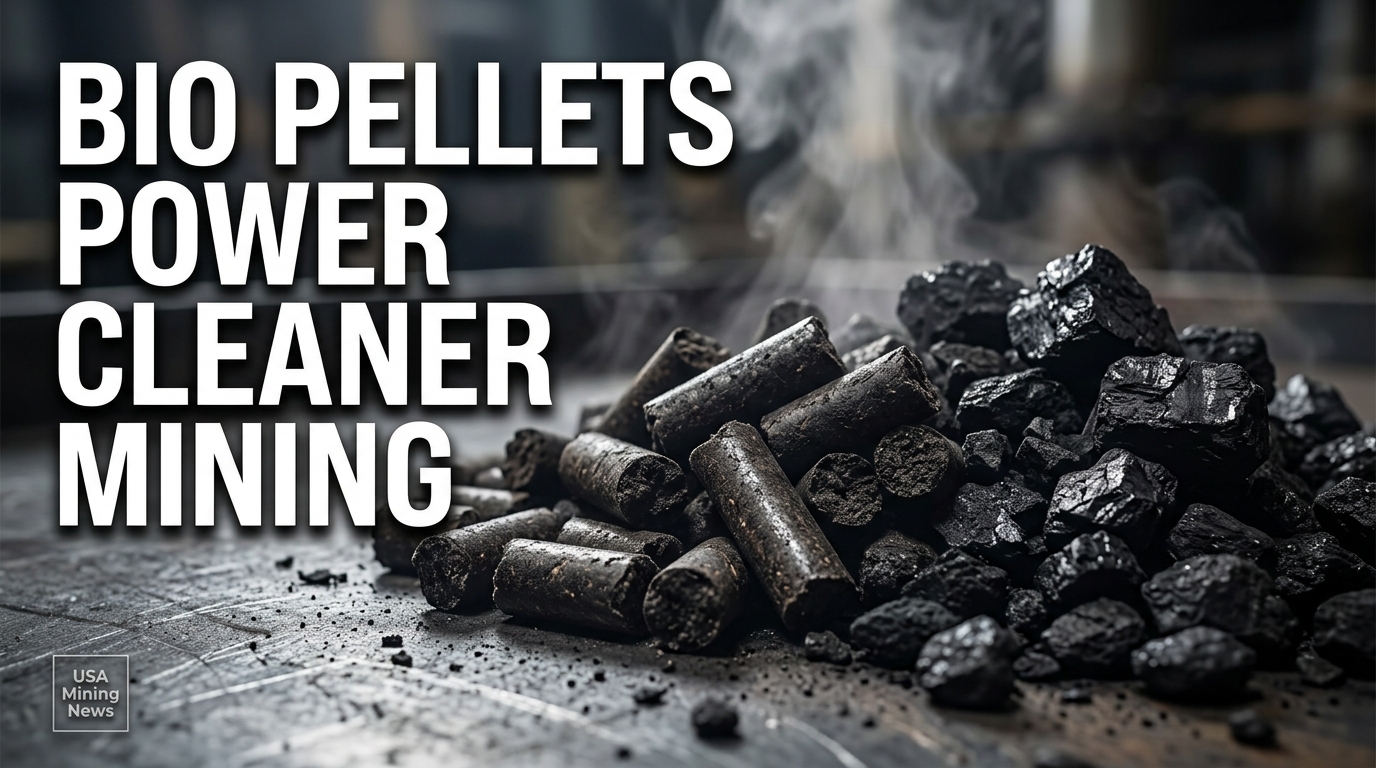
In a significant move signalling a deepening commitment to decarbonization within the mining and metals sector, global diversified miner Rio Tinto announced on July 22, 2026, a pivotal five-year offtake agreement with Australian company SuperChar (SCL) for the supply of bio pellets. This strategic partnership aims to integrate sustainable bio-based fuels into Rio Tinto’s energy-intensive alumina refining operations in Gladstone, Queensland, Australia, marking a tangible step towards reducing fossil fuel reliance and associated Scope 1 emissions.
A Strategic Shift Towards Decarbonization in Alumina Production
The agreement between Rio Tinto and SCL is poised to commence deliveries in 2028, following extensive preliminary work that included operational trials and a comprehensive feasibility study conducted by Rio Tinto. These initial trials, critical to validating the viability of the new fuel source, demonstrated that bio pellets could effectively replace up to 30% of the coal currently used to generate steam in refinery boilers under specific conditions. This outcome has paved the way for a more ambitious phased integration plan.
Alumina refining, a crucial intermediary step in the production of aluminum, is an energy-intensive process predominantly powered by fossil fuels, particularly coal, to generate the high-temperature steam required. Companies like Rio Tinto, committed to aggressive decarbonization targets, are actively exploring a portfolio of innovative solutions to address these Scope 1 emissions. The adoption of bio pellets represents one such promising pathway, offering a direct substitute for a portion of the thermal coal input.
Armando Torres, Managing Director of Rio Tinto Aluminium Pacific Operations, articulated the company’s strategic rationale behind this initiative. "Reducing our alumina refineries' reliance on fossil fuel will require a mix of technologies, innovation and partnerships, and bio pellets are one of the practical options we are exploring as part of that," Torres stated. He emphasized that the preceding trials and feasibility study provided invaluable insights, and this current agreement represents a vital next step in evaluating the practical application and scalability of bio pellets at their Gladstone operations.
Operational Readiness and Phased Implementation
Under the terms of the agreement, Rio Tinto will undertake further operational demonstrations and assessments at its Gladstone facilities. These evaluations will involve testing various blends of bio pellets and coal, ranging from 5% to up to 50% bio pellets. This phased approach is critical to understanding the optimal integration points, technical performance, and economic efficiencies of the new fuel source within existing refinery infrastructure. The meticulous testing will inform the broader rollout and ensure operational stability and safety. Initial deployment of SCL’s bio pellets is specifically earmarked for the Yarwun refinery, one of Rio Tinto’s two alumina refineries in the Gladstone area. Following successful implementation and regulatory clearances at Yarwun, the plan includes potential expansion to the Queensland Alumina refinery, the second facility in Rio Tinto’s Gladstone portfolio. The full commencement of bio pellet use at both refineries, alongside the production at SCL’s new facility, remains subject to securing necessary regulatory approvals and completing site preparations, underscoring the complexities inherent in such large-scale industrial transitions.
SuperChar: A New Link in Queensland's Industrial Supply Chain
The partnership with SCL extends beyond a simple offtake agreement; it fosters the development of a new localized industrial ecosystem. SuperChar intends to establish a dedicated production facility within the Gladstone region itself, ensuring a localized and sustainable supply chain for the bio pellets. This proposed facility will utilize locally grown bana grass as its primary feedstock for manufacturing the bio pellets. The choice of bana grass, a high-yielding perennial crop, highlights an innovative approach to agricultural resource management, connecting regional agriculture with industrial decarbonization efforts.
The initial production capacity of SCL’s proposed facility is projected to be 35,000 tonnes per annum (tpa) of bio pellets. This capacity is specifically designed to meet Rio Tinto’s planned contract volumes and initial operational demands. The integrated nature of this project, from local feedstock sourcing to regional processing and refinery delivery, creates significant economic and industrial opportunities for Central Queensland. Armando Torres underscored this, noting that the project "also has the potential to support new industries and supply chains in central Queensland, connecting agriculture and industry in new ways." This initiative exemplifies a broader trend in the mining industry to forge regional partnerships that support both environmental objectives and local economic development.
Significant Emissions Reduction Potential
The environmental benefits of this agreement are substantial. At the projected contract volumes, the utilization of SCL’s bio pellets has the potential to reduce Rio Tinto’s reported Scope 1 emissions by up to 90,000 tonnes per annum of carbon dioxide equivalent. This projection is calculated using Australia’s current National Greenhouse and Energy Reporting (NGER) standards, providing a standardized and verifiable metric for the environmental impact.
Scope 1 emissions refer to direct greenhouse gas emissions from sources owned or controlled by a company, such as those from burning fossil fuels in refinery boilers. Reducing these direct emissions is a primary focus for mining companies globally, driven by increasingly stringent environmental regulations, investor expectations for sustainable practices, and corporate commitments to achieving net-zero targets. A reduction of this magnitude at a single operational cluster represents a tangible step towards Rio Tinto’s broader decarbonization roadmap and provides a compelling case study for other heavy industries grappling with similar emissions challenges.
Broader Implications for the Aluminum Sector
The aluminum industry, vital for everything from aerospace to construction, faces unique challenges in decarbonization. While renewable electricity is increasingly being adopted for electrolysis in primary aluminum smelting, the process of alumina refining presents different hurdles, particularly regarding the high-temperature heat required for steam generation. Solutions like bio pellets, along with electrification, hydrogen injection, and carbon capture technologies, are all part of the diverse toolkit being explored to address this complex problem. This agreement demonstrates a practical, near-term solution that leverages existing infrastructure with a renewable fuel source. It highlights the industry's shift away from solely relying on innovative, nascent technologies towards implementing commercially viable alternatives where possible.
Regulatory Hurdles and Future Outlook
While the agreement represents a significant milestone, the path forward includes navigating regulatory clearances and ensuring operational readiness for both SCL's new production facility and Rio Tinto's refineries. These approvals are standard for such industrial developments and are crucial before the full-scale integration of bio pellets can commence. If successful, this partnership could serve as a blueprint for expanded bio-energy use across Rio Tinto’s other operations globally, and more broadly, within the resource-intensive alumina refining sector. The experience gained from the Gladstone project will provide invaluable insights for scaling such initiatives, refining operational protocols, and optimizing supply chains.
This initiative firmly positions Rio Tinto at the forefront of sustainable practices in alumina production, demonstrating its proactive approach to energy transition and environmental stewardship. As the global mining industry continues to evolve, these kinds of strategic alliances—that innovate fuel sources, reduce emissions, and foster regional economic development—are becoming increasingly vital. This long-term vision for decarbonization comes as Rio Tinto continues to navigate a dynamic global commodities market, having recently reported a 5% rise in global iron ore sales for the second quarter of 2026 to 89 million tonnes compared to the same period last year, underscoring its broad operational footprint amidst these focused decarbonization efforts.