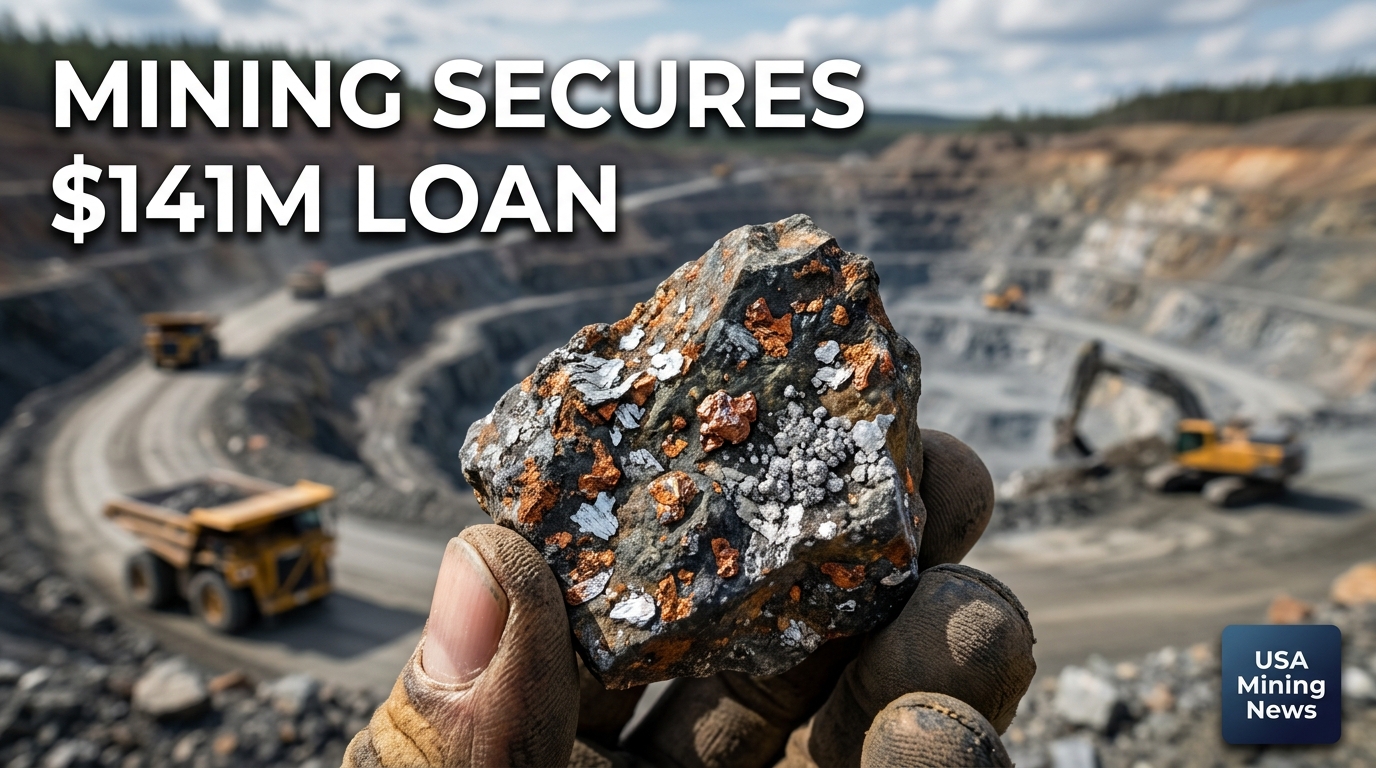
In a landmark development for Canada's burgeoning critical minerals sector, Generation Mining has announced the securing of a substantial debt commitment of C$200 million ($141 million) from the Canada Infrastructure Bank (CIB). This pivotal funding is earmarked for the advancement of the company's Marathon Copper-Palladium Project, strategically located in north-western Ontario. The commitment from the CIB, marking its inaugural investment in Ontario's critical minerals landscape, not only validates the project's economic viability but also highlights its strategic role in bolstering North America's supply chain for metals essential to the global energy transition.
CIB's Strategic Commitment to Critical Minerals
The Canada Infrastructure Bank's investment in the Marathon Project is a significant indicator of the Canadian government's intensified focus on developing its critical minerals capabilities. The CIB's mandate is to invest in revenue-generating infrastructure projects that serve the public interest, attracting private sector investment in the process. Its commitment to Generation Mining comprises two distinct facilities:
- A C$110 million subordinated debt facility, specifically allocated to cover the development and construction expenditures of the project. This type of debt is crucial for large-scale mining ventures as it typically carries a higher risk and interest rate than senior debt but is essential in bridging financing gaps.
- A C$90 million standby facility, designed as a safeguard against potential cost overruns that may occur during the construction phase. Such contingency funding is a common, yet critical, element in project finance, mitigating risks associated with unforeseen challenges in large-scale infrastructure and mining developments.
Generation Mining's President and CEO, Jamie Levy, articulated the synergy between the two entities, stating, "The CIB’s mandate to catalyse private-sector investment in critical infrastructure makes it a natural partner for Generation Mining." He further emphasized that this commitment "further validates the strength of the Marathon project’s economics, its strategic importance and its significance as a future North American producer of copper and palladium – two metals essential to the energy transition." This investment is particularly noteworthy for Ontario, signaling a robust governmental backing for the province's potential in critical mineral extraction and processing, aligning with broader national strategies to secure domestic supply chains for these vital resources.
A Multi-Faceted Financing Architecture
The CIB’s C$200 million contribution is an integral, though not singular, component of a much broader and sophisticated financing plan for the Marathon project, which has now secured a total of approximately C$969 million. This comprehensive funding package underscores the complexity and collaborative nature required to bring world-class mining projects to fruition. Key elements of this financing architecture include:
- Senior Debt Facility: A substantial $310 million has been secured from a consortium of prominent financial institutions, including Export Development Canada (EDC), ING Capital, and Société Générale. Senior debt represents the primary layer of financing, typically secured by project assets and carrying the lowest risk and interest rates among debt instruments, reflecting confidence from international lending bodies.
- Metals Streaming Agreement: An innovative C$200 million agreement has been established with Wheaton Precious Metals. Streaming deals involve a company receiving an upfront payment in exchange for the future delivery of a percentage of the mine's production (in this case, precious metals associated with the copper-palladium ore). This provides non-dilutive capital and often appeals to mining companies seeking to de-risk their financing.
- Equipment Leasing Facilities: Valued at nearly C$145 million, these facilities indicate a strategic approach to capital expenditure, allowing Generation Mining to acquire necessary heavy machinery and operational equipment without immediate outright purchase, thereby conserving upfront capital.
The diverse mix of financing sources — from government-backed entities and international banks to streaming companies and leasing providers — reflects a robust financial strategy designed to spread risk and leverage various capital markets. This approach is typical for large-scale mining projects that require significant capital investment over multi-year development cycles.
The Marathon Project: A Cornerstone for Copper-Palladium Supply
The Marathon project represents a substantial undeveloped deposit strategically positioned to become a critical source of copper and palladium. Located in north-western Ontario, a region renowned for its rich mineral potential, the project holds significant promise for North America's metallic supply chain. It is envisioned to have an expected mine life of 13 years, contributing a stable output of these essential metals.
The importance of copper and palladium, as highlighted by CEO Jamie Levy, cannot be overstated in the context of the global energy transition:
- Copper: Often referred to as "Dr. Copper" due to its bellwether status for global economic health, this metal is fundamental to electrification. It is indispensable for renewable energy infrastructure (solar panels, wind turbines), electric vehicles (EVs), charging stations, and grid modernization. As the world accelerates its decarbonization efforts, demand for copper is projected to surge dramatically over the coming decades.
- Palladium: A platinum group metal (PGM), palladium is primarily used in catalytic converters for gasoline-powered and hybrid vehicles, playing a crucial role in reducing harmful emissions. While the long-term shift to fully electric vehicles might impact palladium demand, it remains critical for the existing fleet and hybrid vehicle market for the foreseeable future. Furthermore, palladium finds applications in electronics, dentistry, and jewelry, underscoring its diverse industrial importance.
The development of a new, significant source of these metals within North America is particularly pertinent given ongoing geopolitical dynamics and the increasing emphasis on securing critical mineral supply chains away from potentially volatile regions. The Marathon project can significantly enhance Canada's standing as a reliable and responsible supplier of these indispensable commodities.
Navigating Towards Construction: Next Steps and Timelines
While the CIB commitment represents a momentous leap forward, several critical steps remain before construction can officially commence. The CIB's investment is contingent upon final documentation and the successful completion of an inter-creditor agreement. This agreement specifies the rights and obligations of the various lenders involved in the project, ensuring a clear hierarchy and process in case of any financial eventualities.
Currently, Generation Mining is continuing active negotiations with surety providers and equity investors to finalize comprehensive financial arrangements. Surety bonds are often required for large construction projects, providing a guarantee that the project will be completed as per contractual obligations. Engaging with equity investors is crucial for securing the final tranche of funding, which typically comes in the form of shares or direct investment, providing long-term capital stability.
The culmination of these financial negotiations and administrative processes is expected to pave the way for construction, which is projected to begin in the latter half of 2026. This timeline underscores the meticulous planning and regulatory compliance inherent in developing a major mining asset, ensuring all financial, environmental, and operational prerequisites are met before breaking ground.
Broader Implications for Canadian Mining and Global Supply Chains
The Marathon project’s progression holds substantial implications beyond Generation Mining itself. For Ontario and Canada, it signifies a concrete step towards realizing the nation’s critical minerals strategy, contributing to economic diversification, job creation, and regional development in north-western Ontario. Mining projects often generate significant employment opportunities, both directly at the mine site and indirectly through supporting industries and local businesses.
On a global scale, the project contributes to the Western world's efforts to de-risk and diversify its critical mineral supply chains. As demand for electrification and clean energy technologies escalates, ensuring reliable access to copper, palladium, and other key metals from politically stable and environmentally responsible jurisdictions becomes paramount. Canada, with its robust regulatory framework and commitment to sustainable mining practices, is well-positioned to serve this growing need.
This investment by the CIB also sets a precedent, potentially encouraging further public and private sector collaboration in financing other critical mineral projects across Canada. It demonstrates a shared understanding of the strategic imperative to develop domestic resources to support the transition to a low-carbon economy.
Leadership Perspective and Future Outlook
Jamie Levy's statement encapsulates the strategic vision behind the Marathon Project: not just as a revenue generator for Generation Mining, but as a significant contributor to North America's energy transition goals. The project's "strength of the economics" combined with its "strategic importance" forms a compelling case for its development.
As the final pieces of the financing puzzle fall into place, the mining industry will be closely watching Generation Mining. Successful execution of the Marathon project will not only establish a new, long-life source of essential metals but also serve as a blueprint for how large-scale critical mineral projects can be financed and developed in Canada through a combination of public sector support, diverse private financing, and a clear vision for contributing to global sustainability objectives. The project stands poised to play a crucial role in powering the next generation of industrial and consumer technologies, solidifying Canada's position in the global critical minerals arena.