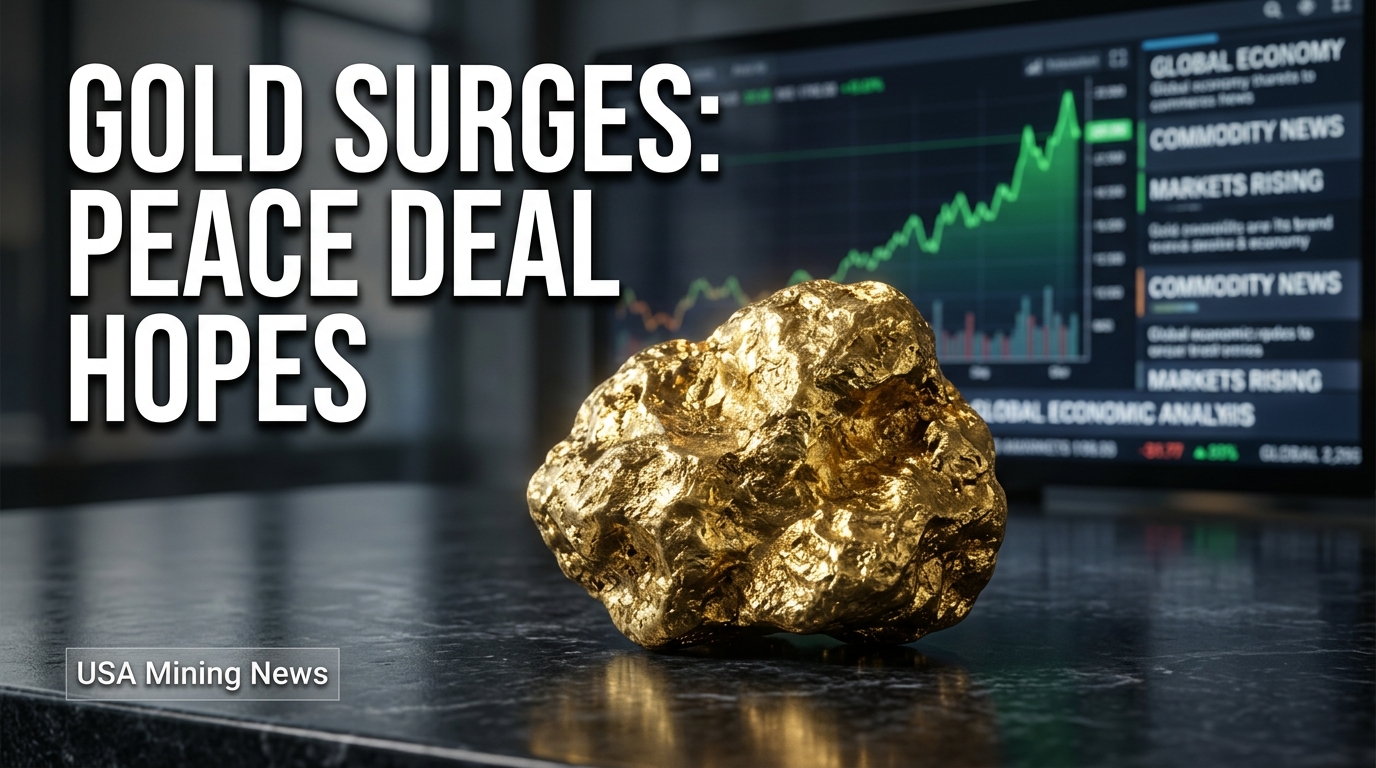
In a notable shift for global commodity markets, gold prices staged a robust comeback on Wednesday, May 5, 2026, nearing a two-week high amidst growing hopes for a peace agreement between the United States and Iran. This resurgence in bullion’s value signaled a temporary easing of investor anxieties over persistent inflation and the potential for an extended duration of restrictive interest rates, dynamics that have heavily influenced the precious metals sector in recent months.
The precious metal’s performance on May 5 represented its strongest daily gain in nearly a month, with spot gold prices surging by as much as 3.6% to surpass the critical threshold of $4,700 per ounce. Similarly, three-month gold futures traded actively in New York, reaching approximately $4,710 per ounce. Silver, often seen as gold’s industrial counterpart and a highly leveraged play on precious metals sentiment, mirrored these gains with an even more pronounced climb, rising by over 6% to approach $78 per ounce. This decisive move comes after a challenging 10-week period for gold, during which its value had declined by approximately 11% as its traditional role as a safe-haven asset was largely overshadowed by concerns over elevated interest rates.
Geopolitical Shifts Drive Market Reversal
The primary catalyst for this vigorous rebound was widespread optimism following reports that the US and Iran were nearing a comprehensive agreement to end the ongoing conflict in the Gulf region. This 10-week-long geopolitical friction had significantly disrupted global energy markets, sending crude oil and natural gas prices soaring. The resultant inflationary pressures had, in turn, dampened expectations for central banks, particularly the US Federal Reserve, to implement interest rate cuts in the near term. A scenario of persistently high interest rates typically creates a challenging environment for non-yielding assets such as gold, making interest-bearing investments more attractive by comparison.
The specifics of the diplomatic progress remain under close scrutiny, with news outlets, including Bloomberg, reporting that Iran is currently evaluating a proposal submitted by the United States. US President Donald Trump, commenting on the situation via social media, indicated that the US would conclude its military campaign "assuming Iran agrees to give what has been agreed to, which is, perhaps, a big assumption." Such high-level, conditional communication underscores the delicate nature of the negotiations but nonetheless injected a significant dose of confidence into the market.
Inflation Concerns Ease, Rate Cut Hopes Rekindle
The immediate impact of the potential peace deal extended beyond just the direct commodity supply implications; it fundamentally altered the market’s perception of future inflation and monetary policy. As the prospects of reduced energy price volatility emerged, concerns over rising price pressures began to ease among investors. This shift reignited speculation that the Federal Reserve might indeed find room to move towards interest rate reductions sooner than previously anticipated, rather than maintaining its restrictive policy for an extended period.
Ewa Manthey, a commodity strategist at ING Groep NV, articulated this sentiment, stating, "As concerns over rising price pressures were easing, gold investors bet that the Federal Reserve can still move towards rate cuts rather than keeping policy restrictive for longer." This perspective highlights the intricate relationship between geopolitical events, macroeconomic indicators, and central bank policy decisions, all of which converge to shape the investment landscape for precious metals. In the immediate future, market participants will be keenly observing a series of incoming US data releases, with Friday’s employment report being particularly critical, to further gauge the Federal Reserve’s monetary policy trajectory.
Expert Insights and Market Volatility
While the recent rally provided a much-needed reprieve for gold investors, industry experts caution against complacency. Peter Grant, Vice President and Senior Metals Strategist at Zaner Metals, weighed in on the development, telling Reuters, "The optimism about a final deal between the US and Iran has caused at least some short-term relief in gold." However, Mr. Grant also prudently cautioned that the market remains susceptible to rapid shifts, underscoring that it can still "pivot on Middle East headlines." This sentiment reflects the inherent volatility in commodity markets, particularly when driven by complex geopolitical negotiations, which are often subject to unpredictable turns.
For mining companies, producers, and their investors, understanding these dynamics is paramount. Gold's dual role as both an industrial commodity (albeit minor) and, more significantly, a monetary asset and store of value means its price discovery process is influenced by a diverse set of factors, from inflation and interest rate expectations to geopolitical stability and currency strength. The recent episode powerfully illustrates how swiftly market sentiment can change, impacting hedging strategies, capital allocation decisions, and overall profitability within the gold mining sector.
Official Sector Purchases: A Persistent Demand Driver
Looking beyond the immediate ebb and flow of geopolitical headlines and monetary policy speculation, the long-term outlook for gold remains robust, according to many market participants and major banks. A significant and consistent driver for this optimism, irrespective of immediate interest rate decisions, is the sustained demand from the official sector—primarily central banks.
According to data compiled by the World Gold Council, official-sector purchases of gold demonstrated a rise in the last quarter, a notable trend even as some individual central banks adjusted their holdings. Central banks across the globe often view gold as a crucial component of their foreign exchange reserves, offering portfolio diversification, a hedge against currency devaluation, and a reliable store of value during periods of global economic or geopolitical uncertainty. This institutional demand provides a fundamental floor for gold prices and represents a structural support that has been growing in recent years, serving as a powerful counterweight to speculative trading or short-term macroeconomic headwinds.
Outlook: Navigating a Dynamic Landscape
As the mining industry looks towards the remainder of 2026, the gold market appears poised for continued scrutiny of both geopolitical developments and macroeconomic signals. The potential for a US-Iran peace deal, while offering immediate relief and a boost to precious metal prices, highlights the persistent influence of international relations on commodity valuations. Simultaneously, the Federal Reserve’s path concerning interest rates will dictate much of the short-term investor sentiment, with upcoming economic reports providing critical clues.
Despite the inherent uncertainties, the underlying structural demand from central banks, coupled with a renewed—albeit cautious—optimism regarding easing inflation, suggests a generally positive trajectory for gold prices through the end of the year. For mining companies engaged in exploration, development, and production, these elevated price levels provide a stronger economic incentive, potentially supporting higher capital expenditures, increased exploration budgets, and enhanced profitability. The ability of gold to perform well in varying economic scenarios—as a safe haven during crises and as an inflation hedge during periods of monetary expansion—underscores its enduring appeal and strategic importance in a complex and ever-evolving global financial landscape.