Pioneering New Horizons: GoldMining Initiates Strategic Drilling at Colombia’s Yarumalito Project
In a move poised to further unlock the significant potential of Colombia’s rapidly emerging mining sector, GoldMining Inc. announced on May 27, 2026, the commencement of an exploration drilling program at its wholly owned Yarumalito Gold-Copper Project. Located in the highly prospective Mid Cauca gold-copper belt within Colombia’s Antioquia region, this initiative represents a critical step in advancing GoldMining’s substantial portfolio of assets, particularly within the Americas. The program highlights the company's strategic focus on proving out and expanding resources within large-scale gold-copper porphyry systems, leveraging both historical data and refined geological models.
The Yarumalito project is strategically positioned approximately 105 kilometers south-southwest of Medellín, a major regional economic hub, and about 40 kilometers south of GoldMining’s own La Mina project. This adjacency within a known mineralized trend underscores the company's consolidated presence in a region that continues to attract considerable attention from global mining operators and investors.
The Mid Cauca Belt: A Hotbed for Discovery
Colombia's Mid Cauca belt has long been recognized for its exceptional geological potential for both gold and copper, forming a critical segment of the Andean Porphyry Belt that stretches across South America. This geological corridor hosts numerous world-class deposits, and the Mid Cauca specifically has seen a resurgence in exploration activity over the past two decades, yielding several significant discoveries. The region is characterized by extensive mineralization associated with Tertiary-age intrusive complexes, making it highly prospective for large-tonnage porphyry deposits, as well as high-grade epithermal and mesothermal vein systems.
Industry veterans understand the significance of operating within such a prolific geological setting. GoldMining President and CEO Alastair Still emphasized this context, noting, “Yarumalito sits in the heart of Colombia’s prolific Mid Cauca belt, in close proximity to major discoveries like Collective Mining’s Guayabales project and Aris Mining’s Marmato mine.” This proximity to established and developing operations, such as Collective Mining's high-grade gold-silver-copper porphyry system at Guayabales and Aris Mining’s long-standing, high-margin Marmato gold mine, provides crucial infrastructure advantages, regional geological coherence, and validates the prospectivity of GoldMining's Yarumalito ground. This regional clustering of significant deposits often indicates a broader, district-scale mineralizing event, increasing the probability of additional discoveries.
Yarumalito: Project Overview and Strategic Objectives
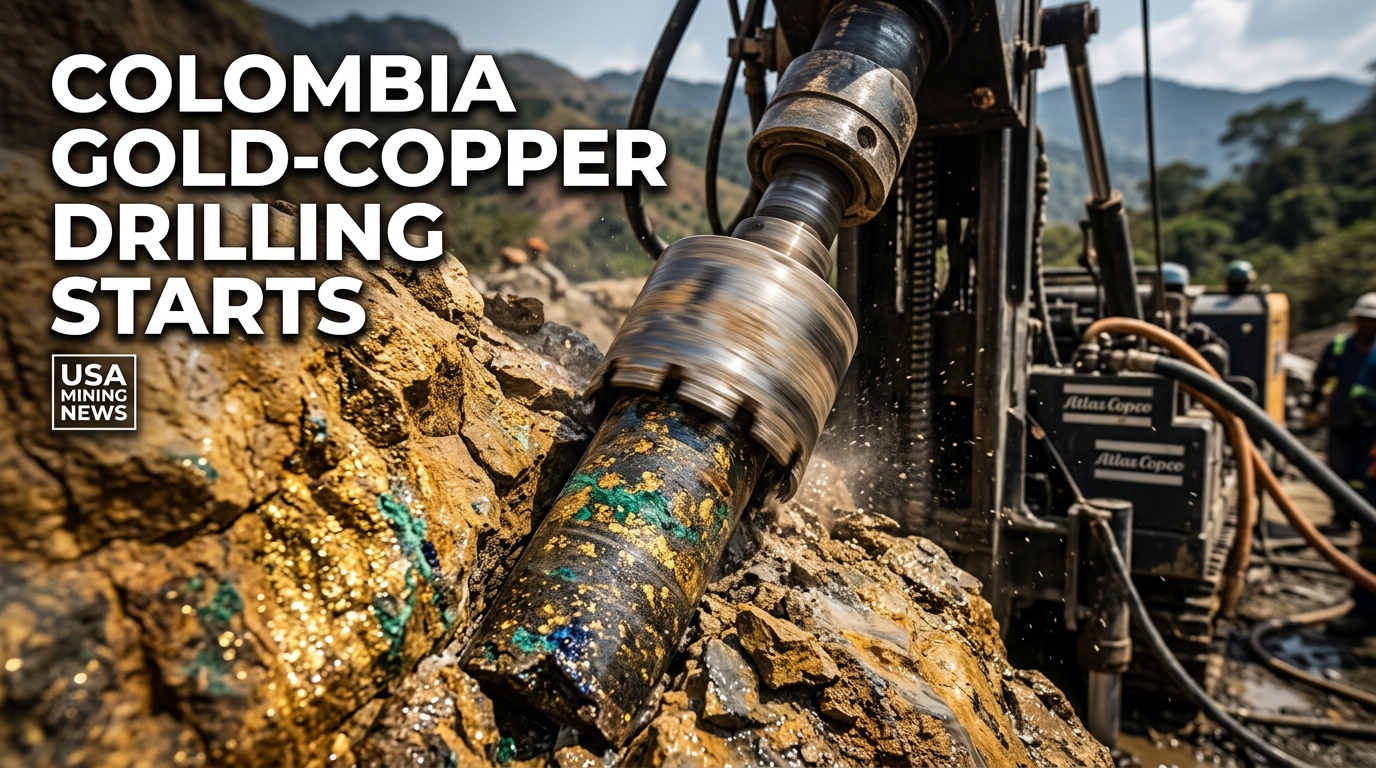
As a wholly owned asset, Yarumalito offers GoldMining full control over its exploration and development trajectory. The current core drilling program is fully funded, reflecting GoldMining’s confidence in the project’s potential and its disciplined approach to capital allocation. The program is designed to encompass approximately 1,200 meters of diamond drilling, a standard and robust method in mineral exploration that provides high-quality core samples essential for detailed geological and metallurgical analysis.
The primary objective of this drilling campaign is to build upon extensive previous geological work. Crucially, it seeks to target areas identified through a recent, rigorous analysis of historical core samples. This methodical approach, combining past insights with contemporary analytical techniques, allows for a more precise and effective deployment of drilling resources. The focus areas, particularly less explored sections of the P-1 porphyry unit, are believed to host significant gold-copper mineralisation. Porphyry units are often large, disseminated mineral occurrences that can lead to vast, long-life mining operations, making the identification and delineation of such units a high priority for exploration companies.
Technical Deep Dive: The 2026 Drilling Program
The ongoing diamond core drilling program is a testament to the meticulous planning and revised geological models that underpin GoldMining’s exploration strategy. Diamond drilling, while more costly than other methods, offers unparalleled data quality, enabling geologists to accurately map lithologies, alteration patterns, and mineralisation styles in three dimensions. This is particularly vital in complex porphyry systems where understanding the subtle nuances of geological controls on mineralisation is paramount.
Still further commented on the strategic importance of this effort, stating, “With diamond core drilling now underway on our second active exploration drilling programme in the Americas for 2026, we are testing a newly refined geological model at Yarumalito.” This statement places Yarumalito within GoldMining’s broader, ambitious 2026 exploration agenda, which commenced with a drilling program in March at its São Jorge Project in Brazil’s Tapajós gold district. Such parallel exploration efforts across multiple high-potential jurisdictions demonstrate a corporate strategy focused on diversified discovery potential and continuous asset de-risking.
The specific targeting of the P-1 porphyry unit, particularly its less explored sections, reflects a calculated risk-reward approach. These zones offer the potential for significant step-out growth, expanding the known mineralized footprint beyond previously defined areas. Alastair Still articulated this, noting the program is “our first step in seeking to unlock the substantial step-out growth potential of the mineralised P-1 host unit.” This implies a phased exploration strategy, with this initial program laying the groundwork for potential future, larger-scale drilling campaigns.
Geological Signatures and Historical Success
The geological characteristics of Yarumalito align perfectly with the valuable porphyry-epithermal gold-copper deposit model prevalent in the Andes. At Yarumalito, gold and copper mineralisation is intimately associated with porphyry intrusive bodies. These intrusives are predominantly composed of potassic-altered diorite, a rock type often linked to significant copper-gold porphyry systems globally. The mineralisation within these diorites occurs as both disseminated particles and fracture-controlled veins of pyrite, chalcopyrite (a primary copper ore mineral), and magnetite. The presence of magnetite is often a good indicator of porphyry-style alteration and can be useful in geophysical targeting.
Crucially, these porphyry units are also intersected by intermediate sulphidation epithermal veins. These veins represent a later-stage mineralizing event and host a distinct suite of minerals including pyrite, galena (lead sulfide), sphalerite (zinc sulfide), and chalcopyrite. The coexistence of porphyry-style disseminated mineralization with later epithermal veins is a common and highly favorable characteristic, often indicating a robust and long-lived magmatic-hydrothermal system capable of depositing substantial quantities of precious and base metals. The inclusion of galena and sphalerite further hints at potential polymetallic enrichment, adding another layer of value to the prospect.
The historical drilling results provide compelling evidence of this robust mineralisation. Notable intercepts include:
- Hole YAR-06: 257 meters grading 0.50 grams per tonne (g/t) gold and 0.1% copper from the surface.
- Hole YAR-08: 250 meters at 0.51 g/t gold and 0.13% copper.
- Hole YAR-11: 141.4 meters at 0.77 g/t gold and 0.09% copper from the surface.
These broad intercepts, often starting from or near surface, are highly desirable in porphyry systems as they indicate potential for large-scale, open-pittable resources which benefit from lower strip ratios and favorable economics. The grades, particularly the gold values, are indicative of typical economic porphyry deposits, where large tonnage often offsets lower individual metal concentrations compared to vein-style deposits. Alastair Still's description of the system as “large, highly accessible gold-copper porphyry system (that) remains open in all directions” further underscores the growth potential that GoldMining is aiming to delineate.
GoldMining's Broader Exploration Strategy
GoldMining Inc. has built a significant portfolio of gold and gold-copper projects across the Americas through a strategic acquisition model, accumulating projects with substantial historical exploration and resource potential. The company's strategy is to systematically advance these projects through targeted exploration, aiming to grow and de-risk the resource base, thereby enhancing shareholder value. The simultaneous drilling programs at Yarumalito in Colombia and São Jorge in Brazil exemplify this multi-front approach to exploration. By diversifying its exploration efforts across different geological settings and jurisdictions, GoldMining mitigates country-specific risks and increases its chances of a major discovery or significant resource expansion. This approach is highly relevant for investors seeking exposure to diversified exploration upside in the global gold and copper markets.
Market Implications and Future Outlook
The initiation of drilling at Yarumalito comes at a pivotal time for both the gold and copper markets. Gold continues to serve as a key safe-haven asset and inflation hedge, while copper, often dubbed "Dr. Copper" for its bellwether status in the global economy, is facing unprecedented demand-side pressures from the ongoing energy transition and electrification efforts. Securing and expanding resources of both metals in a politically stable jurisdiction like Colombia, which has a well-established mining code, is a strategic imperative for companies like GoldMining.
For the mining industry, active exploration programs at projects with existing positive historical results like Yarumalito are crucial. They represent the lifeblood of the sector, continually replenishing the global resource pipeline. A successful program at Yarumalito could lead to:
- Resource Expansion: Potentially adding significant ounces of gold and pounds of copper to GoldMining’s global resource inventory.
- Enhanced Project Value: Delineating a larger, more robust resource base can significantly increase the intrinsic value of the Yarumalito project, making it more attractive for potential joint ventures, strategic partnerships, or even eventual acquisition.
- De-risking: Further geological understanding and confirmed continuity of mineralization reduce exploration risk, paving the way for eventual preliminary economic assessments (PEAs) and feasibility studies.
Colombia's mining sector has made strides in recent years to attract foreign investment, offering a supportive regulatory framework and a skilled workforce. While challenges related to social licensing and environmental stewardship persist, the government has shown a commitment to responsible resource development. GoldMining’s operations will undoubtedly be scrutinized for adherence to best practices in environmental and social governance (ESG), which is increasingly important for investor sentiment and operational success.
Looking ahead, the mining community will keenly await the assay results from this 1,200-meter drill program. These results will be instrumental in validating the newly refined geological model and quantifying the "step-out growth potential" that GoldMining aims to unlock. Positive outcomes could lead to subsequent, more extensive drill campaigns, ultimately moving Yarumalito closer to becoming a prominent gold-copper operation within the Mid Cauca belt, further solidifying GoldMining's position as a significant player in the Americas’ resource sector. This targeted exploration at Yarumalito represents a strategic investment in the future, aiming to transform geological promise into tangible economic value.