GrafTech Announces Strategic Closure of Monterrey Graphite Electrode Plant
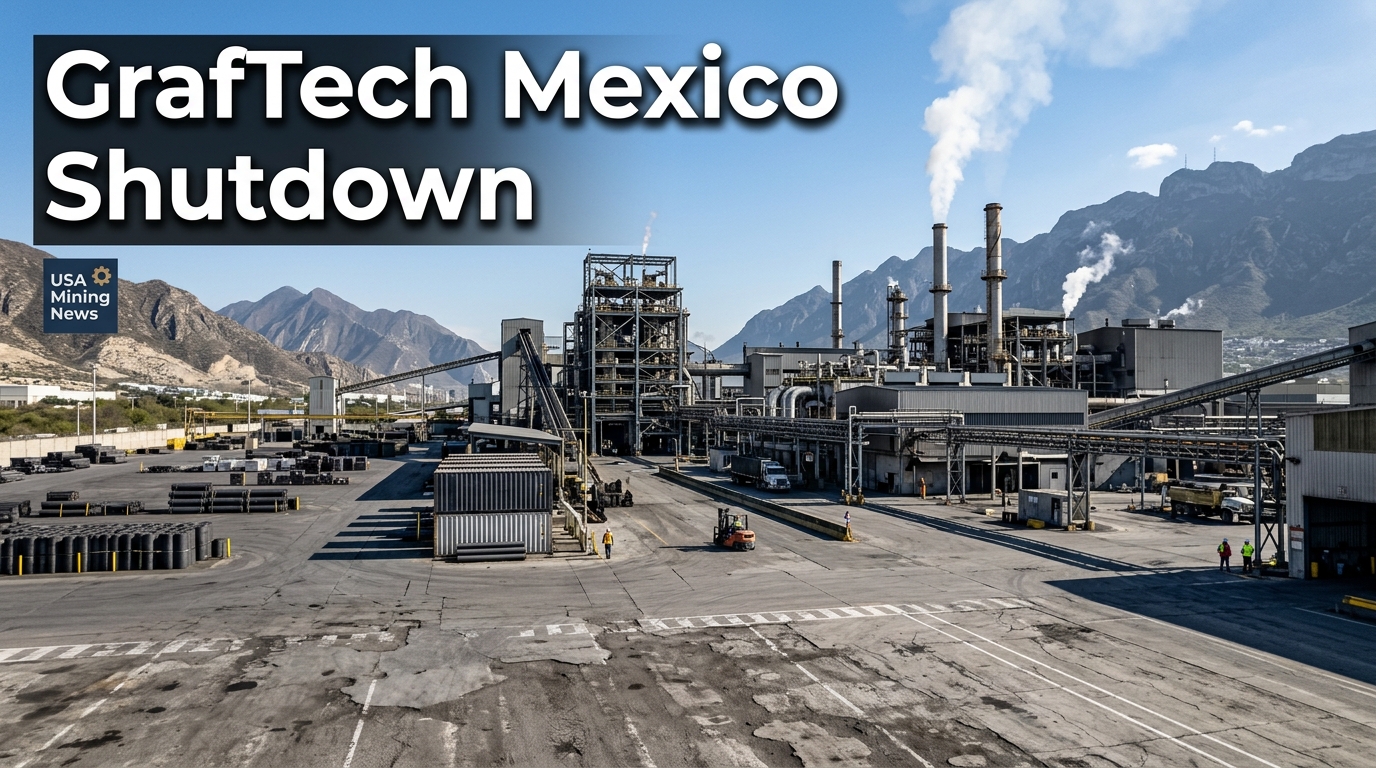
In a significant strategic move announced on September 1, 2026, GrafTech International has disclosed plans to permanently cease operations at its graphite electrode manufacturing plant located in Monterrey, Mexico. The phased wind-down process for the facility is scheduled to conclude with the completion of production in the early part of the second quarter of 2027. This decisive action underscores a broader industry trend of major players recalibrating their operational footprints in response to evolving global market dynamics.
GrafTech's rationale for the closure is rooted in the need to adjust its manufacturing capacity amidst what it describes as "ongoing market challenges and structural overcapacity within the global graphite electrode sector." This decision reflects a proactive approach to optimize its production network and strengthen its financial resilience in a highly competitive market environment. The closure is expected to consolidate the company’s manufacturing efforts, focusing on its larger, more efficient European sites, a move that will have notable implications for its global capacity and cost structure.
Navigating a Challenging Global Market Landscape
The global graphite electrode market has experienced a period of intense pressure, characterized by a significant imbalance between supply and demand. GrafTech explicitly pointed to "excess production capacity worldwide," highlighting particularly strong contributions from manufacturers in China and India. This surge in capacity has consistently outpaced global demand, leading to an increase in exports into key regions and subsequently exerting downward pressure on graphite electrode pricing and, consequently, industry returns for producers across the board. For a capital-intensive industry like graphite electrode manufacturing, maintaining operations at underutilized facilities in such a market climate becomes economically unsustainable.
The persistent oversupply has created a challenging landscape where even established producers like GrafTech must make difficult decisions to ensure long-term viability. Graphite electrodes are critical components in electric arc furnaces (EAFs), primarily used in steel production. While global steel demand remains robust, particularly with the increasing adoption of EAF technology for its lower carbon footprint compared to traditional blast furnaces, the rapid expansion of electrode production capacity has outpaced this growth. This market reality necessitates strategic adjustments from leading manufacturers to align supply more closely with sustainable demand levels, thereby aiming to restore healthier pricing and profitability across the sector.
Operational and Capacity Realignment
The closure of the Monterrey facility will result in a substantial reduction in GrafTech's global annual graphite electrode production capacity. Post-closure, the company's total annual capacity is projected to decrease by approximately 51,000 tonnes, moving from its current 178,000 tonnes to roughly 127,000 tonnes. This represents a significant rationalization of its global manufacturing footprint, reflecting a concerted effort to enhance operational efficiency and resource allocation.
A detailed breakdown of the capacity adjustments reveals a two-pronged approach. The direct closure of the Monterrey plant will remove approximately 35,000 tonnes of capacity. Additionally, GrafTech plans to reduce output at its Pamplona facility in Spain by an extra 16,000 tonnes. This reduction at Pamplona is attributed to changes in its production mix, specifically the strategic shift of pin stock production – a crucial component in assembling electrodes – from Monterrey to its European operations. This consolidation allows GrafTech to centralize specialized production processes and streamline logistics.
To ensure a seamless transition for its clientele, GrafTech intends to transfer customer orders previously served by the Monterrey plant to its remaining, larger European sites. These primary European facilities are located in Calais, France, and Pamplona, Spain. This strategic consolidation is designed to improve the overall utilization rate of GrafTech's manufacturing network, ensuring that remaining facilities operate closer to their optimal capacity, thereby driving down per-unit production costs and enhancing competitive positioning.
Financial Strategy and Expected Benefits
GrafTech anticipates several significant financial benefits stemming from the Monterrey closure and the broader consolidation effort. These financial improvements are central to the company's long-term sustainability objectives:
- Annual Cash Cost Savings: The company projects annual cash cost savings ranging from $20 million to $25 million. These savings will primarily arise from reduced operational expenses, including labor, energy, and maintenance costs associated with running an underutilized facility.
- Reduction in Annual Capital Spending: From 2027 onwards, GrafTech expects to reduce its annual capital expenditures by approximately $5 million. This reduction reflects the elimination of capital investment requirements for the Monterrey plant, allowing capital to be redeployed to more strategic areas or for debt reduction.
- Working Capital Release: A substantial release of $20 million to $25 million in working capital is also anticipated, predominantly in 2028. This is expected to come from the liquidation of inventory and other working capital components no longer required for the Monterrey operations, providing a valuable boost to the company's liquidity.
While these benefits are significant, the transition is not without its costs. GrafTech expects to incur one-time expenses related to the closure, totaling an estimated $20 million to $25 million by the end of 2027. These costs will primarily cover employee severance packages, expenses associated with equipment relocation, and other transitional operational expenses. Despite these upfront costs, the long-term financial advantages, including lower fixed operating costs and an improved financial position, are expected to significantly outweigh the initial outlays, contributing to the company's overall financial strength and profitability.
GrafTech's Enduring North American Footprint and Future Plans
While the closure of the Monterrey plant marks a significant reduction in GrafTech's North American manufacturing capacity for graphite electrodes, the company will maintain a vital presence on the continent. Its existing operations in Seadrift, Texas, will continue to function, underscoring a commitment to serving key North American markets. Additionally, GrafTech will retain its electrode machining and distribution facility in St. Marys, Pennsylvania. It is important to note, however, that electrode production at the St. Marys facility currently remains idled, indicating a strategic focus on finishing and logistical capabilities rather than primary manufacturing at that specific site for the time being.
Regarding the Monterrey property itself, following the removal of graphite electrode production infrastructure, GrafTech intends to pursue the sale of the site. Any proceeds generated from this property divestment are earmarked for enhancing corporate liquidity and for strategic debt reduction. This move aligns with GrafTech's broader financial strategy to optimize its asset portfolio, reduce financial leverage, and strengthen its balance sheet for future growth and market resilience.
CEO's Vision: Disciplined Action for Long-Term Sustainability
Timothy Flanagan, GrafTech’s CEO and president, articulated the strategic imperative behind this decision: “Today’s announcement represents a disciplined and decisive action to support the long-term success of GrafTech.” His statement emphasizes that the move is not merely a reaction to market pressures but a calculated step towards building a more sustainable and profitable future for the company. Flanagan further elaborated on the core challenge, stating, “Given the persistent imbalance between global graphite electrode supply and demand, maintaining underutilised capacity that requires ongoing capital investment is neither economically sustainable nor in the long-term interests of GrafTech or our stakeholders.”
This perspective resonates deeply within the capital-intensive mining and manufacturing sectors, where efficiency, asset utilization, and disciplined capital allocation are paramount. In an environment of overcapacity and competitive pricing, companies must critically evaluate every asset. Operating facilities that do not contribute optimally to the overall network efficiency can drain resources through fixed costs, maintenance, and ongoing capital expenditures, detracting from the company's ability to invest in more productive areas or return value to shareholders.
Broader Implications for the Graphite Electrode Industry
GrafTech's decision to rationalize its capacity carries broader implications for the global graphite electrode market. While a reduction of 51,000 tonnes is significant for a single producer, the sheer scale of global overcapacity, particularly from Asian markets, means that this move alone may not immediately rebalance the entire market. However, it signals a trend among major Western producers to take decisive action to protect margins and optimize their global footprints. Such actions, if mirrored by other producers facing similar pressures, could collectively contribute to a more rationalized supply environment over time.
For steel producers relying on EAFs, this capacity adjustment from a major supplier like GrafTech might raise questions about supply chain resilience, though GrafTech's commitment to transferring orders to its European facilities suggests efforts to maintain continuity. The focus on efficiency and cost control demonstrated by GrafTech highlights the ongoing competitive intensity within the industry, where technological innovation in electrode performance and robust supply chain management will continue to be crucial differentiators.
Outlook: A Reshaped Competitive Landscape
The shutdown of the Monterrey plant represents a pivotal moment for GrafTech, marking a strategic pivot designed to enhance its long-term competitiveness and financial health. By shedding underperforming assets and consolidating production at its more efficient European hubs, GrafTech aims to emerge leaner, more agile, and better positioned to navigate the complexities of the global graphite electrode market. This disciplined approach to capacity management, coupled with anticipated cost savings and liquidity enhancements, is expected to strengthen its financial foundation.
For industry stakeholders, including investors, customers, and competitors, GrafTech's move offers a clear indication of the severe pressures facing the graphite electrode sector. It reinforces the necessity for strategic adaptation in response to evolving market dynamics, particularly persistent oversupply. As the phased wind-down progresses towards its completion in early Q2 2027, the industry will watch closely to see how GrafTech’s reshaped operational footprint impacts its market share, profitability, and overall strategic direction in a competitive landscape that continues to demand efficiency and adaptability.