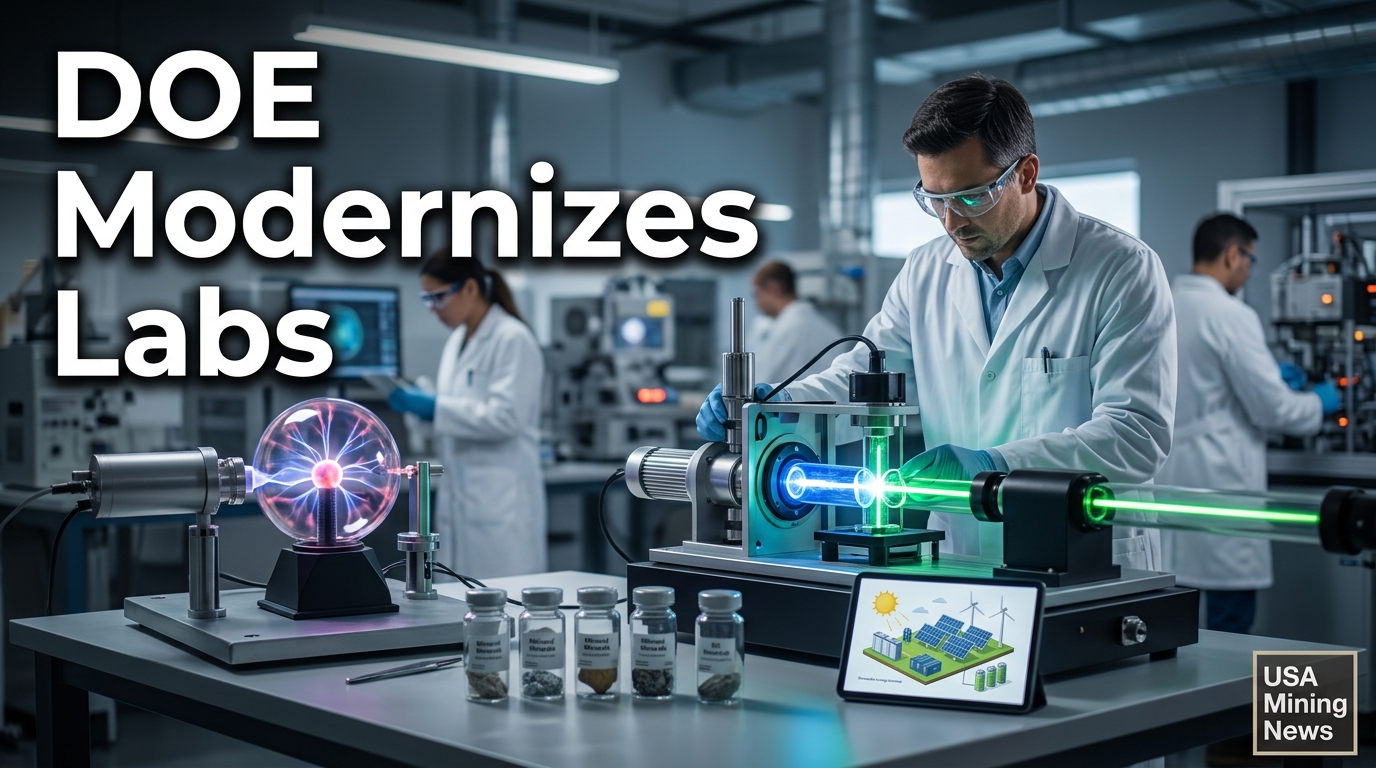
WASHINGTON — The U.S. Department of Energy (DOE) initiated a substantial overhaul of its operational framework for National Laboratories, plants, and sites on August 13, 2026, marking a pivotal moment in the nation’s pursuit of scientific and technological leadership. This strategic move, announced today, aims to modernize operations across the vast DOE laboratory complex, reflecting a concerted effort to enhance efficiency, accountability, and the pace of critical research.
A New Era of Operational Efficiency for U.S. National Laboratories
The core of the DOE's announcement centers on updating what have been described as outdated and duplicative operating requirements. This initiative directly supports President Trump’s commitment to “Restoring Gold Standard Science,” a mandate designed to liberate the nation's world-class scientific workforce from unnecessary administrative burdens. By doing so, the DOE intends to redirect focus towards its most pressing missions: advancing critical science, strengthening national security, and securing the nation's energy future.
U.S. Secretary of Energy Chris Wright underscored the importance of this modernization during the announcement. “America’s National Laboratories are among our nation’s greatest scientific assets and have powered generations of American discovery and innovation,” Secretary Wright stated. He further emphasized, “President Trump has called on DOE to build on that legacy by restoring Gold Standard Science and unleashing the full potential of American ingenuity. By removing unnecessary barriers, we are giving our scientists, engineers, and technicians, more freedom to focus on the critical missions that matter most."
The expected outcomes of these reforms are multi-faceted:
- Improved operational efficiency across the DOE complex.
- Strengthened stewardship of taxpayer resources through reduced administrative overhead.
- Increased speed, discipline, and agility in laboratory operations, aligning with the demanding pace of contemporary scientific and national security challenges.
- Continued adherence to rigorous safety and security standards, ensuring that efficiency gains do not compromise critical safeguards for workers, the public, and the environment.
The Rationale Behind the Reforms: Decades in the Making
The DOE's decision to modernize its directives is not a sudden shift but rather the culmination of more than three decades of expert recommendations. Collaborating with laboratory leaders and subject matter experts, the Department undertook a targeted review of directives governing day-to-day field operations. These reforms build upon consistent advice from influential bodies including Congress, the Government Accountability Office (GAO), and the National Academies, all of whom have previously identified unnecessary complexity within the DOE’s existing directives framework.
By acting on these longstanding recommendations, the DOE aims to strike a crucial balance. The reforms are designed to preserve strong oversight, accountability, and operational excellence, which includes robust protections for DOE workers, the public, the environment, and the Nation’s nuclear security enterprise. This careful approach ensures that while bureaucratic impediments are removed, the foundational principles of safety, security, and responsible governance remain paramount.
Strategic Implications for American Energy Security and Innovation
The National Laboratories, plants, and sites are instrumental in executing some of the nation’s most consequential scientific, engineering, and national security missions. The updated operating directives are poised to better align their day-to-day operations with the scale and complexity of these critical endeavors. This realignment is expected to empower the scientific workforce, granting them more dedicated time and resources to:
- Accelerate the development of advanced technologies.
- Significantly strengthen American energy security.
- Drive American innovation across various sectors.
- Sustain and enhance U.S. leadership in global science and technology.
The pursuit of these objectives carries profound implications for the mining sector, which serves as the foundational supplier of raw materials for many of these strategic initiatives.
Why This Matters to the Mining Sector: A Catalyst for Critical Minerals
For professionals and investors in the mining industry, the DOE's modernization effort represents a significant signal. Streamlined operations within the National Laboratories are highly likely to accelerate research and development (R&D) in critical areas, directly impacting the demand for various mined commodities.
- Accelerated Demand for Critical Minerals: The emphasis on developing new technologies, strengthening American energy security, and driving innovation will inevitably translate into increased demand for critical minerals. Advanced energy systems, such as next-generation batteries for electric vehicles and grid storage (requiring lithium, cobalt, nickel, graphite), renewable energy infrastructure (copper, rare earth elements for magnets), and advanced nuclear reactors including Small Modular Reactors (SMRs) (uranium, zirconium), all rely on a secure and robust supply chain of these materials. Faster R&D at DOE labs means a faster pathway to commercialization for these technologies, thereby compressing the timeline for market demand growth for their essential mineral inputs.
- National Security Imperatives and Domestic Sourcing: The "national security missions" component of the DOE's mandate is particularly relevant. Many defense technologies, from advanced electronics to specialized alloys, depend on a range of critical minerals. As the DOE accelerates R&D in these areas, the strategic importance of establishing and fortifying domestic supply chains for these minerals will intensify. This could lead to increased government support for domestic exploration, extraction, and processing initiatives, positioning U.S. mining companies to play a more central role in national defense.
- Alignment with Broader Permitting Reforms: A noteworthy aspect mentioned in the DOE's accompanying materials is "Streamlining Permitting and Identifying Undue Burdens on American Energy." While this directly refers to energy projects, the underlying philosophy of reducing bureaucratic complexity resonates deeply with the mining industry's long-standing challenges regarding project permitting. The administration's demonstrated commitment to internal operational efficiency within the DOE could signal a broader governmental inclination towards simplifying and accelerating regulatory processes across other agencies relevant to mining, offering a glimmer of hope for faster project development timelines in the sector.
- Innovation in Mining and Processing: Breakthroughs in materials science and engineering emerging from DOE labs could also have direct applications within the mining industry itself. This might include new, more efficient, and environmentally friendly extraction or processing technologies, advanced sensor systems for exploration, or novel approaches to mine waste management and critical mineral recovery from secondary sources.
Key Players and Their Mandate
The impetus behind these reforms stems directly from the highest levels of the U.S. government. President Trump's "Restoring Gold Standard Science" initiative provides the strategic framework, aiming to reinvigorate America's scientific prowess. U.S. Secretary of Energy Chris Wright is tasked with the implementation, leading the DOE in its comprehensive review and restructuring of operational directives. The National Laboratories themselves, including world-renowned institutions, are the operational beneficiaries and the frontline drivers of the scientific and technological advancements expected from these changes. Their scientific workforce, now unburdened by excessive administrative tasks, is empowered to lead the charge in areas ranging from fundamental physics to applied energy solutions and advanced materials.
The Road Ahead: Future Outlook and Opportunities
The updated operating directives are publicly available, signaling transparency and inviting scrutiny from stakeholders. This move is more than just an internal administrative adjustment; it represents a strategic investment in the nation's future scientific and technological competitiveness.
For the mining sector, the outlook suggests a future characterized by:
- An accelerated pace of innovation in energy and defense technologies, translating into sustained and potentially surging demand for a wide array of critical and strategic minerals.
- A heightened national focus on resilient supply chains, which could prioritize and incentivize domestic mineral production.
- The potential for a broader governmental philosophy that favors regulatory streamlining, which, if extended to the mining industry, could significantly improve the landscape for new project development.
- Opportunities for mining companies to engage with emerging technologies and materials research from DOE labs, potentially adopting new methods or identifying new revenue streams.
As the DOE's National Laboratories operationalize these new directives, the mining industry must remain acutely aware of the evolving technological landscape and the strategic imperatives driving U.S. energy and national security policy. The connection between foundational scientific research and the supply of raw materials is undeniable, and this modernization effort by the DOE underscores that critical interdependence.