Aya Gold & Silver Bolsters Moroccan Portfolio with Key Exploration Asset Acquisition
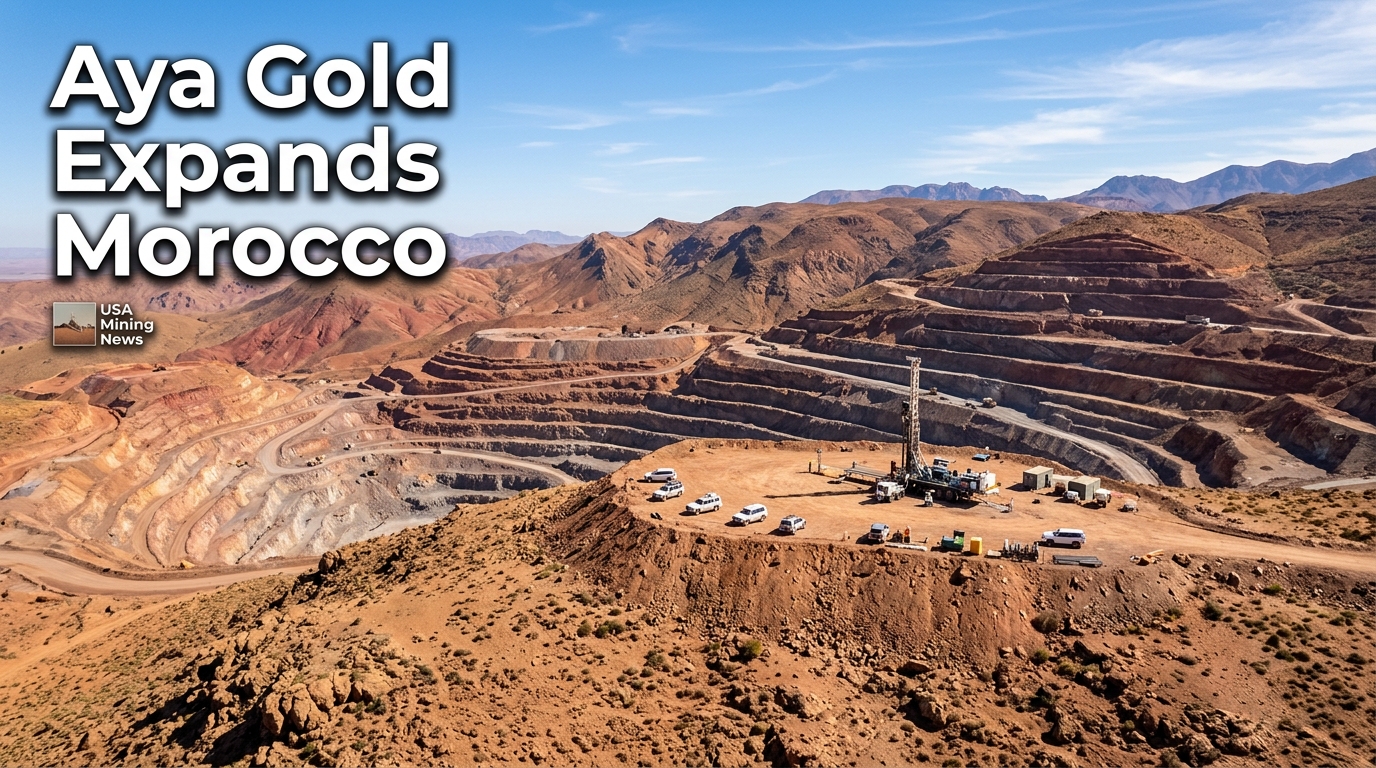
Rabat, Morocco – August 6, 2026 – In a significant strategic maneuver poised to reshape its presence in the burgeoning Moroccan mining sector, Aya Gold & Silver announced today the acquisition of a substantial exploration portfolio. This latest expansion reinforces Aya’s commitment to establishing a dominant position in one of North Africa’s most prospective mineral jurisdictions, significantly enhancing its land holdings and diversifying its exploration focus beyond its current silver-centric operations. The deal, valued at Dh10 million (approximately $1.06 million) through a combination of cash and debt assumption, underscores the company's aggressive growth strategy and its confidence in Morocco's geological potential.
The newly secured portfolio encompasses three distinct projects – Zagora, Agadir-Melloul, and Goulmim – spanning 259 square kilometers across three mining licenses and eighteen exploration permits. This acquisition marks a considerable increase in Aya’s exploration ground in Morocco, boosting its total land package from approximately 732km² to more than 991km², representing a substantial 35.4% increase. This expansion is not merely about acreage; it is a calculated move to consolidate highly prospective mineral belts and build a robust pipeline of exploration opportunities with the potential to unlock future discoveries and support Aya’s next phase of long-term growth.
A Strategic Portfolio Expansion in Morocco
Aya Gold & Silver has been a prominent player in Morocco’s mining landscape, primarily known for its Zgounder silver mine. This acquisition, however, signals a broader vision, aimed at leveraging its "first-mover advantage" to explore for a more diversified suite of commodities. Benoit La Salle, President and CEO of Aya Gold & Silver, articulated the strategic rationale behind this move, stating, “This acquisition reinforces Aya’s first-mover advantage in Morocco and advances our strategy of building one of the largest exploration portfolios in the country.” His remarks highlight the company’s intent to secure district-scale positions early, a strategy often employed by major miners to control vast, underexplored territories that could host multiple deposits.
The transaction’s structure includes not only an upfront consideration but also a forward-looking component designed to align the interests of the sellers with future success. The agreement features milestone payments based on future exploration successes, ensuring that value is created for all parties as the projects advance. Furthermore, a 2% net smelter return (NSR) royalty has been granted to the sellers. An NSR royalty is a common industry mechanism where a percentage of the gross revenue from mineral production, after certain deductions for smelting and refining, is paid to the royalty holder. Aya retains the option to repurchase this royalty under specific conditions, providing flexibility in managing its long-term financial commitments. While the core agreement is in place, certain administrative processes within Morocco regarding the acquisition are still pending finalization, a standard procedure in such large-scale transactions.
Unpacking the New Projects: Diverse Mineral Potential
The three projects forming the core of this acquisition bring distinct geological characteristics and diverse mineral potential, aligning with Aya's strategy to broaden its commodity focus:
- Zagora Project: Spanning 158.6km² across 11 exploration permits, the Zagora project is highlighted for its significant multi-commodity potential. Early indications suggest the presence of a valuable mix of metals, including cobalt, gold, lead, nickel, silver, and zinc. The inclusion of cobalt and nickel is particularly noteworthy, given their status as critical metals essential for the rapidly expanding electric vehicle battery market and renewable energy technologies. Gold, silver, lead, and zinc represent traditional precious and base metals with established global demand.
- Agadir-Melloul Project: Covering 68.5km² and comprising three mining licenses and five exploration permits, the Agadir-Melloul project offers an equally compelling prospect. This area is noted for potential deposits of copper, silver, gold, and, significantly, rare earth elements (REEs). Rare earth elements are a group of seventeen chemically similar metallic elements that are vital components in a wide array of high-tech applications, from consumer electronics and medical devices to defense systems and green energy technologies. Their strategic importance and complex supply chains make any significant discovery of REEs highly valuable.
- Goulmim Project: The smallest of the three at 32km², the Goulmim project is geologically characterized by Lower Ordovician sedimentary rocks alongside Middle Cambrian volcanic sequences. This geological setting is often favorable for the formation of various types of mineral deposits. The project shows potential for lead, silver, copper, and gold, adding further depth to Aya’s base and precious metal exploration targets.
This diversification into a broader range of metals, particularly critical and rare earth elements, positions Aya Gold & Silver to capitalize on shifting global commodity demand trends, moving beyond a singular reliance on silver prices.
Broader Implications for Aya and Morocco's Mining Landscape
This acquisition holds multifaceted implications, both for Aya Gold & Silver and for Morocco's evolving role in the global mining industry. For Aya, it signifies a decisive step towards becoming a multi-commodity explorer and producer. While the company's existing Zgounder mine is a strong silver asset, expanding into base metals like copper, lead, and zinc, and especially critical minerals such as cobalt, nickel, and rare earth elements, offers several strategic advantages:
- Commodity Price Hedging: Diversification helps mitigate risks associated with price fluctuations in a single commodity market.
- Long-Term Growth Drivers: Demand for critical minerals is projected to surge in the coming decades due driven by global decarbonization and technological advancement. Early positioning in these commodities can yield substantial returns.
- Resource Longevity: Building a pipeline of diverse exploration projects ensures a continuous stream of potential future discoveries, essential for the long-term sustainability and growth of any mining company.
From Morocco's perspective, this intensified exploration activity by a reputable international company like Aya Gold & Silver further solidifies its reputation as an attractive and stable mining jurisdiction. The Moroccan government has been actively promoting investment in its mining sector, which traditionally has been a significant producer of phosphates, but also holds untapped potential for a wider range of metallic minerals. Increased exploration can lead to new discoveries, job creation, and economic development in the regions where these projects are located. The geological belts of Morocco, particularly the Anti-Atlas and High Atlas mountains, are known for their metallogenic prospectivity, and systematic exploration by well-funded companies is crucial to unlocking this potential.
The Path Forward: Exploration Strategy and Milestone Payments
With the acquisition complete, Aya Gold & Silver is not wasting time. The company has outlined an ambitious 18–24-month greenfield exploration program to systematically assess the discovery potential of these newly acquired sites. Greenfield exploration, by its nature, involves exploring areas with little to no prior mining or exploration activity, offering higher risk but also higher reward potential for significant new discoveries.
The initial phase of the exploration program will employ a suite of proven, cost-effective techniques:
- Stream Sediment Geochemistry: This method involves collecting sediment samples from stream beds and analyzing them for trace elements, providing broad indications of mineralization upstream.
- Hyperspectral Studies: Utilizing remote sensing technologies, hyperspectral imaging can identify specific mineral assemblages on the Earth's surface, helping target areas with alteration zones typically associated with mineralization.
- Mapping and Prospecting: Traditional geological mapping and on-the-ground prospecting by geologists are fundamental for understanding the local geology, identifying outcrops, and locating mineral occurrences.
Depending on the promising outcomes of these initial stages, Aya plans to escalate the exploration efforts to include more intensive and costly techniques. These subsequent steps may involve detailed geophysics, such as magnetic, electromagnetic, or induced polarization surveys, which can identify subsurface geological structures and potential mineral bodies. Ultimately, successful geophysical and geochemical results would lead to drilling – the definitive method for confirming the presence, grade, and extent of mineral deposits. This phased approach allows Aya to efficiently allocate resources, focusing on the most promising targets as they emerge.
Consolidating a Foothold in a Promising Region
Aya Gold & Silver’s latest acquisition is a bold statement of intent, signaling a strategic pivot towards broader mineral exploration and a firm commitment to its long-term growth trajectory in Morocco. By securing a significantly expanded land package rich in diverse mineral potential, including high-demand critical and rare earth elements, Aya is not merely adding acreage; it is laying the groundwork for future discoveries that could redefine its corporate profile and contribute substantially to the global supply of essential commodities.
As the company embarks on its comprehensive greenfield exploration program over the next two years, the mining industry will be closely watching for initial results. The success of these initiatives could solidify Aya Gold & Silver’s position as a major diversified player in the North African mining landscape, demonstrating the strategic value of early-stage, district-scale exploration in a geopolitically stable and geologically endowed jurisdiction like Morocco. This acquisition is a testament to the enduring allure of frontier exploration and the pursuit of strategic mineral resources critical for the global economy's future.