Pioneering Domestic Iron Production: Hertha Metals Secures $133.65 Million for US Plant
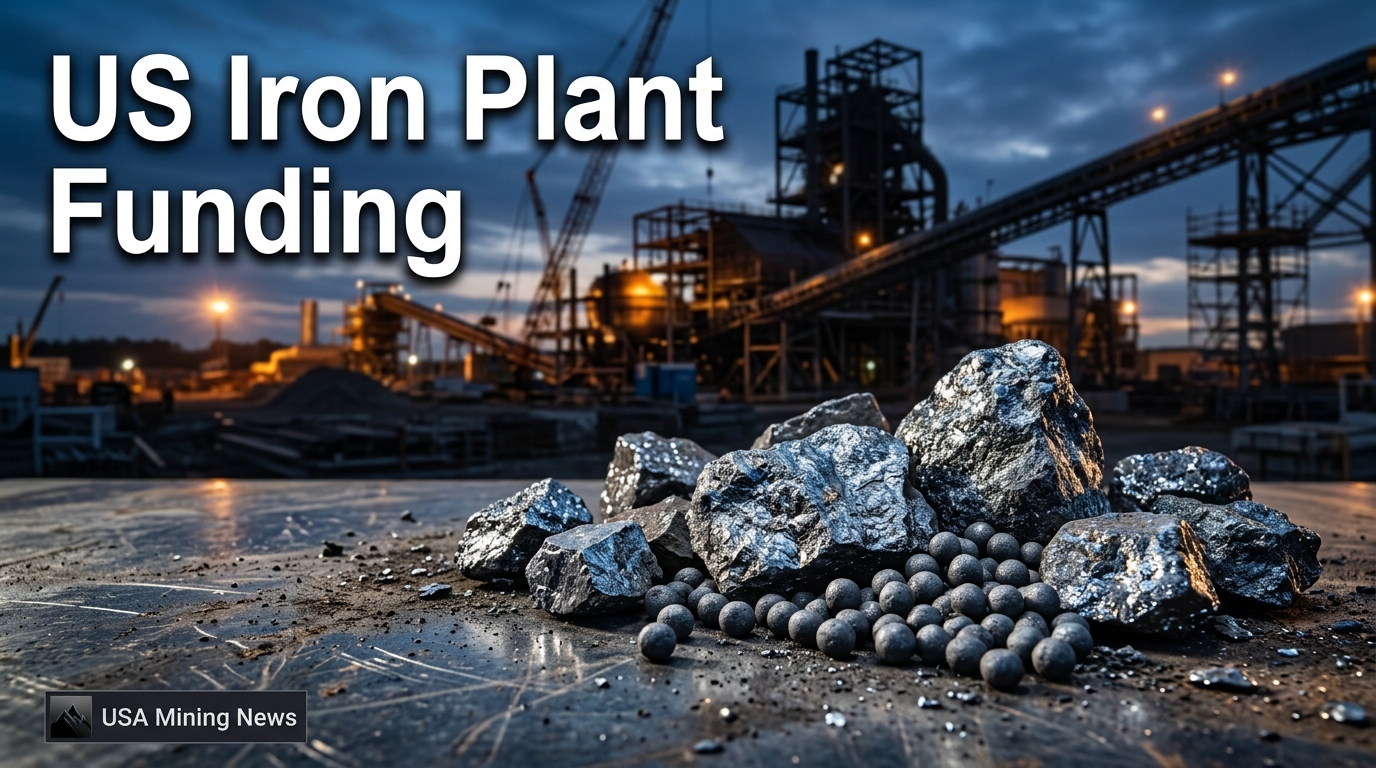
In a significant move poised to bolster the United States' industrial independence and critical mineral supply chains, Hertha Metals announced on September 30, 2026, the successful closure of a Series A funding round, raising an impressive $133.65 million. This substantial capital injection is earmarked for the construction of a state-of-the-art plant in the US, dedicated to producing high-purity iron. This strategic development is aimed squarely at supporting domestic rare-earth magnet manufacturers, a sector vital for numerous advanced technologies and national defense applications. The announcement marks a pivotal step towards securing a critical domestic material supply that the US currently imports almost entirely.
Strategic Investment to Bolster US Industrial Base
The Series A funding round was co-led by prominent venture capital firms Doerr Capital and Khosla Ventures, underscoring private sector confidence in Hertha Metals' innovative approach and market potential. A cornerstone of this funding package is a robust $65 million equity investment from the US Government. This significant government backing was channeled through two crucial initiatives: the Industrial Base Analysis and Sustainment programme and the Economic Defense Unit. The involvement of these governmental bodies highlights a clear national imperative to strengthen the domestic defense industrial base and reduce vulnerabilities associated with foreign supply dependencies for critical materials.
Beyond the lead investors and the US Government, the funding round saw broad participation from a diverse group of strategic and financial partners. These included CEV, Gates Frontier, Niterra SUISO no MORI Fund, Pear Ventures, Siemens Financial Services, and Toyota Ventures. The collective commitment from such a range of investors, from venture capital to corporate strategic funds and government agencies, speaks volumes about the perceived importance and viability of Hertha Metals' mission. For the mining and metals industry, government equity investments of this scale are a strong signal of national priority, often de-risking projects that might otherwise face higher capital hurdles and setting precedents for future public-private partnerships in strategic sectors.
The Hertha Chalyx Facility: A New Hub for High-Purity Iron
The newly secured capital will directly fund the development and construction of a proposed facility known as Hertha Chalyx. This plant is engineered to produce 10,000 tonnes of iron annually, segmented into both steel-grade and, crucially, magnet-grade iron. The focus on magnet-grade iron addresses a critical bottleneck in the domestic supply chain for neodymium iron boron (NdFeB) magnets. These powerful permanent magnets are indispensable components in a wide array of modern technologies, including electric vehicles (EVs), advanced aerospace platforms, sophisticated radar systems, and energy-intensive data centers.
As Hertha Metals CEO and founder Laureen Meroueh emphatically stated, "Every electric vehicle, aerospace platform, radar system and data centre depends on domestic iron and magnet feedstock suppliers. Hertha Chalyx closes that gap. We are building the supply chain this country needs, and we are doing it by providing a domestic cost-competitive option for manufacturers while unlocking safer and cleaner production." This statement underscores the profound impact Hertha Chalyx is expected to have on US manufacturing and national security. The United States currently relies on imports for nearly all of the high-purity iron required for these magnets, which are composed of approximately 70% iron by weight. Establishing a domestic source for this fundamental material is thus not just an economic opportunity but a strategic imperative to enhance national resilience and technological leadership.
Flex-HERS Process: Innovation in Iron Production
At the core of Hertha Metals' strategy is its proprietary Flex-HERS process, an innovative approach designed to revolutionize iron production. This technology stands in stark contrast to the traditional multi-step blast furnace method, which has been the industry standard for centuries. The Flex-HERS process replaces this complex sequence with a single continuous reactor, streamlining operations and significantly reducing the operational footprint.
A key advantage of the Flex-HERS process is its flexibility in reductant inputs. It can utilize either natural gas or hydrogen, offering adaptability to different energy infrastructures and future energy transitions. Furthermore, the process is designed to accept any grade of iron ore, providing significant flexibility in feedstock sourcing and potentially lowering raw material costs. This versatility is particularly appealing in an era of fluctuating commodity prices and increasing demands for resource efficiency.
Hertha Metals makes compelling claims regarding the economic and environmental benefits of its technology. The company asserts that the Flex-HERS process can lower production costs by 25% compared to traditional blast furnaces. This cost advantage, if proven at scale, could make domestically produced iron highly competitive in global markets, directly addressing Meroueh's pledge for a "cost-competitive option." On the environmental front, the process is projected to reduce emissions by 50% when using natural gas as a reductant. More significantly, if hydrogen is employed, emissions could be reduced by up to 98%. This dramatic reduction in carbon footprint aligns perfectly with global sustainability goals and the increasing pressure on the mining and metals industry to decarbonize its operations, offering a cleaner pathway for essential material production.
From Demonstration to Commercial Scale: The Path Ahead
Hertha Metals is not starting from scratch; the company currently operates a 360-tonne-per-year demonstration plant in Conroe, Texas. This facility has been crucial for proving the efficacy and scalability of the Flex-HERS process in a real-world setting. The successful operation of this pilot plant has undoubtedly played a role in securing the substantial Series A funding. Currently, Hertha Metals is engaged in critical supplier qualification efforts with major US rare-earth magnet producers, a necessary step to integrate its future output seamlessly into the domestic manufacturing ecosystem.
With the funding now secured, the next major milestone is imminent. Construction of the Hertha Chalyx plant is scheduled to commence later this year, relative to the September 30, 2026 announcement date. The rapid progression from funding to ground-breaking underscores the urgency and strategic importance placed on bringing this domestic iron production capacity online. The successful ramp-up of Hertha Chalyx will not only validate the Flex-HERS technology at commercial scale but also provide a tangible blueprint for other innovative material production projects in the US.
Broader Implications for the US Mining and Manufacturing Landscape
The establishment of Hertha Chalyx represents more than just a new plant; it is a significant step towards reinforcing the resilience and competitiveness of the US industrial base. By providing a reliable, domestic source of high-purity iron, the project directly addresses vulnerabilities in global supply chains, particularly those reliant on geopolitical adversaries. This aligns with broader US government initiatives to reshore critical manufacturing capabilities and secure access to essential materials.
Furthermore, the emphasis on cost-competitive and environmentally cleaner production methods positions the US as a leader in sustainable industrial practices. The Flex-HERS process, with its potential for significant emissions reductions, offers a model for how the mining and metals sector can evolve to meet stringent environmental regulations while still delivering essential raw materials. This development could spur further innovation and investment in green mining and metallurgy technologies across the country. The project also promises economic benefits, including job creation in construction, manufacturing, and related support industries, contributing to regional economic development in the plant's eventual location.
Conclusion
Hertha Metals' successful Series A funding round and the impending construction of the Hertha Chalyx plant mark a landmark achievement for the US mining and manufacturing sectors. By fusing advanced technology with strategic national objectives, Hertha Metals is poised to deliver a critical domestic supply of high-purity iron, essential for the production of rare-earth magnets that power everything from electric vehicles to defense systems. This initiative exemplifies the convergence of innovation, economic strategy, and national security, setting a precedent for a more resilient, sustainable, and independent industrial future for the United States. As construction begins, the industry will watch closely as Hertha Metals moves from pilot to commercial scale, potentially reshaping the landscape of domestic critical material production.