Direct Lithium Extraction: Transforming Oilfield Wastewater into a Critical Resource Amidst Soaring Demand
The global push towards electrification and sustainable energy is undeniably fueled by lithium, a critical component in batteries powering everything from electric vehicles to grid storage solutions. As the energy transition gains momentum, the demand for this light metal is projected to grow fourfold by 2035. However, the established methods of lithium extraction, predominantly hard rock mining and conventional brine operations, are increasingly challenged by slow project development timelines and significant capital intensity. This widening supply-demand gap is compelling the industry to look beyond traditional sources and embrace innovative technologies, most notably Direct Lithium Extraction (DLE), to secure future supply.
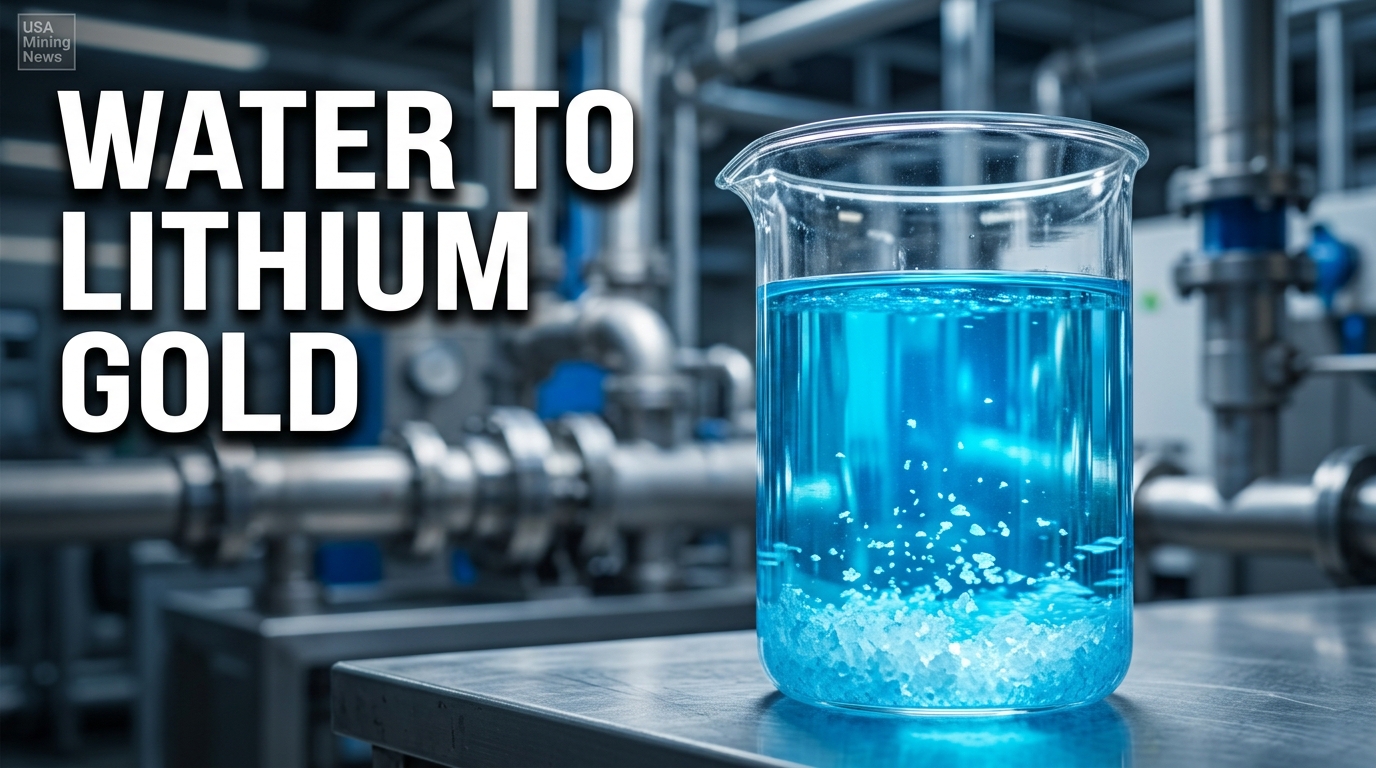
DLE technologies represent a paradigm shift in lithium production, transforming what were once considered waste streams into valuable resources. Unconventional sources such as geothermal brines, seawater, and, critically, oilfield wastewater, contain varying but significant quantities of lithium. While evaporation ponds have been employed for nearly a century to extract lithium from these brines, the process is notoriously slow, typically requiring 12 to 18 months for concentration. DLE, by contrast, can separate lithium from brines in a matter of hours or days, offering a dramatically faster route to market.
The Imperative for Innovative Lithium Sourcing
The urgency surrounding lithium supply is palpable. Traditional lithium mining projects often face protracted permitting processes, environmental challenges, and require substantial upfront investment, hindering the industry's ability to scale up fast enough to meet the escalating demand. This bottleneck has opened the door for DLE as a viable and increasingly attractive alternative.
For major oil and gas companies like Chevron, Equinor, and SLB, DLE presents a compelling opportunity to extract value from existing operations by monetizing their produced wastewater streams. Beyond the immediate revenue potential, this also aligns with broader environmental, social, and governance (ESG) objectives by reducing waste and contributing to a cleaner energy economy. Similarly, for geothermal energy producers, DLE can be an integratable step within their existing operations, allowing for lithium recovery before the necessary reinjection of geothermal fluids back into the earth.
The scale of this opportunity is particularly striking in regions with extensive oil and gas operations. According to some estimates, the wastewater generated from Pennsylvania’s Marcellus Shale operations alone could theoretically meet 38–40% of total U.S. lithium demand. While achieving a 100% yield from such a vast resource remains an unrealistic benchmark, the sheer volume underscores the immense potential. However, significant challenges remain. As Paw Juul, Chief Operating Officer at Lithium Harvest, noted, "In principle there is no limit to this opportunity… However, there is one major pain point: it costs significant amounts of money." This highlights that while the technical feasibility is advancing, the economic viability and scalability of DLE technologies are still under intense scrutiny and development.
Understanding Direct Lithium Extraction Technologies
DLE encompasses a range of technologies designed to selectively extract lithium ions from complex brine solutions. These methods diverge significantly from traditional evaporation ponds, primarily by avoiding the expansive land footprint and lengthy processing times. The two primary DLE methods currently applied to lithium-containing brines are solvent extraction and ion adsorption or exchange. Beyond these, a developing area is membrane technology, alongside other methods such as electrochemical techniques and chemical precipitation, though many remain at laboratory scale.
Solvent Extraction: A Liquid-to-Liquid Process
Solvent extraction is a DLE method that involves a liquid-to-liquid transfer mechanism. Hasan Nikkhah, a research assistant at the University of Connecticut, explains the process: "Brine encounters the organic solvent, and the lithium is transferred to it from the brine. Subsequently, we strip the organic solvent and extract lithium from it."
- Selective Interaction: The organic solvent contains a specialized extractant designed to selectively interact with lithium ions over other dissolved materials within the brine. This selectivity is crucial for achieving high purity.
- Transfer and Purification: Once the lithium moves into the organic phase, the product undergoes a 'scrubbing' process to improve its purity, removing co-extracted impurities.
- Stripping and Regeneration: The purified organic phase is then 'stripped' to release the concentrated lithium solution. A key advantage of this method is that the organic phase can be regenerated and recycled, reducing operational costs and material consumption.
Ion Adsorption/Exchange: A Solid-to-Liquid Approach
Ion adsorption or exchange represents the second primary DLE method, characterized by a liquid-to-solid transfer of lithium ions. As Nikkhah details, "In adsorption, we use solid materials to capture lithium from the brine for the adsorption, and after we capture that lithium, we regenerate the material (the solvent to extract that lithium)."
- Selective Binding: In this process, the raw brine flows over specialized solid materials, typically resins or aluminum/magnesium-based sorbents, which possess active sites that selectively bind with lithium ions.
- Adsorption and Desorption: Once the solid material approaches its capacity for lithium, the process transitions to the desorption stage. The material is then run through either fresh water or a chemical/acid solution, which regenerates the sorbent and releases the lithium in a more concentrated solution, ready for further refining.
- Adsorption vs. Ion Exchange: Nikkhah clarifies that while both share common design concepts and operating cycles, the underlying mechanism differs. In adsorption, transfer occurs via weak physical forces sticking molecules (charged or uncharged) onto a surface. In ion exchange, a chemical reaction takes place where ions swap places to maintain electrical charge balance, indicating a stronger, more specific interaction.
Emerging DLE Frontiers: Membrane Technology
Beyond traditional solvent extraction and ion adsorption, membrane technology is a developing, albeit nascent, area of significant interest for DLE. These advanced membranes act as highly selective filters, designed to concentrate lithium ions from brines.
Membrane processes are generally categorized into two primary groups:
- High Pressure-Assisted Membranes: These include widely recognized separation techniques such as microfiltration, ultrafiltration, nanofiltration, and reverse osmosis. Notably, these methods already feature at various stages within existing adsorption processes, providing initial impurity removal or pre-concentration.
- Potential-Assisted Membrane Processes: This category encompasses technologies like electrodialysis, bipolar membranes, and capacitive deionization, which leverage electrical potential to drive ion separation.
Dr. Burcu Beykal, an assistant professor of chemical and biomolecular engineering at the University of Connecticut, notes the transformative potential of this field: "membrane technology could make a huge difference in terms of like cost effectiveness." However, she also prudently adds that "the technology is not quite there yet," indicating that further research and development are required for widespread commercial application.
Pioneering Commercial Deployment and Future Prospects
While various DLE methods like electrochemical techniques (e.g., electrolysis, which could drastically reduce the need for chemical reagents) and chemical precipitation are also being explored, current commercial deployments primarily leverage ion adsorption. A significant milestone for the US lithium supply chain occurred in February with the opening of the country’s first commercial lithium extraction plant specifically designed to recover lithium from oilfield brine. Operated by Element3 in the Permian Basin, this facility utilizes ion adsorption technology, marking a crucial step towards validating the commercial viability of DLE for unconventional sources.
The rapid development and deployment of DLE technologies underscore a critical shift in the global lithium landscape. By offering significantly faster production timelines compared to conventional evaporative methods and turning a liabilities (wastewater) into assets, DLE holds the potential to de-risk future lithium supply. While costs remain a primary hurdle, ongoing research, particularly in areas like electrochemical methods that promise reduced chemical reagent usage, is poised to enhance the economic and environmental profiles of these innovative extraction techniques. As the world races to meet escalating lithium demand, DLE from unconventional brines stands as a pivotal solution, promising to diversify supply, reduce environmental footprints, and redefine resource utilization within the mining and energy sectors.