The global mining industry stands at a pivotal juncture, grappling with increasing operational complexities, the imperative for enhanced worker safety, and relentless pressure to improve efficiency and sustainability. Against this backdrop, the integration of robotics and automation is no longer a futuristic concept but a tangible reality actively shaping the sector's trajectory. A recent, forward-looking discussion on September 2, 2026, featuring prominent voices in the field – mining engineering professor Steve Schafrik and Brad Baillio from leading equipment manufacturer Epiroc – illuminated the expanding role of these advanced technologies in crafting the "mine of the future." Their insights underscore a critical evolutionary phase, where autonomous systems are becoming indispensable tools for achieving safer, more productive, and ultimately more profitable mining operations.
For mining professionals, investors, and stakeholders, understanding the nuances of this technological revolution is paramount. The shift towards automation promises to redefine everything from daily operational workflows to long-term strategic planning, impacting labor dynamics, capital expenditure, and environmental stewardship. As the industry looks ahead, the dialogue between academic research and industrial implementation, as exemplified by Schafrik and Baillio, provides a vital roadmap for navigating this transformative landscape.
Pioneering Voices in Mining Automation
The insights driving the conversation around robotics and automation in mining are often forged at the intersection of rigorous academic inquiry and practical industrial application. Professor Steve Schafrik, a respected figure in mining engineering academia, brings a foundational understanding of geological principles, extraction methodologies, and the inherent challenges of the mining environment. His research and educational contributions are instrumental in conceptualizing how cutting-edge technology can be effectively integrated into complex mining systems. Academic perspectives like Schafrik's provide the theoretical framework and innovative problem-solving approaches necessary to push the boundaries of what is technologically feasible in mining.
Complementing this academic foresight is the robust industrial expertise of Brad Baillio, representing Epiroc, a global productivity partner for the mining and infrastructure industries. Epiroc is renowned for developing and deploying advanced equipment, drilling solutions, and service offerings, with a strong focus on automation and digitalization. Baillio's involvement signifies the industry's commitment to translating theoretical advancements into tangible, deployable solutions. His perspective offers crucial insights into the practicalities of implementation, the development cycle of automated systems, and the strategic vision of major equipment providers in meeting the evolving demands of their clients. The synergy between Schafrik's academic rigor and Baillio's industry-specific knowledge provides a comprehensive outlook on the current state and future potential of mining robotics, invaluable for any serious observer of the sector.
Precision and Safety: The Role of Robotic Mapping
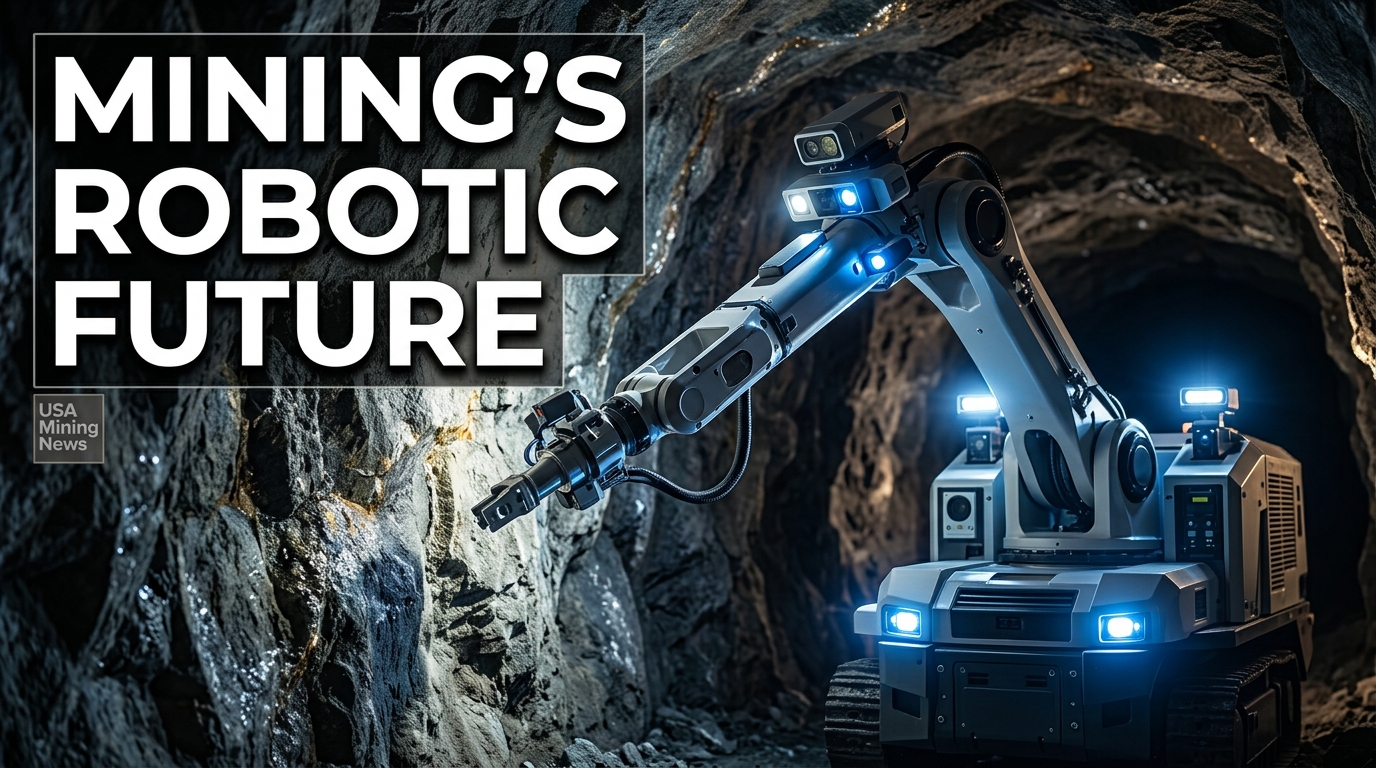
One of the most immediate and impactful applications of robotics highlighted in the discussion is in underground mapping, leveraging both terrestrial and aerial robotic platforms. This specific application exemplifies the dual benefits of enhanced safety and improved data quality that automation brings to the industry. Traditionally, underground mapping has been a labor-intensive and often hazardous task, requiring human surveyors to navigate complex, potentially unstable, and sometimes poorly ventilated environments. The accuracy and frequency of these surveys could be limited by human access restrictions, lighting conditions, and the inherent risks of working in active mining areas.
With the advent of terrestrial robots, equipped with sophisticated LiDAR (Light Detection and Ranging) systems, photogrammetry tools, and inertial navigation systems, mines can now achieve highly detailed, three-dimensional scans of underground workings. These ground-based robots can traverse challenging terrain, entering areas deemed too dangerous for human personnel, such as freshly blasted headings or unsupported ground. The data collected is far more precise and comprehensive than traditional methods, providing engineers with accurate models of tunnels, stopes, and development headings. This granular detail is crucial for optimizing blast designs, planning ventilation systems, assessing ground stability, and ensuring the efficient placement of support structures.
Aerial robotics, specifically drones adapted for underground navigation, further augment these capabilities. These drones can access vertical shafts, raises, and areas with extremely limited human entry, capturing overhead views and difficult-to-reach sections. Equipped with similar sensor packages, they provide rapid assessments of geological structures, rock mass conditions, and even identify potential hazards such as loose ground or water ingress. The combination of terrestrial and aerial robotic mapping dramatically reduces the time required for surveys, enables more frequent updates, and critically, removes human workers from high-risk zones, thereby significantly enhancing overall mine safety. This real-time, high-fidelity data empowers mine operators to make more informed and proactive decisions, optimizing operational efficiency and mitigating risks more effectively than ever before.
Transforming Operations: Safety and Productivity Gains
The promise of robotics and automation extends far beyond mapping, fundamentally reshaping how mining operations are conducted to achieve both safer and more productive outcomes. The core principle driving these advancements is the ability to remove human personnel from direct exposure to hazardous environments while simultaneously enhancing the consistency, precision, and endurance of operational tasks.
- Enhanced Safety: The most compelling argument for automation in mining is its direct impact on worker safety. By deploying autonomous drills, loaders, haul trucks, and support equipment, mining companies can significantly reduce the number of personnel exposed to the inherent dangers of underground and open-pit operations. This includes protection from rock falls, vehicle collisions, exposure to dust and fumes, and the risks associated with working in remote or confined spaces. Autonomous systems operate with consistent precision, eliminating human errors due to fatigue, inattention, or misjudgment, which are common causes of accidents. Furthermore, during blasting sequences or in areas with unstable ground, robots can perform necessary tasks without endangering human lives, allowing personnel to monitor operations safely from remote control centers.
- Increased Productivity: Robotics enables a level of operational efficiency previously unattainable. Unlike human-operated equipment, autonomous machines can operate continuously, 24 hours a day, seven days a week, without breaks for shift changes, lunch, or personal reasons. This continuous operation leads to higher utilization rates for expensive capital equipment and a more consistent flow of material. Autonomous systems can also follow optimized paths and operational sequences with unwavering accuracy, leading to more efficient drilling patterns, optimized loading cycles, and reduced fuel consumption. The precision of robotic drilling, for example, can result in more accurate blast holes, which in turn leads to better fragmentation, reduced secondary breakage, and improved mill throughput. Moreover, the vast amounts of data generated by automated equipment can be analyzed to identify bottlenecks, predict maintenance needs, and further fine-tune operations, moving towards a truly data-driven, optimized mining process. This holistic approach to productivity allows mines to extract resources more efficiently, reduce waste, and improve overall economic viability, particularly as ore grades decline and operational costs continue to climb.
Epiroc and the Ecosystem of Automation
Central to the widespread adoption and successful implementation of mining automation are global leaders like Epiroc. As a premier productivity partner for the mining and infrastructure industries, Epiroc stands at the forefront of designing, manufacturing, and servicing equipment that embodies the principles of safety, productivity, and sustainability through technological innovation. Brad Baillio's role within Epiroc underscores the company's strategic commitment to integrating advanced robotics and automation into its product portfolio.
Epiroc's offerings span a comprehensive range of solutions, from autonomous drill rigs and intelligent loading equipment to advanced fleet management systems and remote operating centers. These technologies are not merely individual machines but are designed to function as interconnected components within a larger, digitally integrated ecosystem. For example, Epiroc's autonomous drill rigs can execute complex drilling patterns with extreme precision, while its automated loaders and haulers transport material along optimized routes, all coordinated by sophisticated software platforms. This integration allows for seamless data flow, enabling real-time monitoring, predictive maintenance, and adaptive control, which are vital for maximizing operational uptime and efficiency.
The broader ecosystem of mining automation also involves a complex network of technology providers, software developers, sensor manufacturers, and telecommunications companies. Collaborations across these sectors are essential for developing robust communication networks (such as 5G underground), advanced AI algorithms for decision-making, and sophisticated data analytics platforms. Companies like Epiroc play a crucial role not only in manufacturing the hardware but also in pioneering the software and connectivity solutions that enable these autonomous systems to operate effectively and safely in challenging mining environments. Their continuous investment in research and development is key to driving the industry forward, ensuring that the "mine of the future" becomes a widespread reality rather than an isolated experiment.
Building the Mine of the Future: Beyond Current Applications
The discussion between Professor Schafrik and Brad Baillio provides a glimpse into a future where the "mine" is fundamentally reimagined. This vision extends beyond current applications of individual automated machines to a holistic, integrated, and intelligent operational paradigm. The mine of the future is characterized by several interconnected elements:
- Fully Integrated Autonomous Fleets: The objective is to achieve seamless, continuous operation where drilling, loading, hauling, and even auxiliary tasks like ground support installation are performed by a fully synchronized fleet of autonomous vehicles. These fleets will communicate with each other and with a central control system, optimizing task allocation and resource utilization in real-time, minimizing bottlenecks, and maximizing throughput.
- AI-Driven Decision-Making: Artificial intelligence and machine learning will move beyond predictive analytics to prescriptive decision-making. AI algorithms will process vast amounts of data from sensors, geological models, and operational metrics to recommend optimal strategies for everything from blast design to equipment maintenance, anticipating challenges before they arise.
- Digital Twins and Real-time Simulation: Mines will operate with comprehensive "digital twins" – virtual replicas of the physical mine that are continuously updated with real-time data. These digital twins will allow operators to simulate various scenarios, test operational changes, and predict outcomes before implementing them in the physical mine, significantly reducing risks and optimizing performance.
- Remote Operating Centers: The central nervous system of the mine of the future will be sophisticated remote operating centers, located miles away from the actual mining site. Skilled operators and engineers will monitor, manage, and troubleshoot entire fleets and processes from a safe, comfortable environment, enhancing work-life balance and attracting a new generation of talent to the industry.
- Sustainable Mining Practices: Automation contributes significantly to environmental sustainability. Optimized operations lead to reduced energy consumption and lower greenhouse gas emissions per ton of material extracted. Precision mining also minimizes waste rock generation and reduces the overall environmental footprint of mining activities, aligning with global efforts towards responsible resource extraction.
This comprehensive vision necessitates a re-skilling of the mining workforce, shifting away from manual machine operation towards roles focused on data analysis, system supervision, maintenance of complex robotics, and software engineering. The mine of the future is not simply about replacing human labor but about evolving the nature of work within the industry, fostering innovation, and creating safer, more intellectually stimulating roles for a highly skilled workforce.
Conclusion: A Trajectory Towards Intelligent Mining
The discussion between Professor Steve Schafrik and Brad Baillio of Epiroc on September 2, 2026, serves as a powerful affirmation of the mining industry's irreversible trajectory towards intelligent, automated operations. The expanding role of robotics, vividly illustrated by its applications in advanced underground mapping, is fundamentally redefining the benchmarks for safety and productivity in resource extraction. By mitigating human exposure to hazardous environments and enabling continuous, optimized operational flows, these technologies are addressing long-standing industry challenges head-on.
As companies like Epiroc continue to innovate and integrate sophisticated robotic systems, the conceptual "mine of the future" is rapidly transitioning into a tangible reality. This future promises not only economic resilience through enhanced efficiency and reduced costs but also a significant improvement in the industry's social license to operate, driven by superior safety records and a reduced environmental footprint. For investors, strategic planners, and professionals across the mining value chain, embracing this technological evolution is not merely an option but an imperative for sustained competitiveness and responsible resource stewardship in the decades to come.