Zambia’s Copper Future: KCM Awards $498 Million Contract for Tailings Recovery Plant
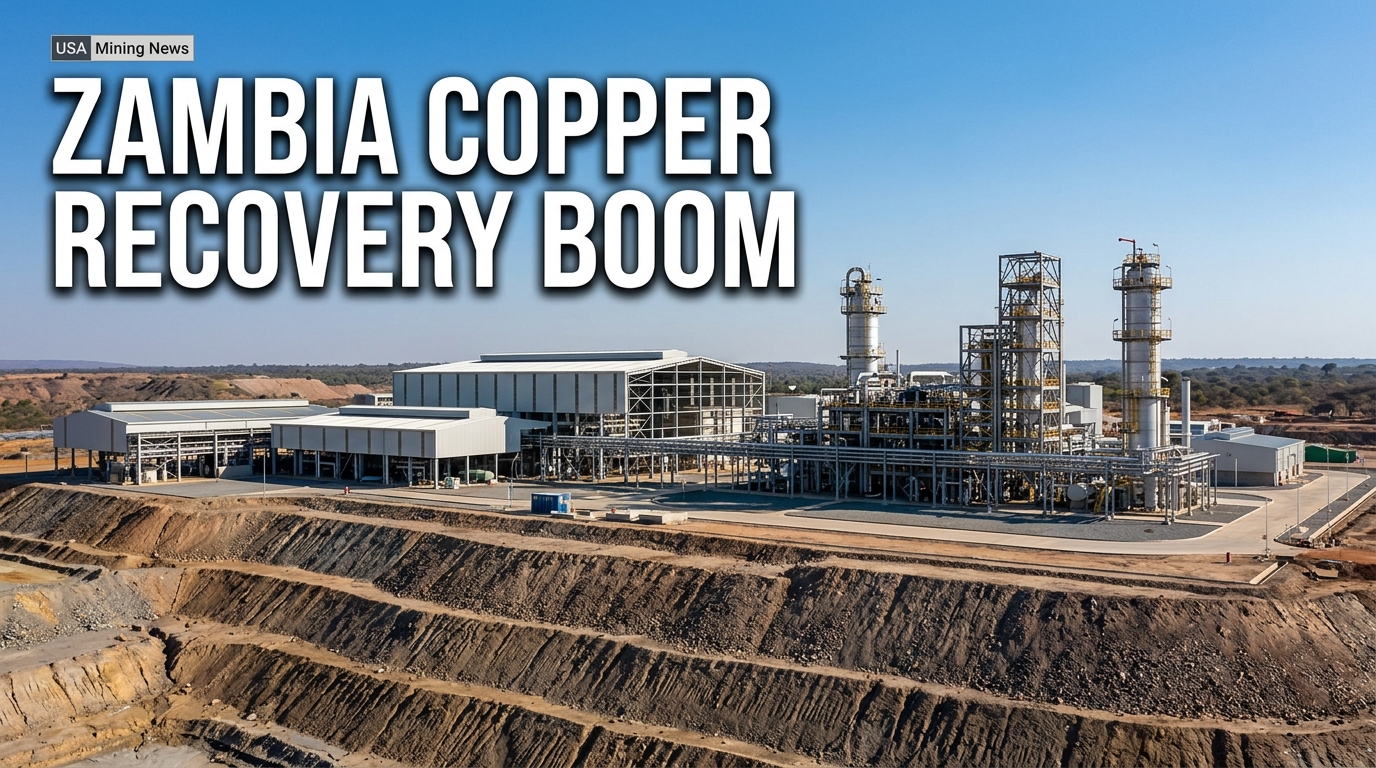
In a significant development for Zambia’s pivotal mining sector and the global copper market, Konkola Copper Mines (KCM), a subsidiary of the diversified natural resources group Vedanta, officially announced a substantial contract award to China’s NERIN Engineering. The agreement, valued at $498 million (K9.78 trillion), was reported on September 18, 2026, and is set to fund the construction and installation of a cutting-edge copper recovery plant at KCM’s operational hub in Chingola, located within Zambia’s mineral-rich copperbelt region.
This strategic investment is poised to make a considerable impact on KCM's production profile and contribute directly to Zambia's national economic objectives. The new facility, specifically engineered to process existing mine tailings, represents a crucial step in KCM’s broader expansion strategy, aiming to significantly elevate its position as a major copper producer in Africa.
A Strategic Investment in Tailings Re-processing
The core of this multi-million-dollar contract lies in its innovative approach to resource recovery. Rather than focusing solely on new ore bodies, the plant will efficiently re-process mine tailings—the residual materials left over from historical mining operations. This method holds substantial appeal for the modern mining industry, offering a dual benefit of environmental remediation by reducing legacy waste footprints, combined with the economic advantage of extracting valuable minerals from previously discarded materials.
NERIN Engineering’s comprehensive mandate under the agreement encompasses the entire lifecycle of the project: design, engineering, procurement, construction, and installation. Beyond these initial phases, the Chinese firm will also be responsible for commissioning the plant, conducting rigorous performance testing to ensure operational efficiency, and providing essential training support for KCM personnel, thereby guaranteeing smooth and sustained operations. The plant is engineered to add a substantial 70,000 tonnes per annum (tpa) to Konkola’s copper production capacity. This figure is particularly noteworthy when considering KCM’s reported output of approximately 80,000 tpa in 2025, highlighting the significant incremental value expected from this single facility. The emphasis on tailings re-processing is a testament to the industry's evolving focus on sustainability and resource maximization, often providing a faster and potentially more cost-effective pathway to increased production compared to developing entirely new greenfield operations.
Konkola Copper Mines' Ambitious Growth Trajectory
The $498 million investment in the copper recovery plant is a cornerstone of Konkola Copper Mines' ambitious long-term expansion strategy. The company has set a formidable target to dramatically escalate its total copper output from an estimated 80,000 tpa in 2025 to an impressive 300,000 tpa by 2031. This nearly fourfold increase within a six-year timeframe positions KCM as a key player in the continent's copper production landscape, a target that was highlighted by the Ecofin Agency.
While the new tailings reprocessing plant is anticipated to be a major contributor to this growth, it forms part of a broader, multi-faceted strategy. Another pivotal element is the ongoing development of the Konkola Deep underground project. This deep mining initiative aims to access high-grade ore bodies situated at greater depths, promising significant long-term production potential. Although preparatory work for Konkola Deep has commenced, the project has reportedly faced delays in securing its necessary financing, underscoring the complexities inherent in funding large-scale, capital-intensive mining developments. KCM’s strategy of combining immediate gains from tailings with long-term primary resource development reflects a pragmatic approach to achieving its aggressive production targets.
Zambia's National Copper Vision: A 3-Million-Tonne Goal
KCM’s substantial investment and expansion initiatives are not isolated corporate endeavors; they align seamlessly with Zambia’s ambitious national objective to significantly boost its copper production. The Zambian government has articulated a clear vision to increase national copper output to an extraordinary three million tonnes by 2031, a monumental increase from the projected 890,000 tonnes in 2025. This audacious goal reflects copper’s enduring and critical role in Zambia’s economy, serving as a primary source of export revenue, foreign exchange, and employment opportunities across the nation.
Globally, copper is recognized as a foundational mineral for the accelerating energy transition. Its indispensable properties make it integral to the expansion of power grids, the deployment of renewable energy technologies, and the proliferation of electric vehicles. As industrial nations and emerging economies alike pivot towards decarbonization, the demand for copper is projected to experience robust growth. Zambia, with its vast and largely untapped copper reserves, is strategically positioned to become a central supplier in this evolving global market. KCM’s expansion efforts, therefore, are not merely contributing to corporate profit but are also integral to Zambia’s national economic prosperity and its crucial role in supplying a commodity vital for the planet’s green future.
Financing Challenges and Market Dynamics
Despite the promising strategic outlook, KCM’s journey toward its ambitious production targets has encountered financial headwinds. The source material indicates that CopperTech Metals, identified as an operating company, had initially intended to bolster its expansion efforts through capital market fundraising. A proposed initial public offering (IPO) on the New York Stock Exchange, targeting up to $423.5 million, was regrettably postponed in June due to prevailing market volatility. This decision highlights the sensitivity of large-scale project financing to broader macroeconomic conditions and investor sentiment, particularly within the inherently capital-intensive mining sector.
Such delays in securing external capital can have ripple effects on project timelines and the overall pace of strategic execution. It is crucial to note that the $498 million contract with NERIN Engineering is explicitly stated as "not yet effective." Its full activation is contingent upon the fulfillment of specific conditions, most notably the payment of an advance to the contractor. This standard contractual clause in major Engineering, Procurement, and Construction (EPC) projects underscores the necessity of upfront capital to initiate mobilization and procurement activities. The ultimate success of KCM's ambitious 2031 production target will undoubtedly hinge on its ability to adeptly navigate these financial complexities and ensure the timely funding for both the new tailings plant and other critical projects such as Konkola Deep.
The Broader Industry Implications
This development at Konkola Copper Mines offers several profound insights for the global mining industry. Firstly, the emphasis on tailings reprocessing reinforces the burgeoning trend towards enhanced resource efficiency and proactive environmental stewardship. Modern mining practices increasingly view historical waste streams not as liabilities, but as valuable secondary resources, thereby extending the economic life of existing operations and demonstrating a commitment to more sustainable practices—a factor of growing importance for investors, regulators, and local communities.
Secondly, the engagement of China's NERIN Engineering, a prominent and capable entity in the global EPC landscape, underscores the continued and significant role that Chinese engineering firms play in the development of critical infrastructure projects across Africa and other emerging markets. Their expertise, often coupled with competitive financing structures, frequently proves instrumental in realizing large-scale mining projects that might otherwise struggle to attract capital.
Thirdly, the ambitious production targets articulated by both KCM and the Zambian government signal a strong, long-term bullish outlook for copper. As a fundamental commodity for the global energy transition, any project that promises to add substantial new copper supply is closely scrutinized by commodity markets and investors. The successful execution of such large-scale expansions within the Zambian copperbelt will be pivotal in determining whether global supply can adequately meet the anticipated surge in demand driven by worldwide decarbonization efforts.
Lastly, the challenges faced by CopperTech Metals in securing capital market funding, as evidenced by the postponed IPO, serve as a potent reminder of the inherent risks and financing complexities within the mining sector. Even projects boasting robust fundamentals and significant strategic importance can be impacted by broader macroeconomic instability and fluctuating investor sentiment, thereby necessitating diverse and resilient funding strategies.
Outlook and Next Steps
The immediate imperative for Konkola Copper Mines will be to fulfill the prerequisites necessary to render the $498 million contract with NERIN Engineering fully effective, particularly the crucial advance payment. Once this contractual milestone is achieved, the construction and installation phase for the new copper recovery plant can commence in earnest, setting the stage for the projected 70,000 tpa increase in copper output. Given the 2031 target, KCM will undoubtedly be aiming for a relatively swift construction and commissioning timeline, likely within the next three to four years, to ensure the plant contributes meaningfully to its ambitious production goals.
Concurrently, KCM will need to intensify its efforts to secure stable and sufficient financing for the Konkola Deep underground project, which remains an indispensable component of its strategy to reach the 300,000 tpa target. This will likely involve exploring diversified funding avenues, potentially including traditional debt financing, forging strategic partnerships, or re-evaluating public market conditions for future equity offerings. The successful execution of these complex initiatives will not only solidify KCM’s standing as a leading copper producer but also provide a significant impetus for Zambia’s national economic growth and its strategic contribution to the global supply chain of a vital transition metal. The global mining community will continue to monitor developments in Zambia’s copperbelt closely as these ambitious plans progress.