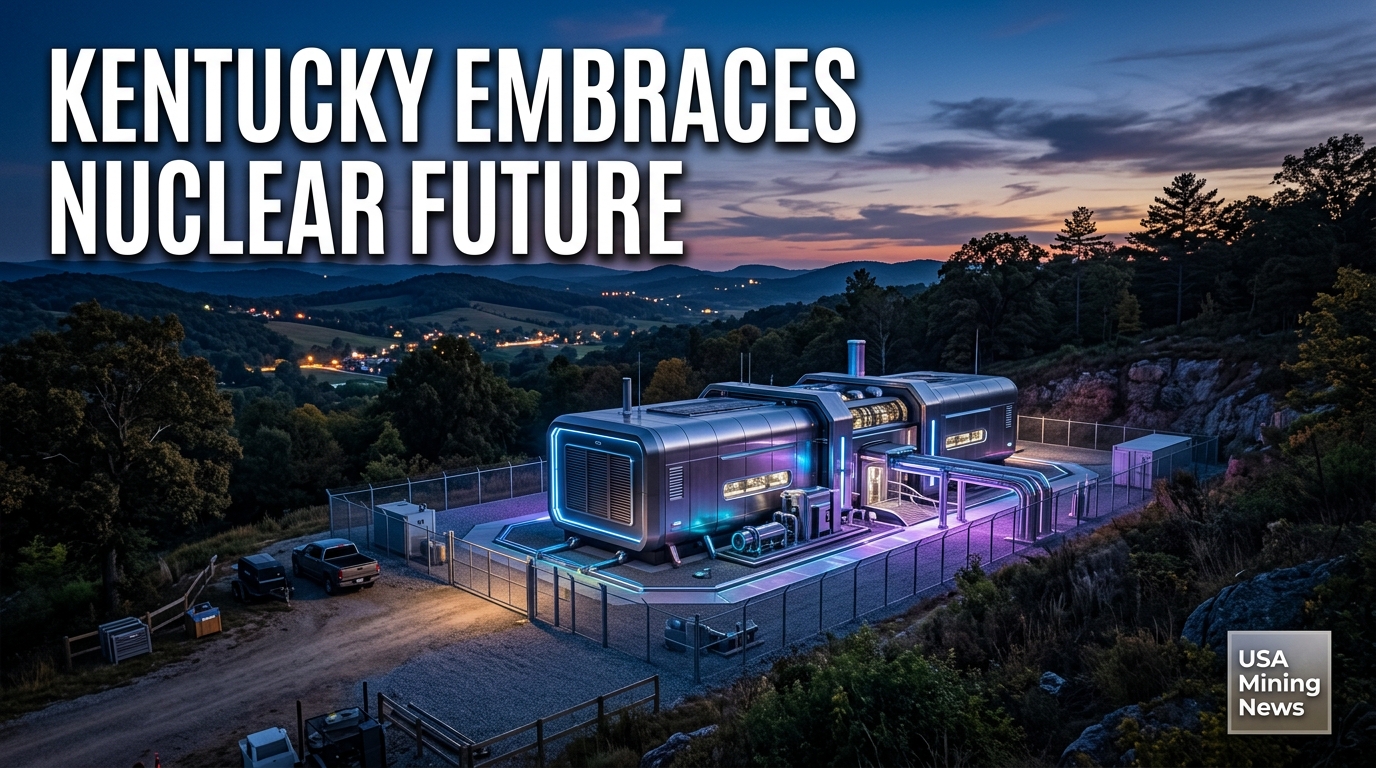
Kentucky Forges Path to Nuclear Future with SMR Collaboration
In a significant development for the energy sector, Louisville Gas and Electric Company (LG&E) and Kentucky Utilities (KU), both wholly-owned subsidiaries of PPL Corporation (NYSE:PPL), have announced a strategic collaboration with nuclear reactor technology designer X-energy (NASDAQ: XE). The partnership is focused on exploring the deployment of X-energy’s advanced Xe-100 small modular reactor (SMR) in Kentucky, an initiative poised to address the region's expanding energy needs and bolster long-term grid reliability. This move highlights a growing national interest in advanced nuclear solutions as a cornerstone for a stable, clean energy future.
The announcement, made on May 4, 2026, marks the commencement of early project feasibility activities between the utility and the SMR developer. The companies plan to thoroughly investigate opportunities for SMR deployments to support not only the broader grid across Kentucky but also cater to the specific, burgeoning requirements of large load customers, such as data centers, which are increasingly seeking reliable and sustainable power sources. This exploration underscores a comprehensive approach to energy planning, integrating cutting-edge nuclear technology into Kentucky's diverse power generation portfolio.
A Strategic Alliance for Energy Reliability
The alliance brings together a prominent utility provider with a leading innovator in SMR technology. PPL Corporation, through its Kentucky operating companies LG&E and KU, serves over 1.3 million customers in Kentucky. Known for its commitment to reliable and affordable energy, PPL is exploring how advanced nuclear technology can enhance its "all-of-the-above" approach to power generation. This strategy embraces a diverse mix of energy sources to ensure robust grid performance and energy security, critical considerations in today's dynamic energy landscape.
X-energy, a publicly traded company on NASDAQ under the ticker XE, stands at the forefront of advanced nuclear technology. Its signature product, the Xe-100, is a high-temperature gas-cooled reactor designed to provide clean, reliable energy through a smaller, more flexible footprint compared to traditional nuclear power plants. These SMRs are engineered to be inherently safer, more efficient, and potentially quicker to deploy, making them an attractive option for utilities seeking to decarbonize while maintaining baseload power capabilities. The collaboration with LG&E and KU is a pivotal step for X-energy in demonstrating the commercial viability and deployment readiness of its innovative reactor design in the U.S. market.
Kentucky's Proactive Stance on Nuclear Power
Kentucky has demonstrated significant legislative and regulatory foresight in promoting a conducive environment for nuclear energy development. This collaboration follows a series of proactive measures taken by the Commonwealth, underscoring a strong political will to embrace nuclear power as a component of its long-term energy strategy.
Key initiatives include:
-
Kentucky Nuclear Energy Development Authority: Formed in 2024, this non-regulatory agency was established with the specific mandate to support the nascent nuclear energy ecosystem within Kentucky. Its role is crucial in fostering an environment ripe for investment and development in the advanced nuclear sector.
-
Kentucky Public Service Commission Investigation: In 2025, the Kentucky Public Service Commission initiated a formal case to thoroughly investigate nuclear energy, including the critical regulatory frameworks required for nuclear development within the state. This proactive regulatory engagement is vital for providing clarity and certainty to potential developers and investors.
-
Nuclear Reactor Site Readiness Pilot Program: Most recently, in April, Governor Andy Beshear signed into law the Nuclear Reactor Site Readiness Pilot Program, which had been passed by the General Assembly. This landmark legislative act includes a substantial $75-million grant initiative. The program is specifically designed to accelerate nuclear site feasibility studies, support applications for early site and construction permitting, and facilitate critical licensing activities. Crucially, it anticipates selecting three projects, each eligible to receive up to $25 million in grant funding, significantly de-risking initial development phases for projects like the one being explored by LG&E, KU, and X-energy.
John R. Crockett III, President of LG&E and KU, emphasized this strong state support, stating in a news release, "We appreciate Governor Beshear, the General Assembly and the Kentucky Public Service Commission prioritizing nuclear energy in the Commonwealth to help ensure we maintain and build upon our strong competitive energy advantage with reliable and affordable power." He further added, "On the heels of the Nuclear Reactor Site Readiness Pilot Program being signed into law this month, we’re proud to work with X-energy to explore bringing nuclear energy to Kentucky to support the significant pipeline of new projects in our service territories where large load customers can support the cost structure." This sentiment reflects a strategic alignment between state policy and utility-level innovation.
X-energy CEO J. Clay Sell echoed this positive outlook on Kentucky’s readiness for advanced nuclear deployment. "Kentucky’s energy leadership and skilled workforce create a strong foundation for evaluating advanced nuclear deployment," Sell remarked. "This collaboration allows us to explore how the Xe-100 can support the Commonwealth’s growing electricity demands while strengthening grid reliability and creating economic opportunity across the region." The emphasis on economic opportunity, including job creation and regional development, underscores the broader benefits anticipated from these projects beyond just power generation.
The Xe-100 SMR: A New Era for Baseload Power
Small Modular Reactors (SMRs) represent a paradigm shift in nuclear energy technology. Unlike their behemoth predecessors, SMRs are advanced nuclear energy systems designed to generate clean, reliable energy through a smaller, more flexible design. The Xe-100, specifically, is a high-temperature gas-cooled reactor that uses TRISO (Tristructural-Isotropic) fuel, known for its extreme robustness and inherent safety characteristics. This design allows the reactors to be factory-fabricated and then transported to sites for assembly, potentially reducing construction times and costs, and offering greater deployment flexibility.
The core advantage of SMRs lies in their ability to provide reliable baseload power. Baseload power generation, often referred to as the minimum amount of power required to be supplied to the grid at any given time, is critical for grid stability. SMRs, designed to be available at any time and in all conditions, offer a non-intermittent, carbon-free source of electricity. This characteristic is particularly attractive given the increasing integration of variable renewable energy sources like wind and solar, where SMRs can provide essential stability and backup. Furthermore, their smaller size makes them adaptable for a variety of sites, including those previously uneconomical for large-scale nuclear plants, and they can be deployed in modules, allowing for capacity expansion as demand grows. This flexibility is crucial for supporting large load customers, such as data centers and industrial facilities, which require uninterrupted, high-quality power.
Implications for the Mining Sector: A Boost for Uranium
For the mining industry, particularly the uranium sector, the burgeoning interest in SMR deployment across the United States is a significant positive indicator. Each operational nuclear reactor, regardless of scale, requires uranium fuel. A widespread adoption of SMRs, such as the Xe-100, would translate directly into increased demand for mined and processed uranium.
As states like Kentucky actively facilitate nuclear development, the long-term outlook for uranium demand strengthens considerably. This development could catalyze investment in domestic uranium exploration and production, vital for establishing a secure and reliable fuel supply chain for U.S. nuclear facilities. The geopolitical imperative for energy independence, coupled with the drive for decarbonization, places uranium front and center as a strategic commodity. Mining companies involved in uranium extraction and processing will monitor these SMR projects keenly, as commercial deployment could pave the way for long-term supply contracts and a more robust market for nuclear fuel. The U.S., with its significant uranium resources, stands to benefit from a renewed focus on domestic supply to meet this anticipated surge in demand from advanced nuclear technologies.
Looking Ahead: Paving the Way for Deployment
The collaboration between LG&E, KU, and X-energy is currently in its early feasibility phase, evaluating the technical, economic, and logistical aspects of deploying the Xe-100 SMRs in Kentucky. The $75-million Nuclear Reactor Site Readiness Pilot Program, with its potential for up to $25 million per selected project, provides a substantial incentive and financial cushion for these initial studies and the rigorous licensing process.
Should the feasibility studies prove positive, Kentucky could become an early adopter of advanced SMR technology, setting a precedent for other states within the Commonwealth region (Massachusetts, Pennsylvania, and Virginia, as mentioned in broader context) and across the nation. The successful deployment of SMRs in Kentucky would not only secure reliable, baseload power for its rapidly growing industrial and technological sectors but also create a template for balancing economic growth with environmental stewardship. The integrated approach, combining state legislative support, utility foresight, and technological innovation, positions Kentucky at the forefront of the next generation of nuclear energy, potentially marking a pivotal moment in the nation's energy transition. The coming years will be critical in translating these ambitious plans into tangible operational success, offering valuable lessons for the broader mining and energy industries alike.