DUBROVNIK, CROATIA – On April 28, 2026, the global energy landscape witnessed a significant strategic pivot as U.S. Secretary of Energy Chris Wright, alongside U.S. officials and a consortium of American companies, unveiled a series of groundbreaking agreements at the Three Seas Initiative (3SI) Summit in Dubrovnik, Croatia. These collaborations, projected to channel billions of dollars in private capital investment into the Central and Eastern European region, are poised to redefine energy security, foster economic growth, and open new avenues for American industry, including substatial implications for the mining sector.
At the heart of these announcements was the formal launch of the
Trump Peace Pipelines Framework
, a U.S.-led Memorandum of Understanding (MOU) designed to accelerate the development of strategic energy infrastructure projects. This framework is explicitly aimed at expanding the region's capacity to import U.S. liquified natural gas (LNG), thereby solidifying America's role as a dependable and strategic partner in fortifying Europe's energy resilience. The initiatives underscore President Trump's administration's commitment to leveraging America’s formidable energy production capabilities for geopolitical and economic advantage.A New Era of Energy Cooperation and Production Leadership
Secretary Wright emphasized the overarching vision driving these partnerships. “President Trump is unleashing a new era of cooperation for Central and Eastern Europe,” Secretary Wright stated. “These partnerships are rooted in our mutual support for an energy addition agenda — more jobs, more opportunity, and more investment. All of this is evidenced by the billions of dollars of deals signed today. The future is extremely bright for the nations that join the United States in pursuing common sense energy policies that deliver prosperity and security for their respective people.”
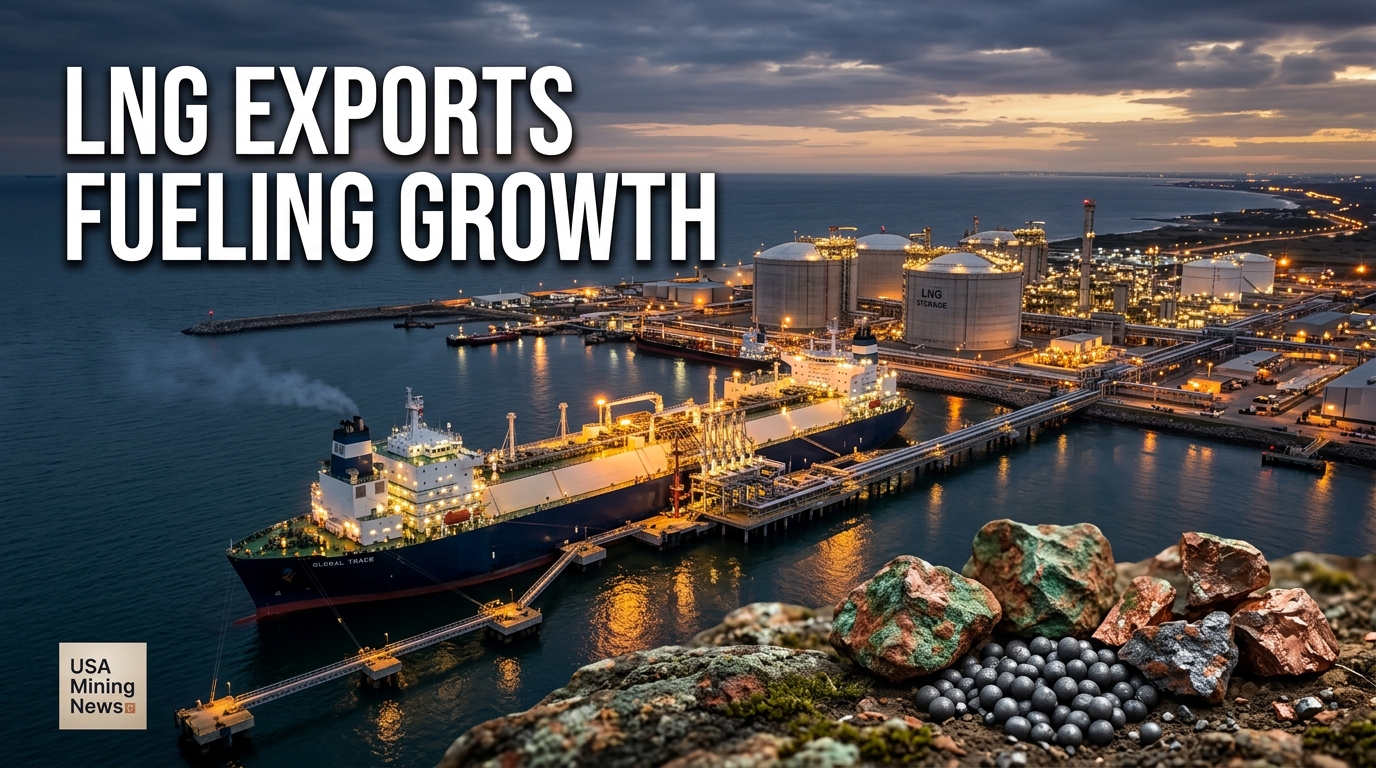
This push for enhanced energy partnerships comes at a time when the United States has achieved a dominant position in global energy production. Under President Trump’s leadership, America is now producing as much natural gas as Russia, China, and Iran combined. The U.S. also leads the world in LNG exports and is projected to more than double its export capacity within the next decade. This abundant supply positions the U.S. to be a critical provider for Europe, offering an alternative to traditional sources and enhancing energy diversification. For the mining industry, this robust production and export trajectory implies sustained, if not increased, demand for materials essential to extraction, processing, transportation, and liquefaction infrastructure.
Strategic Infrastructure Development: Gas and Nuclear
The outcomes of the 3SI Summit span critical energy sectors, directly influencing the mining and heavy construction industries:
- Southern Interconnection Gas Pipeline: A pivotal development is the Joint Statement of Intent supporting an Intergovernmental Agreement (IGA) between Bosnia and Herzegovina, Croatia, and American industry for the Southern Interconnection gas pipeline. This project is vital for expanding regional gas infrastructure, enabling greater imports of U.S. LNG, and significantly strengthening the energy security of participant nations. The construction of such a pipeline will necessitate vast quantities of steel for pipes, concrete for compressor stations, and associated materials like copper for electrical systems, all sourced from mining operations globally.
- Enhanced Civil Nuclear Cooperation: The United States and Croatia signed a Joint Statement aimed at deepening civil nuclear cooperation. This agreement builds upon the existing U.S.-Euratom Agreement for Cooperation in the Peaceful Uses of Nuclear Energy, fostering collaboration in a sector critical for baseload power generation and emissions reduction. Specifically, it advances Croatia's readiness to deploy U.S. small modular reactor (SMR) technology, promoting American nuclear exports and reinforcing U.S. leadership in safe, secure, and reliable nuclear energy.
- Croatia Small Modular Reactor (SMR) Feasibility Study: Supporting Croatia's strategic move towards advanced nuclear technologies, a feasibility study for SMR deployment will be conducted under the Foundational Infrastructure for Responsible Use of SMR Technology (FIRST) Program. This initiative promotes the highest standards of nonproliferation while facilitating the adoption of U.S. SMR technology. The development and deployment of SMRs represent a burgeoning market for specialized mining products, including enriched uranium for fuel, rare earth elements for control systems, and high-strength alloys (such as nickel, chromium, and zirconium) for reactor components, pressure vessels, and piping. The compact footprint and modular nature of SMRs promise quicker deployment, but still demand significant initial material inputs for each unit.
Digital Infrastructure and its Material Demands
Beyond traditional energy, the summit also addressed the growing nexus between energy supply and digital infrastructure:
- Project Pantheon: An American firm is committing a substantial investment, upwards of $50 billion, to develop a next-generation data center in Croatia. This project is envisioned to fortify regional digital infrastructure, support the accelerating demand from AI-driven growth, and position Croatia as a hub for world-class digital services in Central and Eastern Europe. Data centers, while seemingly removed from mining, are immense consumers of mined materials. Their construction requires vast amounts of concrete, steel, and aggregates. Inside, they are densely packed with copper cabling for power and data transmission, aluminum for racks and cooling systems, and a myriad of specialized metals and rare earth elements found in server components, microprocessors, and storage devices. The sheer scale of Project Pantheon’s investment highlights a significant, sustained demand for these commodities, linking digital expansion directly to the mining supply chain.
Market and Industry Context: Why This Matters to Mining
The strategic announcements from the 3SI Summit carry profound implications for the global mining industry. The push for energy security in Central and Eastern Europe, primarily through diversified natural gas supplies and advanced nuclear capabilities, translates directly into increased demand for a wide array of raw materials:
- Natural Gas Infrastructure: The "Trump Peace Pipelines Framework" and projects like the Southern Interconnection gas pipeline will require millions of tons of steel for pipelines, valves, and compressor stations. Furthermore, construction of new LNG import terminals will demand concrete, aggregates, and specialized steels for cryogenic storage tanks. Copper will be critical for the extensive electrical systems, controls, and ancillary facilities at these sites.
- Nuclear Energy Expansion: The deployment of SMR technology in Croatia and potential future expansions across the region creates a strong demand for uranium, the primary fuel source. Additionally, the construction of SMRs necessitates complex alloys incorporating nickel, chromium, and zirconium, which offer the high-temperature and corrosion resistance required for reactor cores and components. Rare earth elements are also vital for advanced control rods and instrumentation.
- Digital Infrastructure Boom: Project Pantheon’s $50 billion investment in a data center exemplifies the profound material intensity of the digital economy. Every server, every networking device, every meter of high-speed cable depends on mined resources. Copper demand, in particular, will soar for power distribution and data transmission within the facility, as well as for the massive supporting electrical infrastructure. Steel, aluminum, and aggregates are fundamental to the physical construction of these sprawling, power-hungry complexes, which, in turn, rely on a stable, diversified energy supply.
Beyond the direct material demand, the robust commitment to expanding energy infrastructure signals a positive long-term outlook for heavy equipment manufacturers, engineering firms, and all segments of the supply chain associated with large-scale industrial projects. The stability and growth within these energy sectors create a predictable demand curve for mined commodities, encouraging investment in new exploration and production projects.
Future Outlook and Broader Implications
The agreements signed at the 3SI Summit mark a distinct acceleration of the U.S. strategy to strengthen energy ties and enhance economic integration within Central and Eastern Europe. The "energy addition agenda" promoted by Secretary Wright aims to foster not only energy security but also economic prosperity and job creation across the region and within the American industries that support these developments.
The expansion of LNG imports, driven by America’s burgeoning production and export capabilities, promises to diversify Europe’s energy mix and reduce reliance on single-source suppliers. This strategic diversification enhances geopolitical stability and provides a more competitive energy market. For the mining industry, continuing investment in gas infrastructure, including pipelines and liquefaction/regasification terminals, will remain a cornerstone of demand for steel, copper, and construction aggregates.
Moreover, the commitment to SMR technology positions Croatia, and potentially other 3SI nations, at the forefront of the next generation of nuclear power, an environmentally conscious and reliable energy source. This trajectory not only promises long-term demand for uranium and specialized metals but also aligns with global decarbonization goals, presenting a sustainable pathway for energy development.
The strategic confluence of energy security, digital infrastructure, and U.S. industrial leadership demonstrated at the 3SI Summit in Dubrovnik underscores a future where American energy diplomacy translates into tangible projects that drive economic activity and create substantial, sustained demand across the entire spectrum of the global mining industry.