In a strategic maneuver set to redefine its position in the global critical minerals landscape, Lindian Resources has announced the signing of a binding term sheet to acquire a fully operational mixed rare earths carbonate (MREC) processing facility in Stepnogorsk, Kazakhstan. This significant development, unveiled on March 4, 2026, marks a pivotal transition for Lindian, pivoting from solely producing rare earths concentrate to engaging in the higher-value downstream processing market.
The acquisition is structured through an incorporated joint venture (IJV), with Lindian holding a controlling 51% stake and its local in-country partner, RA-Group, owning the remaining 49%. This collaborative model aims to leverage both Lindian's global market access and project development expertise with RA-Group's invaluable local knowledge and operational insight within Kazakhstan.
A Strategic Leap into Downstream Processing
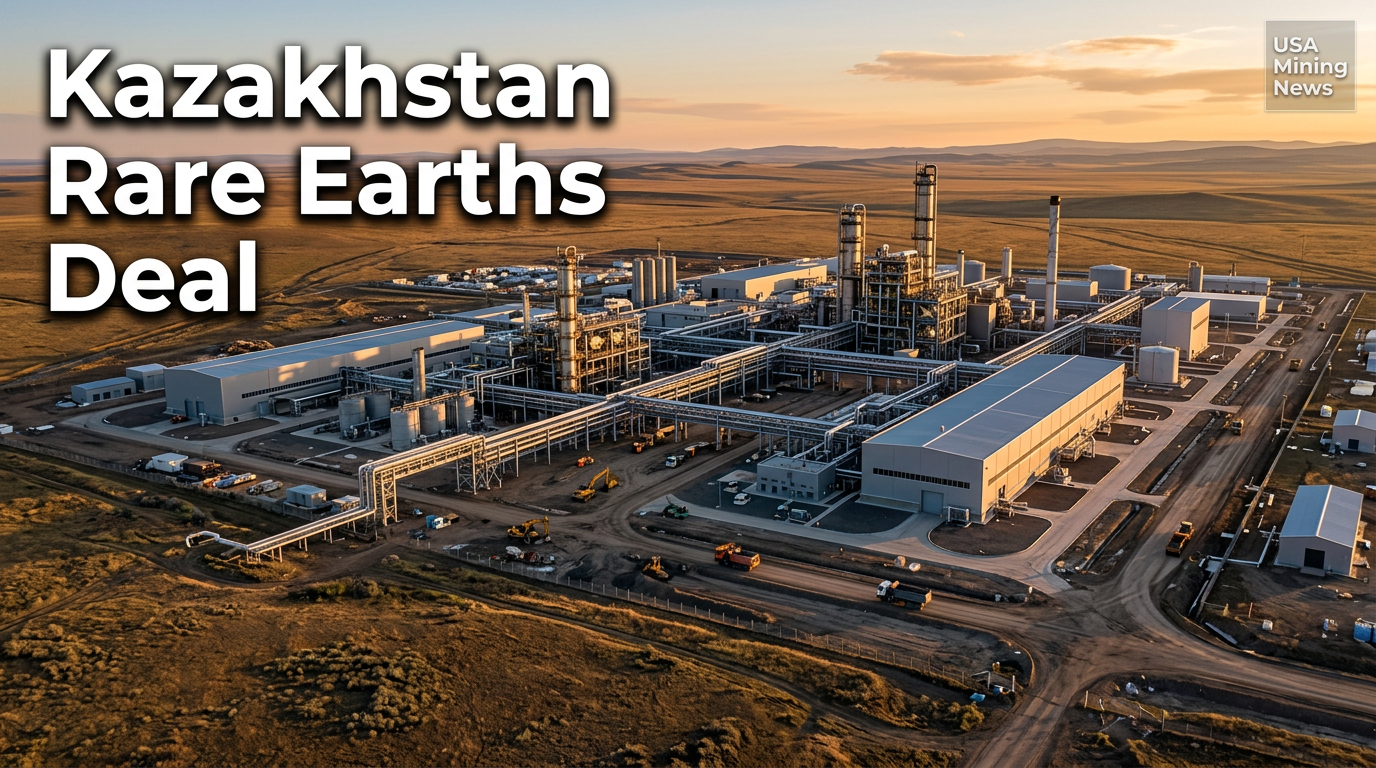
The facility targeted for acquisition is the Summit Atom Rare Earth Company Arctic (SARECO) MREC processing plant and associated infrastructure. This plant boasts a notable heritage, having been previously owned and operated under a joint venture between the Japanese conglomerate Sumitomo Corporation and Kazakhstan's national atomic company, Kazatomprom. This history imbues the SARECO facility with an established operational track record, a critical factor for Lindian's rapid entry into advanced processing.
Lindian's move represents a deliberate and calculated shift in its operational strategy. Historically focused on upstream mining and concentrate production from its flagship Kangankunde Rare Earths Project, the company is now making an assertive foray into MREC production. This vertical integration is a key industry trend, driven by the desire to capture a larger share of the value chain inherent in rare earths – minerals crucial for a multitude of high-tech and green energy applications, including electric vehicles, wind turbines, and advanced electronics.
Robert Martin, Executive Chairman of Lindian Resources, emphasized the transformative nature of this transaction. "The acquisition of the SARECO MREC facility is a defining step for Lindian," Martin stated. "It fast-tracks our transition from a concentrate producer to an integrated rare earths company with downstream capability, materially enhancing margins, commercial flexibility and long-long-term strategic value. This transaction positions Lindian to be one of the very few non-Chinese companies globally producing both rare earth concentrate and MREC." This statement underscores the strategic ambition to position Lindian among an elite cohort of non-Chinese processors, a group highly valued amidst ongoing global efforts to diversify critical mineral supply chains.
Operational Integration and Timeline
A cornerstone of Lindian's strategy for the SARECO facility is the planned supply of approximately 12,500 tonnes per annum (tpa) of monazite concentrate from its Kangankunde Rare Earths Project. Located in Malawi, the Kangankunde project is a high-grade, undeveloped rare earths deposit that Lindian fully acquired in December 2025, having paid the final $10 million tranche under a share sale agreement to acquire Rift Valley Resource Developments, which holds 100% ownership of the project. This vertical integration ensures a captive feedstock supply for the Kazakh processing plant, streamlining the overall production pipeline.
Both the Kangankunde project and the newly acquired SARECO facility are slated to be fully operational by the fourth quarter of 2026. This aggressive timeline reflects Lindian's commitment to rapidly scaling its integrated rare earths production capabilities, a critical factor in a market characterized by increasing demand and geopolitical sensitivities.
The acquisition of an existing, fully operational facility offers significant advantages over greenfield developments. By leveraging pre-existing infrastructure, Lindian aims to mitigate the extensive costs, regulatory hurdles, and prolonged development timelines typically associated with building new processing plants from the ground up. This "brownfield" approach provides a cost-effective and expedited entry into downstream processing, minimizing both investment risk and time to market.
Financial Structure and Value Proposition
The SARECO plant's acquisition is valued at $15 million. Lindian's financial contribution to this deal is $7.65 million, equivalent to A$10.83 million, aligning with its 51% ownership in the IJV. RA-Group will contribute the remaining $7.35 million (3.65 billion Kazakhstani Tenge) for its 49% stake. A notable aspect of the financial arrangement is that the majority of this acquisition cost is deferred until after commercial production commences. This payment structure represents a commercially astute approach, linking significant expenditure to proven operational success and cash flow generation, thereby optimizing Lindian's capital deployment strategy.
Beyond the immediate cost savings of avoiding greenfield development, entering the MREC market offers a substantial enhancement in margins. MREC is a higher-value product than concentrate because it has undergone initial chemical processing to remove impurities and enrich the rare earth content. It serves as an intermediate product, typically sold to separation plants where individual rare earth elements (like neodymium, praseodymium, dysprosium, terbium) are extracted and refined. By controlling and marketing the MREC product, Lindian expects to broaden its customer base, attract more sophisticated buyers, and ultimately strengthen its negotiating position in global rare earths markets.
Geopolitical Context and Supply Chain Diversification
This strategic move by Lindian Resources aligns perfectly with broader international efforts to diversify and secure critical mineral supply chains. The importance of such diversification was underscored by a memorandum of understanding (MoU) signed in November 2025 between the United States and Kazakhstan concerning critical minerals. This collaboration aims to foster a more resilient and geographically diverse supply chain, reducing reliance on currently concentrated jurisdictions, notably China, which dominates many segments of the rare earths value chain.
Kazakhstan, with its rich mineral endowments and strategic location, is emerging as a critical partner in these global diversification efforts. The presence of an established MREC facility in the country, previously managed by major international and state-owned entities, reinforces its potential as a hub for critical mineral processing.
Lindian's operational oversight of the MREC processing facility, coupled with exclusive marketing rights for all MREC products, positions the company as a significant new player in this secure and diversified supply chain. This not only enhances Lindian's commercial prospects but also contributes to the strategic objectives of nations seeking reliable access to these indispensable materials.
Outlook and Industry Implications
The upcoming year, particularly leading up to Q4 2026, will be crucial for Lindian Resources as it works to bring both its Kangankunde mine and the SARECO MREC facility online. A successful integration of these two assets will solidify Lindian's status as one of the few non-Chinese companies capable of end-to-end rare earth concentrate and MREC production.
For the broader mining industry and investors, this development highlights several key trends: the increasing emphasis on vertical integration within critical minerals supply chains, the strategic value of acquiring existing infrastructure to accelerate market entry, and the growing importance of international partnerships and geopolitical alignment in securing future mineral supplies. Lindian's phased payments and joint venture structure also offer a template for capital-efficient expansion in a high-growth, high-stakes sector.
As global demand for rare earths continues to surge, driven by the energy transition and technological advancements, companies like Lindian, making bold strategic investments in downstream processing, are poised to capture significant value and play a crucial role in building a more secure and diversified future for critical mineral supply.