U.S. Diplomacy Fuels Europe's Energy Security: The Vertical Gas Corridor and its Mined Foundations
Strategic Alignment: DOE Advances Vertical Gas Corridor with European Partners
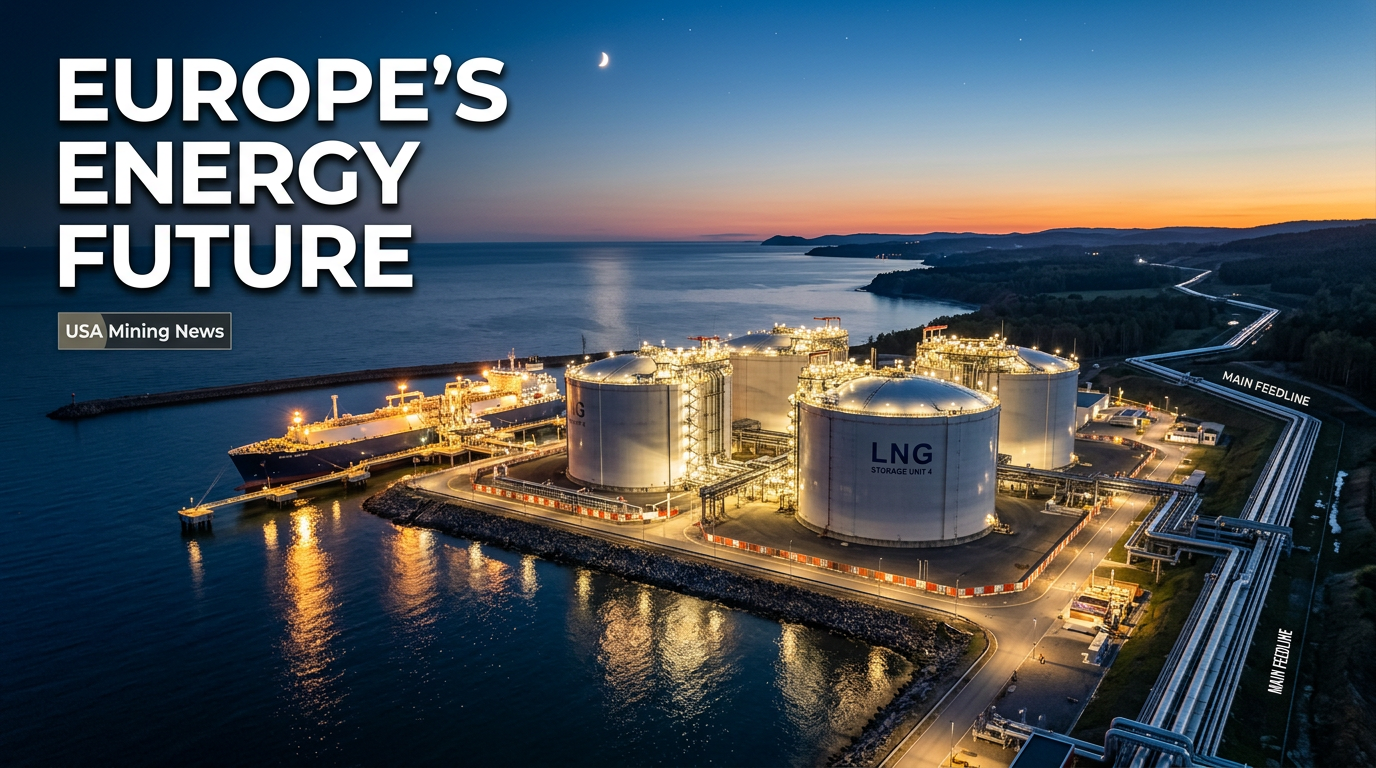
In a significant move to bolster European energy security and expand America’s natural gas export footprint, the U.S. Department of Energy (DOE) hosted a high-level meeting on February 25, 2026. Officials from Bulgaria, Greece, Romania, Moldova, Ukraine, and the European Commission convened in Washington, D.C., with the explicit objective of accelerating the development of the Vertical Gas Corridor. This ambitious project is designed to enable the northbound flow of regasified U.S. liquefied natural gas (LNG) from Greece, delivering a vital alternative energy supply to Central and Eastern European markets.
The meeting marked a tangible progression in transatlantic energy cooperation, building upon crucial discussions held at the Partnership for Transatlantic Energy Cooperation Summit in Athens in November 2025, and the Transatlantic Gas Security Summit, also in Washington, D.C., earlier in February 2026. These ongoing diplomatic and technical engagements underscore a concerted effort to diversify Europe's energy portfolio, a strategic imperative with profound implications for global energy markets and the mining sector that underpins critical infrastructure development.
"By partnering with the countries of the Vertical Corridor, we are opening major opportunities to expand U.S. LNG exports to Central and Eastern Europe," stated Joshua Volz, a key spokesperson for the U.S. Department of Energy. He further emphasized the initiative's alignment with U.S. foreign policy objectives: “This effort is so important to our President and Secretary because it aligns with our nation’s strengths and commitment to supporting friends and allies across Europe." This sentiment highlights not only the commercial benefits for U.S. energy producers but also the geopolitical stability gained by providing reliable alternatives to what the DOE terms "adversarial energy suppliers."
Unlocking Potential: Technical and Regulatory Hurdles Addressed
The February 25th technical discussion brought together a formidable contingent of energy stakeholders, including representatives from national Energy Ministries, regulatory bodies, and Transmission System Operators (TSOs) from the participating nations. Such a comprehensive gathering was essential to tackle the intricate challenges currently impeding the Vertical Gas Corridor's full operational capacity. The discussions centered on three pivotal objectives:
- Resolving Regulatory Friction Points: A key bottleneck in cross-border energy projects often lies in disparate national regulations, permitting processes, and pipeline access rules. Addressing these friction points is critical for long-term planning, investment certainty, and efficient project execution. Harmonizing these frameworks across multiple jurisdictions will streamline operations and reduce project timelines, essential for major infrastructure undertakings.
- Harmonizing Tariffs: To ensure the Vertical Gas Corridor can deliver LNG at a competitive price point, the participating nations must establish a unified and equitable tariff structure. Inconsistent or prohibitively high tariffs can negate the economic advantages of diversified supply, discouraging uptake. Collaborative efforts to achieve cost-competitiveness are paramount for the corridor’s commercial viability and its ability to genuinely compete with existing energy sources.
- Reviewing Strategic Infrastructure Investments: Achieving the full northbound flow capacity requires significant investment in existing and new infrastructure. This includes upgrading and expanding pipeline networks, enhancing compressor stations, and potentially developing new interconnectors at national borders. The meeting served as a forum to identify these critical investment needs, prioritize projects, and potentially coordinate funding mechanisms to ensure the necessary physical backbone is in place.
These technical deep dives are indicative of a mature phase in the project’s development, moving beyond conceptual agreements to practical implementation strategies. The success of these discussions will directly translate into the corridor’s ability to function as a robust and reliable energy artery for Central and Eastern Europe.
U.S. Energy Leadership and Export Ambitions
The DOE's proactive role in facilitating the Vertical Gas Corridor underscores America's strategic ambition to cement its position as a leading global energy provider. The rapid expansion of U.S. LNG export capacity over the past decade has transformed the global energy landscape, offering destination flexibility and fostering greater market liquidity. By actively working to reduce barriers to U.S. LNG exports, the DOE is not only creating new markets for American energy producers but also leveraging energy as a tool for economic statecraft and geopolitical stability.
The U.S. shale gas revolution, driven by advancements in horizontal drilling and hydraulic fracturing technologies, has unlocked vast domestic natural gas reserves. This abundance has enabled the construction of multiple large-scale LNG export terminals, primarily along the Gulf Coast, with several more under construction or in advanced planning stages. These facilities liquefy natural gas for tanker transport, enabling its delivery to distant markets like Europe. The Vertical Gas Corridor, therefore, represents a crucial last-mile solution for U.S. LNG to reach a wider European customer base, particularly those nations historically reliant on single-source energy imports.
This initiative aligns with broader U.S. efforts to diminish Russia's energy leverage in Europe and promote greater energy independence among allied nations. The geopolitical volatility stemming from conflicts in Eastern Europe has highlighted the urgent need for robust, diversified energy supply chains, making the Vertical Gas Corridor a timely and critical undertaking. The U.S. commitment reinforces a long-term strategic partnership aimed at fostering economic resilience and security across the transatlantic alliance.
The Indispensable Role of Mining in Energy Infrastructure
While the immediate focus of the Vertical Gas Corridor is on natural gas trade, the mining industry stands as an indispensable, albeit often unseen, foundation for its success. Every major energy infrastructure project, from regasification terminals to thousands of kilometers of pipelines, relies heavily on a diverse array of mined materials. For mining industry professionals and investors, the expansion of projects like the Vertical Gas Corridor signals sustained demand for essential commodities.
- Steel and Iron Ore: The backbone of any pipeline network is steel. Fabricating the high-strength steel pipes required to transport natural gas safely and efficiently necessitates vast quantities of iron ore and coking coal. The construction of new pipelines, extensions, and compressor stations to facilitate northbound flow will drive consistent demand for these bulk commodities.
- Copper: Electrical systems power compressor stations, control units, and the intricate infrastructure of LNG terminals. Copper, with its excellent conductivity, is essential for wiring, transformers, and myriad electronic components that ensure the smooth operation of these facilities. The continued development of energy grids and international interconnectors ensures a steady market for copper producers.
- Aggregates and Cement: Concrete, made from mined aggregates (sand, gravel, crushed stone) and limestone-derived cement, forms the foundation for LNG terminal facilities, pipeline support structures, access roads, and administrative buildings. Large-scale construction projects inherently create significant demand for these fundamental building materials.
- Specialty Minerals and Rare Earths: Modern energy infrastructure, particularly instrumentation and control systems, increasingly incorporates advanced materials. While not explicitly mentioned, the sophisticated sensors, communication systems, and automated valves used in gas networks can rely on specialty minerals and even rare earth elements for enhanced performance and efficiency.
- Frac Sand (Silica Sand): Looking further upstream to the source of U.S. LNG, the production of natural gas from shale formations relies heavily on hydraulic fracturing. High-quality silica sand, or frac sand, is a critical proppant used in this process to keep fractures open and allow gas to flow. Expanded U.S. LNG exports directly translate to sustained levels of domestic natural gas production, thus ensuring robust demand for this specialized industrial mineral.
The construction phase of such large-scale projects not only consumes materials but also creates logistical challenges and opportunities for mining and auxiliary industries. Transporting these materials, deploying heavy machinery (itself made of mined metals), and managing vast supply chains present significant economic activity beyond the immediate energy sector.
Future Outlook and Broader Market Implications
The U.S. Department of Energy’s continued commitment to the Vertical Gas Corridor signals a future characterized by enhanced energy diversification and security for a crucial region of Europe. Successfully addressing the outlined regulatory, economic, and infrastructure challenges will have several significant implications:
- Increased LNG Import Capacity for Europe: The corridor will fully leverage established LNG import terminals in Greece, enhancing their strategic value and effectively extending their reach deeper into the continent.
- Greater Market Flexibility: Central and Eastern European countries will gain greater flexibility in procuring natural gas, increasing their bargaining power and shielding them from supply disruptions or politically motivated price escalations.
- Boost to U.S. LNG Export Market: For U.S. energy companies, the corridor represents an expanded and more resilient market for their LNG, encouraging further investment in liquefaction capacity and upstream gas production.
- Stimulus for Infrastructure Development: The ongoing need for pipeline upgrades and interconnections will drive significant engineering, procurement, and construction (EPC) activity, providing opportunities for contractors and, critically, sustained demand for the materials sourced from the mining sector.
The February 25, 2026, meeting was more than a diplomatic exchange; it was a foundational brick laid in the complex edifice of transatlantic energy security. As the Vertical Gas Corridor progresses from strategic vision to operational reality, its impact will resonate far beyond the immediate gas market, influencing geopolitical stability and reinforcing the vital, often understated, role of the global mining industry in powering modern civilization.