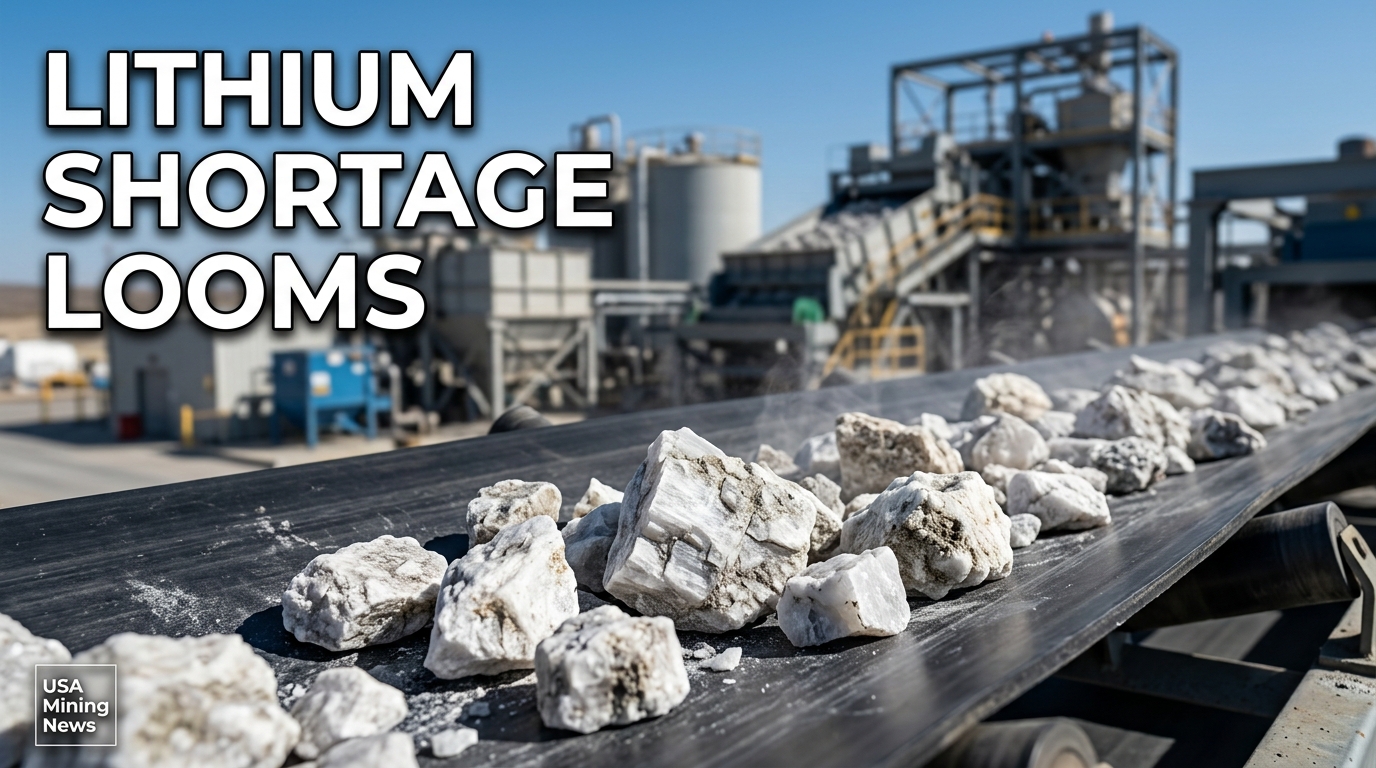
As the global energy transition accelerates, the foundational role of critical minerals, particularly lithium, has never been more pronounced. A recent assessment by Canaccord Genuity, published in a note on a Wednesday preceding April 22, 2026, paints a stark picture for the lithium market, projecting an almost decade-long period of supply deficit. This comprehensive outlook suggests that a “material market deficit” is set to commence in 2026 and persist until 2035, primarily due to insufficient investment in new mine capacity needed to meet escalating demand from the battery metals sector.
The Looming Lithium Deficit: Canaccord Genuity Sounds Alarm for Nearly a Decade of Shortfall
The core of Canaccord Genuity’s analysis points to a fundamental imbalance between the pace of new supply development and the voracious appetite for lithium, particularly from the burgeoning electric vehicle (EV) industry. Despite some near-term weakness in demand, which the analysts observe has been more than offset by tightening supply, the structural deficit is anticipated to begin in 2026. This projection is a significant concern for stakeholders across the mining, automotive, and renewable energy sectors, signaling potential challenges for future growth and cost stability.
Canaccord’s detailed note indicates that even a possible supply response ignited by rising lithium prices through 2027-28 would prove insufficient to close the projected gap. The lead times for bringing new lithium mines into production are notoriously long, spanning several years from exploration to commissioning. This inherent lag means that even if higher prices stimulate investment decisions today, the resultant supply may only come online well into the deficit period, failing to adequately address immediate and medium-term shortages.
A Deep Dive into Canaccord's Projections
The investment bank’s forecast of a deficit stretching until 2035 highlights a critical challenge for the mining industry: the persistent difficulty in aligning long-term capital expenditure with the rapid growth trajectories of emerging technologies. The concept of a “material market deficit” implies not just a minor imbalance but a significant structural shortage that could have profound implications for global supply chains. For mining investors, this signals a potentially sustained period of strong commodity prices, though tempered by supply chain volatility and the geopolitical risks associated with securing raw materials.
The analysts specifically address the interplay between price and supply. While rising lithium prices are the natural market mechanism to incentivize new production, the scale and speed required appear to be out of sync. Historically, the mining industry has reacted to price spikes with investment, but the complex approvals, environmental scrutiny, community engagement, and engineering challenges involved in developing new hard rock or brine lithium projects mean that these responses are seldom immediate. This delay contributes directly to Canaccord’s view that even a robust price surge through the middle of the decade will not be enough to avert the projected shortfall.
Furthermore, Canaccord's outlook operates under the assumption of no further major disruptions in key producing regions such as China and elsewhere. Should additional geopolitical events, regulatory shifts, or operational challenges materialise, the deficit could extend beyond the projected 2035 timeframe, exacerbating an already challenging supply landscape.
Recent Market Dynamics and Supply Chain Fragility
The current market conditions provide a compelling backdrop to Canaccord’s bearish supply forecast. In recent months, lithium prices have experienced a notable ascent, driven by persistent anxieties over supply security and sufficiency. These worries have been amplified by specific, high-profile disruptions in leading lithium-producing nations:
- Suspension of a Key Mine in China: China is not only the world’s largest refiner and consumer of lithium but also a significant producer. The suspension of operations at a key domestic mine earlier this year sent ripples through the market, highlighting the sensitivity of global supply to disruptions within China’s borders. Given China’s central role in the lithium value chain, any internal supply shock has immediate and widespread effects on global availability and pricing.
- Zimbabwe’s Ban on Raw Lithium Exports: Early in 2026, Zimbabwe, which holds some of Africa’s largest lithium deposits and has emerged as a top global producer of the raw material, implemented a comprehensive ban on the export of unprocessed lithium. This policy aims to encourage domestic value addition and beneficiation, ensuring processed lithium products rather than raw ores are exported. While strategically beneficial for Zimbabwe, this move temporarily restricts the ready supply of unrefined lithium to the global market, intensifying existing supply tightness. Such policies, increasingly common among resource-rich nations seeking greater economic benefits from their mineral wealth, add another layer of complexity for international buyers and processors.
These incidents underscore the inherent fragility of the global lithium supply chain, which relies on a relatively concentrated set of producing regions and processing hubs. The ability of the market to absorb such shocks is diminished when underlying investment is already lagging. In this context, Canaccord's assumption of "no further disruptions" presents a best-case scenario; a more realistic assessment might factor in the inherent volatility and geopolitical risks associated with critical mineral supply.
The Imperative for Significant Investment
The message from Canaccord is clear: the lithium market requires "significant" long-term investment in new supply. This is not merely a call for incremental capital, but a demand for substantial, sustained financial commitment across the entire lithium project lifecycle. Developing a new lithium mine, whether from hard rock spodumene or brine resources, is a multi-stage, capital-intensive endeavor that typically includes:
- Exploration and Resource Definition: Identifying and quantifying viable lithium deposits.
- Feasibility Studies: Detailed economic, technical, and environmental assessments.
- Permitting and Regulatory Approvals: Often a protracted process involving multiple government agencies and community consultations.
- Mine Construction and Plant Development: Building the physical infrastructure for extraction and processing, including concentrators for spodumene or evaporation ponds and direct lithium extraction facilities for brines.
- Ramp-up to Commercial Production: The period during which operations scale to full capacity.
Each of these stages can take years, meaning that investment decisions made in 2026 might not translate into significant new production until the early 2030s, exactly within the projected deficit window. This reinforces the urgency of current investment challenges. Without a robust pipeline of projects advancing through these stages, the forecasted deficit is not just probable but almost inevitable.
Geopolitical and Regional Considerations
The global lithium landscape is geographically diverse yet highly concentrated in terms of major producers and processing capabilities. Canaccord’s outlook implicitly touches upon these key regions:
- Africa: With nations like Zimbabwe emerging as significant raw material suppliers, Africa is increasingly vital. The region's potential, however, is often accompanied by geopolitical complexities and the push for local beneficiation, as seen with Zimbabwe's export ban.
- Australia: A dominant force in hard rock lithium (spodumene) mining, Australia is a critical supplier to the global market, particularly for Chinese converters. Continued investment and stable regulatory frameworks in Australia are paramount for global supply security.
- China: Beyond its role as a producer, China processes the vast majority of the world's lithium chemicals. Its internal supply-demand balance and industrial policies heavily influence global market dynamics.
- Latin America: The "Lithium Triangle" – Argentina, Bolivia, and Chile – holds a substantial portion of the world’s brine-based lithium resources. Companies operating here, such as SQM (Sociedad Química y Minera de Chile), a prominent Chilean chemical company active in the lithium, potassium, and iodine industries, are central to global supply. Image credits featuring SQM often highlight their significant presence in this region. Development in Latin America involves unique environmental considerations and sometimes complex political landscapes regarding natural resource extraction.
These regional dynamics underline the strategic importance of diversifying supply sources and fostering international cooperation to ensure a resilient lithium supply chain.
Implications for the Electric Vehicle and Battery Sectors
The projected lithium deficit carries profound implications for the electric vehicle and broader battery sectors, which are the primary drivers of lithium demand growth. A sustained shortfall would likely lead to:
- Elevated Battery Costs: Higher lithium prices directly translate to increased costs for lithium-ion batteries, which could slow the downward trend in EV battery pack prices.
- Slower EV Adoption: Increased battery costs could make EVs less competitive on price, potentially decelerating the global transition away from internal combustion engine vehicles.
- Intensified Research into Alternative Chemistries: A prolonged lithium deficit could accelerate investment into battery technologies that use less lithium or substitute it with more abundant materials, though these are typically still in early stages of commercialisation for high-density applications.
- Focus on Recycling: The economic impetus for lithium-ion battery recycling would strengthen significantly, driving efforts to recover lithium from end-of-life batteries and manufacturing scrap.
For automotive manufacturers and battery makers, securing long-term lithium supplies through off-take agreements, direct investments in mining projects, or joint ventures becomes an even more critical strategic imperative.
Strategic Responses and the Path Forward
Addressing a potential nearly decade-long lithium deficit requires a multi-pronged strategic response from industry participants, investors, and governments:
- Accelerated Exploration and Project Development: Fostering an environment conducive to exploration and facilitating the rapid development of new projects is paramount. This includes streamlining permitting processes, while maintaining stringent environmental and social standards.
- Diversification of Supply: Encouraging new projects in politically stable and geologically promising regions outside of traditional hubs can enhance supply security.
- Technological Innovation: Continued investment in direct lithium extraction (DLE) technologies could unlock new resources from brines more efficiently and with a smaller environmental footprint. Enhanced processing techniques for existing hard rock ores are also crucial.
- Recycling Infrastructure: Building robust infrastructure for lithium-ion battery recycling will be essential for reducing reliance on primary extraction in the long run.
- Capital Allocation: Mining companies and institutional investors must demonstrate a sustained commitment to funding new and expansionary lithium projects, even through periods of price volatility, recognising the long-term demand fundamentals.
The challenge is not merely about finding lithium, but about efficiently and responsibly bringing it to market at a scale unprecedented in the industry’s history.
Conclusion: Navigating a Critical Decade for Lithium Supply
Canaccord Genuity’s forecast of a global lithium market deficit from 2026 to 2035 serves as a critical warning shot for the entire mining ecosystem and the downstream industries it supports. The report underscores that the current pace of investment in new mine capacity is insufficient to meet the projected demand from the rapidly expanding EV and battery storage markets. With recent disruptions in key producing nations highlighting the fragility of existing supply chains, the imperative for significant, proactive investment has never been clearer.
For mining industry professionals and investors, this outlook presents both significant challenges and opportunities. While securing future supply will demand innovative strategies, judicious capital allocation, and collaborative efforts across the value chain, the potential for sustained strong lithium prices throughout this deficit period could reward those who make strategic long-term investments now. Navigating this critical decade for lithium supply will require foresight, resilience, and an unwavering commitment to developing the resources essential for the global energy transition.