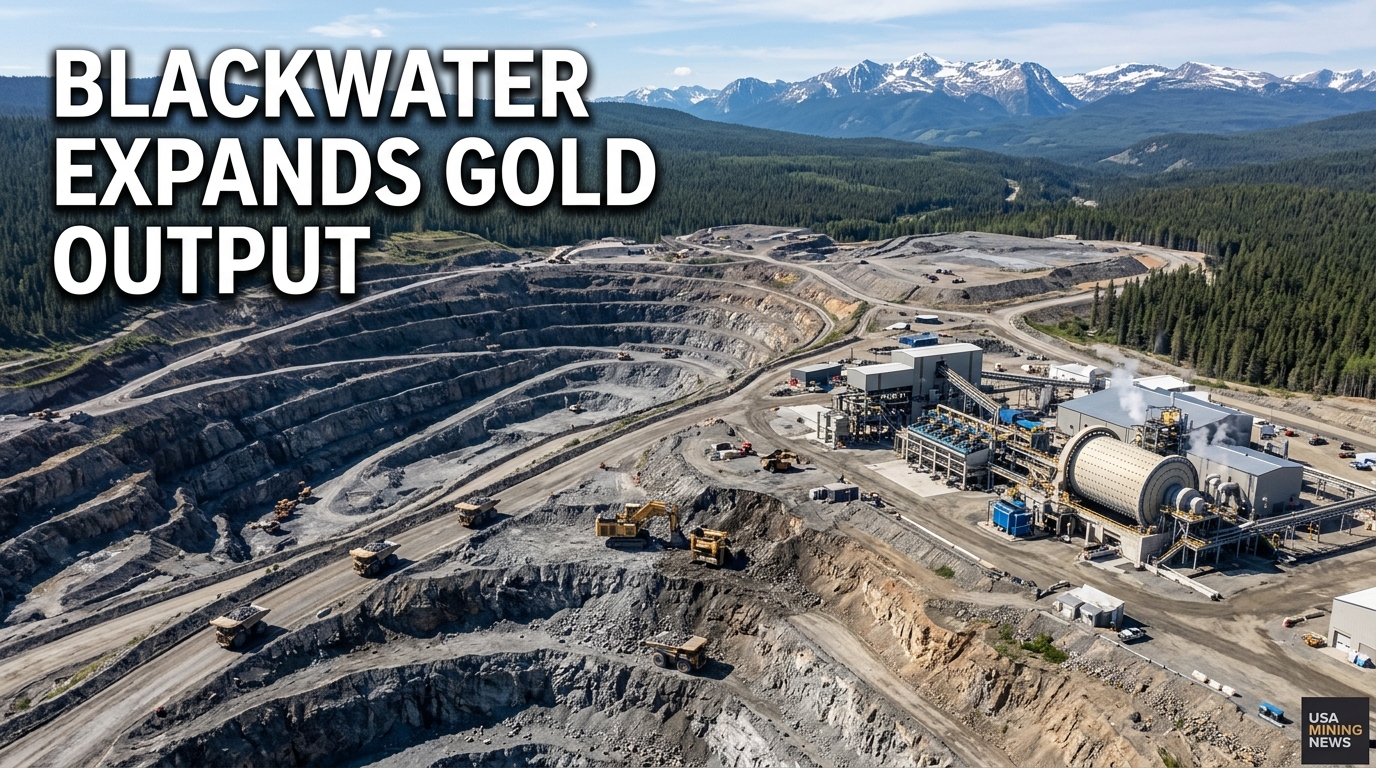
In a notable development for the North American mining sector, leading engineering and project management firm Lycopodium has been awarded an A$93 million, equivalent to approximately $65.5 million USD, Engineering, Procurement, and Construction Management (EPCM) contract. This substantial agreement is with Artemis Gold for the Expanded phase two (EP2) project at their Blackwater Mine, a significant open-pit gold and silver operation situated in central British Columbia, Canada.
The contract underscores a continued partnership between Lycopodium and Artemis Gold, with Lycopodium having already provided EPCM services for the mine’s initial Phase 1A and contributing to earlier EP2 development stages. The Blackwater Mine, which commenced commercial production in May 2025, represents a cornerstone project in Canada’s rich mining landscape, and this expansion is pivotal to realizing its full operational potential.
Strategic Expansion at Blackwater Mine
Artemis Gold’s Blackwater Mine is envisioned as a long-life, large-scale precious metals operation. Located approximately 160 kilometers south-west of Prince George and 446 kilometers north-east of Vancouver, the mine benefits from its position within British Columbia, a province renowned for its geological prospectivity and robust mining regulatory framework. The operation utilizes a conventional open-pit, truck and shovel mining method, a highly efficient and widely adopted approach for large-tonnage deposits.
The current multiphase expansion program is designed to significantly ramp up the mine’s processing capabilities. The first stage, Phase 1A, established an initial throughput capacity of 8 million tonnes per annum (mtpa). The newly contracted EP2 project is engineered to add a further 13 mtpa of throughput capacity. Upon completion of EP2, the Blackwater Mine’s total processing capacity is projected to reach an impressive 21 mtpa. This phased expansion strategy allows Artemis Gold to manage capital expenditures, optimize construction timelines, and progressively increase production in line with market conditions and operational readiness.
Increasing throughput capacity is a fundamental driver for enhancing the economic viability of large-scale mining operations. Higher throughput typically leads to lower unit operating costs due to economies of scale, extends the overall mine life by efficiently processing more ore, and can improve overall project profitability. For Artemis Gold, achieving 21 mtpa is a critical milestone that will firmly establish Blackwater as a significant producer in the global gold and silver markets.
Lycopodium's Enduring Partnership and Expertise
Lycopodium’s selection for the EP2 EPCM contract is a testament to its proven expertise and established relationship with Artemis Gold. This is not their first involvement with the Blackwater project; Lycopodium has been integral to its development trajectory. Their prior contributions include:
- Providing EPCM services for the initial Phase 1A development, demonstrating continuity and in-depth project knowledge.
- Undertaking the feasibility study for the EP2 project, which laid the detailed technical and economic groundwork for the expansion.
- Delivering front-end engineering and design (FEED) services for the new plant, ensuring the proposed facilities are optimized for efficiency and cost-effectiveness.
The EPCM model, an abbreviation for Engineering, Procurement, and Construction Management, designates Lycopodium’s role as the manager and coordinator of the project, rather than assuming direct construction responsibilities. In this capacity, Lycopodium provides comprehensive engineering design, manages the procurement of equipment and materials, and oversees the construction activities performed by various contractors. This approach is often favored by mining companies for its flexibility and the ability to maintain greater control over project execution and costs, while leveraging the specialized project management skills of an experienced firm like Lycopodium.
Lycopodium's global reach and extensive experience in the mining sector are evident from its international network of offices. With a presence in key mining regions including Argentina, Australia, Botswana, Brazil, Canada, Ghana, Namibia, Peru, the Philippines, South Africa, Tanzania, and the United States, the company possesses the breadth and depth of expertise required for complex, multinational projects. This global footprint allows Lycopodium to draw upon diverse talent pools and best practices, enhancing their capability to deliver projects of Blackwater’s scale.
Peter De Leo, Lycopodium’s managing director and CEO, expressed his satisfaction with the contract award, stating, "We are very pleased to be given this opportunity to continue to work with Artemis Gold in the further development of the Blackwater Mine. Blackwater is a world-class facility in a tier-one mining jurisdiction, and our involvement in the mine’s expansion is particularly meaningful, given it represents a material domestic project to be delivered by our Canadian-based business." De Leo’s comments underscore the strategic importance of the Blackwater project, not just for Artemis Gold, but also for Lycopodium’s operations within Canada. A "tier-one mining jurisdiction" like British Columbia is characterized by political stability, a well-defined legal and regulatory framework, a skilled workforce, and established infrastructure, all of which mitigate project risks and attract significant investment.
Technical Details and Project Milestones
The EP2 expansion is already progressing with significant early works. Earthworks at the new plant site are currently underway, preparing the ground for the substantial infrastructure required for the increased processing capacity. A critical milestone in major construction was recently achieved ahead of schedule: the first concrete pour for the ball mill foundations. Ball mills are central components of any mineral processing plant, responsible for grinding ore into a fine powder to liberate the valuable metals. The timely completion of their foundations is a key indicator of efficient project management and keeps the overall construction schedule on track.
The Blackwater Mine’s location in central British Columbia is strategic. While somewhat remote, the region has a long history of resource extraction, supported by a network of logging roads and proximity to established communities that can provide services and a skilled labor force. British Columbia is one of Canada's leading mining provinces, with a rich endowment of minerals and a well-developed regulatory environment that balances economic development with environmental stewardship. The provincial government's support for responsible mining projects contributes to the attractiveness of the jurisdiction for major investments like Blackwater.
Market Context and Industry Implications
The expansion of the Blackwater Mine holds significant implications for both Artemis Gold and the broader precious metals market. Gold and silver continue to be highly sought-after commodities, valued for their roles as safe-haven assets, industrial components, and investment vehicles. Global demand for these metals remains robust, driven by geopolitical uncertainties, inflationary pressures, and continued industrial applications in electronics and renewable energy.
For Canada, projects of Blackwater's magnitude are vital economic engines. They create substantial employment opportunities, both directly at the mine site and indirectly through the vast supply chain that supports mining operations – from engineering services and equipment manufacturing to logistics and community services. Furthermore, such developments attract foreign investment, bolster regional economies, and contribute significantly to provincial and national GDP through royalties, taxes, and economic multiplier effects. Lycopodium's commitment to delivering this "material domestic project" through its Canadian business unit further strengthens the local industry ecosystem.
Lycopodium's success with the Blackwater contract also highlights its strong competitive position within the global EPCM market. This achievement follows another significant contract secured by Lycopodium in July 2025: an EPCM contract worth approximately A$48 million for the Nyanzaga gold project, owned by Perseus Mining. These back-to-back contract wins underscore the company’s strong pipeline of projects and its ability to consistently secure major contracts in diverse mining jurisdictions, reinforcing its reputation as a preferred partner for complex mining developments.
Outlook and Future Impact
With the EP2 project now fully underway, the immediate future for Blackwater involves an intensive period of construction and infrastructure development. The successful and timely completion of the expansion will be paramount for Artemis Gold, enabling them to transition to a significantly higher production profile. This ramp-up in capacity is expected to cement Artemis Gold’s position as a prominent mid-tier gold and silver producer, capable of delivering consistent and substantial output to the global market.
For Lycopodium, the Blackwater EP2 contract not only solidifies its standing as a leader in EPCM services within the Canadian mining sector but also enhances its global portfolio. The company’s continued involvement in such a significant project in a tier-one jurisdiction is likely to attract further opportunities and reinforce its expertise in delivering large-scale, complex mining developments.
The broader impact on the mining industry will be multifaceted. The Blackwater expansion contributes to the long-term supply of precious metals, supporting various industrial applications and investment demands. It also serves as an example of responsible resource development within a stringent regulatory environment, demonstrating how large-scale projects can proceed with careful planning and execution. As the mining sector continues to evolve, the success of projects like Blackwater will be critical in driving innovation, attracting capital, and sustaining the economic benefits that resource extraction brings to communities and nations worldwide.