Lynas Bolsters Rare Earth Dominance with $674 Million Meteoric Resources Acquisition
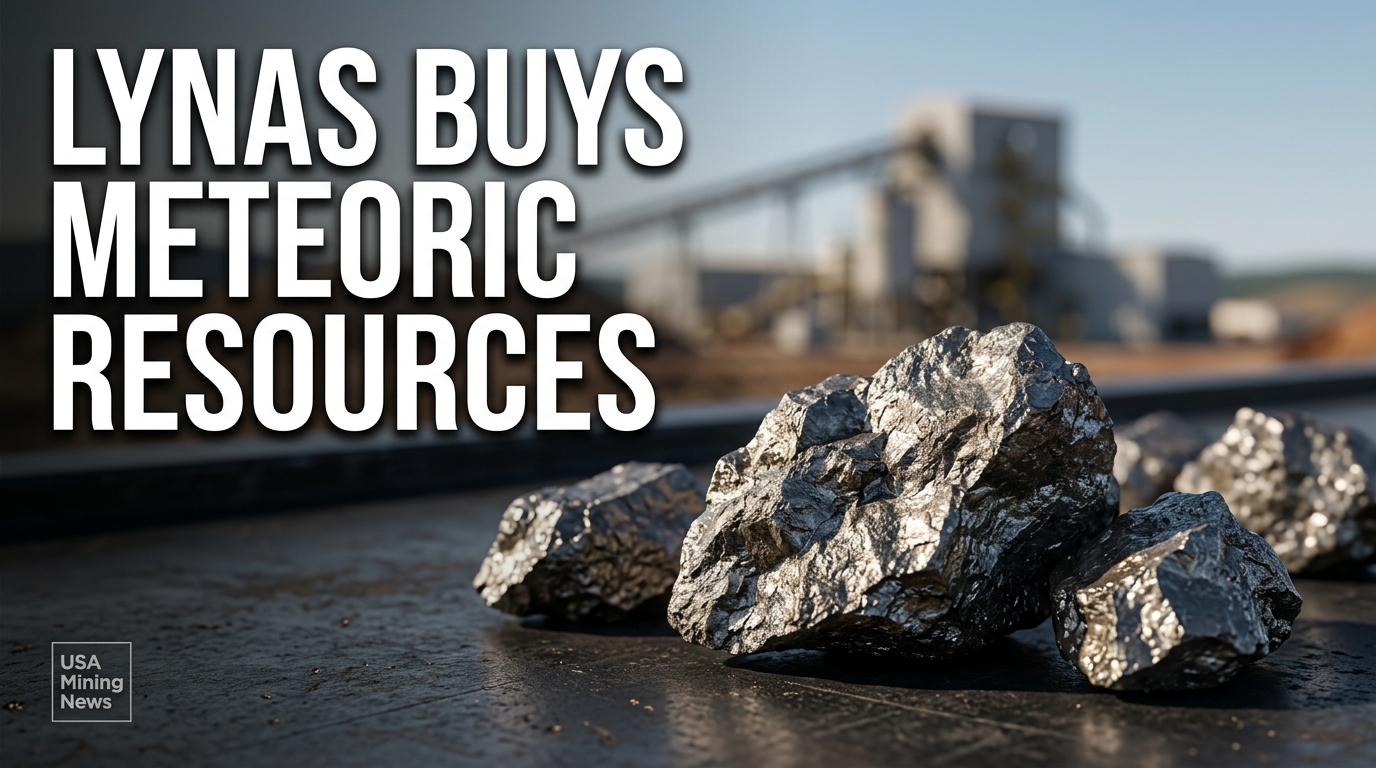
In a significant move poised to reshape the global rare earths supply landscape, Australian rare earths giant Lynas Rare Earths has announced a binding scheme implementation deed to acquire all shares in Meteoric Resources. The all-share transaction, valued at approximately $674 million (A$968 million) on a fully diluted basis, is set to integrate Meteoric’s Caldeira ionic clay rare earth project in Minas Gerais, Brazil, into Lynas’s expanding portfolio. This acquisition, revealed on October 1, 2026, represents a bold strategic maneuver by Lynas to enhance its resource diversification and strengthen its leading position in the increasingly critical rare earths market.
The deal comes as the global mining industry, particularly the advanced manufacturing and renewable energy sectors, intensifies its efforts to secure stable and diverse supply chains for rare earth elements. These materials are indispensable for a wide array of high-technology applications, including electric vehicles, wind turbines, and advanced electronics. Lynas, already a prominent player with its Mt Weld mine in Western Australia and processing facilities, is clearly positioning itself for substantial growth and enhanced geopolitical relevance through this calculated expansion into South America.
Strategic Rationale: Securing a Critical Supply Chain
The acquisition of Meteoric Resources and its Caldeira project is a cornerstone of Lynas’s "Towards 2030" growth objective, which aims to significantly expand its resource base and operational scale. John Humphrey, Lynas board chair, articulated the strategic imperative behind the deal, stating, "Lynas is very pleased with the potential to bring together the Caldeira deposit, which is the largest known ionic clay rare earth mineral resource outside China reported in accordance with the JORC Code, and Lynas’ high-grade Mt Weld deposit and leading rare earth operations."
This synergy is designed to create a more robust and diversified raw material feedstock for Lynas, complementing its existing world-class hard rock operation at Mt Weld. Ionic clay deposits are highly sought after for their typically lower capital and operating costs relative to hard rock deposits, as well as their propensity to contain a higher proportion of heavy rare earth elements (HREEs), which are often scarcer and more valuable. By integrating Caldeira, Lynas aims to meet the escalating customer demand for rare earth materials, ensuring a long-term, stable supply essential for a multitude of industrial applications. Furthermore, expanding operations into a new country like Brazil provides geographical diversification, mitigating single-jurisdiction risks and bolstering the company's resilience within the global rare earths supply chain. This move aligns with broader industry trends focusing on supply chain security and the reduction of reliance on a single dominant source.
The Caldeira Project: A Game-Changing Resource
At the heart of this acquisition is the Caldeira rare earth project, situated in Brazil’s mining-rich Minas Gerais state. Caldeira stands out as the largest known ionic clay Joint Ore Reserves Committee (JORC) rare earth oxide mineral resource outside China. Its significance is underscored by its comprehensive resource profile, which includes both light rare earth elements (LREEs) and heavy rare earth elements (HREEs), critical for high-performance applications.
Detailed technical assessments have established Caldeira's substantial mineral resources, notably an estimated 802,000 tonnes of neodymium-praseodymium oxides (NdPrO) and 41,000 tonnes of dysprosium-terbium oxides (DyTbO). NdPr is particularly vital for the production of high-strength permanent magnets, which are essential components in electric vehicle motors, wind turbine generators, and various advanced electronics. Dysprosium and terbium, while required in smaller quantities, are crucial HREEs used to enhance the heat resistance and performance of these magnets, especially in demanding environments. The presence of both LREEs and HREEs within a single, JORC-compliant ionic clay deposit outside of China makes Caldeira a truly strategic asset. Moreover, the project already has a completed definitive feasibility study (DFS), indicating a mature stage of development and providing a clear pathway for its rapid progression under Lynas’s ownership. Lynas anticipates the capital expenditure for developing the Caldeira project will exceed $500 million (A$721.3 million), reflecting the scale and ambition of this venture.
Financials and Transaction Mechanics
The transaction’s structure is an all-share scheme of arrangement, valuing Meteoric at approximately $674 million (A$968 million). This valuation is based on the 60-day volume-weighted average price (VWAP) of Lynas’s shares on a fully diluted basis. Under the terms of the agreement, Meteoric shareholders are set to receive 0.0207 Lynas shares for each Meteoric share they hold.
This share exchange implies a price of A$0.286 per Meteoric share, representing a substantial premium for Meteoric shareholders. Specifically, it reflects a 68.4% premium to Meteoric’s last closing price of A$0.170 and a 57.6% premium to its 30-day VWAP of A$0.197. Such a significant premium highlights Lynas’s strong interest in securing the Caldeira asset and its confidence in the project's long-term value. To ensure operational continuity for Meteoric during the scheme process, Lynas has also committed to providing an unsecured interim funding facility of up to A$110 million. An initial tranche of A$35 million became immediately available upon the execution of the binding deed, providing Meteoric with necessary liquidity as the acquisition progresses.
Regulatory and Shareholder Pathways
The successful completion of the acquisition remains contingent on several key approvals and conditions, typical for transactions of this magnitude. Foremost among these are the requisite approvals from both Meteoric shareholders and the Australian courts. The directors of Meteoric have publicly stated their intention to vote in favor of the scheme, provided no superior proposal emerges and an independent expert concludes that the deal is in the best interests of their shareholders. This customary condition ensures due diligence and protects shareholder value. Beyond these approvals, the scheme is also subject to other customary conditions that need to be satisfied before the transaction can be finalized.
The intricate financial and legal aspects of the deal have involved a roster of prominent advisors. Lynas received financial advice from Barrenjoey and Australian legal counsel from Mallesons. For the specific complexities of Brazilian legal matters, Lynas engaged BMA Advogados. On Meteoric’s side, Macquarie Capital (Australia) acted as financial advisor, with Allens providing Australian legal advice and Pinheiro Neto Advogados advising on Brazilian legal aspects. The involvement of multiple highly-regarded firms underscores the cross-border nature and legal intricacies involved in acquiring a significant mining asset in a foreign jurisdiction.
Broader Industry Implications: Diversification and Supply Security
This acquisition by Lynas is a microcosm of a larger trend within the global mining industry: the urgent drive to diversify and secure critical mineral supply chains outside of traditional, concentrated sources. The rare earth sector has long been dominated by China, which controls a significant portion of global production and processing. Geopolitical tensions and the increasing demand for rare earths for clean energy technologies and defense applications have spurred Western nations and companies to invest heavily in establishing alternative, resilient supply routes.
Lynas’s move into Brazil, a country with significant mining potential but a relatively nascent rare earths sector, represents a strategic geographical diversification. It reduces the company's reliance solely on its Australian operations and positions it as a key player in building a more distributed global rare earths supply network. This strategy is further evidenced by Lynas’s actions earlier in July 2026, when it signed a long-term partnership with JS Link to develop a rare earth permanent magnet factory in Kuantan, Malaysia. This forward integration into magnet production highlights Lynas's ambition to move further up the value chain, securing its position not just as a raw material supplier but also as a critical component provider for high-tech industries. The combination of resource acquisition and downstream processing investments signals a comprehensive approach to rare earth dominance.
Future Outlook for Lynas and the Rare Earth Sector
Should the acquisition of Meteoric Resources be finalized, Lynas Rare Earths will emerge significantly strengthened, possessing a unique combination of a world-class hard rock deposit at Mt Weld and a large-scale ionic clay resource at Caldeira. This dual-source strategy provides optionality in production, enhances raw material flexibility, and offers a natural hedge against potential operational challenges or market shifts impacting either deposit type. The integration of Caldeira’s NdPr and DyTb resources will allow Lynas to expand its product offerings and cater to a broader spectrum of customer needs, particularly for advanced magnet manufacturers seeking a reliable supply of both light and heavy rare earths.
For the broader rare earth industry, this transaction underscores the ongoing strategic consolidation and investment aimed at de-risking supply chains. Expect to see continued exploration and development of non-Chinese rare earth projects, coupled with increased focus on environmentally responsible mining practices and innovative processing technologies. Lynas’s proactive steps, exemplified by the Meteoric acquisition and its Malaysian magnet factory partnership, illustrate a clear vision for long-term growth and leadership in a market that is only set to increase in strategic importance. The coming years will likely feature more such transformative deals as the world races to secure the critical minerals essential for its energy transition and technological advancement.