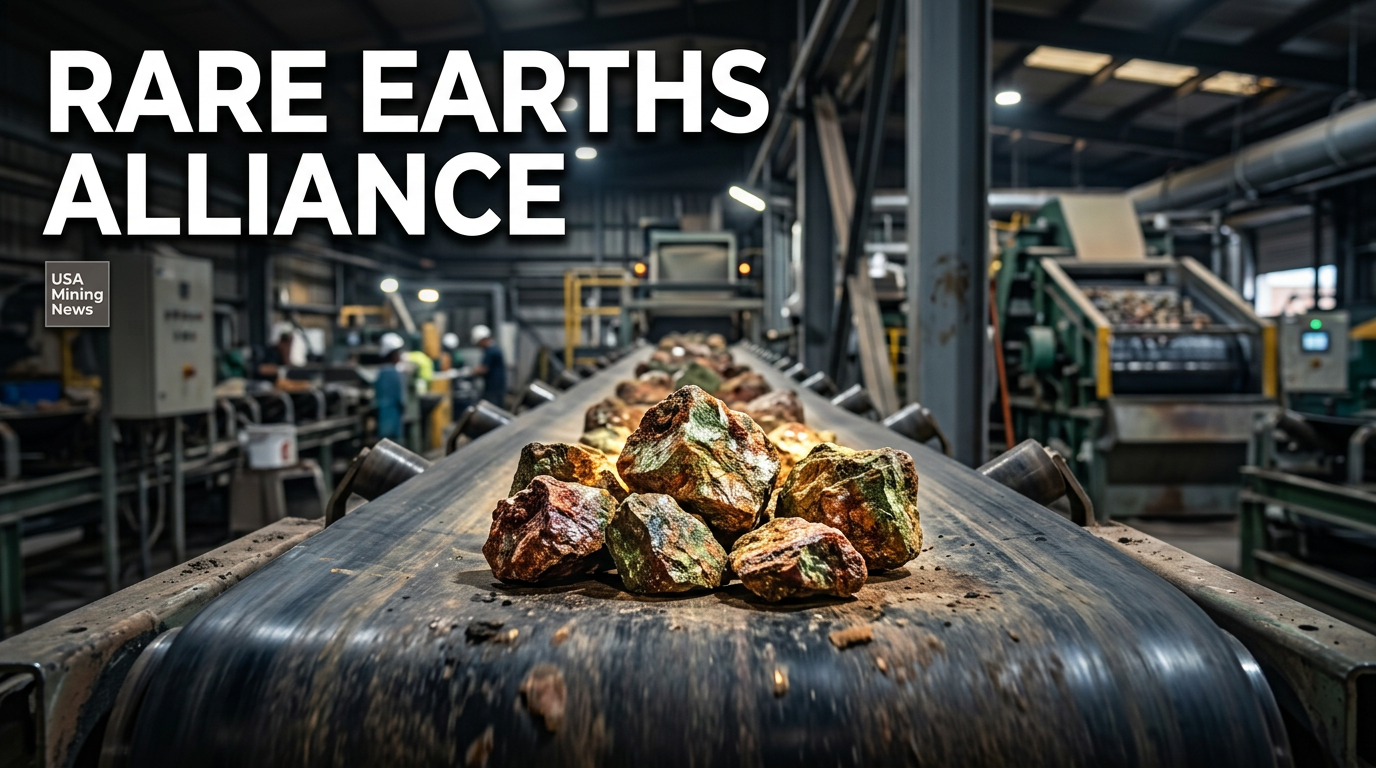
In a significant move poised to reinforce the diversification of global rare earth supply chains, Lynas Rare Earths, a leading producer of rare earth materials outside of China, and Japan Australia Rare Earths (JARE) formally signed a non-binding Memorandum of Understanding (MoU) on March 13, 2026. This pivotal agreement lays the groundwork for comprehensive collaboration across the rare earths value chain, encompassing mineral exploration, development, processing, and future product offtake.
The MoU, while non-binding and contingent upon the formulation of definitive agreements, signals a profound commitment between two key players to enhance the stability and sustainability of critical mineral supplies. For the global mining industry and nations heavily reliant on rare earth elements for advanced technologies, this partnership represents a bolstering of efforts to create robust, non-Chinese supply routes.
A Strategic Alliance for Rare Earths Supply Security
JARE, a joint venture established by the Japan Organisation for Metals and Energy Security (JOGMEC) and Sojitz Corporation, plays a crucial role in Japan's national strategy for securing stable access to critical minerals. JOGMEC, a governmental agency, is tasked with ensuring a stable supply of natural resources and energy for Japan, while Sojitz Corporation is a major Japanese trading company with extensive global operations. Their involvement alongside Lynas, which operates the world's highest-grade rare earth mine at Mt Weld in Western Australia and sophisticated processing facilities in Malaysia, creates a powerful alliance designed to address the multifaceted challenges of rare earth supply.
The relationship between Lynas and JARE is not new; the entities are already bound by a long-term senior loan agreement, reflecting an established history of financial and strategic cooperation. The MoU, however, broadens the scope of this partnership considerably, moving beyond mere supply agreements to a more integrated approach across the entire rare earths value chain. This holistic strategy is critical in an industry where geological scarcity, complex processing requirements, and geopolitical sensitivities intersect.
Deepening a Robust Partnership: The Updated Supply Agreement
The signing of the MoU directly follows an announcement earlier in March 2026 regarding an updated availability and supply agreement between Lynas and JARE. This revised agreement, effective until 2038, provides a clear framework for Lynas to supply a significant portion of its output to the Japanese market.
Key terms of the updated supply agreement include:
- A firm offtake for 5,000 tonnes per annum of neodymium-praseodymium (NdPr). This volume is secured at a floor price of $110/kg, with a provision for shared profit when market prices surpass $150/kg. NdPr is an essential component for high-strength permanent magnets, which are critical for electric vehicles (EVs), wind turbines, and a wide array of high-tech electronics and defense applications.
- Commitment to supply up to 75% of all heavy rare earth oxides (HREOs) produced by Lynas to the Japanese market. Heavy rare earth elements (HREEs) such as dysprosium and terbium are typically rarer and more challenging to extract and process than light rare earth elements (LREEs). They are vital for specialized applications requiring high heat resistance and magnetic performance, making their secure supply particularly strategic.
This long-term commitment, extending well over a decade, provides Lynas with revenue certainty and enables JARE—and by extension, Japanese industry—to plan with greater confidence for its future rare earth needs. It establishes Japan as a critical priority market for Lynas and significantly de-risks the supply chain for Japanese manufacturers heavily dependent on these materials.
Expanding the Value Chain: Scope of the MoU
The heart of the newly signed MoU lies in its ambition to create a comprehensive framework for cooperation that expands beyond existing supply arrangements. The planned areas of collaboration are extensive and aim to cover multiple facets of rare earth operations:
- Mineral Exploration and Development: Joint efforts to identify and develop new rare earth deposits. This is crucial for long-term supply security as current known deposits may not suffice for escalating global demand.
- Supplying Additional Feedstock: Exploring avenues to provide supplementary rare earth feedstock for Lynas’ existing processing and separation facilities. This could involve new mineral sands projects or other rare earth sources, diversifying Lynas’ raw material inputs.
- Offtake Agreements for Rare Earth Products from Joint Ventures: Establishing commercial mechanisms for JARE to purchase rare earth products derived from any future joint exploration or development ventures. This ensures that any new resources brought online benefit the strategic partnership.
- Financial Involvement from Both Parties: Committing to mutual financial participation in projects stemming from this collaboration, underscoring the shared investment and risk in developing these critical resources.
To facilitate discussions and work towards mutually agreeable definitive agreements, a steering committee comprising representatives from both Lynas and JARE will be formed. This structured approach is essential for navigating the complexities inherent in large-scale international mining and processing projects.
Lynas' "Towards 2030" Strategy and Resource Expansion
The MoU with JARE aligns seamlessly with Lynas’ ambitious “Towards 2030” growth strategy, particularly its objective to “add resource and scale.” This strategy is designed to ensure Lynas maintains its position as a globally significant, diversified supplier of rare earths by expanding its operational footprint and resource base.
Key pillars of this objective include:
- Expanding the Mt Weld Carbonatite Deposit: Increasing the operational capacity and efficiency of its world-class Mt Weld mine in Australia, which is renowned for its high-grade rare earth mineralisation.
- Further Exploring the Extensive, High-Grade Mt Weld Ore Body: Dedicated geological work to better understand and delineate the full extent of the Mt Weld resource, potentially identifying new zones for extraction.
- Sourcing New Complementary Feedstock: Actively seeking and developing additional sources of rare earth raw materials beyond Mt Weld to diversify supply and meet growing demand. The collaboration with JARE on exploration and development plays directly into this ambition.
Amanda Lacaze, CEO and managing director of Lynas Rare Earths, emphasized the complementary strengths brought together by the MoU. “The MoU will bring together Lynas’ mineralogy and metallurgy expertise and world-class Mt Weld resource with the technical, financial and commercial expertise of our partners at JOGMEC and Sojitz Corporation,” she stated. This synergy is fundamental to unlocking new resource potential and optimizing the entire rare earths value chain.
Industry Context: Geopolitical Imperatives and Demand Growth
This partnership unfolds against a backdrop of intensifying global demand for rare earths and a persistent desire among Western nations and allies to reduce reliance on China, which has historically dominated the rare earth production and processing landscape. Rare earths are fundamental to the global energy transition, powering electric vehicle motors, wind turbine generators, and a host of defense technologies, making dependable supply chains a matter of national economic and strategic security.
Japan, in particular, has been proactive in establishing secure supply routes for critical minerals. Its initiatives, exemplified by JARE, seek to mitigate supply chain risks and foster stable, diversified sources from friendly nations. Australia, with its significant mineral endowments and strong regulatory environment, has emerged as a key partner in this endeavor.
Further underscoring Lynas' commitment to supporting diversified supply outside of China, the company announced in October 2025 the construction of a new heavy rare earth (HRE) separation facility in Malaysia. This facility is specifically designed to meet the increasing demand for a dependable source of HRE oxides, which are particularly sensitive given their scarcity and strategic importance. The ability to process HREs locally, closer to end-users and outside of traditional processing hubs, represents a tangible step towards a more resilient global supply chain. The new MoU with JARE, specifically providing for up to 75% of HREOs to Japan, integrates perfectly with this broader strategic vision.
Future Outlook: Next Steps and Market Impact
The immediate next step for Lynas and JARE will be the work of the newly formed steering committee to translate the intent of the MoU into definitive, legally binding agreements. This will involve detailed negotiations on specific project scopes, timelines, financial commitments, and operational structures for exploration, development, and potential joint ventures. The market will closely watch for these definitive agreements as they will provide concrete details on the scale and impact of this expanded partnership.
Looking ahead, this deepening alliance between Lynas and JARE is expected to have several significant impacts. For global rare earth markets, it signals a further strengthening of the non-Chinese supply chain, contributing to greater overall stability and potentially influencing pricing dynamics over the long term. For investors, it highlights the continued strategic value of companies like Lynas that possess world-class resources and sophisticated processing capabilities, particularly those actively engaging in international partnerships to expand their value chains.
Ultimately, the Lynas-JARE MoU is much more than a corporate agreement; it represents a strategic alignment of resource expertise, financial strength, and national interest in securing the foundational elements for modern technology and a greener future. As the global energy transition accelerates, such collaborations will be increasingly vital in ensuring that critical minerals are available, accessible, and sustainably sourced.