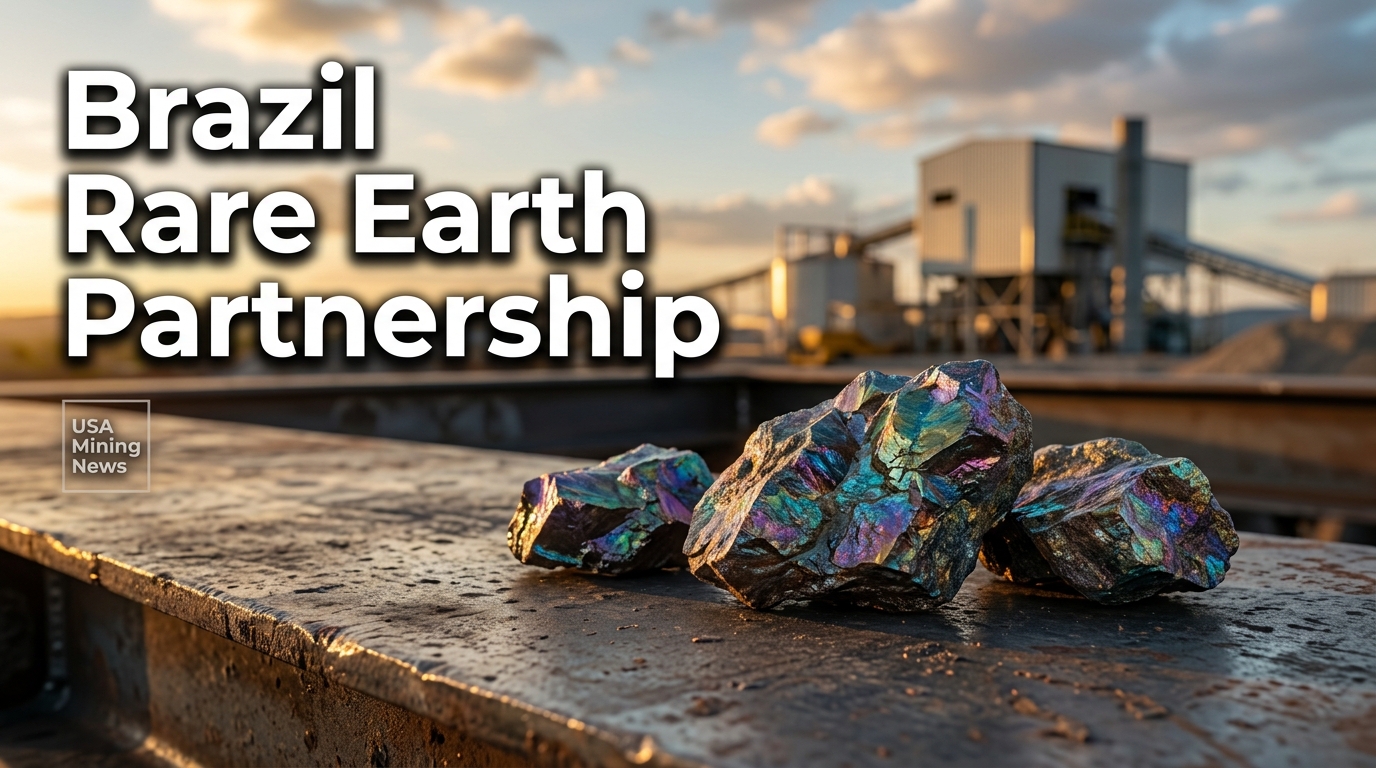
São Paulo, Brazil & Seoul, South Korea - July 29, 2026 – In a development signaling a concerted effort to fortify global critical mineral supply chains, Australia's Meteoric Resources has announced a strategic non-binding memorandum of partnership with South Korean industrial powerhouse POSCO International. This significant agreement targets the long-term development and commercial production of rare earth materials from Meteoric's Caldeira Rare Earth Project located in Brazil. The alliance underscores a proactive approach by POSCO to establish a resilient, integrated "mine-to-magnet" supply chain, critical for the rapidly expanding electric vehicle (EV), robotics, data center, and defense sectors worldwide.
A Strategic Collaboration for Critical Minerals
The memorandum of strategic partnership, signed on July 29, 2026, sets the stage for a comprehensive collaboration between Meteoric Resources and POSCO International. At its core, the agreement outlines a potential long-term offtake arrangement where POSCO could receive a substantial portion – up to 30% – of Caldeira's rare earth material output for a period extending up to seven years. This commitment highlights the strategic value POSCO places on securing a stable and diversified supply of these essential minerals, particularly as global demand continues to accelerate.
For Meteoric Resources, this partnership represents a major endorsement of the Caldeira project's substantial scale, high-quality resource, and strategic importance within the global rare earth landscape. As stated by Meteoric Managing Director Stuart Gale, the memorandum "represents a significant endorsement of Caldeira’s scale, quality and strategic importance, and provides a strong platform to advance long-term offtake, financing support and downstream supply chain integration with one of Korea’s most important industrial groups." The meticulous engagement between the two entities over "many months" prior to this announcement emphasizes the deliberate and strategic nature of the partnership, aiming to lay a robust foundation for Brazil's nascent rare earth industry and ensure a secure rare earth supply for the Republic of Korea.
Caldeira Project: A Cornerstone for Magnetic Rare Earths
The Caldeira Rare Earth Project in Brazil is positioned to be a crucial source of magnetic rare earths (MREs), which are indispensable components in high-performance permanent magnets. These magnets are vital for a diverse array of advanced technologies: they are integral to the traction motors powering electric vehicles, the precise mechanisms in robotics, the cooling systems in data centers, and advanced defense applications. The global transition towards electrification and automation has significantly amplified the demand for these MREs, creating an urgent need for new, reliable supply sources outside of traditional jurisdictions.
A key technical advantage highlighted in this partnership is the compatibility of Caldeira's rare earth carbonate with POSCO's processing capabilities. Metallurgical testing conducted by Meteoric has indicated that the Caldeira material can be processed by POSCO without requiring additional refining steps. This streamlines the supply process for these critical minerals, potentially reducing both processing costs and time-to-market. Such direct compatibility can offer a competitive edge in a global supply chain where complex and costly refining processes often add significant bottlenecks.
POSCO's Integrated "Mine-to-Magnet" Vision
This collaboration is a pivotal component of POSCO International's broader strategic vision to establish an end-to-end "mine-to-magnet" supply chain. This integrated approach aims to control the entire lifecycle of rare earth materials, from their extraction at the mine to their incorporation into finished high-performance magnets used in various high-tech applications. For a conglomerate of POSCO International's stature, with diverse interests spanning steel, energy, and trading, securing critical raw materials is paramount to de-risk its future manufacturing and industrial endeavors.
The strategic imperative for POSCO is clear: to ensure a stable and resilient supply of MREs that are essential for the advanced manufacturing industries it serves, both in South Korea and globally. By investing upstream in projects like Caldeira, POSCO aims to mitigate supply chain vulnerabilities, reduce reliance on single-source origins, and secure competitive advantages in an increasingly resource-constrained world. This move aligns with a broader industry trend where major industrial players are increasingly engaging directly with mining projects to secure their raw material needs.
Financial and Technological Synergies
Beyond the direct offtake agreement, the memorandum outlines significant avenues for financial and technological cooperation. POSCO International has expressed its intent to support Meteoric’s financing activities for the Caldeira project. This support could manifest in several ways, including possible direct participation in Meteoric's equity. Furthermore, POSCO is positioned to assist Meteoric in seeking funding from prominent Korean Export Credit Agencies (ECAs) and other financial institutions. Such entities could include the Export-Import Bank of Korea and Korea Trade Insurance, which play crucial roles in facilitating strategic international investments by Korean companies.
Access to such robust financial backing is critical for the development of large-scale mining projects like Caldeira, which require substantial capital investment. This potential financial lifeline, combined with the earlier support secured by Meteoric in January of this year – a non-binding, conditional letter of support for financing of up to $50 million (A$74.71 million) from Export Finance Australia – provides a strong financial runway for the project's progression. The combination of support from both Australian and Korean export credit agencies underscores the international strategic importance of the Caldeira project.
In addition to financial synergies, both companies are committed to sharing technology and industry best practices. This collaborative knowledge exchange aims to bolster Brazil’s downstream rare earth sector and enhance its overall value chain. Such technical cooperation can accelerate the development of more sophisticated processing capabilities within Brazil, potentially transforming the country from merely an extractor of raw materials into a more integrated participant in the global rare earth value chain.
Commercial Framework and Future Negotiations
The commercial terms of the rare earth supply are critical, and the memorandum establishes an initial framework for pricing. The pricing for the Caldeira rare earth material would initially be referenced to the Asian Metal Index, a widely recognized benchmark in the rare earth market. However, the definitive details of the final offtake pricing, including specific mechanisms and adjustments, are subject to further rigorous commercial negotiations. These negotiations will also take into account factors such as production availability from Caldeira and the internal approvals required by both Meteoric and POSCO.
It is important to note that, as a non-binding memorandum, the agreement remains subject to a series of crucial prerequisites. These include the satisfactory completion of due diligence by POSCO, obtaining all necessary internal approvals from both companies, and the eventual execution of definitive binding agreements. These steps are standard in major industry partnerships and ensure that all commercial, technical, and legal aspects are thoroughly vetted before final commitments are made.
Industry Implications: Reinforcing Supply Chains and Brazil's Role
The partnership between Meteoric and POSCO carries significant implications for the global mining industry, particularly within the critical minerals sector. It exemplifies the ongoing strategic imperative for major industrial economies, such as South Korea, to diversify their raw material sources away from highly concentrated supply chains. China, for instance, has historically dominated much of the rare earth mining and processing landscape, and global players are actively seeking alternative, reliable suppliers to enhance supply chain resilience and mitigate geopolitical risks.
Brazil, with its vast geological potential and nascent, but growing, rare earth industry, stands to benefit significantly from such international collaborations. Projects like Caldeira, supported by substantial foreign investment and technical expertise, have the potential to elevate Brazil's profile as a key player in the global rare earth market. This in turn could attract further investment and foster the development of a more sophisticated domestic critical minerals ecosystem.
This partnership also aligns with broader international efforts to establish responsible sourcing frameworks for critical minerals. As demand for these materials proliferates, ensuring ethical extraction, environmental stewardship, and social responsibility becomes paramount. Collaborations that integrate downstream users with upstream producers can facilitate the implementation of best practices across the value chain.
The Broader Rare Earths Landscape and Outlook
The global demand for rare earths, particularly the magnetic rare earths, is projected to surge in the coming decades, driven by the irreversible trends of electric vehicle adoption, renewable energy deployment, and advancements in digital infrastructure. Analyst reports consistently highlight a looming supply deficit for these critical elements if new projects do not come online expeditiously. The Meteoric-POSCO agreement is a clear example of how industry leaders are responding to this challenge by forging strategic alliances.
Looking ahead, the successful culmination of due diligence and definitive agreements will be critical next steps for both Meteoric Resources and POSCO International. Once finalized, the focus will shift towards accelerating the development of the Caldeira project, optimizing its operational efficiency, and bringing it into commercial production within agreed timelines. The long-term success of this partnership could serve as a valuable blueprint for future collaborations in the critical minerals space, demonstrating how international cooperation, financial backing, and technological exchange can collectively address the complex demands of a rapidly evolving global industrial landscape.