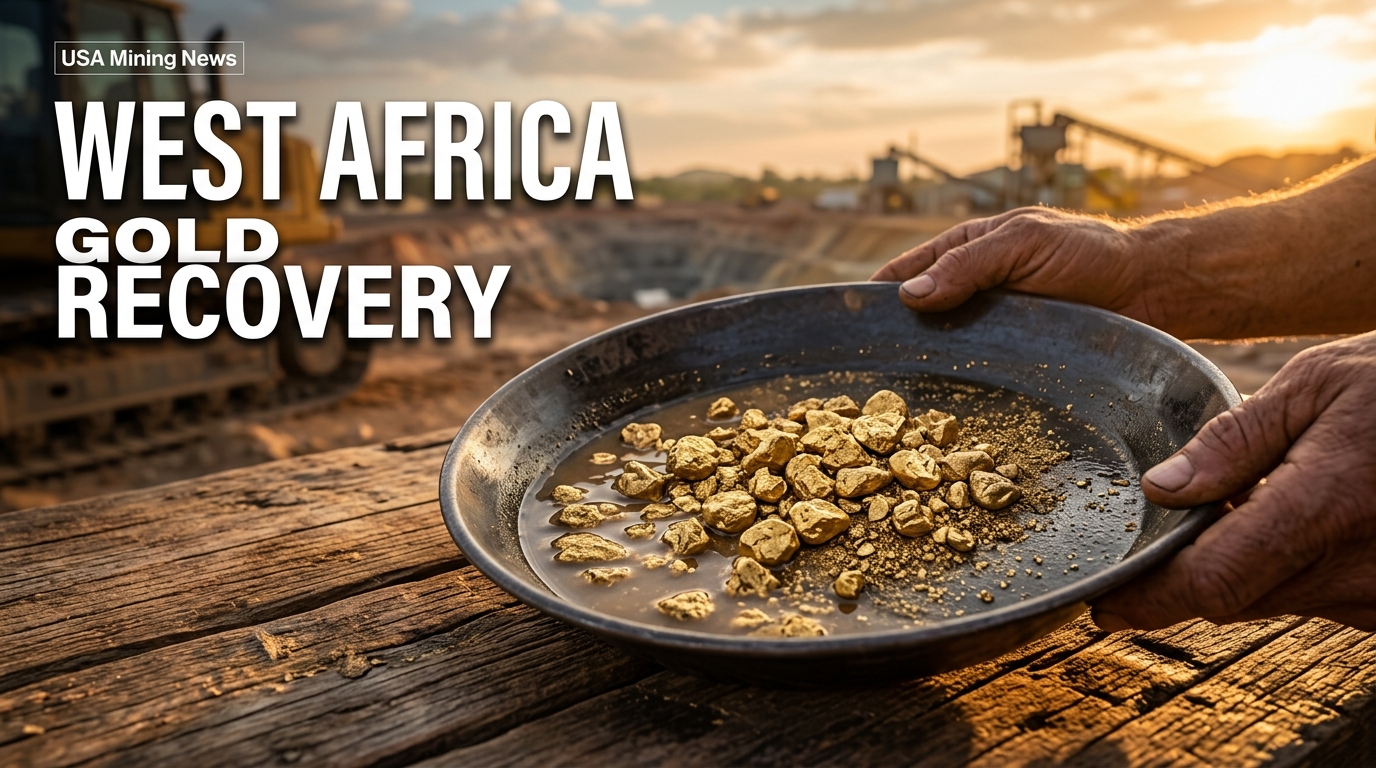
West Africa's Gold Landscape Set for Significant Shift as Ivory Coast Rises
West Africa has firmly established itself as a critical region in the global gold mining industry, contributing substantially to worldwide production and attracting considerable investment. Its rich geology, coupled with a generally favorable investment climate in key jurisdictions, has nurtured a vibrant mining sector. According to a recent analyst comment from GlobalData, dated May 14, 2026, the regional gold production landscape is set for a notable recalibration by 2026. This assessment highlights a dynamic shift within the key producing nations, driven significantly by the impact of renewed operational activity and strategic investment.
The core of this projection indicates that Ivory Coast is expected to ascend into a more prominent position, slated to become the third-largest gold producer in West Africa, thereby surpassing Mali. Concurrently, Ghana is anticipated to retain its formidable status as the continent's largest gold producer in 2025, continuing to serve as the steadfast anchor for West African gold output. This evolving scenario underscores the crucial role of mine restarts in supporting the region’s overall gold recovery, signaling a period of renewed vitality and strategic adjustments for industry stakeholders.
Ghana: The Indisputable Anchor of African Gold Production
For many years, Ghana has been the undisputed heavyweight of gold production in Africa, a distinction it is poised to maintain well into the near future. GlobalData's analysis confirms that Ghana will continue to be Africa’s largest gold producer in 2025 and is considered the "anchor" of West African gold production. This sustained dominance is not merely a matter of historical precedent but is rooted in a confluence of factors that have cemented its position as a leading mining jurisdiction.
Ghana boasts a mature and well-established mining sector, characterized by transparent regulatory frameworks, a long history of successful large-scale operations, and a relatively stable political environment. Major international mining companies have significant, long-term investments in the country, operating highly productive mines such as Ahafo, Obuasi, Tarkwa, and Damang. These operations benefit from extensive existing infrastructure, a skilled local workforce, and robust local supply chains. The Ghanaian government has, over the years, sought to balance resource extraction with local economic development, often implementing policies that encourage local content and beneficiation. This comprehensive approach ensures that while Ghana maintains its top production volumes, it also fosters a sustainable and attractive environment for ongoing capital expenditure and exploration. For investors and mining professionals, Ghana represents a benchmark for operational excellence and strategic stability within the African context, acting as a crucial foundation for the region's overall gold output.
Ivory Coast's Ascent: A New Regional Dynamic
Perhaps the most compelling shift highlighted by GlobalData’s analyst comment is the projected rise of Ivory Coast within the West African gold hierarchy. By 2026, the nation is expected to leapfrog Mali to become the region's third-largest gold producer. This anticipated surge is indicative of significant recent progress and strategic initiatives within the Ivorian mining sector.
Ivory Coast has, in recent years, actively sought to diversify its economy beyond its traditional reliance on cocoa and coffee, identifying mining as a key growth pillar. The country benefits from a highly prospective Birimian greenstone belt geology, similar to its gold-rich neighbors. A concerted effort by the Ivorian government to create a more attractive investment climate, through streamlined permitting processes, improvements in mining codes, and enhanced security, has drawn considerable international attention and capital. This has facilitated both new discoveries and the advancement of existing known deposits into production. Several new gold projects have either recently commenced operations or are in advanced stages of development, contributing to a rapidly expanding production profile. The strategic location of these projects, combined with ongoing infrastructure development, further enhances their viability. For the broader mining industry, Ivory Coast's rise signifies a burgeoning frontier, offering fresh opportunities for exploration and development, and contributing to the diversification of supply sources within West Africa.
Mali's Shifting Position in the Gold Hierarchy
As Ivory Coast ascends, Mali is set to transition from its long-standing position as a major regional player. While still a significant contributor to West African gold output, the GlobalData analysis projects that Mali will be surpassed by Ivory Coast as the third-largest producer by 2026. This shift does not necessarily imply a drastic reduction in Mali's absolute production, but rather a relative reordering of the top producing nations in the region.
Mali has historically been a crucial gold producer, hosting several world-class operations that have been instrumental in establishing West Africa's reputation as a gold prolific region. Mines such as Loulo-Gounkoto, Syama, Sadiola, and Morila have contributed substantially to both national and regional output for decades. However, like any mature mining jurisdiction, Mali faces a unique set of challenges. These can include the natural decline of ore grades at older mines, requiring significant capital investment in deeper exploration or optimizing existing processes. Furthermore, the country has navigated periods of political instability which, while not always directly halting operations, can affect investor confidence, delay new investment decisions, and complicate logistics and supply chains. Maintaining a consistent pipeline of new, high-grade discoveries is vital for sustaining production growth, and the competitive landscape for exploration capital has intensified in West Africa. While Mali remains an important gold mining nation, the anticipated shift in ranking underscores the dynamic nature of the regional industry and the need for continuous adaptation and investment to retain top-tier status.
The Role of Mine Restarts in Regional Recovery
The overarching theme of West Africa's gold recovery in 2026, as highlighted by GlobalData, is significantly underpinned by the robust trend of "mine restarts." This phenomenon refers to the recommissioning of previously dormant, underperforming, or economically marginal gold mining operations that are now being brought back online or scaled up. The implications of this trend are multifaceted and crucial for understanding the region’s rejuvenated mining activity.
Several factors typically contribute to the economic viability of mine restarts. A primary driver is a sustained period of high gold prices, which renders previously uneconomic deposits, or those with higher operating costs, profitable once again. This renewed profitability encourages companies to re-evaluate their assets, invest in necessary upgrades, or attract new ownership with fresh capital and expertise. Furthermore, advancements in mining technology, processing techniques, and a deeper understanding of geological deposits can unlock value from assets that were once considered depleted or too complex to develop. Strategic reviews of operational efficiencies, coupled with favorable market conditions, often position these projects for successful re-entry into the production stream. Such restarts are vital because they can bring quicker production gains compared to developing entirely new greenfield projects, which typically require much longer lead times for exploration, permitting, and construction. They also leverage considerable existing infrastructure, reducing initial capital outlays. For West Africa, these mine restarts are not just isolated incidents but represent a coordinated regional response to a positive market environment, contributing directly to increased gold output and creating employment opportunities within local communities.
Broader Market and Industry Implications
The evolving gold landscape in West Africa carries significant implications for the global mining industry, investors, and regional economies:
- Diversification of Supply: While Ghana maintains its leading role, the rise of Ivory Coast contributes to a more diversified production base within West Africa. This reduces potential supply risks associated with over-reliance on a single jurisdiction, enhancing the region's overall attractiveness for investment.
- Investment Focus and Capital Flows: The shift will likely redirect investor attention and capital towards jurisdictions demonstrating strong growth trajectories and stable regulatory environments. Ivory Coast, in particular, may see enhanced interest for exploration and development funding, while established players in Ghana continue to attract significant investment for expansion and modernization.
- Regional Competition and Cooperation: The dynamic among West African gold producers naturally fosters a degree of competition for international investment. However, it also presents opportunities for regional cooperation on infrastructure development, regulatory harmonization, and sharing best practices in sustainable mining and environmental stewardship.
- Economic Impact: Increased gold production translates directly into substantial economic benefits for the producing nations. These include boosted government revenues through royalties and taxes, foreign exchange earnings, job creation for local populations, and opportunities for local content development in procurement and services.
- Operational Challenges: Despite the positive outlook, the region continues to face common operational challenges such as securing reliable power and water, developing adequate infrastructure, attracting and retaining skilled labor, and ensuring consistent regulatory and fiscal regimes. These factors remain critical considerations for sustained growth.
Future Outlook for West African Gold
The proactive engagement in mine restarts and the strategic development of new projects underscore a positive and forward-looking outlook for gold production in West Africa. The region continues to demonstrate immense geological potential, with ongoing exploration efforts expected to yield new discoveries and extend the life of existing operations.
Maintaining a stable and predictable political and regulatory environment will be paramount for securing sustained investment and growth. Governments across the region are increasingly focused on balancing resource exploitation with national development objectives, including an emphasis on environmental protection, social responsibility, and local community benefits. As the global demand for gold remains robust, driven by its enduring value as an investment and in industrial applications, provinces like West Africa will continue to play a pivotal role. The strategic recalibration of production leadership, spearheaded by the ascendance of Ivory Coast and the steadfast performance of Ghana, paints a picture of a resilient and expanding gold sector poised for continued prominence on the world stage.