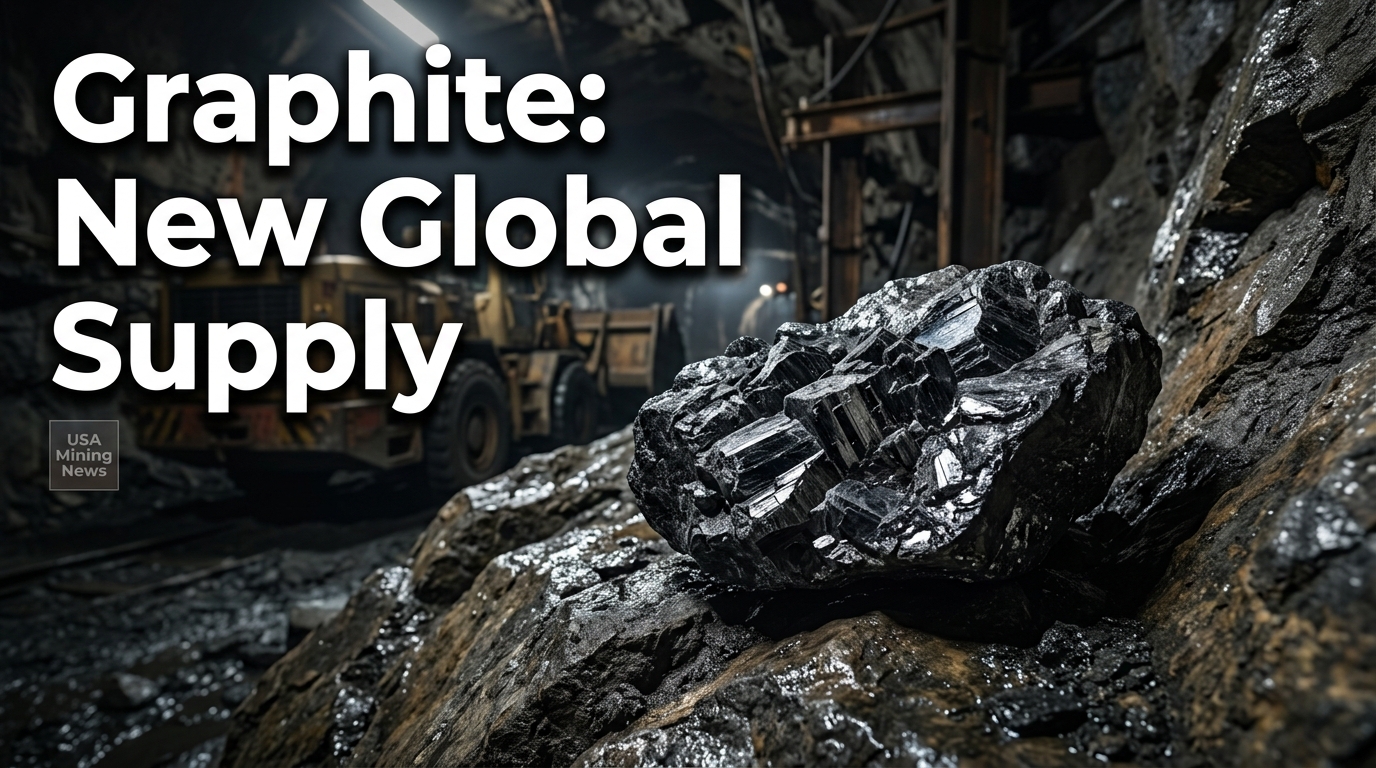
In a pivotal development for the global minerals sector, natural graphite production is experiencing not only substantial growth but also a significant geographical rebalancing. This fundamental shift, detailed in a recent analysis by GlobalData on April 24, 2026, signals a critical evolution in the supply chain for a mineral indispensable to the burgeoning electric vehicle (EV) battery industry and other high-tech applications. The era of overwhelming dominance by a single nation appears to be drawing to a close, ushering in a more diversified and resilient market landscape.
A New Era for Global Graphite Supply Commences in 2025
The year 2025 marked a crucial inflection point for natural graphite. Global production is estimated to have increased by a robust 9.6%, reaching 1.70 million tonnes (mt). However, the numerical expansion was overshadowed by a more material structural transformation: the rapid emergence of African producers as key drivers of new supply. This movement signifies the industry's concerted effort to broaden its production base and mitigate the risks associated with a historically concentrated supply structure.
Mozambique, in particular, led this expansion, reasserting its position as the world’s second-largest natural graphite producer, surpassing previous leaders Brazil and Madagascar. This recovery was predominantly fueled by the successful restart of Syrah Resources' Balama mine in June 2025. Improved operational efficiencies, including better recovery rates, enhanced product quality, and uninterrupted operating campaigns, were instrumental in its resurgence. Syrah’s Balama project is globally recognized as one of the largest natural graphite operations, making its consistent performance vital to global supply stability.
Tanzania also recorded a remarkable surge in output, with production nearly doubling from 24,600 tonnes in 2024 to 41,200 tonnes in 2025. This significant increase was primarily attributed to the continued ramp-up of the Lindi Jumbo project. Concurrently, Madagascar contributed to this positive momentum through stronger output from the Molo project and the recommencement of production at Vatomina in February 2025, further solidifying Africa's growing importance in the graphite landscape.
Sustained Momentum and Policy Shifts Drive 2026 Projections
The positive trajectory established in 2025 is expected to continue with vigor into 2026. Global natural graphite production is projected to rise by a further 25.1%, reaching an estimated 2.12 mt. This next phase of growth is anticipated to be even more geographically diverse than the preceding year.
- Mozambique is set to remain a primary contributor, with continued ramp-ups from the Balama and Nipepe projects. The country's expanding infrastructure and operational experience are expected to underpin this sustained growth.
- China, after a relatively flat 2025, is projected to recover. This recovery will be supported by the commissioning of China Minmetals’ Yunshan mine, alongside steady output from its extensive network of existing operations. While China's overall share is projected to decrease long-term, its absolute production volume will remain substantial.
- Madagascar is also forecast to increase its contribution, driven by improved utilization and operating performance at both the Molo and Vatomina projects.
A significant factor influencing the 2026 outlook, and indeed the longer-term trajectory, is the growing importance of policy and investment conditions. Madagascar's decision in January 2026 to lift its 16-year moratorium on new mining permits for most minerals is a landmark development. This policy change is expected to significantly enhance investor confidence and accelerate the approval process for new graphite projects, unlocking considerable development potential within the country.
Similarly, Tanzania's sustained growth is closely tied to execution, financing, and the strategic priorities of international project owners. This is particularly pertinent given that several key Tanzanian graphite developments are owned or backed by Australian companies. Their long-term investment strategies and successful project implementation will be crucial in defining Tanzania's future role in the global graphite market.
The Reshaping of the Graphite Landscape: A 2035 Vision
Looking further ahead, the graphite industry in 2035 is anticipated to be materially different from its current structure. Over the forecast period leading up to 2035, global natural graphite production is expected to grow at an impressive Compound Annual Growth Rate (CAGR) of 9.8%, ultimately reaching 4.9mt. The central narrative of this expansion will undoubtedly be supply diversification.
Growth will increasingly emanate from new projects and expansions in regions traditionally considered outside the core supply base, most notably Africa. The continent's high-quality resources, robust project pipelines, and attracting foreign investment are key pillars supporting this development. Consequently, a rise in output from Tanzania, Mozambique, Madagascar, Canada, and Australia is projected to fundamentally reshape the global market share dynamics:
- China, while remaining the largest producer, is expected to see its share of global output decline dramatically from 74.9% in 2025 to a projected 29.6% by 2035. This represents a significant easing of single-country dominance.
- Mozambique is expected to retain its position as the second-largest producer, though its market share may soften slightly as other new suppliers expand at a faster rate.
- Tanzania is projected to record one of the most substantial gains, with its share soaring from 2.4% in 2025 to an impressive 18.5% by 2035. This reflects both the successful ramp-up of existing projects and its evolving strategic relevance to the critical EV battery material supply chains.
- Canada and Australia are also expected to strengthen their presence considerably as non-Chinese supply chains attract increased investment, particularly from Western economies seeking to secure vital critical mineral resources.
- Madagascar is likely to maintain a meaningful role in future supply growth, capitalizing on its reopened licensing regime and existing project base.
Strategic Implications for the Mining Industry
This ongoing geographical rebalancing of natural graphite production carries profound implications for the global mining industry, investors, and policymakers alike.
- Supply Chain Resilience and Security: The shift away from concentrated supply, particularly from China, is a strategic imperative for global automotive and electronics manufacturers. Diversified sources reduce geopolitical and logistical risks, ensuring more stable access to a critical raw material for EV batteries. Western nations, in particular, are actively seeking to build resilient supply chains for critical minerals, and this diversification aligns perfectly with those strategic goals.
- Investment Opportunities in Emerging Markets: Africa’s ascendance as a graphite powerhouse presents significant investment opportunities. Companies with expertise in exploration, project development, and sustainable mining practices are poised to capitalize on these new ventures. However, these opportunities come with challenges related to infrastructure development, regulatory stability, and local community engagement, which require careful navigation.
- Technological Development and Quality Control: As new projects come online, maintaining consistent product quality, especially for highly demanding EV battery anode applications, will be paramount. Investments in processing technologies and quality assurance will be crucial for these new producers to compete effectively in the global market.
- Geopolitical Realignment: The changing landscape of graphite supply is intrinsically linked to broader geopolitical efforts to secure critical mineral supplies outside of traditional spheres of influence. This trend will likely foster new international partnerships and trade agreements, particularly between producing nations and major consuming blocs like North America and Europe.
- Environmental, Social, and Governance (ESG) Considerations: As new mines are developed, particularly in regions like Africa, robust ESG frameworks will be essential. Sustainable mining practices, responsible labor standards, and meaningful community benefits will not only be regulatory requirements but also critical for attracting ethical investment and securing social license to operate.
Key Players and the Evolving Investment Frontier
The success of this diversification hinges on the continued commitment and strategic acumen of key industry players. Companies like Syrah Resources, operating the Balama mine in Mozambique, exemplify the potential for significant output recovery and sustained growth when backed by robust financing and operational expertise. Similarly, the long-term prospects for projects like Lindi Jumbo in Tanzania, often supported by Australian companies, underscore the importance of international collaboration and foreign direct investment in catalyzing these shifts.
The policy moves in countries such as Madagascar, signaling a more open and predictable regulatory environment, are critical for attracting the necessary upstream capital. Investors and mining companies will be closely monitoring these policy shifts, as they directly impact project viability, risk assessment, and ultimately, the flow of investment into new exploration and development initiatives.
Conclusion: A Fundamental Transformation Underway
The natural graphite market is undergoing a fundamental transformation that will redefine its structure for decades to come. The projected decline in China's market share, coupled with the impressive rise of African nations like Tanzania and Mozambique, along with emerging contributions from Canada and Australia, marks a significant step towards a more geographically diverse and resilient global supply chain. This rebalancing is not merely numerical but represents a strategic imperative driven by the surging demand for critical minerals—especially for the electrification of transportation. For mining industry professionals and investors, understanding and adapting to this evolving landscape will be paramount for navigating the opportunities and challenges of a rapidly changing global economy.