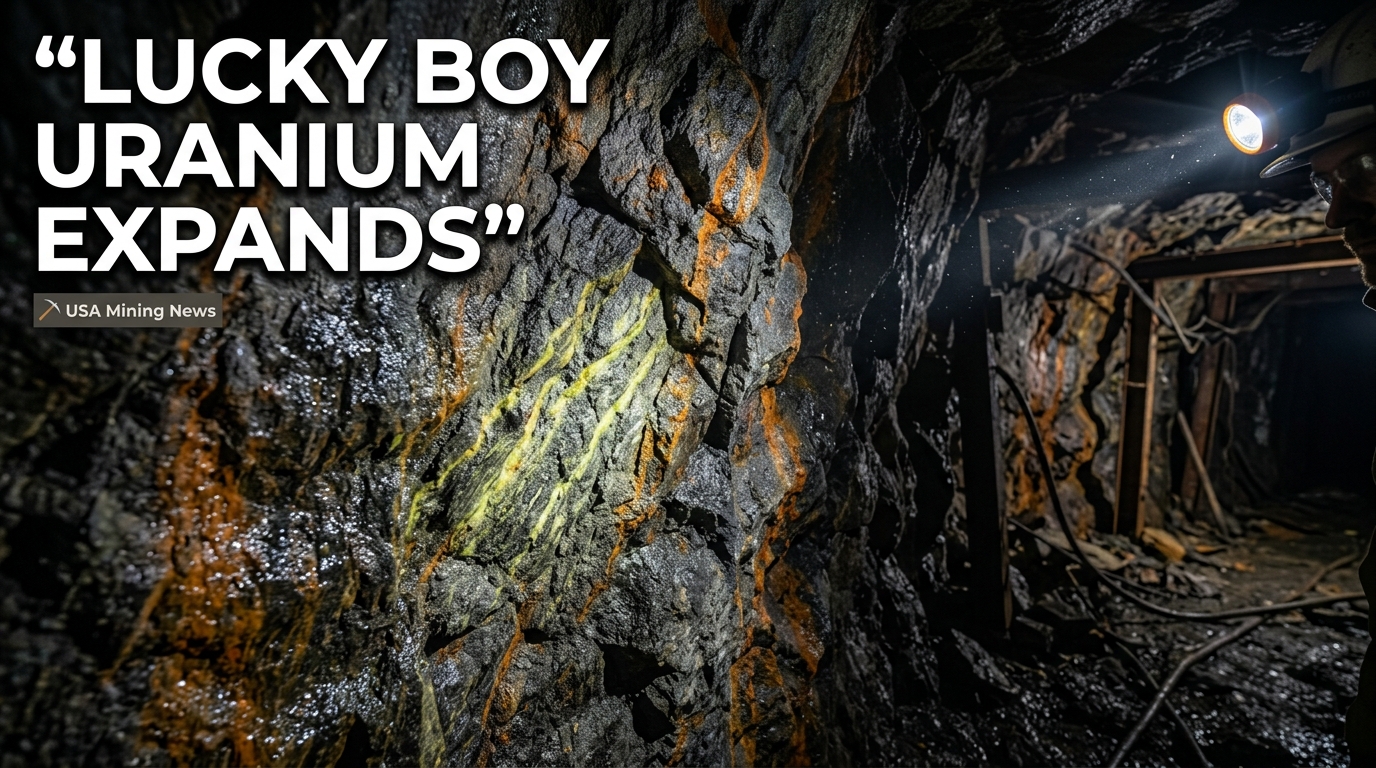
Phoenix, AZ – New Earth Resources, a growing player in the North American mineral exploration sector, announced a substantial expansion of its Lucky Boy Uranium Project in Gila County, Arizona, on May 1, 2026. The company has successfully secured approval for an additional 268 acres of state mineral lease land, which is directly contiguous to its existing project area. This strategic move, following an application submitted to the Arizona State Land Department in February 2026, significantly bolsters New Earth's footprint in a region with a documented history of uranium production.
Strategic Expansion Fortifies Lucky Boy Uranium Project
The acquisition of the new 268-acre state mineral lease parcel marks a pivotal development for the Lucky Boy project, effectively almost doubling New Earth Resources’ land holdings in the area. Prior to this approval, the Lucky Boy project encompassed 14 lode claims totaling approximately 273 acres. With the addition of the new contiguous state lease land, the project now spans an impressive total of around 541 acres.
This expansion is particularly significant given the project's historical context. The Lucky Boy area is known to have housed small open pit and underground workings that were actively producing uranium during two distinct periods in the mid-20th century: the 1950s and the 1970s. The presence of past production provides crucial geological insight and reduces the exploratory risk typically associated with greenfield projects, offering New Earth Resources a tangible starting point for its current and future exploration endeavors. Securing contiguous land is often a priority for mining companies, as it allows for more efficient operational planning, streamlined infrastructure development, and a consolidated approach to resource definition across a larger, unified land package.
Commenting on the approval, Lawrence Hay, CEO of New Earth Resources, expressed his satisfaction: "We are very pleased to receive approval for the additional state mineral lease land. The additional land significantly increases our footprint in the area, providing an opportunity to expand upon our existing exploration efforts and continue evaluating the broader project area." This statement underscores the company's long-term vision for the Lucky Boy project, viewing the expansion not merely as an acreage increase but as a strategic asset for comprehensive regional assessment and future development planning.
Operational Synergies and Future Planning
The decision to expand the Lucky Boy project through the acquisition of adjacent state mineral lease land is a clear reflection of New Earth Resources' strategic approach to mineral development. The contiguity of the new land parcel to the existing project area is a key operational advantage. It simplifies logistical challenges, potentially reducing the need for duplicate infrastructure, and creates a more cohesive exploration target. This integrated approach allows geological teams to conduct more thorough and systematic surveys, leveraging existing data from the initial lode claims across a wider, uninterrupted area.
The company views this additional state lease as a crucial step to "strengthen its property position" and "aid in long-term project planning." In the mining industry, a robust and consolidated land position is fundamental for attracting investment, optimizing operational efficiencies, and providing the necessary flexibility for eventual mine design and production scaling. The "increased strategic flexibility for future exploration" mentioned by New Earth Resources highlights the optionality that this expanded land title provides, allowing for dynamic adjustments to exploration strategies as new data emerges without being constrained by property boundaries.
Furthermore, combining adjacent land parcels can significantly "aid in potential development planning" as the company progresses its assessment of the project area. As exploration efforts mature and potential resources are delineated, having an expanded and unified land package can be instrumental in planning access roads, processing facilities, waste rock storage, and other essential infrastructure, ensuring that any future development can be designed for optimal economic and environmental performance.
Arizona's Role in Domestic Uranium Supply
Arizona holds a historically significant position in the United States' uranium supply chain. During the uranium boom of the mid-20th century, spurred by defense and later energy demands, states like Arizona, particularly within the Colorado Plateau region, were major domestic producers. The small open pit and underground workings at Lucky Boy, active in the 1950s and 1970s, are a testament to this legacy. The state's geological endowments have made it an attractive region for uranium exploration for decades.
In the current global landscape, renewed interest in nuclear power as a clean, reliable, and baseload energy source is intensifying focus on domestic uranium production in countries like the United States. Governments and utilities are increasingly seeking to diversify their uranium supplies and reduce reliance on geopolitically sensitive regions. Projects such as Lucky Boy, with proven historical production and now expanded exploration potential, are therefore garnering attention as potential contributors to future domestic uranium security.
The involvement of the Arizona State Land Department in the approval process underscores the regulatory framework governing mineral extraction on state lands. Navigating these processes successfully is critical for any mining company operating within Arizona, and New Earth Resources' prompt approval, just three months after its February 2026 application, indicates efficient engagement with state authorities.
New Earth Resources' Broader Portfolio
While the Lucky Boy project in Arizona is a significant focus, New Earth Resources is actively developing a diversified mineral portfolio across North America. This strategy aims to mitigate commodity-specific risks and capitalize on various market opportunities.
Beyond its Arizona uranium asset, the company maintains a presence in Canada's renowned uranium-producing region. New Earth holds three additional uranium claims in Saskatchewan, Canada, covering an area of 365 hectares. Saskatchewan's Athabasca Basin is globally recognized for hosting some of the world's highest-grade uranium deposits, making any exposure to this region strategically valuable for a uranium-focused company.
Furthermore, New Earth Resources is also exploring opportunities in the critical minerals sector, particularly rare earth elements (REEs). In January "this year" (referring to January 2026), the company outlined plans for an exploration initiative at the Strange Lake Project in Quebec, Canada. This property holds significant rare earth element potential, a commodity class vital for advanced technologies, renewable energy, and defense applications.
The planned exploration program for the Strange Lake Project is comprehensive, encompassing multiple data-gathering methodologies:
- Regional prospecting: Field reconnaissance to identify potential mineral occurrences.
- Airborne geophysical studies: Utilizing aerial surveys to detect subsurface geological features and potential mineralization through magnetic, radiometric, and electromagnetic responses.
- Regional geochemical surveys: Analyzing soil, stream sediment, or rock samples over broad areas to identify anomalous concentrations of target elements.
These initiatives are designed to generate robust data layers that will inform future targeting and area reduction, allowing New Earth Resources to focus its subsequent, more intensive exploration efforts on the most prospective zones. This diversification into both uranium and rare earth elements positions New Earth Resources to capitalize on two commodities that are deemed critical for global energy transitions and technological advancements.
Market Context and Uranium Outlook
The current global uranium market is experiencing a robust resurgence driven by a powerful confluence of factors. A renewed international commitment to decarbonization and the urgent need for energy security have placed nuclear power firmly back in the spotlight. Unlike intermittent renewable sources, nuclear power provides baseload electricity generation with virtually no greenhouse gas emissions, making it an indispensable part of many nations' strategies to meet climate targets and ensure grid stability.
This paradigm shift has resulted in increasing demand for uranium and, consequently, a significant appreciation in uranium prices over recent years. Utilities, facing long-term supply uncertainties and seeking to reduce reliance on geopolitically unstable sources, are entering into long-term contracts at higher prices, providing strong incentives for miners to invest in exploration and restart idled production capacity. For companies like New Earth Resources, holding and expanding projects with historical production records, like Lucky Boy, becomes particularly attractive. The presence of past workings often implies favorable geology and can accelerate the path to resource definition and, eventually, potential production, compared to entirely greenfield projects.
The expansion of the Lucky Boy project is therefore not just an isolated land acquisition but a well-timed move by New Earth Resources to position itself advantageously within a tightening and increasingly strategic uranium market. The company’s increased land package provides optionality for a larger potential resource, which could become a significant asset as the demand for secure and sustainable uranium supply continues to intensify globally.
Next Steps and Strategic Implications
With the expanded land package now secured for the Lucky Boy project, New Earth Resources will likely proceed with systematic exploration programs designed to fully evaluate the increased footprint. These efforts will typically involve detailed geological mapping, ground-based geophysical surveys, and ultimately, drilling campaigns to delineate and define a modern mineral resource estimate in accordance with industry standards. The historical production data from the 1950s and 1970s will be invaluable in guiding these initial exploration phases, helping to pinpoint high-priority targets. The contiguous nature of the new land parcel will allow for a more efficient and comprehensive approach to these activities.
The strategic implications of this expansion are far-reaching for New Earth Resources. It signals the company's commitment to advancing its uranium portfolio, recognizing the commodity's increasing importance. For investors, the expanded land position at Lucky Boy potentially de-risks future development by providing a larger, more coherent area for resource growth and operational planning. As the global energy transition continues to unfold, companies with tangible assets in critical minerals like uranium and rare earth elements are poised for significant growth, and New Earth Resources' latest move in Arizona firmly places it within this promising trajectory.