In a significant development for the global uranium market, Lotus Resources has announced that Orano Chimie-Enrichissement (Orano CE) has confirmed the acceptance of uranium ore concentrate originating from its Kayelekera site. This crucial validation allows Lotus to proceed with shipments to Orano CE’s conversion facility located in Malvesi, France, marking a substantial step forward for the restart of the Kayelekera project in Malawi and positioning Lotus as an emergent player in the international uranium supply chain.
A Formal Acceptance from Orano CE Unlocks Supply Potential
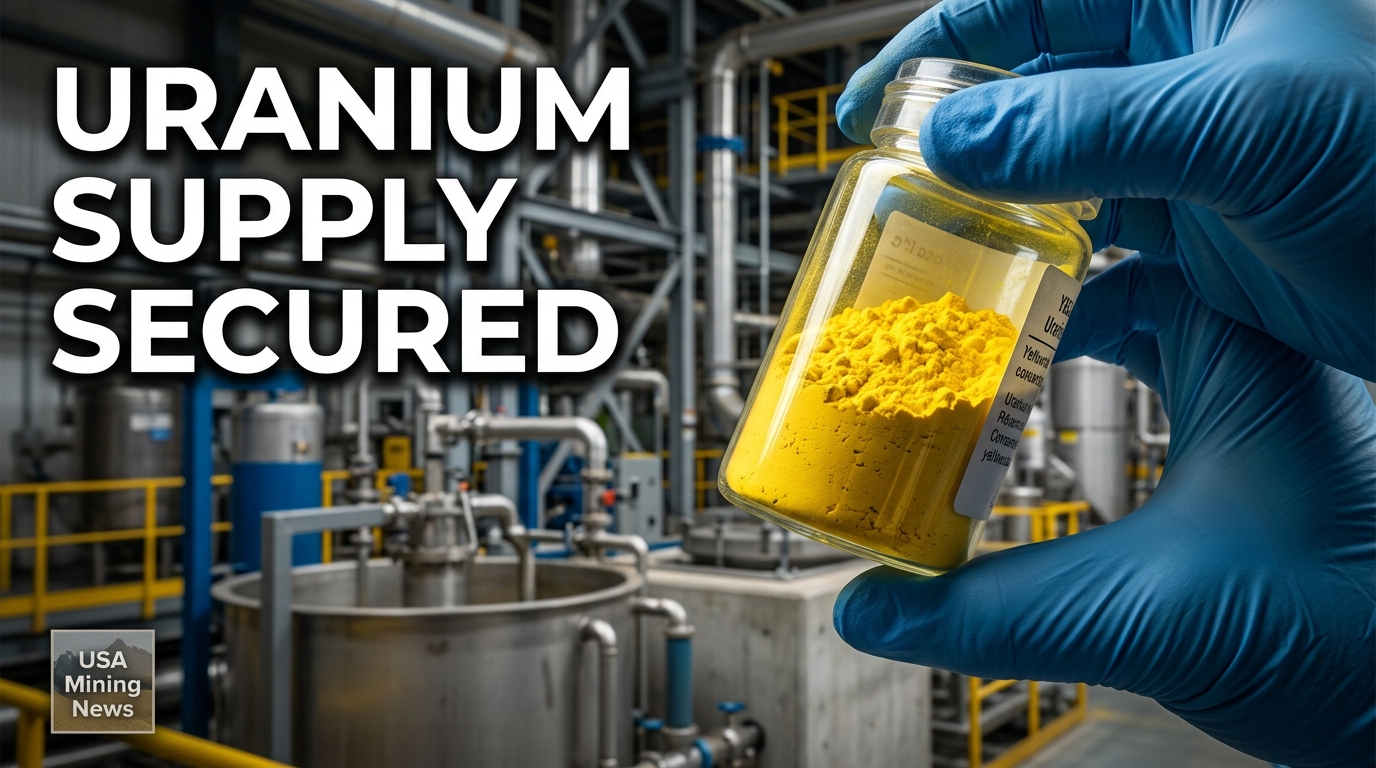
The acceptance by Orano CE, a key global player in the nuclear fuel cycle, represents a culminating point following a dedicated period of collaborative efforts between Lotus Resources and Orano CE. These efforts were primarily focused on optimizing and rigorously qualifying the uranium ore concentrate product from Kayelekera to meet the stringent specifications required for downstream processing. Such qualification processes are standard in the nuclear industry, ensuring that the concentrate, commonly known as yellowcake (U3O8), meets purity, moisture, and chemical composition standards necessary for safe and efficient conversion into uranium hexafluoride (UF6).
The formal agreement stipulates that Lotus must provide independent laboratory test results before initial shipments of the concentrate can commence to Orano CE. This step is critical for verifying the quality of the first batches against agreed-upon specifications and maintaining the integrity of the nuclear fuel supply chain. Furthermore, Orano CE is currently undertaking an additional assessment regarding the acceptance of materials that will be produced during the commissioning phase, which Lotus anticipates will occur in the fourth quarter of 2025. This forward planning ensures that all product types, including those generated during early operational stages, can be integrated into the supply pipeline.
Kayelekera's Pathway to Full Production
With the acceptance confirmed, Lotus Resources is now firmly focused on achieving its operational milestones. The company aims to reach full production capacity at the Kayelekera project by the second quarter of 2026. This ambitious timeline is supported by reported steady performance improvements observed in February and March, indicating positive momentum in the plant’s restart and commissioning activities. Mining restarts and ramp-ups often involve sequential improvements as equipment is fine-tuned, and operational crews gain experience with the specific ore body and processing plant configuration. These early performance metrics are critical indicators of a project's trajectory towards stable production.
The Kayelekera project, an 85%-owned asset of Lotus Resources located in Malawi, represents a significant source of future uranium supply. Its restart comes at a time of heightened demand and strategic interest in diversified uranium sources, driven by global shifts towards nuclear energy as a cornerstone of clean energy strategies.
Navigating Global Logistical Complexities
Successfully delivering uranium concentrate to global markets requires robust and reliable logistics, a challenge that Lotus is actively addressing. Earlier statements in March highlighted that exporting uranium via the port of Dar-es-Salaam in Tanzania remains the preferred route to market. This route typically offers a familiar and established pathway for mineral exports from the region.
However, the global shipping landscape has recently been marked by significant disruptions, particularly affecting routes from Dar-es-Salaam to Singapore’s crucial trans-shipment hub. These disruptions, often stemming from geopolitical events, regional conflicts, or port congestion, have necessitated agile strategic adjustments by commodity exporters. In response to these challenges, Lotus is actively collaborating with Alistair Group, a prominent logistics provider, and freight forwarder Orano NPS, a subsidiary of the Orano group specializing in nuclear transport solutions, to initiate exports through an alternative route: Walvis Bay, Namibia. This pivot to Walvis Bay demonstrates Lotus's proactive approach to supply chain resilience and ensures that their product can reach conversion facilities like Malvesi despite prevailing global logistical bottlenecks. Utilizing Walvis Bay provides an alternative gateway to the Atlantic shipping lanes, bypassing some of the disrupted traditional routes.
Strategic Implications for Lotus Resources and the Uranium Market
The acceptance by Orano CE is a pivotal moment, as underscored by Lotus managing director Greg Bittar. Mr. Bittar commented, "Orano’s acceptance of uranium marks a fantastic milestone for the Kayelekera restart, positioning Lotus as the next global uranium supplier." He further emphasized the excitement within the company, stating, "We are very excited to have achieved this acceptance by Orano CE, which allows us to now plan for first product to be dispatched from site." This initial export of uranium is contingent on several critical steps: final product preparation, comprehensive testing, fulfillment of acceptance criteria, securing necessary permits, and finalizing shipping arrangements, all of which are projected to occur in the second quarter of calendar year 2026.
Beyond simply securing a destination for its product, the agreement with Orano CE offers Lotus significant strategic flexibility. Mr. Bittar noted, "Whilst we will continue working to achieve accreditation with the other two western converters, ConverDyn and Cameco, the ability to exchange or swap product between converters means an Orano CE account provides us with delivery flexibility across all contracts and for future sales." This capability is immensely valuable in the nuclear fuel market, which is characterized by long-term contracts and complex supply chains. Having an accredited account with any major Western converter like Orano CE effectively facilitates transactions with other converters through product swapping or exchange agreements, thereby enhancing Lotus's market reach and mitigating risks associated with single-customer dependence. It also broadens the company's options for fulfilling various sales contracts, optimizing delivery schedules, and responding to market demands more efficiently.
Financial Foundations for Growth and Development
To support its ambitious restart and development plans, Lotus Resources undertook a significant capital raise in September 2025. The company completed a placement that generated approximately A$65 million, equivalent to about US$42 million. This substantial injection of capital was earmarked to bolster the working capital for the 85%-owned Kayelekera uranium project in Malawi. Adequate working capital is vital for mining operations, especially during a restart phase, covering operational expenses, spare parts, consumables, and unforeseen contingencies. A robust financial position ensures the smooth ramp-up and sustained operation of the mine and processing plant.
Furthermore, a portion of these funds is dedicated to progressing the development of Lotus’s 100%-owned Letlhakane project in Botswana. This dual focus highlights Lotus’s strategy of not only bringing Kayelekera online but also advancing its broader uranium project portfolio, indicating a long-term commitment to becoming a significant and diversified uranium producer.
Broader Market Context and Future Outlook
The acceptance of Kayelekera’s concentrate by Orano CE arrives at a dynamic period for the global uranium market. Heightened geopolitical uncertainties, coupled with a renewed global emphasis on energy security and decarbonization, have propelled nuclear power back into the spotlight. Governments worldwide are extending the lifespans of existing reactors, restarting dormant ones, and planning new builds, all of which are driving demand for uranium. Simultaneously, supply has faced numerous challenges, including historic underinvestment, production cutbacks, and operational hurdles at existing mines. This supply-demand imbalance has led to a significant upward re-rating of uranium prices over the past year.
Against this backdrop, new and diversified sources of uranium supply, such as that offered by Lotus Resources' Kayelekera project, are critically important. They contribute to greater supply security, reduce reliance on concentrated sources, and help stabilize the nuclear fuel cycle. For the global mining industry and investors, this development signals the potential for a new significant producer to enter the market, adding capacity to a sector that is increasingly looking for reliable, long-term supply solutions.
Looking ahead, the successful dispatch of the first product from Kayelekera in the second quarter of 2026 will be a closely watched event. Beyond the technical and logistical hurdles, Lotus will continue its efforts to secure accreditations with other Western converters, strengthening its market position. The journey from restart to full production, coupled with strategic logistical and market access partnerships, underscores the complex yet rewarding nature of bringing a major mineral asset back online in today's commodity climate. Lotus Resources is poised to play an increasingly important role in meeting the world's growing demand for nuclear fuel.