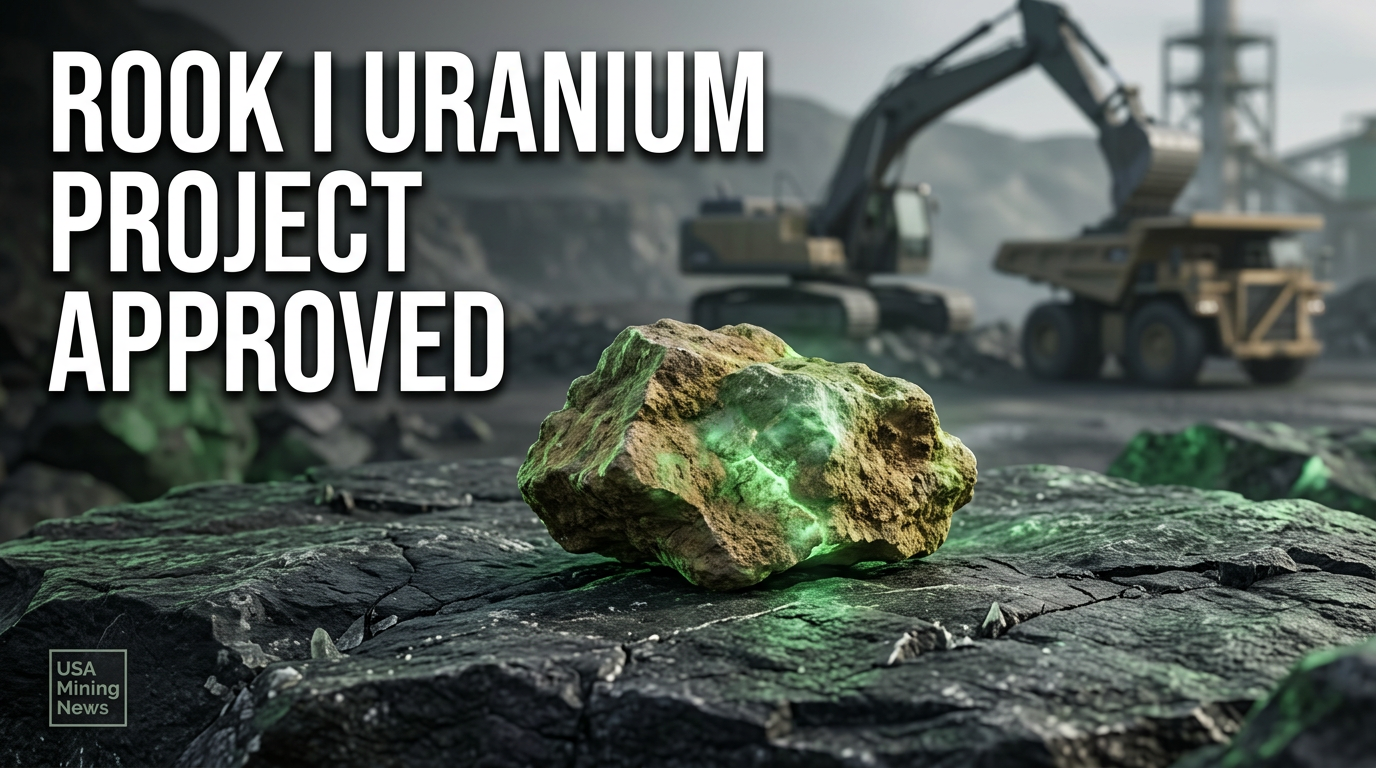
In a pivotal development for the global uranium sector, NexGen Energy Ltd. announced on March 6, 2026, that its flagship Rook I Uranium Project has received final federal approval from the Canadian Nuclear Safety Commission (CNSC). This critical license, authorizing site preparation and construction, marks the culmination of a rigorous and comprehensive regulatory process, positioning Rook I as one of the most advanced and significant new uranium projects in the world. Situated in Saskatchewan’s highly prospective Athabasca Basin, the project is set to begin full construction in summer 2026, promising to be a cornerstone of future global uranium supply and a major economic driver for the region.
The Path to Approval: A Rigorous Regulatory Journey
The journey to this final federal clearance has been a multi-year endeavor, characterized by extensive environmental assessments, engineering studies, and proactive engagement with stakeholders. NexGen Energy has navigated a complex regulatory landscape, underscoring Canada's stringent standards for resource development.
Key milestones leading to the March 6, 2026, CNSC approval include:
- Environmental Assessment Endorsement: In November 2023, the Province of Saskatchewan provided its environmental assessment endorsement, a fundamental prerequisite for moving forward with federal permitting. This provincial sign-off affirmed the project's adherence to stringent environmental protection standards.
- Commission Hearing Conclusion: The CNSC's two-part Commission Hearing concluded in February 2026. These hearings represent a crucial stage where the project's safety case, environmental impacts, and stakeholder concerns are thoroughly reviewed by independent experts and the public.
- Site Preparation and Construction License: The definitive approval, issued by the CNSC on March 6, 2026, grants NexGen the authority to prepare the Rook I site and proceed with construction activities. This license signifies that the project meets all federal safety and environmental requirements for the construction phase of a nuclear facility.
Leigh Curyer, Founder and CEO of NexGen, emphasized the magnitude of this achievement, stating, “Today’s approval represents one of the most rigorous and comprehensive regulatory processes undertaken for a resource project globally. This milestone is the result of the NexGen team’s steadfast and unrelenting focus over 12 years, understanding and delivering our objectives honestly and incorporating a culture of excellence.” This statement highlights the dedication and meticulous planning required to bring a project of this scale and sensitivity to fruition in a highly regulated jurisdiction like Canada.
Rook I: A Pillar of Future Uranium Supply
The Rook I Project is strategically located in Saskatchewan's Athabasca Basin, a region globally renowned for its exceptionally high-grade uranium deposits. Once operational, the project is projected to achieve an annual production target of up to 30 million pounds (mlb) of uranium. To put this figure into perspective, this single project is expected to account for more than 20% of the current global uranium supply and over half of the Western world’s current output.
This immense production potential positions Rook I as a critical component in addressing the anticipated global uranium supply deficit and enhancing energy security, particularly for Western economies seeking to diversify their supply chains away from politically sensitive sources.
With all necessary regulatory steps complete and a Final Investment Decision (FID) made, NexGen is poised to commence full-scale construction activities. The company has indicated that construction is officially set to begin in summer 2026 and is anticipated to span a period of four years. NexGen has affirmed that the necessary team, resources, and infrastructure are already in place, ready to facilitate advanced site preparations and the subsequent construction phases.
Strategic Development and Community Partnership
A hallmark of the Rook I project's development has been its commitment to collaboration with local Indigenous communities. This partnership approach reflects a growing imperative within the mining industry to ensure that resource development projects are undertaken in a manner that respects Indigenous rights, addresses concerns, and provides tangible benefits to local populations. Such collaborative frameworks are essential for achieving social license to operate, fostering long-term sustainability, and ensuring equitable distribution of the economic prosperity generated by mining operations.
Beyond the environmental and regulatory rigor, NexGen has also demonstrated a strategic financial approach to market its future production. In August 2025, the company secured a significant uranium off-take contract with a prominent US utility company. This agreement commits NexGen to deliver 1 mlb of uranium annually over a five-year period. Such early off-take agreements are crucial for de-risking major mining projects, providing guaranteed revenue streams, and signaling strong market demand to potential investors.
Market Implications and Geopolitical Significance
The final approval of Rook I comes at a time when the global uranium market is experiencing renewed interest and upward price momentum. The resurgence of nuclear power as a cornerstone of clean energy strategies, coupled with geopolitical instability impacting traditional supply routes, has underscored the need for reliable and secure uranium sources. The project's substantial production capacity, originating from a stable and Western-allied jurisdiction like Canada, carries significant geopolitical weight.
The prospect of Rook I supplying over 50% of the Western world's uranium output is a game-changer for energy independence. Many nations are actively seeking to reduce their reliance on uranium processors and producers from countries like Russia, which have historically dominated certain segments of the nuclear fuel cycle. Projects like Rook I offer a vital alternative, contributing to the diversification and resilience of the global nuclear fuel supply chain.
Economically, the project is poised to deliver substantial growth and job opportunities to the region. The four-year construction phase will generate numerous direct and indirect employment opportunities, attracting skilled labor and supporting local businesses. Once operational, Rook I will create long-term, high-value jobs, contribute significant tax revenues and royalties to provincial and federal governments, and further solidify Saskatchewan’s position as a global leader in uranium mining.
Leadership Perspective and Future Outlook
Leigh Curyer's remarks on the approval highlight not just the regulatory accomplishment but also the corporate philosophy underpinning NexGen's success. “This approach is what has defined our success to date and will continue through successful execution of the construction and operations phases. We moved with purpose and confidence to deliver a new standard for resources development,” he stated. This commitment to 'excellence' from concept to execution will be critical as the company transitions from a development stage entity to a major uranium producer.
Looking ahead, the next four years will be dedicated to the intensive construction of the mining and processing infrastructure at Rook I. Following this period, the project will move into commissioning and then full production, gradually ramping up to its target of 30 mlb per year. The successful execution of this construction phase will be closely watched by investors, industry analysts, and utility companies worldwide, as it represents a significant step towards alleviating potential future uranium supply crunches and supporting the expansion of global nuclear energy capacity.
The Rook I project is not just a mining venture; it is an integral part of the broader global energy transition. By providing a secure, substantial, and ethically sourced supply of uranium, NexGen Energy is playing a crucial role in enabling a future powered by clean, reliable nuclear energy. This final federal approval is not merely a bureaucratic checkbox; it is a green light for progress, prosperity, and energy security.