NMG Secures Landmark Graphite Supply Deal with Canadian Government, Fortifying North American Critical Minerals Chain
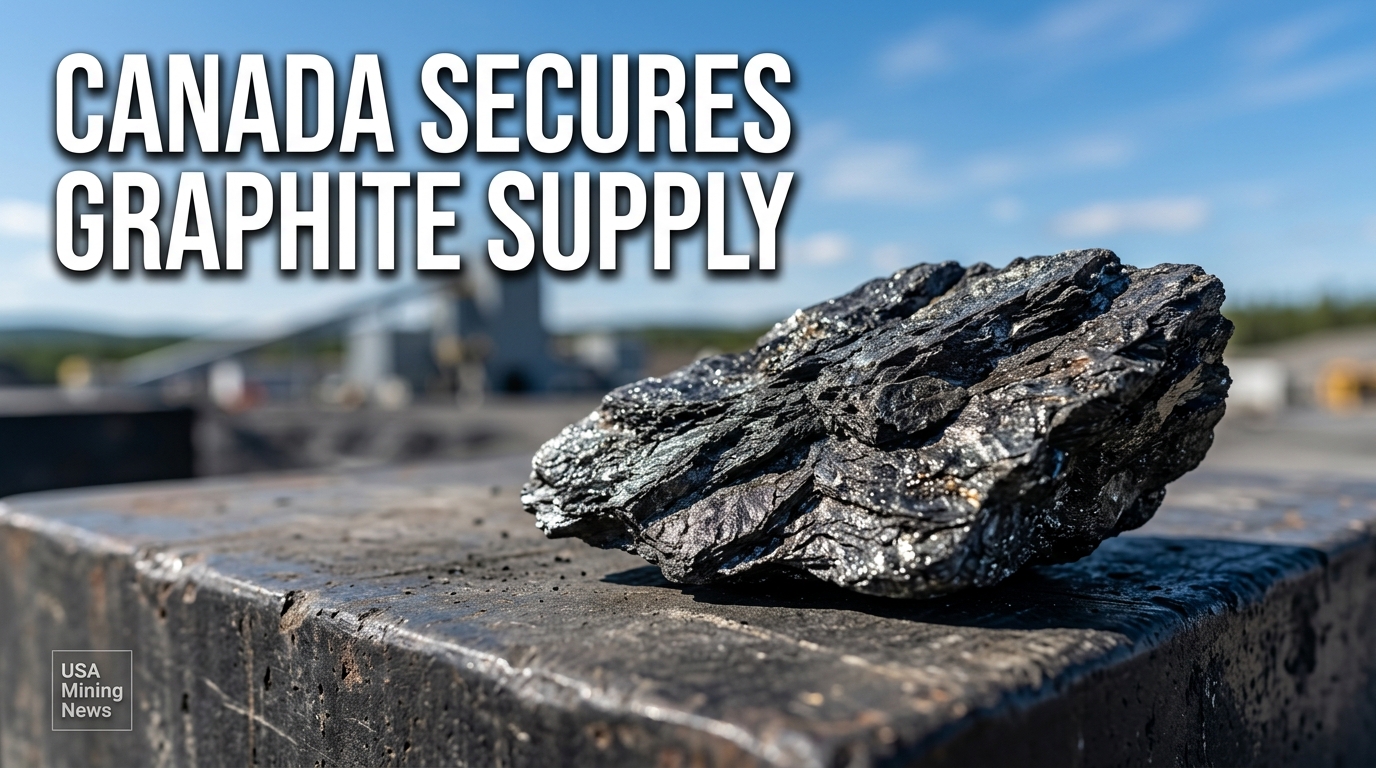
Montréal, Québec – In a pivotal development for North America’s burgeoning critical minerals sector, Nouveau Monde Graphite Inc. (NMG) announced on March 27, 2026, the signing of a revised, binding long-form term sheet with the Canadian Government. This agreement outlines the precise commercial terms for the supply, storage, and resale of high-purity flake graphite concentrate derived from NMG’s Phase Two Matawinie Mine, located in Saint-Michel-des-Saints, Québec. The deal represents a significant stride for NMG in de-risking its flagship project and a strategic victory for Canada in its efforts to build a resilient, secure domestic supply chain for electric vehicle (EV) battery materials.
The revised term sheet solidifies a commitment from the Canadian Government to purchase 30,000 tonnes per annum (tpa) of flake graphite concentrate. This purchase is structured on a take-or-pay basis, a common contractual arrangement in commodity markets where the buyer either takes delivery of the agreed-upon quantity or pays a penalty. This mechanism provides NMG with guaranteed revenue stability for a substantial duration of seven years, significantly enhancing the project’s bankability and its appeal to investors.
Commercial Framework: A Collaborative Revenue Model
The commercial terms of the agreement are designed to be both supportive of NMG’s operations and beneficial to Canada’s strategic objectives. The pricing for the graphite concentrate is set at a fixed North American price, which will be subject to annual adjustments tied to inflation. This structured pricing model aims to provide predictability for NMG while reflecting underlying economic conditions.
A distinctive feature of this agreement is the provision that grants NMG the right to resell the contracted volumes of graphite concentrate to other customers. Should NMG successfully resell these volumes at a price exceeding the fixed North American price stipulated in the agreement, any excess revenue generated will be shared equally with the Canadian Government. This innovative revenue-sharing mechanism offers NMG commercial agility, allowing it to capitalise on favourable market conditions and potentially higher prices, while ensuring Canada benefits directly from any market upside. It underscores a partnership approach, where both parties are incentivized for the project’s commercial success.
The execution of this term sheet is a crucial step towards finalizing definitive transaction agreements. However, these final agreements, and by extension the full implementation of the supply deal, remain contingent upon securing necessary government approvals and a positive Final Investment Decision (FID) for the Matawinie Mine. An FID is a critical gateway in large-scale mining projects, signifying a company's formal commitment to proceed with construction, typically following comprehensive feasibility studies, detailed engineering, and secured financing.
Reinforcing Project Bankability with Strategic Financing
The newly announced supply agreement is further complemented by substantial financial backing that significantly de-risks the Matawinie project. As previously disclosed, NMG has secured a C$464.01 million (approximately US$335 million) debt commitment from two prominent Canadian financial institutions: Export Development Canada (EDC) and the Canada Infrastructure Bank (CIB). This formidable financing package is instrumental in supporting NMG’s overarching strategy to secure the necessary capital for the development and construction of the Matawinie Mine.
Export Development Canada is the country’s official export credit agency, providing financial solutions and risk management services to Canadian companies. The Canada Infrastructure Bank is a Crown corporation that invests in revenue-generating infrastructure projects for the public interest. The involvement of both EDC and CIB highlights the Canadian government's strategic intent to support projects deemed vital for national economic interests and critical infrastructure, especially those that contribute to key supply chains like EV batteries. Such commitments from governmental financial entities are paramount for de-risking large-scale mining ventures, particularly in the nascent critical minerals space, making them more attractive to private investors and commercial lenders.
Matawinie Mine: A Cornerstone of North American EV Supply
The Matawinie Mine, located approximately 150 km north of Montréal, is poised to become a cornerstone of North America’s independent supply of natural flake graphite. NMG has meticulously advanced the project through detailed engineering and preparatory work, demonstrating a high level of readiness for construction. Furthermore, NMG has diligently engaged with local stakeholders, including securing significant agreements with the Atikamekw First Nation and local community representatives. These partnerships are crucial for ensuring the social license to operate, fostering local economic benefits, and upholding environmental stewardship.
Beyond this new arrangement with the Canadian Government, NMG has already put in place critical offtake agreements with major industry players. Notably, deals with Panasonic Energy, a global leader in EV battery manufacturing, and Traxys North America, a prominent physical commodity trader, collectively cover more than 70% of the planned production from the Phase Two Matawinie Mine. These pre-existing agreements, coupled with the new Canadian government deal, demonstrate robust market demand for NMG’s graphite concentrate and solidify its position as a reliable supplier in the rapidly expanding EV battery value chain.
Momentum for the Matawinie project has been building, with NMG announcing last month that it is advancing preparations for construction. This included the awarding of major construction contracts, which collectively cover more than half of the project’s total capital expenditure. This proactive approach indicates NMG’s confidence and commitment to bringing the mine into production as efficiently as possible.
Strategic Imperative: Securing a "Local, Dependable, and Responsible" Graphite Source
Eric Desaulniers, NMG’s founder, president, and CEO, underscored the transformative nature of this agreement. "This updated framework with the Government of Canada is another key step in reinforcing the bankability of our Phase‑2 Matawinie Mine and our positioning among the G7 and allied countries as a local, dependable and responsible graphite source," Desaulniers stated. "The contemplated supply, storage and marketing structure is designed to support Canada’s strategic ambitions while preserving commercial agility for NMG as we advance toward definitive agreements and an FID."
Desaulniers’ comments highlight the broader geopolitical and economic context of the deal. Graphite is a critical material for electric vehicle batteries, serving as a primary component of the anode. The global supply chain for battery-grade graphite is currently heavily concentrated in China, which processes the vast majority of the world's natural graphite. This reliance poses significant supply chain vulnerabilities for Western economies, particularly as the demand for EVs escalates rapidly.
Canada, like the United States and the European Union, has launched ambitious critical minerals strategies aimed at diversifying and securing domestic and allied supply chains. By guaranteeing a take-or-pay agreement and providing significant financial backing, the Canadian Government is actively working to establish a sovereign supply of graphite, thereby reducing its dependence on foreign sources and bolstering its domestic EV manufacturing ecosystem. NMG's Matawinie project, with its high environmental and social governance (ESG) standards, aligns perfectly with the criteria of a "responsible" source, which is increasingly important for downstream automotive and battery manufacturers.
Future Outlook and Implications
The path forward for NMG now hinges on the finalization of definitive agreements and, critically, a positive Final Investment Decision for the Matawinie Mine. Given the robust financing commitments, the existing offtake agreements, and the new government supply deal, along with advanced engineering and community engagement, the prospects for a favorable FID appear strong. A positive decision would trigger the full-scale construction of the mine, moving NMG closer to becoming a significant producer of battery-grade flake graphite. This would not only be a triumph for NMG but also a substantial victory for North America’s independent critical minerals supply and its ambitions in the global EV market.
This strategic partnership between NMG and the Canadian Government serves as a blueprint for how North American nations can collaborate with private industry to build resilient, secure, and sustainable supply chains for critical minerals. As the world transitions towards a greener economy, such initiatives will be paramount in ensuring energy security, economic growth, and technological independence for leading industrial nations.