Nokia’s Cognitive Operations Platform: Ushering in a New Era of AI-Driven Mining Intelligence
In a significant development poised to reshape operational paradigms across heavy industries, telecommunications giant Nokia announced the commercial availability of its new Artificial Intelligence (AI) platform, Cognitive Operations (CO). Unveiled on September 10, 2026, the CO platform is specifically engineered to support sectors where continuous field operations are paramount, with an initial and pronounced focus on mining, alongside public safety and defense. This strategic move by Nokia underscores the growing convergence of advanced digital technologies and industrial operational demands, promising to deliver unprecedented levels of real-time intelligence and resilience to some of the world’s most challenging work environments.
The CO platform represents a sophisticated integration of mission-critical communications, robust edge computing, and advanced operational AI, all consolidated within a field-deployable system. Its core mandate is to provide real-time intelligence regarding site conditions and asset performance, thereby significantly enhancing operational oversight and decision-making capabilities. For the global mining sector, grappling with complex logistics, remote operations, and stringent safety requirements, Nokia’s Cognitive Operations solution emerges as a critical tool for driving efficiency, safety, and productivity in an increasingly competitive landscape.
Revolutionizing Field Operations with AI and Digital Twins
At the heart of Nokia’s Cognitive Operations platform lies a suite of sophisticated features designed to address the pervasive challenges of downtime and operational interruptions in demanding industrial settings. The platform’s capabilities extend far beyond traditional monitoring, integrating several cutting-edge technologies:
- AI Assistance: Leveraging artificial intelligence, the platform provides proactive insights and recommendations, helping operators anticipate issues and optimize workflows before they escalate into significant problems. This proactive intelligence is crucial in mining, where equipment failure can lead to substantial financial losses and safety hazards.
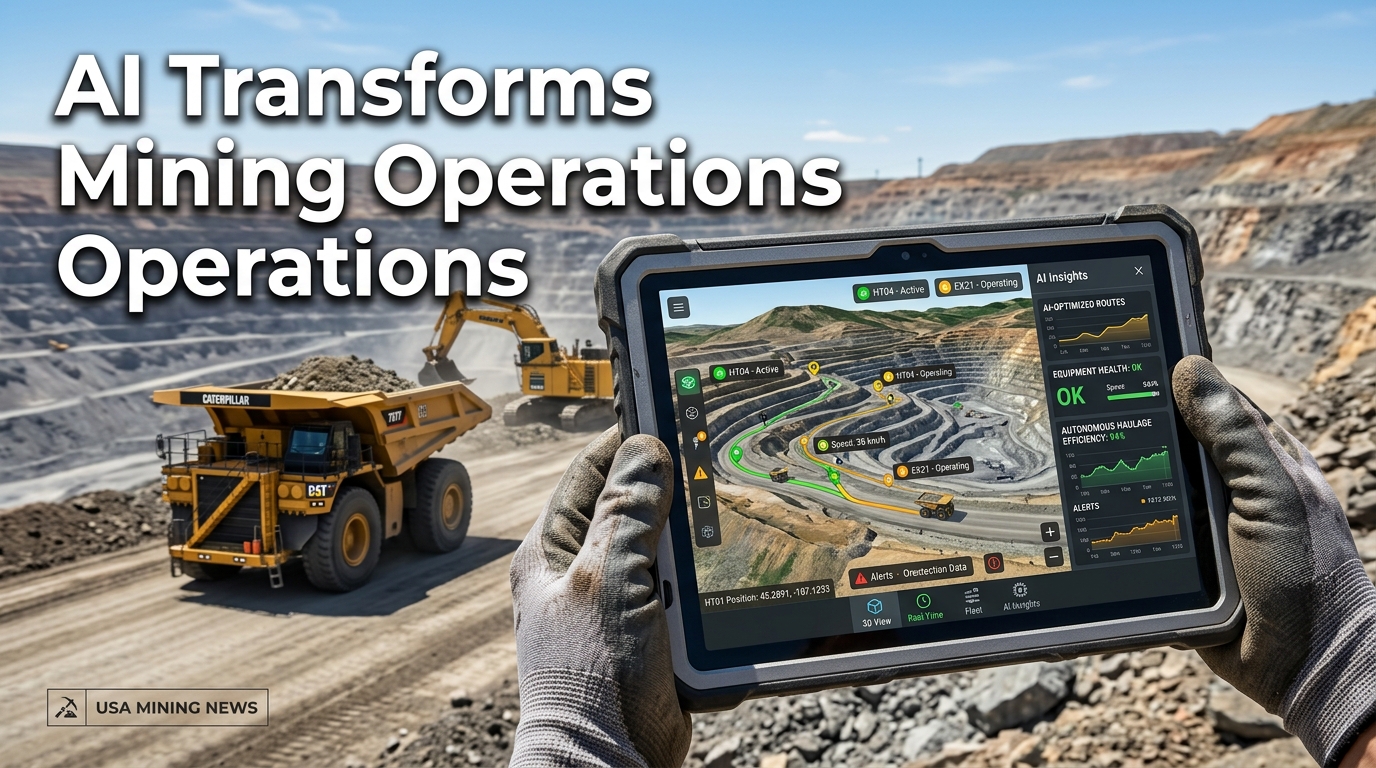
- 3D Digital Twin Visualizations: One of the most compelling features, digital twin technology creates a virtual replica of physical assets, processes, or even an entire mine site. This 3D visualization allows for real-time monitoring of operational status, predictive modeling, and scenario planning, offering unparalleled situational awareness. Operators can remotely assess conditions, simulate changes, and troubleshoot issues, reducing the need for physical presence in potentially hazardous areas.
- Video Analytics: Integrating advanced video processing, the platform can automatically analyze live and recorded video feeds from cameras deployed across a mine site. This enables automated detection of anomalies, security breaches, safety protocol violations, and operational inefficiencies, providing immediate alerts and actionable insights.
- Predictive Maintenance: By continuously monitoring equipment performance and leveraging AI algorithms, CO can predict potential mechanical failures before they occur. This allows for scheduled, proactive maintenance, significantly reducing unexpected breakdowns, prolonging asset life, and optimizing maintenance schedules, thereby minimizing operational disruption and associated costs.
- Hybrid Network Connectivity: Recognizing the diverse and often isolated nature of mining operations, the platform is designed to maintain robust connectivity across various network types. This ensures that intelligence gathering and communication remain uninterrupted, regardless of the challenging geographical or infrastructural constraints of a mine site.
Nokia asserts that this comprehensive combination of features is specifically tailored to reduce downtime and ensure that essential operations continue to run smoothly, even in the most challenging and remote environments. For mining operators, the integration of AI-enabled monitoring with resilient communications is paramount, offering a seamless flow of critical data whether deployed on-premises or via cloud solutions such as the Microsoft Azure Marketplace.
The Technical Backbone: Cognitive Edge Node (CEN)
Central to the functionality and robust deployment of the Cognitive Operations platform is the Cognitive Edge Node (CEN). The CEN is described as a durable network and edge computing device, meticulously engineered to withstand the harsh conditions often encountered in mining and other field operations. Its design encapsulates several critical technological advancements:
- Multi-Access Networking: The CEN facilitates connectivity across various network technologies, ensuring reliable data transfer and communication even in areas with fragmented or intermittent network coverage. This is especially vital for sprawling open-pit mines or extensive underground networks where traditional connectivity can be difficult to establish and maintain.
- On-Device, Graphics Processing Unit (GPU)-Accelerated Computing: By integrating powerful GPUs directly into the edge device, the CEN can process complex AI algorithms and handle extensive data analytics locally, at the source of data generation. This significantly reduces latency, a critical factor for real-time decision-making, and minimizes the reliance on continuous backhaul to a central data center or cloud, which may not always be feasible in remote mining locations. This capability extends AI-driven intelligence directly to vehicles, heavy machinery, and remote facilities operating in the field, enabling localized autonomy and immediate response.
The strategic deployment of CEN allows mining companies to bring advanced AI capabilities closer to the operational front lines, enabling faster data processing and more immediate insights. This decentralized intelligence is a game-changer for autonomous systems and real-time operational adjustments, which are increasingly becoming standard in modern mining.
Strategic Partnerships and Deployment Flexibility
Nokia’s approach to the Cognitive Operations platform is also characterized by strategic partnerships aimed at enhancing its capabilities and market reach. A notable collaboration is with Rajant, an industry leader in wireless networking. Through this partnership, Nokia has integrated Rajant’s Kinetic Mesh InstaMesh technology into the CEN. This integration significantly expands the platform’s wireless access options, providing an even more robust and adaptable communication backbone essential for the dynamic and often mobile nature of mining operations.
Furthermore, Nokia has partnered with Microsoft Azure, enabling cloud deployments of the CO platform via the Azure Marketplace. This offers mining operators the flexibility of choice between deploying the system on their local IT infrastructure at customer sites or leveraging the scalability and global reach of a leading cloud platform. This deployment flexibility is a key advantage, allowing mining companies to tailor the solution to their specific infrastructure capabilities, security requirements, and operational models, thereby facilitating faster implementation cycles. As Lelio Di Martino, General Manager of Nokia CO, articulated, “This launch is a defining step in Nokia’s promise to deliver connected intelligence. Our Cognitive Operations solution extends AI directly into the field, enabling real-time intelligence where physical operations happen. Together with our partners Microsoft Azure and Rajant, we are building a future-ready system for autonomous mission-critical infrastructure, with public safety agencies, defence forces and mining/construction companies leading the way.” This statement underscores Nokia’s commitment to forging robust ecosystems to deliver comprehensive solutions.
Implications for the Mining Sector: A Paradigm Shift
The introduction of Nokia’s Cognitive Operations platform holds profound implications for the mining industry, a sector undergoing a rapid transformation driven by digitalization, automation, and a renewed focus on sustainability and safety. CO addresses several critical pain points and offers significant opportunities:
- Enhanced Safety and Risk Mitigation: Mining is inherently a high-risk industry. AI-driven monitoring, real-time alerts from video analytics, and predictive maintenance capabilities can drastically improve safety protocols. By preventing equipment failures, monitoring personnel in hazardous zones, and detecting unsafe conditions proactively, CO can reduce incidents, protect workers, and minimize the operational and reputational costs associated with accidents. For example, in underground mining, real-time 3D digital twins coupled with video analytics can provide unprecedented oversight, immediately highlighting deviations from safety procedures or potential rockfall risks.
- Optimized Operational Efficiency and Productivity: Real-time intelligence and AI assistance empower mining companies to make data-driven decisions swiftly. Digital twins facilitate optimized mine planning, resource allocation, and logistics management. Predictive maintenance significantly reduces unplanned downtime, ensuring that valuable assets like haul trucks, excavators, and processing plants operate at peak efficiency for longer periods. This translates directly into higher production volumes and lower operational costs per tonne. The ability to push AI capabilities to the edge through CEN directly supports the growing trend towards autonomous vehicles and machinery in mining, enabling these systems to operate more intelligently and safely.
- Significant Cost Reductions: By optimizing maintenance schedules, reducing equipment wear and tear, improving energy consumption through better operational planning, and minimizing production stoppages, CO can yield substantial cost savings. The platform's ability to operate efficiently in remote locales also reduces the need for extensive on-site human intervention, which can be costly and logistically challenging.
- Supporting Environmental, Social, and Governance (ESG) Goals: More efficient and intelligently managed operations naturally lead to a smaller environmental footprint. Optimized energy use, reduced waste, and more precise resource extraction contribute to environmental sustainability. Furthermore, enhanced safety and improved working conditions contribute positively to the social aspect of ESG, reinforcing a company's social license to operate. The data insights gleaned from CO can also be used to demonstrate compliance with environmental regulations and improve reporting transparency.
- Bridging the Connectivity Gap in Remote Locales: Mining operations are frequently situated in remote geographical areas, often lacking robust communication infrastructure. The CEN’s multi-access networking and Rajant’s Kinetic Mesh InstaMesh integration provide resilient, high-bandwidth connectivity options that are crucial for transmitting large volumes of data required for AI analytics and real-time digital twin updates. This ensures that even the most isolated mine sites can leverage the full benefits of advanced digital solutions.
The Future of Connected Mining: Next Steps and Market Impact
Nokia’s Cognitive Operations platform arrives at a pivotal moment for the mining industry. As the sector continues to embrace Industry 4.0 principles, the demand for integrated, intelligent, and resilient digital solutions is escalating. The ability to deploy such a comprehensive AI and communications platform either on-premises or via cloud services offers mining companies unparalleled flexibility in their digital transformation journeys. This adaptability is crucial for an industry with diverse operational scales, legacy infrastructure, and varying levels of digital maturity.
The platform’s focus on extending AI directly into the field, to the very point where physical operations occur, positions Nokia as a key enabler for the next generation of autonomous and semi-autonomous mining operations. As mines move towards fully automated fleets and remote control centers, the low-latency, high-reliability data processing and communication offered by CO will become indispensable. This innovation is not merely about incremental improvements; it represents a fundamental shift in how mining operations can be managed, monitored, and optimized.
As mining companies look to future-proof their operations against market volatility, regulatory pressures, and skilled labor shortages, investment in advanced digital technologies like Nokia’s Cognitive Operations platform will be critical. The solution provides a tangible pathway towards achieving greater operational transparency, predictive capabilities, and ultimately, more sustainable and profitable mining enterprises globally.
The commercial availability of Cognitive Operations marks a significant milestone in Nokia’s broader strategy to deliver connected intelligence to industrial sectors. By addressing the unique demands of mining with a holistic and adaptable AI-driven solution, Nokia is poised to play a pivotal role in shaping the future of industrial automation and operational excellence.