Bolstering Mining Resilience: The Indispensable Role of Oil Analysis in Operational Strategy
The global mining sector operates under relentless pressure to maximize output, minimize costs, and ensure the longevity of multi-million-dollar heavy equipment. In such an environment, unplanned downtime is not merely an inconvenience; it represents significant financial losses, disrupts production schedules, and can even pose safety risks. As the industry continues to advance its operational methodologies, one critical, yet often underestimated, pillar of equipment maintenance is gaining ever more recognition: the disciplined practice of oil monitoring and used oil analysis. As insights published on March 25, 2026, underscore, these proactive measures are fundamental to sustaining peak performance and mitigating operational hazards.
The Critical Role of Proactive Maintenance in Mining
For any large-scale mining operation, the machinery — from gigantic haul trucks and excavators to sophisticated processing plants and drilling rigs — represents the backbone of its productivity. The integrity and continuous operation of these assets are paramount. Operation Managers are constantly seeking robust solutions that can curtail equipment downtime and preemptively address any risks that threaten site productivity targets. Traditional reactive maintenance, where repairs are only initiated after a failure occurs, is a costly approach that mining companies can ill-afford in today's competitive landscape. Such a strategy invariably leads to:
- Increased equipment downtime, directly impacting production volumes.
- Accelerated wear and tear, necessitating more frequent and extensive repairs.
- Complete equipment failure, resulting in exorbitant repair or replacement costs.
- Reduced capacity to meet crucial production demands and contractual obligations.
The shift towards proactive and predictive maintenance methodologies is not merely a trend but a strategic imperative. At the heart of this shift lies the systematic application of used oil analysis and continuous oil monitoring, delivering critical data that informs maintenance decisions long before minor issues escalate into catastrophic failures.
Unpacking the Value of Used Oil Analysis and Monitoring
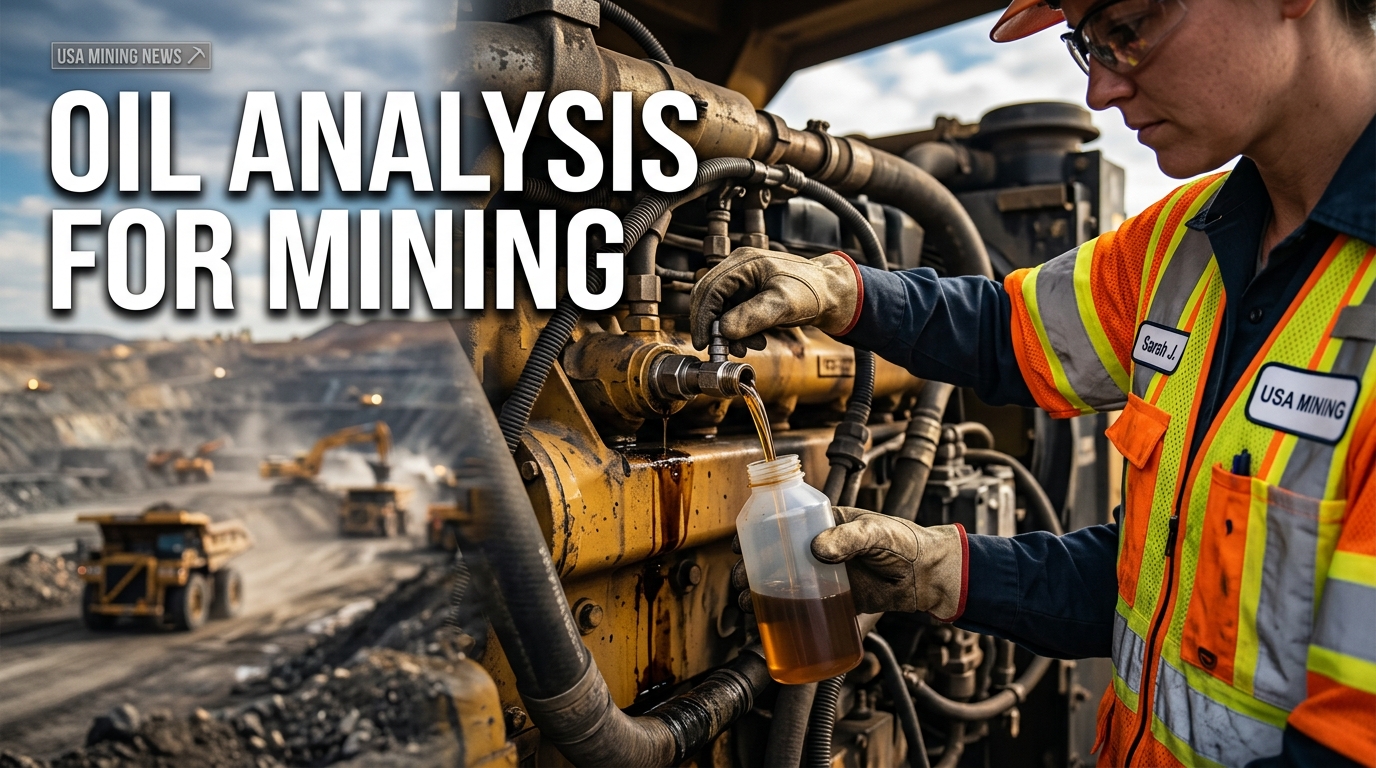
Used oil analysis is a diagnostic tool akin to a blood test for machinery. By regularly sampling and analyzing the lubricants within critical components, maintenance teams can gain deep insights into the internal health of an engine, gearbox, hydraulic system, or differential. This analytical process identifies various indicators, providing a comprehensive assessment of both the oil's condition and the equipment's operational state.
Key parameters typically examined in used oil analysis include:
- Wear Metals: Detecting microscopic metallic particles in the oil (e.g., iron, copper, aluminum, lead) can indicate abnormal wear rates in bearings, gears, cylinder liners, or pistons. Tracing the type and concentration of these metals can pinpoint the specific component experiencing distress.
- Contaminants: Identifying foreign substances like dirt (silicon), water, fuel, or coolant provides crucial intelligence. Dirt ingress is a leading cause of abrasive wear, while water can cause corrosion and reduce lubricant effectiveness. Fuel dilution or coolant leaks signal internal engine issues that require immediate attention.
- Oil Condition: Assessing the oil's viscosity, oxidation levels, nitration, and total acid number (TAN) or total base number (TBN) reveals how well the lubricant itself is performing. Degradation of the oil can compromise its protective capabilities, leading to increased wear despite sufficient lubrication.
- Additives: Monitoring the depletion of essential oil additives (e.g., anti-wear agents, detergents, dispersants) provides insights into the oil's remaining useful life and helps in optimizing oil drain intervals.
The core benefit derived from this rigorous analysis is the ability to catch potential issues, such as hydraulic system wear or contamination, long before they manifest as serious, visible damage or lead to operational disruption. This early detection capability transforms maintenance from a reactive scramble into a scheduled, controlled procedure, minimizing unplanned downtime and associated costs.
Preventing Catastrophic Failures: Technical and Operational Insights
Mining equipment, by its very nature, operates in some of the most challenging environments on Earth. Extreme temperatures, abrasive dust, heavy loads, constant vibration, and prolonged operating hours push machinery to its limits. Hydraulic systems, for instance, are the driving force behind many critical functions in excavators, loaders, and drills. They are intricate networks of pumps, valves, cylinders, and hoses, all reliant on the precise condition and cleanliness of hydraulic fluid.
Contamination in a hydraulic system – whether from external dust, water condensation, or internal component wear – can lead to a cascade of problems. Abrasive particles can score cylinder walls, damage pump components, and clog delicate control valves. Water can cause rust and degrade hydraulic fluid, leading to loss of lubricity and eventual system failure. Each of these events, if left unchecked, invariably results in:
- Reduced operational efficiency due to sluggish or unresponsive controls.
- Increased friction and heat, accelerating wear on other components.
- Sudden component failure, necessitating expensive parts replacement and extensive labor.
- Extended periods of equipment being out of service, directly impacting production targets.
Regular oil analysis allows maintenance teams to detect these precursors to failure. For example, a sudden spike in iron or copper particles in hydraulic fluid might signal wear in a pump bearing, allowing for a planned maintenance intervention (e.g., pump overhaul or replacement) during a scheduled downtime window rather than a crisis-driven, costly emergency repair during peak production.
A Case Study in Strategic Lubrication: Copper Mountain Mine's Experience
The practical application and tangible benefits of strategic lubrication and oil analysis are powerfully demonstrated by real-world examples within the industry. A compelling case study highlights how Canada's Copper Mountain Mine, a key producer in the nation's copper sector, leveraged a comprehensive lubrication strategy to support the launch and ongoing operations of its large-scale mining endeavor.
Copper Mountain Mine faced a formidable set of challenges characteristic of pioneering new operations and managing an extensive and diverse fleet:
- Extreme Operating Environments: The mine's location required systems capable of performing reliably under harsh weather conditions, including significant temperature fluctuations and demanding terrain.
- Diverse Equipment Fleets: The operation incorporated a wide array of heavy machinery from various manufacturers, each with unique lubrication requirements.
- Multiple OEM Requirements: Adhering to the specific lubrication specifications and warranties of numerous Original Equipment Manufacturers (OEMs) added complexity to maintenance planning.
- Demanding Operating Conditions: Continuous, heavy-duty operation placed immense stress on components, necessitating lubricants that could withstand high pressures and prolonged use.
To navigate these complexities, Copper Mountain Mine strategically partnered with Petro-Canada Lubricants, a recognized leader in performance lubricants. Together, they implemented a holistic lubrication strategy designed to go beyond mere reactive top-offs, focusing instead on proactive asset protection and optimized performance.
The core elements of this strategic approach likely included:
- Selection of high-performance, purpose-built lubricants tailored to specific equipment and environmental conditions.
- Development of rigorous lubrication schedules and procedures, supported by advanced monitoring.
- Integration of regular used oil analysis programs to track equipment health and lubricant performance.
- Training programs for maintenance personnel to ensure consistent application of best practices.
The outcome was a significant improvement in operational reliability, a simplification of maintenance protocols across the diverse fleet, and, most importantly, enhanced protection for critical assets. This strategic foresight minimized early-life failures and contributed directly to the mine's sustained performance and efficient production profile.
Beyond Downtime: Broader Industry Implications
The ramifications of robust oil monitoring and analysis extend far beyond merely reducing equipment downtime. They permeate nearly every facet of a mining operation's financial health, environmental stewardship, and competitive standing.
- Cost Efficiency: By extending component life and optimizing oil drain intervals, companies can significantly reduce consumption of lubricants, spare parts, and labor costs associated with emergency repairs. Planned maintenance is inherently less expensive than unplanned interventions.
- Enhanced Safety: Equipment failures can initiate hazardous situations. Preventing catastrophic mechanical breakdowns through proactive monitoring directly contributes to a safer working environment for all personnel on site.
- Environmental Responsibility: Longer equipment life translates to less waste from discarded components and potentially reduced lubricant consumption, aligning with broader industry goals for sustainability and reduced environmental footprint.
- Improved Asset Management: Detailed data from oil analysis feeds into more sophisticated asset management systems, providing a clearer picture of asset depreciation, remaining useful life, and optimal time for capital expenditure planning (e.g., when to schedule a major overhaul or replacement).
- Competitive Advantage: Mines with superior operational efficiency and reliability can achieve lower per-unit production costs. This enables them to maintain profitability even during periods of commodity price volatility, providing a crucial competitive edge in the global market.
In essence, investing in comprehensive oil analysis and monitoring programs is not merely a maintenance expense; it is a strategic investment in operational resilience, long-term profitability, and sustainable mining practices.
The Future Outlook for Asset Management in Mining
The principles of oil monitoring and analysis are continually evolving, integrating with broader trends in digital transformation and predictive analytics. The future will likely see even more sophisticated applications:
- Real-time Sensor Integration: Continuously monitoring oil condition and wear particles in situ, transmitting data wirelessly for immediate analysis and alerts.
- Artificial Intelligence and Machine Learning: Algorithms will process vast datasets from oil analysis, operational parameters, and environmental conditions to predict failures with even greater accuracy and recommend optimal maintenance interventions.
- Integrated Maintenance Platforms: Oil analysis data will be seamlessly integrated with Enterprise Asset Management (EAM) and Computerized Maintenance Management Systems (CMMS) for a holistic view of asset health and automated work order generation.
- Advanced Lubricant Formulations: Manufacturers, like Petro-Canada Lubricants, will continue to innovate, developing lubricants with enhanced protective properties, longer lifespans, and specialized additives that further extend equipment life and enable more sophisticated analysis.
As the mining industry navigates escalating operational costs, supply chain complexities, and pressures for sustainable practices, the importance of foundational maintenance disciplines like oil monitoring and used oil analysis will only grow. These practices, proven to extend equipment life, reduce costly downtime, and bolster overall productivity, remain central to defining excellence in mining operations today and well into the future.