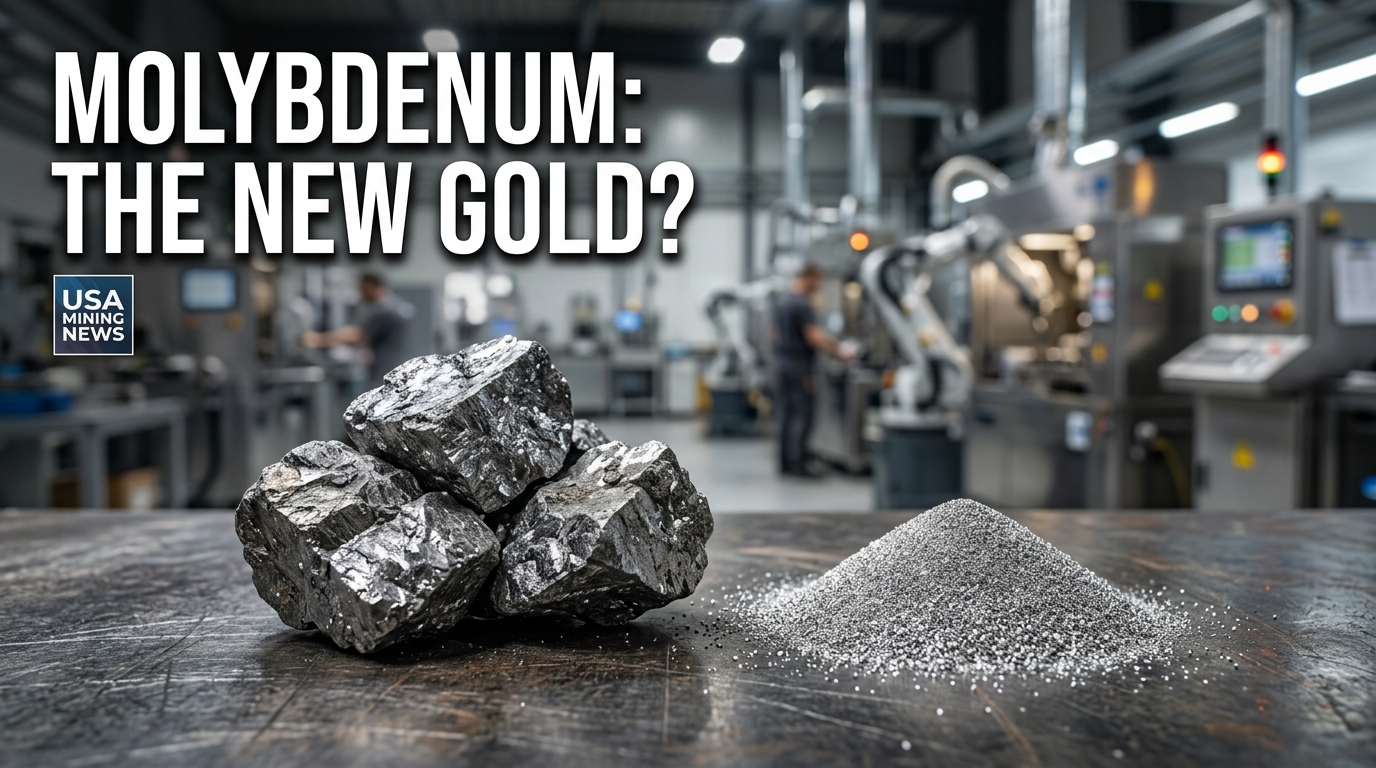
In a dynamic global commodities landscape, the recent surge in molybdenum prices has captured the attention of mining enterprises, investors, and industrial consumers alike. While often regarded as a mere by-product of copper mining, molybdenum’s current trajectory, as highlighted by Juan Carlos Guajardo, Executive Director of Plusmining consultancy, on July 6, 2026, signals a transformative shift. This is not simply another rally tied to the steel cycle; it represents a deeper, more systemic stress in critical minerals markets, where geopolitical considerations are increasingly dictating the functional utility and strategic value of adjacent materials.
Molybdenum's Ascent: A Price Signal Beyond the Steel Cycle
The financial indicators are compelling. In May 2026, the International Monetary Fund (IMF) molybdenum spot series touched an impressive $65,503 per tonne. This figure marks a substantial 48.9% increase year-over-year, translating to a price shift from approximately $20 per pound to nearly $30 per pound. Such a dramatic escalation suggests more than just a robust demand environment; it strongly indicates that a "security premium" is being factored into the price of alloying metals vital for high-performance manufacturing sectors.
This premium is a direct consequence of escalating geopolitical risks impacting the supply chains of various critical minerals. Molybdenum, traditionally a less prominent metal compared to base metals like copper, is now being re-evaluated for its strategic importance in industrial applications, particularly as an enabler of metallurgical resilience amidst global supply uncertainties. The market is increasingly valuing materials that can offer stability and continuity in manufacturing processes, especially those integral to advanced technologies and defense.
Tungsten at the Core of Geopolitical Risk
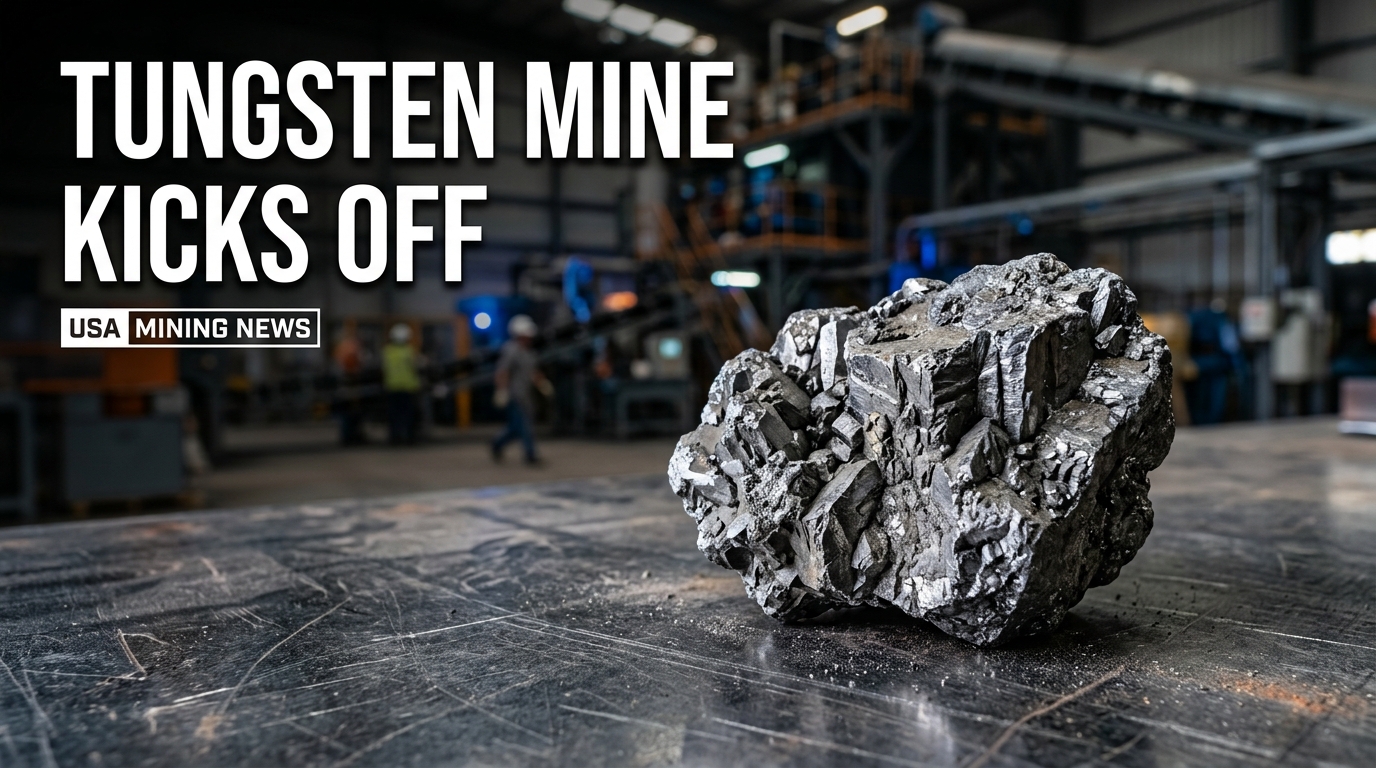
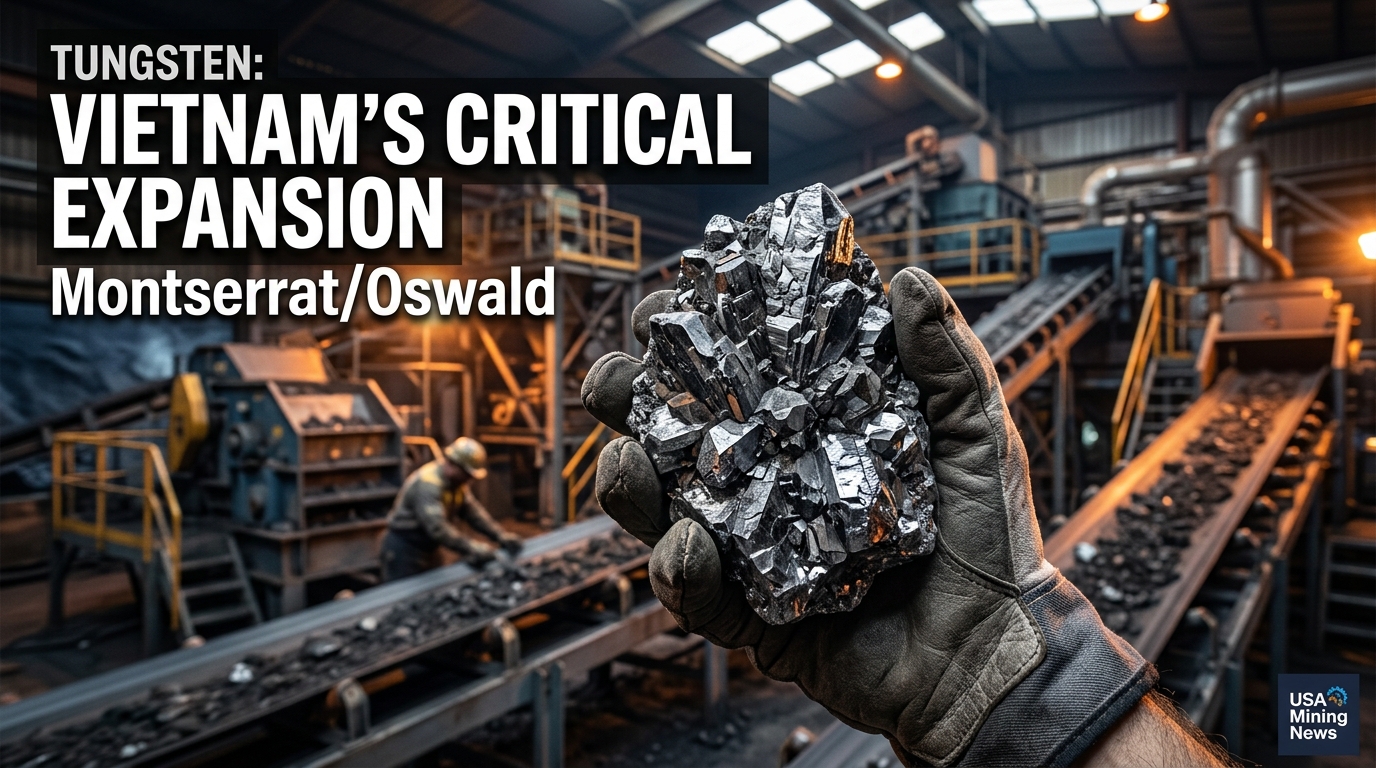
The strategic re-evaluation of molybdenum is inextricably linked to the tightening supply dynamics and geopolitical concentration surrounding tungsten. Tungsten boasts exceptional properties, including remarkable hardness, high density, and superior heat resistance. These characteristics render it largely irreplaceable in a diverse array of demanding applications:
- Cemented carbides and cutting tools: Essential for precision machining and wear resistance.
- Drilling equipment: Crucial for the durability of drill bits in mining and oil & gas.
- Defense sector: Utilized in penetrators and armor, where density and strength are paramount.
- Aerospace: Critical for high-temperature components in aircraft engines and structures.
- High-temperature applications: Wherever extreme heat resistance is required, such as in furnace elements.
However, the critical challenge with tungsten lies in its geopolitical supply chain. China exerts formidable dominance over tungsten's mine supply, processing capabilities, and export availability. For industries in Western nations, this high concentration creates a significant vulnerability. The risk extends beyond mere price volatility; it encompasses the more profound concern of "permissioned access"—the potential for supply disruptions or restrictions dictated by geopolitical considerations rather than market forces.
This risk materialized explicitly in February 2025, when China implemented export controls on a range of critical minerals, including tungsten, tellurium, bismuth, indium, and notably, molybdenum itself. Such controls introduce substantial licensing risks for downstream consumers, leading to increased lead times, procurement uncertainties, and potential disruptions across vital global supply chains spanning defense, electronics, aerospace, mining equipment, and clean energy technologies. The implication is clear: reliance on a single, dominant supplier for critical materials carries inherent strategic vulnerabilities that manufacturers are now compelled to address.
The Nuance of Substitution: Molybdenum's Functional Role
It is important to clarify that molybdenum is not a universal, one-to-one substitute for tungsten. In many applications, particularly those requiring the extreme hardness, wear resistance, density, and thermal stability of tungsten carbide, a direct, binary replacement is simply not metallurgically feasible. The mechanism driving molybdenum's increased strategic value is instead one of "metallurgical re-optimization."
This process of re-optimization involves intricate engineering and materials science challenges, including:
- Reducing tungsten intensity: Engineers work to decrease the amount of tungsten required in an alloy or product without compromising performance.
- Redesigning alloys: Developing entirely new material compositions that achieve similar performance profiles using alternative, more readily available elements.
- Qualifying alternative carbides: Exploring and validating the use of different carbide compounds that can perform adequately in specific applications.
- Changing specifications: Modifying product specifications to allow for the use of materials with slightly different properties while preserving overall functionality under supply stress.
Within this complex process, molybdenum gains significant strategic importance. Molybdenum carbide, for instance, can partially substitute for the functionality of cemented tungsten carbides in certain applications, offering a viable alternative where precise performance profiles can be met. Furthermore, the incorporation of molybdenum into steels and superalloys is crucial for enhancing key material properties such as hardenability, creep resistance at elevated temperatures, high-temperature strength, and corrosion performance. Therefore, the substitution channel is not a binary choice but rather a broad spectrum of partial replacement and functional complementarity, where molybdenum plays a pivotal enabling role in maintaining industrial performance and supply chain resilience.
Market Impact: Demand Creation and Supply Dynamics
The critical question for market sizing is not merely how many tonnes of tungsten can be directly replaced by molybdenum, but rather how much new molybdenum demand is created as industrial users actively redesign materials and specifications to mitigate exposure to restricted metals. Considering a global molybdenum market of approximately 300,000 tonnes per year, an additional demand of 5,000 to 10,000 tonnes arising from substitution, inventory rebuilding, and requalification might seem modest in percentage terms, representing only a few percentage points of global supply.
However, the impact on specialty applications and high-purity material markets can be profound. Such a demand increase in niche, high-value segments is often sufficient to significantly tighten availability, driving up prices and revaluing these specific grades of molybdenum. This effect is further amplified by molybdenum's unique supply structure.
The vast majority of molybdenum is produced as a by-product of copper mining, particularly from large porphyry copper deposits. This means that molybdenum supply is inherently inelastic to its own price; its output is predominantly dictated by copper mine production plans, ore grades, copper recovery circuits, and integrated by-product processing capacities. Even if molybdenum prices soar, copper miners are unlikely to significantly ramp up copper production solely to extract more molybdenum, as copper economics remain the primary driver of their operations. This inelasticity means that even relatively small increases in demand, especially for critical applications, can have a disproportionately large impact on market prices and availability.
By-Products Transform into Strategic Assets
The experience of nations like Chile and Peru vividly illustrates the burgeoning importance of molybdenum as a by-product. In both countries, molybdenum is a secondary product extracted during copper mining operations, yet it already represents a substantial export commodity. In 2025, Chilean molybdenum exports reached approximately US$2.48 billion, securing its position as the country’s eighth-largest export product. Similarly, Peru exported about US$1.65 billion of molybdenum ore in 2025, making it its thirteenth-largest export. For mining companies operating in these nations, higher molybdenum prices significantly improve by-product credits, effectively reducing net copper production costs and bolstering margins for operations equipped with molybdenum recovery circuits. This enhances the overall economic viability and profitability of their copper projects.
This trend underscores a broader re-evaluation within the mining industry: by-products are no longer peripheral. While metals like molybdenum, rhenium, vanadium, niobium, tellurium, bismuth, and indium may be small in volume compared to primary commodities such as copper, iron ore, or lithium, their strategic importance within sophisticated industrial systems can be decisive. Their true value is increasingly assessed based on several critical factors:
- Their integral role in high-performance materials and advanced manufacturing processes.
- Their ability to reduce industrial exposure to geopolitically controlled supply chains.
- The difficulty and cost associated with qualifying them into existing or new industrial applications.
This paradigm shift means that overlooked by-products are now being recognized as essential components for national security, economic competitiveness, and technological advancement, transforming them into critical supply-chain assets.
The Emerging Geopolitics of Functionality Scarcity
The core message emanating from this situation is the emergence of a "geopolitics of substitution." China's export controls on critical minerals do not necessarily need to completely sever supply channels to reshape the global market. Their mere existence and the associated uncertainty surrounding future access are sufficient to compel manufacturers globally to fundamentally redesign their materials strategies. This proactive approach to de-risk supply chains is a direct response to perceived vulnerabilities.
Once the arduous and often costly process of "requalification" begins—involving extensive research, development, testing, and regulatory approvals for new material compositions—its effects can be long-lasting. Even if the immediate geopolitical tensions or supply shocks eventually ease, the strategic shifts in material usage and supply chain diversification initiated by manufacturers are likely to persist, creating durable changes in demand patterns for metals like molybdenum. This signifies a fundamental departure from traditional market dynamics, where perceived scarcity was primarily about depletion or insufficient production capacity. Instead, the focus has shifted to a "functionality scarcity"—a scarcity not of the mineral itself, but of reliable, unhindered access to it for critical industrial applications.
Outlook and Strategic Implications for the Mining Sector
Molybdenum’s current rally is, therefore, more than just a fleeting price event; it is a profound symptom of this broader shift from traditional mineral scarcity to a scarcity of functionality and accessible supply. For the global mining sector and its investors, understanding this evolving landscape is paramount. Strategic winners in this new environment will be those who possess a deep, nuanced understanding of how various materials interact within complex industrial systems and how the imperative for substitution can elevate a once-overlooked by-product into an indispensably critical supply-chain asset.
This re-evaluation calls for integrated approaches in exploration, mine planning, and metallurgical processing. Miners must increasingly consider the full suite of by-products within their ore bodies, assessing not only their current market value but also their strategic future utility in a world grappling with geopolitical supply chain risks. Investment in projects with robust by-product recovery capabilities, particularly those linked to critical minerals, will likely attract significant attention. As articulated by Juan Carlos Guajardo of Plusmining, the future of critical minerals is not just about geology and economics, but increasingly about geo-strategy and industrial resilience.