A New Paradigm for Lithium Development in the McDermitt Caldera: Jindalee Lithium Prioritizes Stewardship
In a significant move reflecting the evolving landscape of responsible resource development, Jindalee Lithium (ASX: JLL) announced on Tuesday, June 23, 2026, that its wholly-owned U.S. subsidiary, HiTech Minerals, has entered into a Memorandum of Understanding (MoU) with RESOLVE. RESOLVE is a distinguished nonprofit organization known for its expertise in convening stakeholders and rightsholders to address complex natural resource and social challenges, including those within responsible mineral supply chains. This strategic collaboration is poised to explore the creation of a voluntary Stewardship Area within the broader Oregon-Nevada caldera region, an area of considerable ecological sensitivity and geological significance, where HiTech Minerals is actively advancing its flagship McDermitt lithium project.
The signing of this MoU is particularly noteworthy as Jindalee Lithium is actively preparing to spin out its key U.S. lithium assets, with the McDermitt project at its core, into a new Nasdaq-listed entity to be named US Elemental. This initiative signals a clear intent to embed robust environmental and social governance (ESG) practices at the foundational level of the new company, recognizing that a proactive approach to stewardship can be a critical enabler for project success and long-term value creation in the highly scrutinized critical minerals sector.
The Collaborative Framework: HiTech Minerals and RESOLVE
The MoU establishes a structured framework designed to facilitate collaborative engagement between HiTech Minerals and RESOLVE. Its primary objective is to explore and potentially establish a voluntary Stewardship Area within the region. This area is intended to support superior environmental outcomes for high-value habitat areas, complementing HiTech’s parallel efforts to responsibly develop a domestic source of lithium within the McDermitt Caldera. For an industry increasingly facing stringent environmental regulations and heightened public scrutiny, such proactive measures are becoming indispensable for securing and maintaining a social license to operate.
Under the terms of the MoU, HiTech and RESOLVE anticipate engaging extensively with a diverse array of stakeholders and rightsholders in the region. This engagement process will be crucial for identifying specific land areas that may warrant various stewardship measures, including investment, protection, restoration, or other conservation-oriented actions. The emphasis on collaboration with rightsholders, which typically includes Indigenous Tribal Nations, local communities, and environmental groups, underscores a commitment to inclusive decision-making and respect for diverse interests.
Importantly, HiTech Minerals has indicated it will consider funding a portion of these agreed-upon stewardship measures. This commitment, however, will be subject to the McDermitt lithium project meeting its development milestones. This conditional funding mechanism links environmental investment directly to project progress, demonstrating a practical and integrated approach to sustainability. Jindalee CEO Ian Rodger underscored the company’s philosophy, stating in a news release, "HiTech recognizes the ecological, cultural and community values of the broader Oregon-Nevada McDermitt Caldera region, and the importance of advancing McDermitt in a way that is responsible, transparent and constructive." He further elaborated, "This MoU with RESOLVE provides a practical framework to explore how domestic lithium development and long-term environmental stewardship objectives can be progressed together."
It is crucial to note that any voluntary stewardship measures identified and implemented through this process are explicitly stated to be in addition to, and not a substitute for, HiTech’s existing obligations under applicable environmental laws, permitting processes, and regulatory requirements. This distinction reinforces the idea that these are enhanced commitments aimed at exceeding baseline compliance, thereby fostering a stronger relationship with the environment and local communities.
McDermitt: A Strategic Asset in a Critical Region
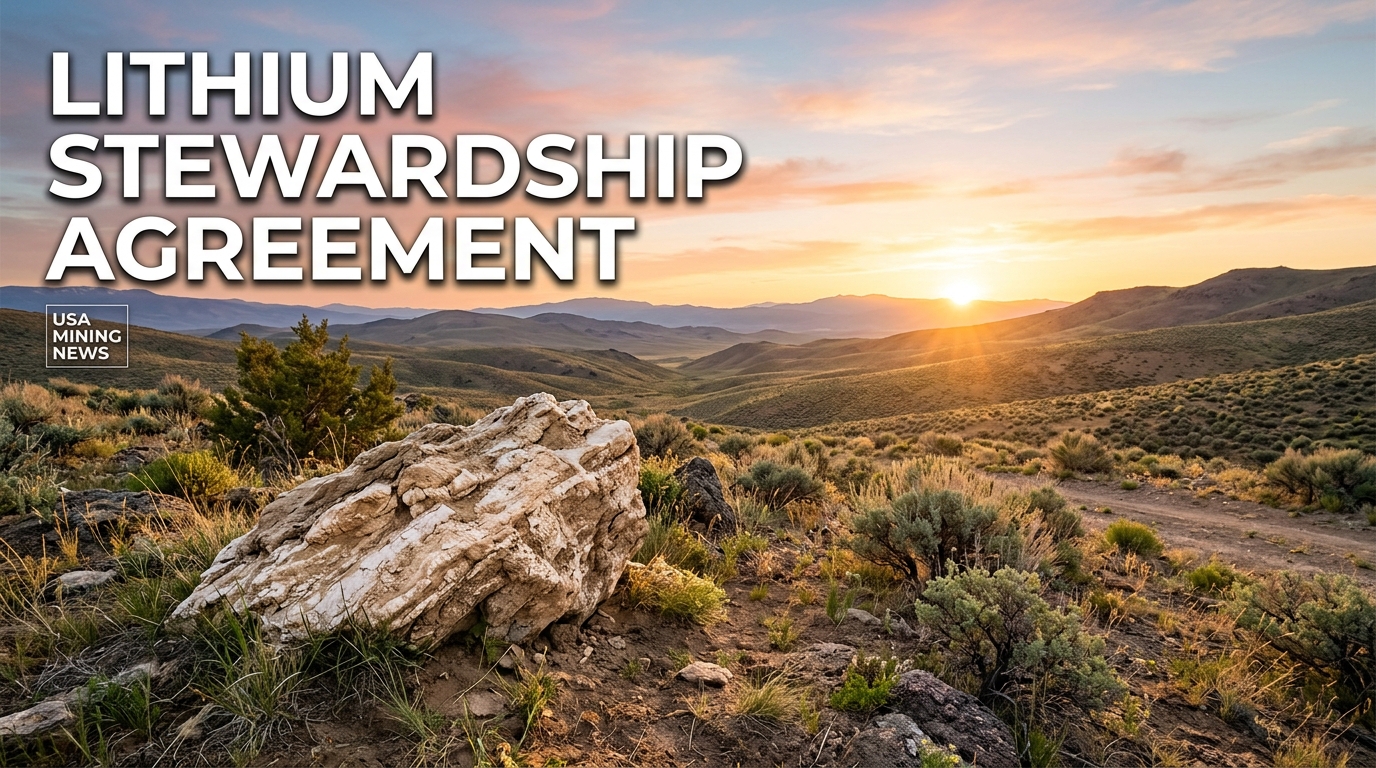
The McDermitt lithium project commands strategic importance given its location within the Oregon-Nevada caldera region. Geologically, the project is situated on the same prominent formation that hosts Lithium Americas’ Thacker Pass project, an area known for its significant clay-hosted lithium deposits. The outcropping mineralized sediments towards the center of the giant McDermitt lithium deposit, as depicted in images courtesy of Jindalee Resources, signify the project's considerable resource potential.
The development of a robust domestic supply chain for critical minerals like lithium has become a national priority for the United States. Geopolitical factors, combined with the accelerating global transition to electric vehicles (EVs) and renewable energy storage solutions, have highlighted the vulnerabilities associated with reliance on foreign sources for these essential materials. Projects like McDermitt, therefore, are not merely corporate ventures but are integral to broader national energy security and economic objectives. The impending spin-out of Jindalee's U.S. lithium assets into US Elemental and its planned Nasdaq listing further underscore the strategic value assigned to these American-based resources and aims to attract capital specifically geared towards domestic critical mineral production.
Advancing Responsible Resource Development
The modern mining industry operates under an ever-increasing expectation to demonstrate commitment to environmental, social, and governance (ESG) principles. For critical minerals projects, this expectation is even more pronounced, given the high-stakes demand and often complex environmental and social settings of deposits. Ian Rodger’s comments regarding the recognition of "ecological, cultural and community values" reflect a holistic understanding that successful project development hinges not just on resource economics but also on the ability to sensitively manage impacts and build trust with local stakeholders.
The emphasis on early engagement with Tribal Nations and other stakeholders, as highlighted by Rodger, is particularly pertinent in the western United States. These regions often hold profound cultural significance for Indigenous communities, and effective consultation and partnerships are non-negotiable for project viability. A proactive approach, such as that facilitated by the MoU with RESOLVE, aims to identify potential concerns and opportunities for shared value creation at an early stage, thereby mitigating risks that could otherwise lead to project delays or opposition.
This initiative exemplifies an industry-savvy approach to navigating the complexities of large-scale mineral extraction. By voluntarily seeking pathways for environmental enhancement beyond regulatory minimums, HiTech Minerals is positioning the McDermitt project to potentially differentiate itself in a competitive landscape, attracting not only investors keen on ESG-compliant assets but also fostering greater local acceptance.
Industry Implications and Market Context
The global demand for lithium continues its dramatic ascent, fueled predominantly by the burgeoning electric vehicle market and grid-scale energy storage solutions. Projections consistently indicate a significant supply deficit in the coming years without a substantial increase in responsible mining and processing capacity. In this context, domestic U.S. lithium projects are critical, yet they frequently encounter substantial hurdles related to permitting, environmental assessments, and community opposition.
Voluntary agreements and partnerships with respected third-party organizations like RESOLVE can play a pivotal role in de-risking mining projects. Such collaborations can enhance a project’s social license to operate (SLO), improve its environmental credentials, and potentially streamline parts of the permitting pathway by preemptively addressing key stakeholder concerns. The perception of environmental stewardship can significantly influence investor confidence, particularly for those deploying capital through socially responsible investment (SRI) frameworks.
For the broader mining industry, this MoU provides a template for how resource developers can proactively engage with environmental concerns and community priorities, rather than merely reacting to regulatory mandates or public outcry. It suggests a growing recognition that integrating stewardship into the core business strategy is not just a compliance exercise but a value-adding proposition for critical minerals developers aiming for long-term sustainable operations.
Future Outlook and Next Steps
Jindalee CEO Ian Rodger prudently noted that the process is still in its early stages. The successful definition and implementation of any future Stewardship Area will necessitate continued, careful engagement with Tribal Nations and other stakeholders, robust technical assessment, and integration with the ongoing permitting pathway for the McDermitt lithium project. This iterative approach acknowledges the complex interplay of ecological science, community relations, and regulatory requirements.
The success of this stewardship initiative could have significant ramifications for the US Elemental spin-out. A demonstrated commitment to responsible development could bolster investor confidence ahead of its planned Nasdaq listing, potentially enhancing its valuation and attracting a broader pool of capital. Furthermore, if successful, the McDermitt-RESOLVE model could serve as a valuable precedent for other critical mineral projects in the United States and globally, illustrating an effective pathway for balancing essential resource extraction with environmental best practices and community well-being. As the world continues its drive towards decarbonization, the methods by which these vital materials are sourced will remain under intense scrutiny, making proactive stewardship initiatives like this increasingly central to industry success.