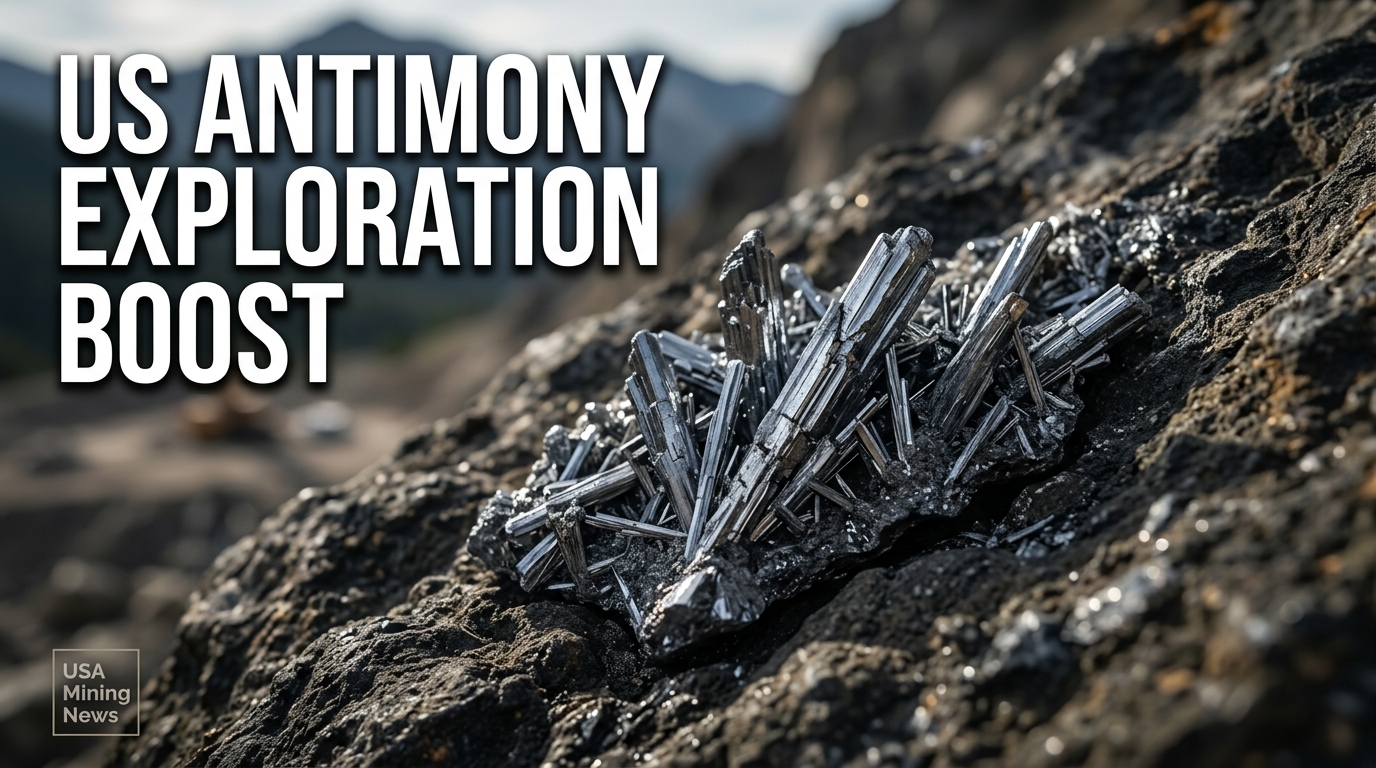
In a significant development for the US critical minerals sector, Red Mountain Mining has announced a robust plan to recommence exploration activities at its portfolio of antimony projects across the United States. This strategic re-engagement, timed with the return of favorable weather conditions, underscores the growing imperative to establish secure domestic sources for essential industrial commodities, especially antimony.
The company's phased exploration program, initially focusing on the Thompson Falls Antimony Project before expanding to sites in Idaho, signals a dedicated effort to advance these assets rapidly towards drilling and potential resource definition. This renewed push comes amidst increasing global demand and strategic geopolitical considerations that highlight antimony's critical role in a range of advanced technologies and defense applications.
Focused Exploration at Thompson Falls: Laying the Groundwork
Red Mountain Mining’s immediate priority is the Thompson Falls Antimony Project, strategically located on the Montana-Idaho border. This initial phase will involve comprehensive surface geological mapping and sampling, building upon promising preliminary data. Prior to the onset of winter, the company successfully collected and submitted rock samples from Thompson Falls for analysis, which yielded encouraging results. Initial rock chip analysis from the site has indicated remarkably high antimony concentrations, reaching up to 36.5% antimony, alongside 1.12 parts per million (ppm) gold.
The significance of these high-grade surface samples cannot be overstated, as they often serve as strong indicators of potential underlying mineralization. Field crews are scheduled to return to the project site in April, as weather conditions become more amenable to sustained outdoor operations, with the explicit goal of furthering efforts to identify and develop prospective drill targets. This systematic approach, moving from surface reconnaissance to targeted drilling, is a standard methodology in mineral exploration aimed at efficiently defining the extent and quality of a resource.
The Thompson Falls project holds an additional strategic advantage through its geographical positioning. It lies directly west of the existing facilities of US Antimony Corporation’s Thompson Falls Antimony Smelter, as well as the historic Stibnite Hill Antimony Mine. This proximity to established infrastructure and historical mining operations could potentially offer significant logistical and economic benefits in the event of successful resource development, reducing the capital expenditure typically associated with greenfield projects in remote areas.
Expanding the Footprint: Yellow Pine and Silver Dollar Projects
Following the focused initial work at Thompson Falls, Red Mountain’s exploration agenda is set to expand to its Yellow Pine and Silver Dollar antimony projects, both situated within Idaho. The Yellow Pine Project, in particular, warrants close attention due to its location near Perpetua Resources’ Stibnite Gold-Antimony Project. The source material highlights similar geological characteristics between Yellow Pine and the notable Stibnite project, suggesting a shared geological pedigree that could bode well for Yellow Pine's prospectivity.
The geological framework of the Stibnite region, and by extension potentially Yellow Pine, is characterized by antimony and gold deposits that are intricately influenced by regional faults and splays. These structural features appear within the vast Cretaceous Idaho Batholith, an extensive igneous intrusion, as well as in adjacent older meta-sedimentary rocks. Such geological environments are renowned for hosting significant hydrothermal mineral deposits, making areas with similar traits highly attractive targets for exploration companies.
Understanding these geological controls is paramount for successful exploration. Faults and shear zones often act as conduits for mineralizing fluids, concentrating valuable metals in specific areas. The presence of the Idaho Batholith, a major geological feature in the region, further underscores the potential for large-scale mineral systems.
Building Expertise and Streamlining Approvals
To further bolster its operational efficiency and strategic direction, Red Mountain Mining has made key appointments and engagements. Max Baker has been brought on as an advisor to the Red Mountain board, a move that is expected to inject significant expertise into the company's exploration strategy. Mr. Baker's extensive background in mineral exploration will be invaluable as Red Mountain navigates the complexities of identifying, evaluating, and developing antimony resources in the US.
Recognizing the intricate regulatory landscape often associated with mining projects in the United States, Red Mountain has also engaged KC Harvey Environmental. This Montana-based firm will provide essential technical support, specifically aimed at expediting project approvals. The objective is clear: to progress swiftly from initial surface exploration to drilling and, ultimately, to resource definition. Efficient navigation of permitting processes is a critical pathway to success in the US mining industry, where environmental stewardship and regulatory compliance are rigorously enforced.
The Critical Minerals Imperative and Government Support
Red Mountain Mining's renewed focus on US antimony projects aligns directly with the broader strategic objectives of the United States Government. Antimony is recognized as a critical mineral, essential for a diverse array of industrial and defense applications, including flame retardants, lead-acid batteries, ammunition, specialized alloys, and semiconductor manufacturing. Historically, the global supply chain for antimony has been heavily concentrated in countries like China and Russia, raising significant concerns about supply security and economic vulnerability for the US.
The US Government has consistently emphasized the importance of securing domestic supplies of critical minerals to reduce reliance on foreign sources, enhance national security, and support technological innovation. This commitment is evidenced by initiatives such as the granting of FAST-41 status to nearby critical mineral projects. FAST-41, or the Federal Permitting Improvement Act, is designed to streamline the federal environmental review and authorization process for certain infrastructure projects, including critical mineral mines, thereby accelerating their development.
For Red Mountain Mining, this supportive governmental environment presents a significant opportunity. The company is actively exploring funding opportunities, collaborating with US consultants to identify and secure non-dilutive financing options. Non-dilutive financing, which does not involve issuing new equity, is particularly attractive as it allows existing shareholders to maintain their proportional ownership, preserving value as the projects advance.
Global Footprint and Future Outlook
While the focus is firmly on the US antimony projects, it is important to note that Red Mountain Mining maintains a broader international portfolio. The company also manages the Armidale Antimony-Gold Project in New South Wales, Australia. This diversified approach demonstrates Red Mountain's commitment to antimony and gold exploration across different jurisdictions, providing a degree of operational flexibility and mitigating single-country risk.
The immediate future for Red Mountain in the US involves a concentrated effort on surface exploration, with a clear trajectory towards the identification of drill targets. The successful execution of this exploration program, coupled with the strategic support of advisors and environmental consultants, is expected to culminate in the commencement of drilling activities aimed at defining substantial antimony resources. The market will closely watch for further announcements regarding resource estimates and project development timelines, which could significantly impact the outlook for domestic antimony supply.
The revitalization of US antimony exploration by Red Mountain Mining represents more than just a corporate initiative; it is a tangible step towards strengthening the US critical minerals supply chain. As the nation seeks to bolster its industrial base and enhance its geopolitical resilience, projects like Thompson Falls, Yellow Pine, and Silver Dollar embody the potential for domestic mining to play a crucial role in securing essential resources for the 21st century economy.