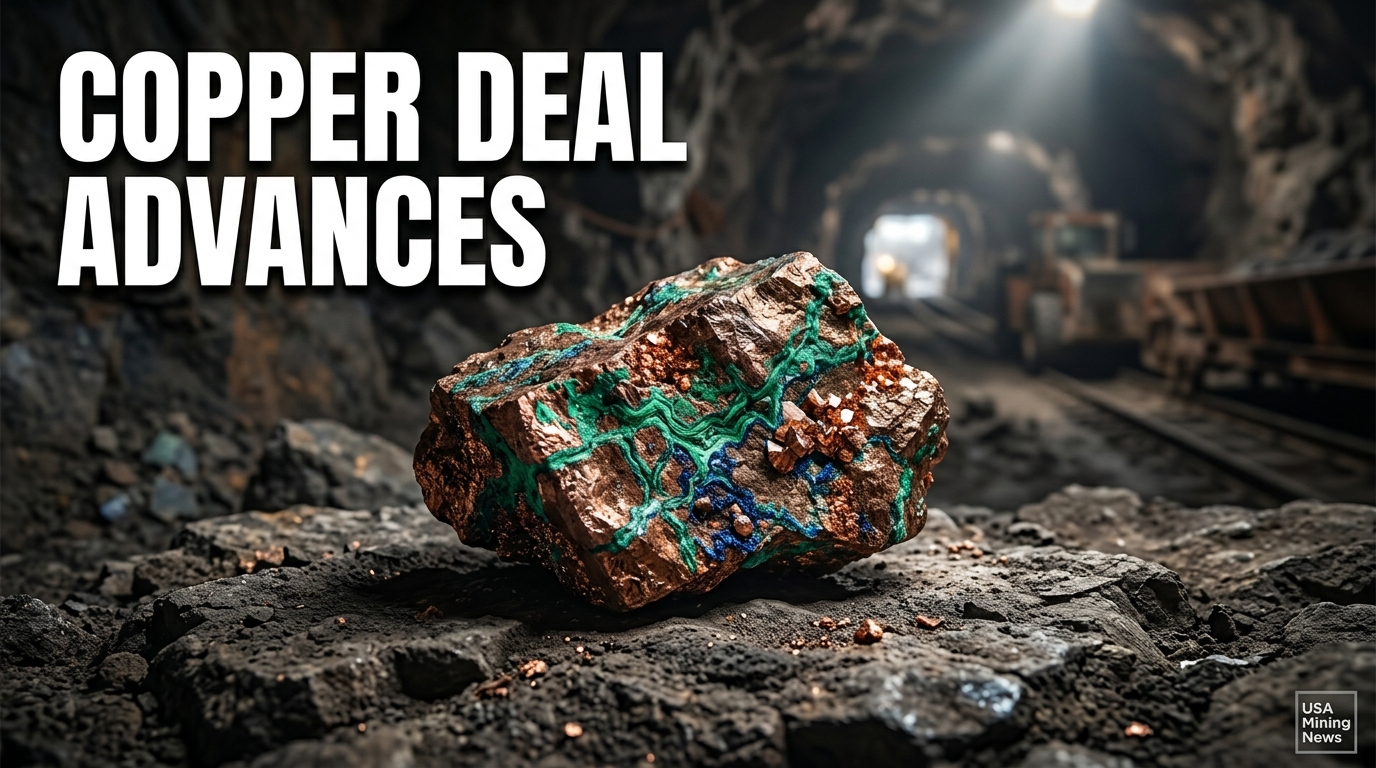
PHOENIX, AZ – In a development poised to reshape the landscape of domestic copper production, Resolution Copper, a prominent joint venture between global mining giants Rio Tinto (55% stake) and BHP (45% stake), formally announced on March 17, 2026, the successful conclusion of a significant land exchange with the US Forest Service (USFS). This landmark agreement, which has been years in the making, removes a substantial hurdle for the Resolution Copper project, clearing the path for the next critical stages of work and development planning for what is considered one of the world's largest undeveloped copper deposits.
A Decisive Milestone for Resolution Copper
The completed land exchange is a pivotal moment for the Resolution Copper project, situated near the historic Magma Copper mine in Arizona. Through this intricately negotiated transaction, Resolution Copper has acquired approximately 2,400 acres of land essential for the project's future operations. In return, the company has transferred a more extensive parcel of roughly 5,400 acres of environmentally sensitive and culturally significant land to be integrated into National Conservation Areas. This strategic transfer is designed to ensure long-term conservation, actively supporting habitat preservation and the protection of invaluable cultural heritage assets. This balanced approach underscores the complex interplay between resource development and environmental stewardship that characterizes modern mining endeavors.
The conclusion of this exchange is particularly significant given the project's ambitious goal: to develop a copper deposit that could potentially satisfy up to 25% of America's copper demand for decades to come. Such a contribution would be transformative for the nation’s supply chain, reducing reliance on foreign imports and bolstering domestic industrial capabilities at a time of increasing global demand for critical minerals.
Navigating Legal and Legislative Hurdles
The journey to this land exchange has been protracted and complex, marked by both legislative action and judicial review. The process was initially set in motion by bipartisan-backed legislation passed in 2014, reflecting a broad consensus on the strategic importance of the Resolution Copper project. However, like many large-scale resource development initiatives in the United States, it faced legal challenges.
A crucial turning point arrived on March 13, 2026, when the US Court of Appeals for the Ninth Circuit delivered a decisive ruling. The court sided unequivocally with Resolution Copper and the federal government, rejecting attempts by plaintiffs to halt the land exchange. This legal affirmation provides essential clarity and certainty for the project, allowing it to move forward without the specter of further protracted litigation regarding the land transfer itself.
Throughout the development of the land exchange, extensive consultations have been a cornerstone of the process. Resolution Copper has engaged proactively with a diverse array of stakeholders, including local communities such as the Town of Superior, Arizona, and particularly with Native American Tribes whose ancestral lands and cultural heritage lie within and around the project area. These ongoing dialogues and the commitment to address stakeholder concerns have been vital in shaping the project's development plan and ensuring that community and cultural considerations are integrated into its operational strategy.
Significant Investment Fuels Next Phase of Development
In conjunction with the successful land exchange, Resolution Copper has reinforced its commitment to the project by announcing a substantial additional investment of approximately $500 million over the next two years. This significant capital injection is earmarked for critical "enabling works" that are foundational to advancing the project toward production. The scope of these initial activities is comprehensive and indicative of the detailed planning required for a mining operation of this scale:
- Surface Drilling for Further Resource Assessment: This involves extensive geotechnical and exploratory drilling to refine the understanding of the vast copper ore body, optimizing mine planning and resource models.
- Support for Native American Tribes and Local Communities: A portion of the funding is dedicated to continued engagement and support initiatives for local stakeholders, reflecting Resolution Copper’s commitment to community development and partnership.
- Infrastructural Improvements: These vital upgrades will encompass enhancements to existing infrastructure and the development of new facilities necessary for mine construction and operation, including roads, power, and water management systems.
- Initial Underground Development: This phase will involve preparatory work for the underground mine, setting the stage for the primary extraction activities to commence once all necessary permits are secured.
These upcoming activities are not merely about infrastructure; they are also about people. The investment is expected to generate approximately 100 new jobs, providing immediate economic benefit to the local Arizona communities that have historically relied on the mining sector for employment and prosperity. This initial job creation foreshadows the much larger workforce that will be required once the mine enters its full construction and operational phases.
Strategic Importance of US Copper Supply
The Resolution Copper project arrives at a critical juncture in the global economy, characterized by an accelerating demand for copper. Katie Jackson, Rio Tinto copper chief executive, underscored this strategic imperative, stating, “Rio Tinto is building a stronger copper business with a pipeline of large, long-life resources that can help meet growing global demand for the materials needed for electrification, infrastructure and modern technologies.”
Copper is an indispensable commodity for the transition to a greener economy, serving as a fundamental component in electric vehicles, renewable energy systems like solar panels and wind turbines, and the vast global infrastructure required to support these advancements. The United States, currently a net importer of copper, views domestic projects like Resolution Copper as crucial for securing its supply chains and achieving ambitious renewable energy targets.
Jackson further emphasized the profound economic impact of the project, stating that it has the potential to “add $1 billion a year to Arizona’s economy and create thousands of local jobs in a region where mining has played an important role for more than a century.” This economic boost would be significant for Arizona, an historically mining-rich state, providing long-term employment opportunities and contributing substantially to state and local tax revenues. The legacy of the Magma Copper mine, which operated for decades in the same region, offers a tangible historical context for the community's connection to the industry and the potential for a renewed era of economic prosperity.
Path Forward: Permitting and Stakeholder Engagement
While the land exchange represents a significant hurdle cleared, Resolution Copper's journey is far from over. The upcoming activities, including the $500 million investment in enabling works, will proceed alongside continued and rigorous engagement with local stakeholders, Native American Tribes, and the commencement of essential state-level permitting processes. Large-scale mining projects are subject to exhaustive environmental reviews and regulatory approvals at both federal and state levels, a process that can be lengthy and complex.
The focus on continued stakeholder engagement reflects an understanding that successful project development hinges not only on technical and financial capabilities but also on maintaining social license to operate. Transparent communication and collaboration with all affected parties will be paramount as the project moves through these additional regulatory phases.
Broader Context: Rio Tinto's Global Strategy
The Resolution Copper milestone also fits into Rio Tinto's broader strategic vision for strengthening its portfolio of critical metals. Earlier this month, the company demonstrated its commitment to expanding its resource base by securing a financing package totaling $1.17 billion (£872.27 million) to advance the Rincon lithium project in Salta Province, Argentina. This并行 development highlights Rio Tinto's diversified approach to securing long-life assets in essential commodities, positioning the company to meet the evolving demands of a rapidly electrifying global economy.
The conclusion of the land exchange for Resolution Copper is more than a bureaucratic formality; it is a profound affirmation of a large-scale project’s potential to significantly bolster America's domestic copper supply, drive substantial economic growth in Arizona, and contribute to the global energy transition. As Resolution Copper embarks on its next phase, the industry will be watching closely as one of the world's most promising undeveloped copper deposits moves closer to realizing its full potential.