U.S. Bolsters Global Energy Supply with Enhanced Plaquemines LNG Exports
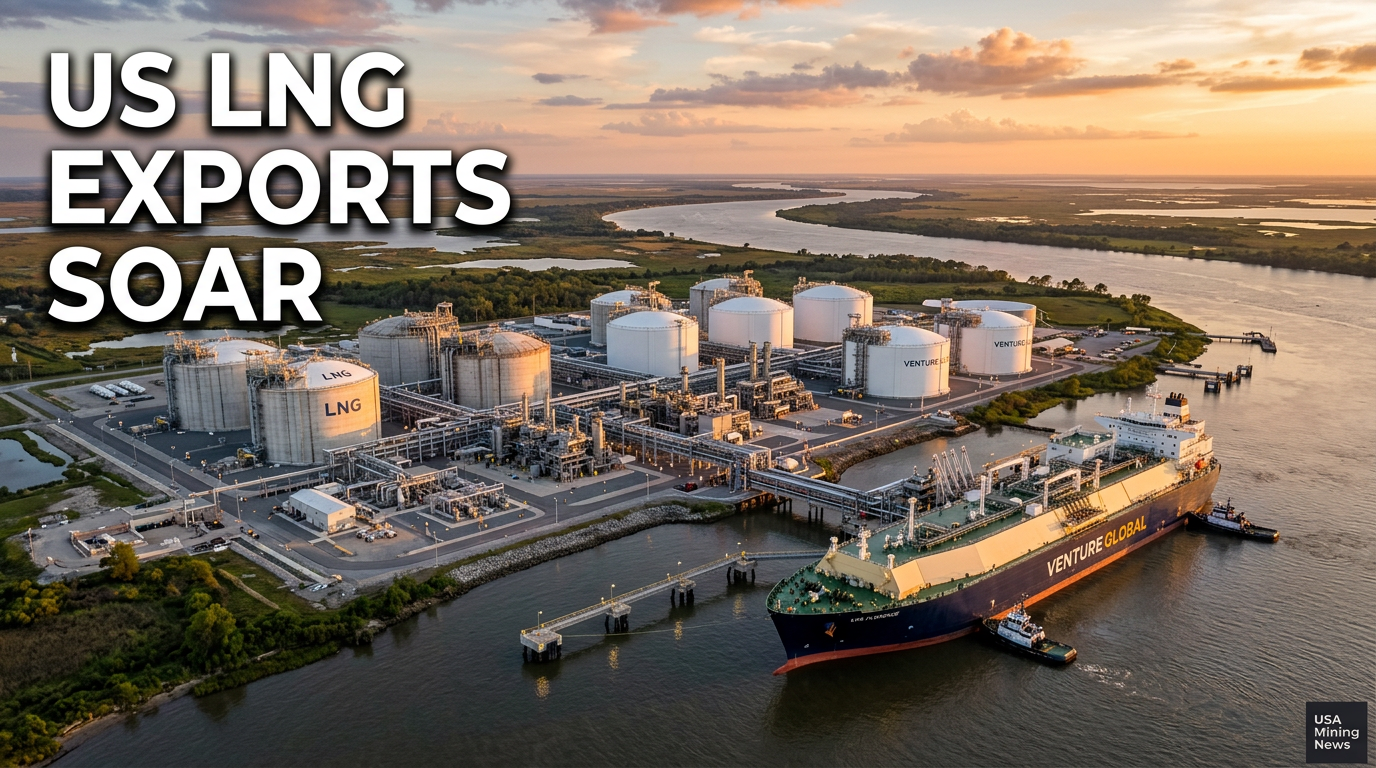
WASHINGTON, D.C. – In a strategic move to reinforce global energy security and solidify American energy dominance, the U.S. Department of Energy (DOE) today announced an immediate and significant increase in liquefied natural gas (LNG) export authorizations from Venture Global’s Plaquemines LNG Terminal in Louisiana. U.S. Secretary of Energy Chris Wright issued the directive on March 13, 2026, approving a 13% expansion in export capacity, equating to an additional 0.45 billion cubic feet per day (Bcf/d) of natural gas destined for non-free trade agreement (FTA) countries.
This authorization elevates Plaquemines LNG’s total immediate export capacity to 3.85 Bcf/d, covering both FTA and non-FTA markets. The decision underscores the Trump Administration’s commitment to leveraging American energy resources to stabilize international markets and counter geopolitical disruptions. The expansion is critical, especially given that non-FTA countries constitute the predominant market for U.S. LNG exports, driven by growing energy demands in Asia and Europe’s continued pivot away from Russian gas sources.
Plaquemines LNG: A Pivotal Hub in Rapid Growth
Venture Global’s Plaquemines LNG Terminal has rapidly emerged as a cornerstone of the U.S. LNG export landscape. The facility, which commenced initial exports in December 2024, has swiftly scaled up its operations, demonstrating the agility and efficiency characteristic of modern American energy infrastructure projects. Prior to today’s announcement, Plaquemines LNG had already increased its export levels to over 3 Bcf/d, a testament to its robust operational capabilities and the pressing global demand for reliable natural gas supplies.
The additional 0.45 Bcf/d, representing a 13% increase, is specifically directed towards non-FTA countries. This deliberate focus is crucial for global energy markets. Non-FTA nations, including major economies in Europe and Asia, often lack sufficient domestic gas production and rely heavily on diversified imports to meet their industrial, residential, and power generation needs. The ability of U.S. facilities like Plaquemines LNG to quickly expand capacity and direct supply to these critical markets plays a vital role in preventing price volatility and ensuring energy access.
Venture Global’s innovative approach to LNG project development, often employing modular construction techniques, allows for faster project completion and quicker ramp-up times compared to traditional models. This operational agility is precisely what enables the U.S. to respond rapidly to evolving global energy demands and geopolitical shifts, as evidenced by Plaquemines LNG’s performance since its start-up in December 2024.
Strategic Imperatives: American Energy Dominance and Global Security
The context surrounding this authorization extends far beyond commercial interests, touching upon critical geopolitical and strategic objectives. Secretary Wright emphasized this broader significance in his statement: “At a time when Iran and its terrorist proxies attempt to disrupt the global energy supply, the Trump Administration remains committed to strengthening American energy dominance,” he stated. This clear articulation links U.S. LNG exports directly to national security interests and the stabilization of the international energy order.
The United States has cemented its position as the world’s largest natural gas producer and exporter, a status that carries considerable weight in global energy diplomacy and market influence. Secretary Wright further affirmed that, thanks to President Trump’s leadership and ongoing American innovation, the U.S. “will more than double its LNG exports in the coming years.” This projection highlights not only the current robust output but also the anticipated trajectory of growth within the U.S. LNG sector, signaling sustained commitment to being a global energy guarantor.
For the mining industry, a stable and abundant supply of energy is paramount. Mining operations are inherently energy-intensive, requiring substantial power for extraction, processing, and transportation. Reliable access to competitively priced natural gas, whether directly for power generation or via the grid, directly impacts operational costs and overall project viability. Furthermore, the expansion of LNG infrastructure necessitates significant demand for raw materials such as steel, copper, nickel, and various aggregates, providing a secondary benefit to the mining sector.
The Policy Landscape and Regulatory Facilitation
The current administration's proactive stance on LNG exports is a significant factor in the rapid expansion seen in recent years. Secretary Wright specifically acknowledged President Trump’s role in ending a “previous administration's LNG export approval ban,” a policy shift that has demonstrably unleashed American energy potential. Since President Trump’s Inauguration Day in 2025, the Department of Energy has approved more than 18.6 Bcf/d of LNG export authorizations. This substantial capacity far exceeds the United States’ total export capacity at the time of the President’s inauguration, illustrating the dramatic impact of a supportive regulatory environment.
The DOE’s permitting process for LNG export terminals involves a meticulous review, balancing economic, environmental, and national security considerations. Approvals for non-FTA countries, in particular, often involve broader assessments of public interest. The speed and decisiveness of this latest authorization for Plaquemines LNG underscore a streamlined process and a clear policy directive to prioritize global energy supply alongside domestic energy interests.
Assistant Secretary of the Hydrocarbons and Geothermal Energy Office, Kyle Haustveit, reiterated the department’s foundational mission. “Our mission to enable secure, reliable, and affordable energy has never been more important than now,” he stated. “I am pleased that DOE can take this action to be able to make an immediate difference to help add to global supplies of LNG.” This sentiment reflects a governmental philosophy that views American energy production as a tool for economic prosperity at home and stability abroad.
Market Implications and Industry Outlook
The increased export capacity from Plaquemines LNG carries significant market implications. By adding 0.45 Bcf/d to an already robust global supply chain, the U.S. further enhances its ability to meet fluctuating international demand. This is particularly crucial for European nations seeking to completely diversify away from Russian energy, and for Asian economies like Japan, South Korea, China, and India, where LNG is a critical component of their energy mix, often serving as a cleaner bridge fuel in their transition away from coal.
The reliability and increasing volume of U.S. LNG contribute to a more competitive global natural gas market, potentially moderating price volatility and offering buyers greater flexibility. This predictability is vital for long-term energy planning and investment decisions, both for importing nations and for the upstream natural gas producers and midstream pipeline operators in the U.S. that feed these liquefaction terminals.
For the mining sector, the health and expansion of the LNG industry present multiple advantages. Firstly, stable and affordable energy inputs are vital for cost-sensitive mining operations globally. Secondly, the construction of new LNG facilities, pipelines, and associated infrastructure creates significant demand for a wide array of mined commodities. From the structural steel and concrete for liquefaction plants to the specialized metals for cryogenic tanks and intricate piping systems, the burgeoning LNG sector directly stimulates demand throughout the mining supply chain. This symbiotic relationship ensures that growth in one critical industry sector positively impacts another.
Looking Ahead: Sustained Growth and Geopolitical Influence
The immediate authorization for Plaquemines LNG is not an isolated event but rather a clear indication of a sustained trend. Secretary Wright’s remark that “We will see meaningful additions to U.S. LNG export capacity at Plaquemines immediately and other facilities commencing operations in future weeks and months” points to a robust pipeline of projects. This ongoing expansion suggests that the U.S. will continue to grow its role as a predominant global LNG supplier for years to come.
The strategic deployment of American energy resources, as exemplified by this latest DOE authorization, provides critical geopolitical leverage. In an era marked by shifting alliances and energy supply vulnerabilities, the U.S.’s capacity to deliver substantial and reliable LNG bolsters the energy security of allies and partners. For the mining industry, this signifies not only a secure energy future but also a consistent demand for the materials essential to building and maintaining this expansive energy infrastructure, further intertwining the fates of these vital sectors.