The Imperative for Efficiency: Rethinking Slurry Pump Sealing in Modern Mining
In the dynamic and increasingly regulated landscape of global mining, operators face a constant deluge of pressures: the unwavering demand to maximize throughput, the critical need to streamline maintenance schedules, and the overarching imperative to extend equipment life. Overlaying these operational demands are stringent environmental regulations and a heightened focus on sustainability, particularly concerning water consumption. This complex confluence of factors has cast a spotlight on every operational detail, none more critical perhaps than the performance and efficiency of slurry pump sealing mechanisms, which are fundamental to the movement of materials across mine sites.
A recent industry discussion, highlighted in partner content published on June 29, 2026, delves into the necessity of “Rethinking slurry pump sealing: design, integration, and total cost of ownership.” This underscores a pivotal industry shift towards innovative sealing solutions that promise not only to cut water use and maintenance costs but also to bolster overall operational uptime. The discourse emphasizes that while individual components are important, their integration into a cohesive system holds the key to unlocking true value and addressing the multifaceted challenges faced by modern mining operations.
The Evolving Landscape of Mining Operations and TCO Pressure
The past decade has solidified water conservation as a paramount concern for mining companies globally. Driven by increasingly robust environmental regulations and a widespread corporate commitment to sustainability, managing water resources has become a differentiating factor in operational success and social license to operate. This is particularly acute in arid regions, where water scarcity is a perennial challenge, and the acquisition, filtration, and desalination of water represent a significant and escalating operating cost. Any technology or operational improvement that can measurably reduce water consumption carries substantial economic and environmental benefits.
Simultaneously, the global demand for mineral resources continues unabated, pressing mining sites to boost throughput while containing expenses. This means that every piece of machinery, from the largest excavators to the smallest pump components, must contribute optimally to the production chain. Equipment reliability, longevity, and ease of maintenance are no longer mere advantages but critical requirements for ensuring uninterrupted operation and financial viability. Within this demanding framework, areas of slurry pump performance that can simultaneously reduce water use and maintenance demands while lowering total cost of ownership (TCO) are gaining unprecedented attention.
Conventional Seal Challenges: Flush Water, Maintenance, and Complexity
For decades, traditional shaft sealing arrangements—primarily stuffing boxes—have been standard in slurry pumping applications. These designs rely on a continuous supply of external flush water. The purpose of this flush water is twofold: to lubricate the seal interface, reducing friction and heat, and to create a barrier that prevents abrasive slurry solids from entering and damaging the seal area during pump operation. This seemingly straightforward approach, however, comes with a substantial hidden cost.
The continuous demand for flush water translates directly into significant operational expenditure. Mines in water-stressed regions might incur substantial costs for sourcing, transporting, filtering, or even desalting water to meet operational specifications. Beyond the direct cost of water, the infrastructure required to manage these water systems – pumps, pipes, filtration plants – adds to both capital and operating expenses. This dependency on external flush water creates a direct link between sealing efficacy and a site’s water footprint, tying a relatively small component to a major environmental and economic concern.
Furthermore, traditional stuffing box designs are inherently high-maintenance. They frequently require operator intervention, including regular packing adjustments to maintain seal integrity and preventive or reactive replacement of packing materials. This ongoing maintenance often necessitates pump shutdowns, leading to unwelcome and costly downtime, particularly for pumps operating as critical components within a larger processing system. Coordinating these maintenance schedules can become a logistical challenge, disruptive to overall plant efficiency, and a drain on skilled labor resources.
Another often-overlooked aspect affecting TCO for conventional seals is the complexity arising from component sourcing. In many instances, the pump and its shaft sealing mechanism are procured from different Original Equipment Manufacturers (OEMs). This lack of integrated design can lead to complications during installation, maintenance, and repair. Should a component failure occur, operators may find themselves caught in a frustrating “blame game” between different suppliers, each potentially pointing to the other’s product as the root cause. This multi-vendor scenario can dramatically slow down problem resolution, prolong downtime, and incur additional costs for diagnostics and repairs, consuming valuable time and labor from maintenance teams that could otherwise be deployed elsewhere.
The Mechanical Seal Advantage: A Path to Reduced Operational Costs
The strategic shift towards modern mechanical seals represents a significant evolution in slurry pump sealing technology, offering a robust pathway to lower TCO. The fundamental design principle of a mechanical seal – creating a precise, self-contained sealing interface – drastically reduces or entirely eliminates the need for continuous external flush water. This singular advantage alone can translate into enormous cost savings throughout a pump’s operational lifespan, particularly in areas where water commands a premium or is subject to strict regulatory controls.
Beyond water savings, the more controlled and often more robust sealing interface inherent in mechanical seal designs typically offers a substantially longer service life and enhanced reliability compared to conventional stuffing boxes. This extended lifespan directly contributes to reduced maintenance frequencies, fewer unplanned interventions, and a higher degree of operational predictability. Consequently, labor costs associated with routine seal maintenance are diminished, and critical assets spend more time in production, contributing to overall plant profitability.
However, it is vital to recognize that merely adopting a mechanical seal does not automatically resolve all complexities associated with traditional sealing methods. If the mechanical seal is chosen or supplied independently of the pump, meaning from a different manufacturer, the potential for coordination challenges still exists. Mining operators might still face issues requiring troubleshooting, repair, or replacement that necessitate interaction between two separate suppliers. While the performance benefits of the mechanical seal itself are tangible, the logistical and administrative burden of managing multiple vendors for a single critical system could persist, continuing to expose operations to the risks of prolonged problem resolution and associated downtime costs.
Integrated Design: KSB's LAPIS Slurry Seal as an Industry Benchmark
The true transformative potential of mechanical seals is realized when they are not merely components, but integral elements of the pump system itself. This philosophy underlines the concept of an integrated mechanical seal solution, where the seal’s design is harmonized with the pump’s operational characteristics from conception. The performance of any seal is profoundly influenced by system variables such as shaft alignment, shaft movement, vibration levels, the nature of solids being handled, and the specific installation geometry. When the seal and pump are engineered to function as an integrated unit, these critical variables can be managed holistically and more effectively.
This integrative approach yields manifold benefits: it significantly improves seal wear life, enhances overall performance, simplifies maintenance procedures, and elevates the reliability of the entire pump system. Crucially, sourcing both the seal and the pump from a single, unified supplier eliminates the coordination complexities and potential friction that frequently arise when third-party seal providers are involved. This streamlines procurement, simplifies troubleshooting, and centralizes accountability, offering operators a single point of contact for products, expertise, and lifecycle support.
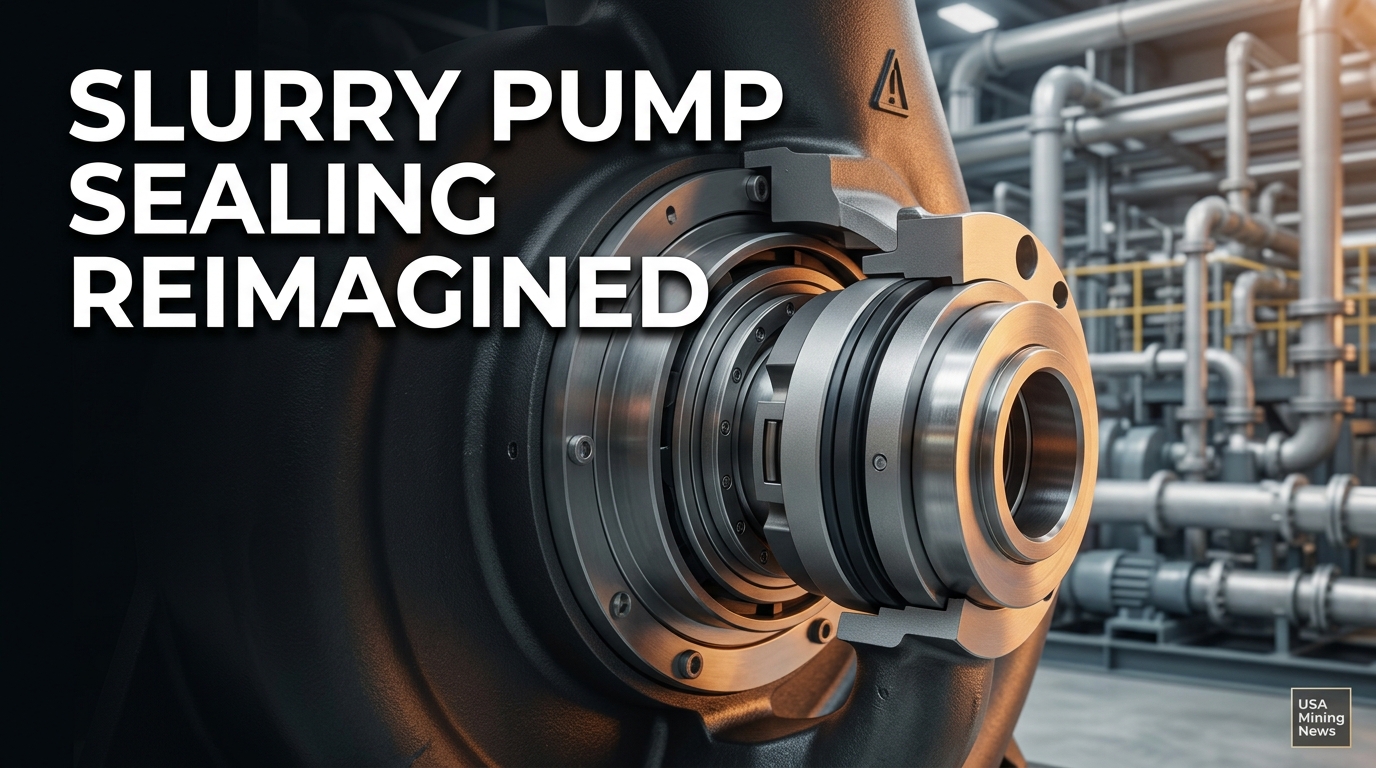
A prime example of this advanced design philosophy is the development of the LAPIS slurry seal by KSB, a proprietary mechanical seal specifically engineered for GIW® slurry pumps. KSB has a strong heritage in mechanical seal technology, having designed and produced mechanical seals since 2012, with a portfolio spanning more than 40 different product lines. The LAPIS represents a significant milestone as KSB’s inaugural mechanical seal specifically designed for heavy-duty slurry service, a demanding application requiring exceptional robustness and reliability.
The LAPIS seal is a testament to collaborative engineering, emerging from the combined product development expertise of KSB GIW and KSB Pegnitz teams. It synthesizes KSB’s extensive mechanical seal knowledge with KSB GIW’s nearly century-long (approximately 100 years) experience in slurry pump engineering. This synergistic approach ensures that LAPIS delivers not only the inherent benefits of mechanical sealing but also the crucial advantages of full pump integration, providing customers with a unified solution and consolidated support.
Designed meticulously to tackle the rigorous demands of slurry applications, the LAPIS slurry seal incorporates key innovations informed by extensive field experience and invaluable customer feedback, particularly concerning the performance limitations of third-party mechanical seals. Its robust construction includes:
- Thicker seal faces for enhanced durability against abrasive slurries.
- Larger O-rings to improve sealing integrity and resistance to wear.
- More robust metallic components, significantly increasing the seal’s tolerance to shaft movement and misalignment, common issues in challenging operating environments.
- Larger, protected springs strategically positioned outside the path of the pumping fluid, proactively preventing blockages that can compromise seal performance.
Moreover, LAPIS features an innovative quench design. This system actively clears solids from the internal springs, ensuring that consistent seal face pressure is maintained throughout operation, thereby reducing clogging and extending functional life. A sophisticated clamp collar locking mechanism further enhances its design, providing strong torque-carrying capacity while simultaneously facilitating easier adjustment during both installation and routine maintenance, contributing to reduced downtime and simplified field service.
Strategic Implications for Mining Operators and Investors
The advent of integrated mechanical sealing solutions like the LAPIS slurry seal carries profound strategic implications for both mining operators and investors. For operators, these technologies are not merely an incremental improvement; they represent a fundamental shift towards greater operational predictability and cost control. By significantly reducing water consumption, integrated mechanical seals help mines meet increasingly stringent environmental regulations and enhance their sustainability credentials, crucial for maintaining community relations and securing future operating permits. The reduction in maintenance frequency and simplification of repair processes contribute directly to improved uptime, higher asset utilization, and a more streamlined workforce management.
For investors, the adoption of such advanced, integrated solutions signals a commitment to operational excellence and long-term value creation. Reduced operating expenditures (OpEx) through lower water and maintenance costs, coupled with enhanced asset reliability, translate into stronger financial performance and improved returns on invested capital. In an industry characterized by tight margins and significant capital outlays, investments in technologies that demonstrably lower TCO and mitigate operational risks are highly attractive. Moreover, a company’s proactive stance on sustainability, partially achieved through water-saving technologies, can positively influence its environmental, social, and governance (ESG) ratings, appealing to a broader base of socially conscious investors.
The Future of Slurry Pumping: Efficiency and Sustainability
The mining sector's relentless pursuit of higher efficiency and greater sustainability extends far beyond capital-intensive, large-scale technological shifts. It encompasses the continuous, meticulous optimization of every component, no matter how seemingly small, within the production chain. The focus on rethinking slurry pump sealing, spearheaded by innovations such as KSB’s LAPIS system, powerfully illustrates how specialized engineering can directly address some of the industry’s most pressing operational and environmental challenges.
As the conversation on June 29, 2026, underlined, the future of slurry pumping will likely see further emphasis on integrated solutions that offer comprehensive, high-value systems rather than disparate components. This trend is driven by a clear understanding that true operational synergy and TCO reduction are achieved when every element is designed to function seamlessly within a larger system. Looking ahead, the industry can expect continued innovation in this space, as equipment manufacturers strive to deliver solutions that enable mining operations to balance throughput, total cost of ownership, and an unwavering commitment to environmental stewardship.