Rio Tinto Targets Mid-2030s for Landmark Arizona Copper Mine
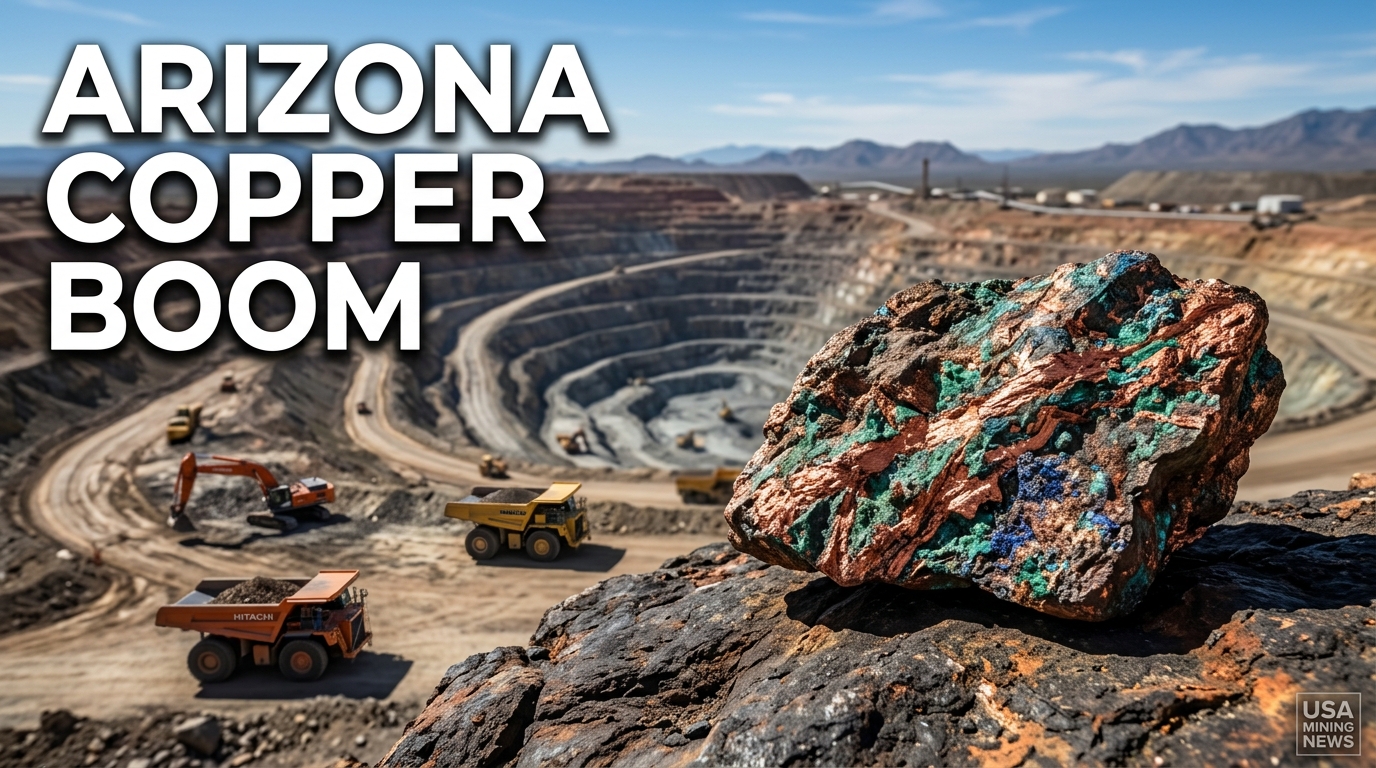
Rio Tinto, one of the world's leading mining powerhouses, has announced an ambitious target: the mid-2030s for the start of operations at its Resolution Copper mine in Arizona, United States. This declaration signals a significant step forward for a project critical to bolstering domestic copper supply, coming after a protracted period of regulatory hurdles and stakeholder negotiations. Poised to yield more than 18 million tonnes (mt) of copper throughout its operational lifespan, the Resolution project is projected to satisfy over a quarter of the US's total copper demand, underlining its strategic importance in the nation's push for critical mineral independence and energy transition.
The company confirmed its commitment to the venture by initiating a substantial $500 million (£374.86 million) drilling program. This extensive drilling campaign is specifically designed to explore and delineate previously unaccessible sections of the supergiant underground ore body, aiming to unlock the full potential of this massive deposit. The investment underscores Rio Tinto's long-term vision for Resolution Copper and its role in meeting the anticipated surge in demand for the red metal driven by electrification and renewable energy technologies.
The Resolution Project: A Deep Dive into US Copper Supply
The sheer scale of the Resolution project positions it as a cornerstone for future copper supply in the United States. With a projected output exceeding 18 million tonnes over its life, it stands to become a generational asset. Copper, often referred to as "Dr. Copper" due to its sensitivity to economic health, is indispensable for a vast array of modern applications. It is a fundamental component in electrical wiring, renewable energy systems such as solar panels and wind turbines, electric vehicles, and critical infrastructure development. For the US, achieving greater self-sufficiency in copper production is not merely an economic advantage but also a matter of national strategic security, especially in an era of complex global supply chains.
The initiation of the $500 million drilling program represents a crucial phase in the project's development. Such significant investment at this stage is indicative of a major mining company’s confidence in the geological potential and economic viability of the asset. Extensive drilling is fundamental for detailed resource modeling, mine planning, and optimizing future extraction strategies, especially in a deep, complex underground deposit like Resolution. Accessing previously untouched sections of the ore body could potentially lead to updated resource estimates and provide critical data for engineering design, further refining the project’s scope and future operational parameters.
Navigating Operational Challenges: Smelting and Infrastructure
Despite the immense potential of the Resolution project, Rio Tinto executives have highlighted a key operational challenge: the current state of domestic copper smelting capacity in the US. A senior executive indicated to Reuters that the company might need to export a portion of its copper concentrate because of "difficult smelting economics" within the United States. This challenge is not unique to Rio Tinto but reflects a broader industry concern regarding the downstream processing capabilities for critical minerals in North America.
Copper concentrate, the product of the initial beneficiation process at the mine site, must be further processed via smelting and refining into cathode form. Copper cathodes are high-purity metal slabs, which are then used as the primary raw material for manufacturing essential products such as electrical wires, pipes, and other industrial components. The US currently has limited primary copper smelting capacity. Rio Tinto itself operates the Kennecott copper mine and its integrated smelter in Utah. Beyond Kennecott, Freeport-McMoRan manages the only other significant copper smelter in the United States. The scarcity of domestic smelting infrastructure means that even with increased upstream mining, the US may still rely on overseas facilities for a portion of its vital metal processing, presenting a supply chain vulnerability and economic leakage.
Addressing this smelting bottleneck would require substantial capital investment in new or upgraded facilities, which face significant capital costs, stringent environmental regulations, and lengthy permitting processes. The potential necessity to export concentrate not only adds logistical complexity and cost but also impacts the overall carbon footprint of the supply chain, as concentrate must be shipped internationally for processing before potentially being shipped back to US manufacturers in cathode form. This issue underscores the need for a holistic approach to critical mineral supply chains, encompassing extraction, processing, and manufacturing.
Resolution's Long Road: Land Access and Stakeholder Relations
The journey to the mid-2030s start-up target has been long and arduous for the Resolution Copper project, primarily due to complexities surrounding land access. Rio Tinto recently secured control of the necessary acreage for the project, a crucial milestone achieved after what was described as a "protracted legal battle." This legal dispute brought into sharp focus the intricate balance between increasing US demand for copper—a material vital for national economic and strategic interests—and the deeply held religious rights and ancestral lands of the San Carlos Apache people.
The land exchange process, which typically involves federal land being swapped for privately held parcels, became a focal point for intense debate. Indigenous groups expressed profound concerns over the potential impact on Oak Flat (Chiricahua Apache: Chi’chil Bildagoteel), an area within the project footprint considered sacred. This conflict highlights a recurring pattern in modern mining discourse globally, where resource development projects intersect with environmental stewardship, cultural heritage, and indigenous rights. Successfully navigating such sensitive issues demands extensive, respectful engagement, transparent communication, and often, innovative solutions that uphold both economic development and social equity.
The resolution of this land dispute, while complex, represents a significant de-risking event for the project, allowing Rio Tinto to advance with its development plans. It also sets a precedent for how future large-scale mining projects in the US may need to address and integrate diverse stakeholder interests, emphasizing the growing importance of environmental, social, and governance (ESG) considerations in investment and operational decisions.
Broader Portfolio Moves: From Diamonds to Lithium
While Resolution Copper takes center stage in Arizona, Rio Tinto's global portfolio management continues to evolve with other significant developments reported concurrently. In Canada, the company marked the official closure of its Diavik diamond mine, located 220km south of the Arctic Circle. Discovered in 1991 and commencing operations in 2003, Diavik had a remarkable 23-year run, producing more than 150 million carats of rough diamonds, predominantly white gem-quality stones, alongside some rare yellow diamonds.
The closure of Diavik represents a natural progression in the mining lifecycle, from discovery and development to production and eventual rehabilitation. Closure activities are slated to continue until 2029, followed by a phase of post-closure monitoring, demonstrating Rio Tinto's commitment to responsible mine closure and environmental remediation. The final batches of Diavik's rough diamonds will be polished and distributed through Rio Tinto’s global customer network, including its established Select Diamantaires, through 2026 and beyond, ensuring a phased exit from diamond sales.
In a contrasting move reflecting its strategy to pivot towards minerals essential for the energy transition, Rio Tinto recently secured a substantial financing package totaling £872.27 million ($1.17 billion USD equivalent) to advance the Rincon lithium project in Salta Province, Argentina. This investment underscores the company's commitment to diversifying its commodity base beyond traditional metals and diamonds, explicitly targeting materials like lithium that are crucial for battery manufacturing and the burgeoning electric vehicle market. The Rincon project is positioned to become a significant source of battery-grade lithium carbonate, further solidifying Rio Tinto's presence in the critical minerals sector.
Strategic Implications for the Mining Industry
The developments surrounding Rio Tinto's Resolution Copper project carry significant implications for the broader mining industry and global commodity markets. For the United States, bringing a project of Resolution’s magnitude online offers a vital opportunity to enhance domestic supply security for a critical mineral at a time of increasing geopolitical tension and supply chain vulnerabilities. The anticipated output could drastically reduce reliance on foreign copper, supporting the country's ambitious infrastructure and clean energy goals.
Rio Tinto's strategic maneuvers, encompassing the long-term commitment to a major copper asset, the phased closure of a mature diamond mine, and substantial investment in a lithium project, paint a clear picture of a major miner dynamically reshaping its portfolio. This strategy aligns with prevailing industry trends: a strong focus on commodities deemed essential for decarbonization (copper, lithium), alongside the responsible management of legacy assets through their full lifecycle. It exemplifies how large diversified miners are positioning themselves for the future mineral demands driven by global electrification.
Furthermore, the lengthy permitting process and the land access complexities at Resolution Copper serve as a poignant case study for the industry on the challenges of developing large-scale projects in established jurisdictions. It highlights the imperative for robust stakeholder engagement, particularly with indigenous communities, and the increasing scrutiny projects face regarding their environmental and social impact. Navigating these obstacles effectively is becoming as crucial as geological prospectivity and economic viability for successful project delivery.
Outlook: A Future Shaped by Critical Minerals and Responsible Mining
As Rio Tinto targets the mid-2030s for Resolution Copper's operational debut, the project stands as a testament to the long lead times, substantial capital requirements, and complex socio-political landscapes inherent in mega-mining ventures. The coming decade will involve continued engineering, environmental work, and community engagement to prepare for full-scale production. Overcoming the domestic smelting challenge will be a key factor in maximizing the project's contribution to a truly integrated US copper supply chain.
The broader context of Rio Tinto's activities—from the sunset of Diavik to the dawn of Rincon—illustrates an industry in constant flux, adapting to evolving resource demands and societal expectations. The future of mining will undoubtedly be characterized by an intensified focus on critical minerals like copper and lithium, driven by the global energy transition. Simultaneously, the industry will face increasing pressure to demonstrate unparalleled commitment to sustainability, responsible resource management, and social license to operate, making projects like Resolution Copper not just economic endeavors, but symbols of the industry’s evolving role in a changing world.