In an era of increasing industrial innovation and supply chain vulnerabilities, the global aluminium smelting sector is undergoing a profound transformation. Faced with surging demand, intricate logistical challenges, and an unwavering commitment to worker safety, producers are strategically embracing automation and advanced robotics. This pivotal shift, as observed on April 14, 2026, is not merely an incremental improvement but a fundamental re-evaluation of how aluminium, a critical material for automotive and construction industries, is brought to market.
The Imperative for Automation: Demand, Dynamics, and Danger
The demand for aluminium, prized for its lightweight and durable properties, continues its upward trajectory. Production facilities worldwide are striving to scale their output to meet this escalating need, yet the arduous and hazardous nature of aluminium smelting presents significant hurdles. The industry's reliance on automation is a direct response to the call for greater reliability, enhanced efficiency, and, crucially, improved safety within its operations.
Recent geopolitical events have acutely underscored the global supply chain’s fragility and the strategic importance of reliable aluminium production. The ongoing disruption in the Strait of Hormuz, a critical maritime chokepoint, serves as a stark reminder of this vulnerability. The Gulf region, despite producing only approximately 3% of global alumina and 1% of bauxite, accounts for around 9% of global aluminium production. Both the import of raw materials and the export of processed aluminium are heavily reliant on this shipping route. Intensifying these concerns, recent Iranian strikes on aluminium smelters in the United Arab Emirates and Bahrain have led to shutdowns at some of the world's largest facilities. Such incidents can cause power losses that halt potlines mid-process, raising the severe risk of physical damage to equipment and translating into recovery timelines that can span months.
As producers across the globe endeavor to ramp up aluminium production, the logistical complexities inherent in the refining and smelting stages remain formidable. Smelting, in particular, stands out as a process that is not only complex but also inherently dangerous, solidifying the compelling case for automation. As Jan Biti, CEO of Norway-based robotic aluminium smelting technology and equipment company AlumatIQ, succinctly puts it, the sector is "an industry with enormous unmet demand for automation – and very little competition doing it well."
Robotics Market Surges Amid Strategic Shift
The embrace of automated robotics offers a pathway to unparalleled reliability and round-the-clock productivity, particularly in environments that are simply too dangerous for human workers. This strategic shift is being confirmed by robust market forecasts. Recent analysis from Data Insights Market projects a "substantial expansion" in the global smelt robot market, estimating its value at $100.59 billion in 2025. This market is further predicted to achieve a compound annual growth rate (CAGR) of 12.17% between 2025 and 2033, culminating in a projected value of $252.1 billion by the end of that period.
This growth trajectory for specialized smelt robots aligns with broader trends in industrial robotics. GlobalData, the parent company of this publication, projects the overall industrial robotics market to reach $205.5 billion by 2030, growing at a 15% CAGR. While industrial deployments like those in smelting are expected to grow more steadily than service robotics, their integration represents a critical advancement for heavy industries.
The aluminium smelting space is uniquely conducive to automation due to its requirements for high-intensity, continuous processes carried out in hazardous environments that demand extreme precision and repeatability. Unlike alumina refining, which is primarily chemically driven, aluminium smelting is an energy-intensive electrochemical process. This distinction significantly shapes both the risk profile of the operation and the specific roles that automation can play.
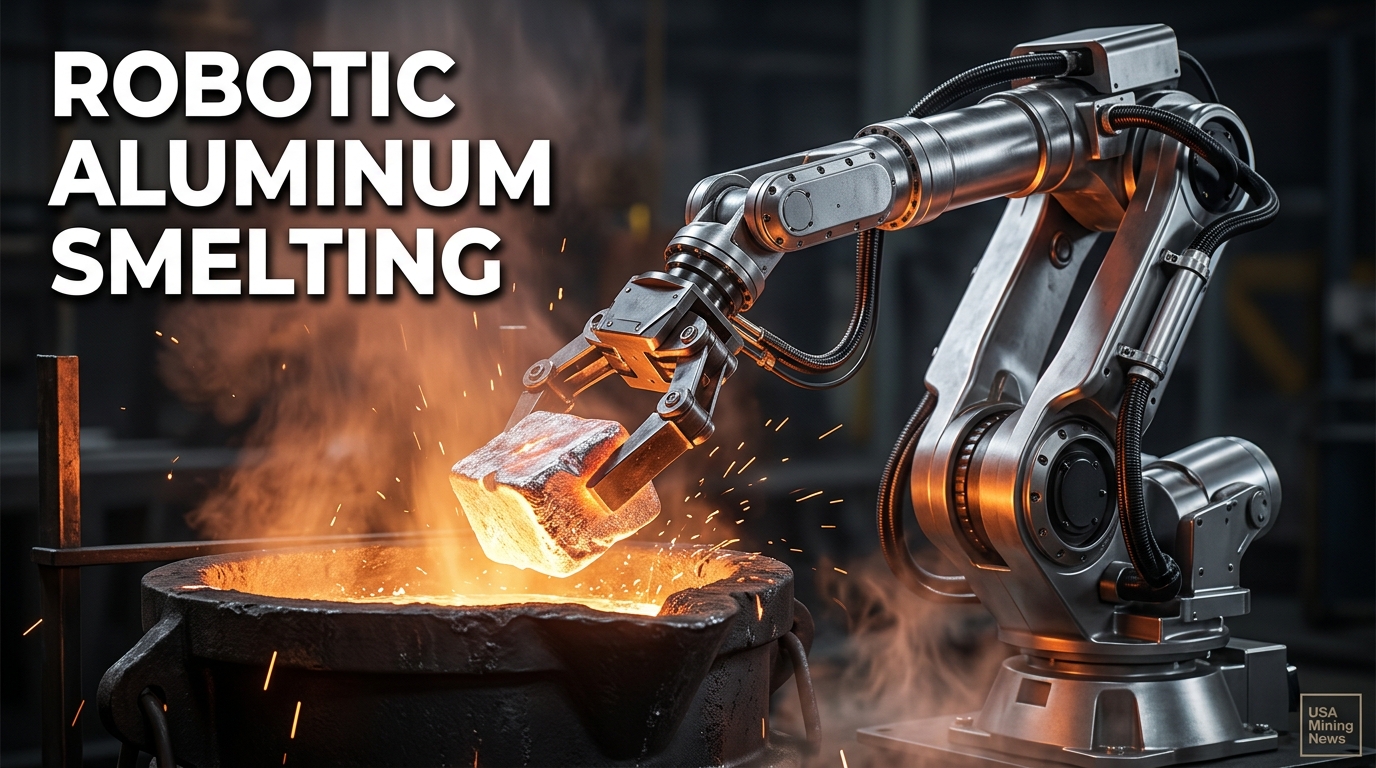
Prasanna Lakshmi, a mining analyst at GlobalData, emphasizes the strategic nature of this transition. "The adoption of autonomous robotics in aluminium smelting is a deliberate strategic shift, rather than a coincidence," Lakshmi notes, "driven by the industry’s unique combination of extreme thermal hazards and highly repetitive precision tasks such as anode tending and molten metal pouring – which allow robotic systems to operate up to ten-times faster than manual labour." While automation and robotic solutions are already elevating the smelting environment and excising humans from the most perilous tasks, the unique challenges of the aluminium potroom have historically made innovation a formidable undertaking.
Prioritizing Safety: Robotics Revolutionizes Potroom Operations
Safety stands as perhaps the most compelling driver for the proliferation of automation in aluminium smelting. The statistics underscore the inherent dangers: in 2024 alone, the Aluminium Association reported 141 explosion incidents, including two classified as Force 3 explosions – a designation for catastrophic industrial events. For Jan Biti of AlumatIQ, safety is "the most underappreciated driver" of automation in smelting environments, and for good reason.
"The potroom is a genuinely hazardous workplace," Biti asserts, highlighting a multitude of risks: "heat stress, heavy lifting, repetitive strain, awkward postures, daily co-activity risks between crane and ground operators, and sustained exposure to fluoride and particulate emissions including hydrofluorocarbons and perfluorocarbons."
The predominant method for aluminium smelting is the Hall-Héroult process. This electrochemical process operates at temperatures exceeding 900°C. The by-products include carcinogenic fumes, hydrogen fluoride, sulphur dioxide, and fine particulates (alumina and fluorides), all of which can lead to severe respiratory irritation. Long-term exposure can cause conditions such as 'potroom asthma,' chronic obstructive pulmonary disease, and bronchitis. Furthermore, the high electric currents present in potrooms generate magnetic fields powerful enough to affect medical implants like pacemakers, posing an additional, unseen hazard to workers.
In response to these dangers, robotics are being increasingly deployed to automate critical high-risk and repetitive tasks. These include:
- Furnace tapping and plugging
- Slag removal
- Cathode stripping
- Electrode handling areas
- Anode changing and repair
Among these, anode changing and repair ranks as one of the most perilous tasks within the potroom. This process involves the removal of large, carbon-based blocks from the smelting pot, which necessitates breaking the electrical connection. This action can result in an abrupt voltage surge and localized electrical arcing, potentially leading to a potline open circuit – a condition known to trigger explosions.
A prime example of this transformative approach is seen at Rio Tinto's Tiwai Point smelter in New Zealand. This facility, renowned for producing low-carbon aluminium primarily using hydroelectric power, has implemented an automated robotic system for anode yoke repair. The technology, supplied by Australia-based Autoa Robot Welding, strategically utilizes through-arm welding robots and an additional handling robot to precisely load and position each yoke, thereby removing human operators from a highly dangerous and precision-intensive task.
Outlook: A More Resilient and Sustainable Future
The integration of robotics into aluminium smelting represents more than just technological advancement; it signifies a strategic pivot towards building a more resilient, safer, and ultimately more sustainable industry. By leveraging autonomous systems, producers can mitigate the risks associated with human exposure to extreme conditions, reduce operational variability, and enhance overall productivity. The ability of robots to operate continuously and at speeds ten times faster than manual labor for specific tasks promises significant efficiency gains.
Looking ahead, the continued maturity of robotic technologies, coupled with the ongoing pressure for greater safety and efficiency, ensures that automation will play an increasingly central role in the aluminium sector. This evolution is vital for meeting global demand, navigating complex geopolitical landscapes, and fostering a workplace environment that prioritizes the well-being of its human capital, while simultaneously safeguarding the economic viability of a critical industrial commodity.