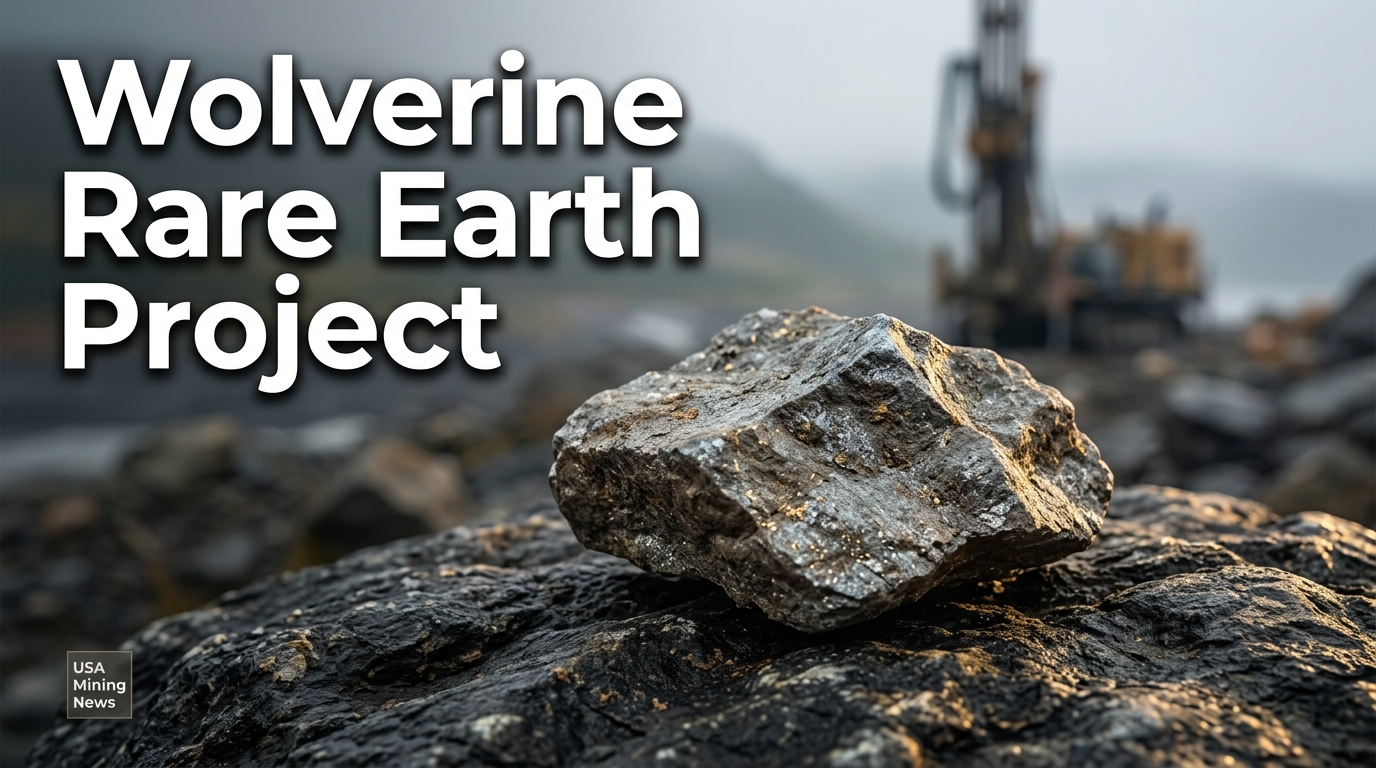
St. John's, NL – SAGA Metals has commenced a comprehensive mobilization effort at its 100% owned Wolverine Heavy Rare Earth Element (HREE) Project, located in central Labrador, Canada. This pivotal phase involves deploying crews, equipment, and supplies, alongside establishing crucial camp facilities and supporting infrastructure. The activities are in direct preparation for an ambitious 4,000–5,000-meter diamond drilling program, set to significantly advance the understanding and potential of this promising rare earth asset.
The Wolverine Project, encompassing nine contiguous mineral licences across 294.5 square kilometers, represents a strategic holding for SAGA Metals in a region increasingly recognized for its critical mineral potential. Located approximately 50 kilometers west of Hopedale and just 12 kilometers from the Labrador coast, the project boasts logistical advantages, including proximity to local airstrips, road connections in nearby towns, and access to tidewater, which could facilitate year-round operations and future development.
Building on Promising Initial Success
SAGA Metals’ current drilling initiative is designed to build upon the encouraging results derived from its 2025 reverse circulation (RC) drilling operation. That campaign successfully delineated broad zones of near-surface rare earth element mineralization extending across an impressive 1.7-kilometer by 1.2-kilometer area, situated within a geologically significant peralkaline caldera system. The findings from this earlier program provided a strong impetus for the more detailed diamond drilling now underway.
The 2025 RC drilling program yielded consistent mineralization, highlighting the Wolverine Project's potential. Notable intercepts included 48.8 meters at 0.77% total rare earth oxides (TREO) from a shallow depth of 1.5 meters in hole WOLRC25-003. Furthermore, the program recorded a peak assay of 2.03% TREO. Crucially for the market, SAGA Metals reported that heavy rare earth oxides contributed a significant 24–28% of the total TREO value. Complementing these drilling results, surface sampling at Wolverine has identified zones with remarkably high grades, reaching up to 21.6% TREO, underscoring the project's high-grade potential.
The Upcoming Diamond Drilling Program: A Deeper Dive
The forthcoming diamond drilling program represents a critical step in de-risking and advancing the Wolverine Project. Unlike RC drilling, which provides pulverized rock chips, diamond drilling recovers intact core samples. This enables highly detailed geological, structural, mineralogical, and metallurgical analysis, which is essential for understanding the deposit's characteristics and for subsequent resource estimation. The planned 4,000–5,000-meter campaign will be systematically executed across four primary focus areas:
- Detailed Mineralized Zone Mapping: Extensive mapping efforts will be undertaken to precisely define the geological structures controlling the mineralization. This understanding is crucial for predicting the continuity and geometry of the ore body.
- Follow-up Drilling: The program will conduct follow-up drilling both along strike and at depth from previously identified mineralized zones. This aims to establish the lateral and vertical extent of the rare earth mineralization, a key factor in determining deposit size.
- High-Priority Prospect Assessment: Additional high-priority prospects within the extensive 294.5 km² project area will be assessed. This proactive exploration strategy seeks to identify new zones of mineralization and expand the overall resource potential.
- Rock Property and Geochemical Testing: Comprehensive tests will be performed on mineralized rock properties and geochemical characteristics. This data is vital for understanding the material's metallurgical behavior and for optimizing future processing routes.
Michael Garagan, SAGA Metals’ Chief Geologist Officer (CGO) and Director, emphasized the strategic importance of this phase. “Mobilisation is progressing well with the camp and supporting infrastructure in place to commence all parts of the programme in mid-August,” Garagan stated. He further added, “This programme will allow us to systematically explore the continuity of ore grade; near-surface mineralisation identified by the two previous drilling campaigns create the essential database to advance this project towards a maiden resource.” His comments highlight the methodical approach SAGA Metals is taking to build a robust geological and technical foundation.
The Strategic Importance of Heavy Rare Earths
The Wolverine Project's focus on heavy rare earth elements (HREEs) holds particular significance in the global critical minerals landscape. HREEs, such as dysprosium and terbium, are less abundant and often more challenging to extract than their light rare earth counterparts. However, they are indispensable components in a wide array of high-technology applications, including high-performance magnets for electric vehicle motors, wind turbines, advanced electronics, and crucial defense technologies. The global demand for these strategic elements is projected to grow significantly, driven by the energy transition and geopolitical considerations around supply chain security.
The reported contribution of 24–28% HREO to the total TREO at Wolverine, along with high-grade surface samples, positions the project as a potentially valuable source in a market seeking diversified and reliable supplies of these critical materials. Establishing domestic or allied-country sources of HREEs is a key policy objective for many Western governments, including the United States and Canada, aiming to reduce reliance on dominant suppliers.
Metallurgical Considerations and Project Logistics
Beyond the geological potential, robust metallurgy is a critical factor for the economic viability of any rare earth project. The complex mineralogy of many rare earth deposits often presents significant processing challenges. In an important parallel development, SAGA Metals and Temas Resources recently completed an independent metallurgical validation program. This program utilized Temas's Regenerative Chloride Leach Platform Technology and specifically reported titanium recoveries of up to 90.8%. While this validation focused on titanium, it demonstrates SAGA Metals' proactive approach to evaluating and de-risking processing pathways for various elements within its projects, suggesting a broader strategy for comprehensive resource utilization.
The logistical advantages of the Wolverine Project also bear emphasis. Its location, approximately 12 kilometers from the Labrador coast and with access to local airstrips and road connections, could significantly reduce future capital and operational expenditure related to transportation. Proximity to tidewater, in particular, offers the potential for cost-effective, year-round shipping of concentrates or refined products to global markets, a considerable advantage in remote mining jurisdictions.
Towards a Maiden Resource and Future Prospects
The successful completion of this 4,000–5,000-meter diamond drilling program is expected to generate the comprehensive data required to establish a maiden mineral resource estimate for the Wolverine Project. A maiden resource is a pivotal milestone for any exploration company, providing a quantified statement of mineral tonnage and grade, which is essential for attracting investment, conducting preliminary economic assessments (PEAs), and advancing towards feasibility studies.
SAGA Metals' systematic approach to exploring the continuity of ore-grade, near-surface mineralization aligns with best industry practices for de-risking and adding value to a mineral asset. As the drilling progresses through August and beyond, the market will keenly anticipate the detailed analytical results and subsequent resource declarations. The Wolverine Heavy Rare Earth Element Project represents a significant endeavor in Canada's burgeoning critical minerals sector, with the potential to contribute to secure and diversified global supplies of these indispensable elements.