SAGA Metals Fortifies Critical Minerals Portfolio with Wolverine REE Project Acquisition in Canada
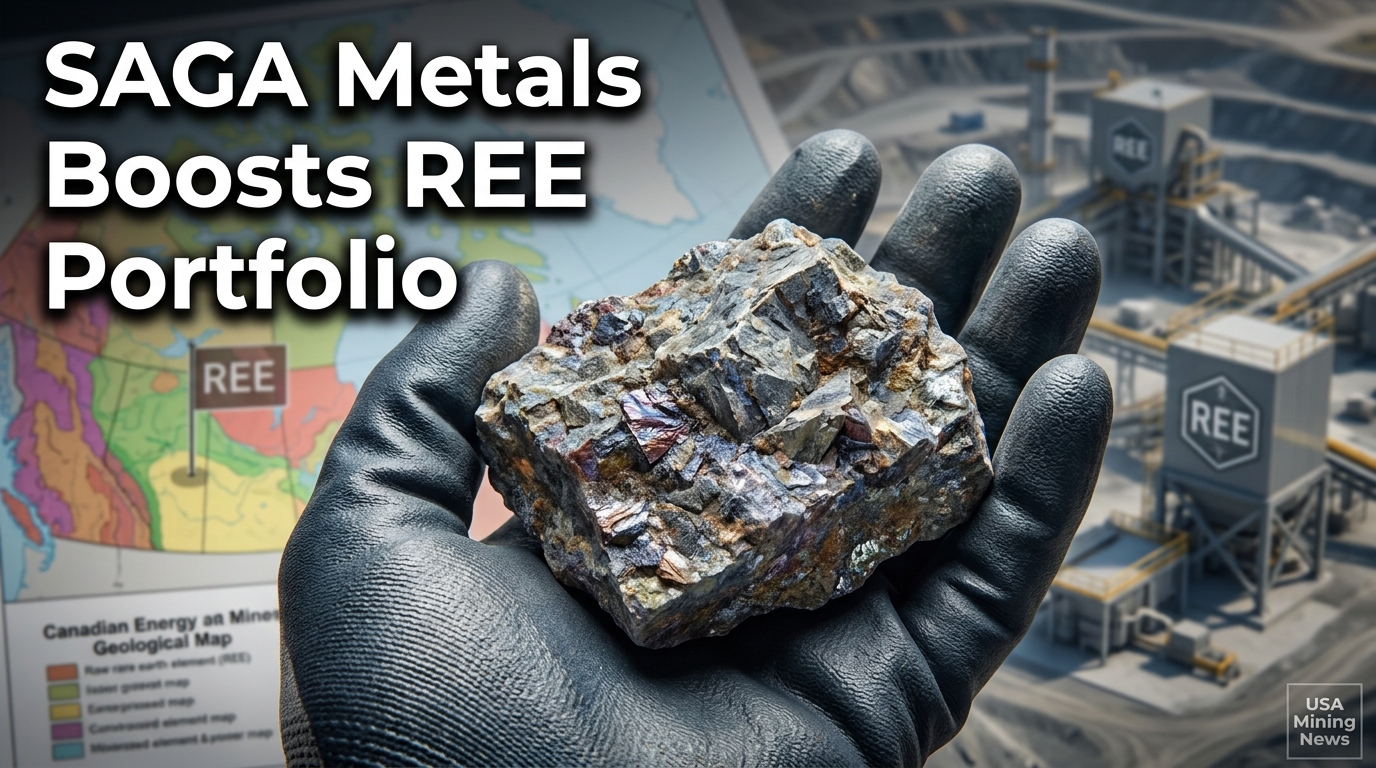
In a significant strategic move announced on April 15, 2026, SAGA Metals has unveiled its agreement to acquire Catalyst Rare Metals, thereby securing full ownership of the Wolverine rare earth element (REE) project in Canada. This acquisition is poised to substantially enhance SAGA Metals' burgeoning portfolio of critical mineral assets, marking a pivotal step in its efforts to address North American supply chain vulnerabilities for essential materials crucial for both the clean-energy transition and national defense priorities. The Wolverine project, notably royalty-free, adds a high-potential heavy rare earth element (HREE) asset to SAGA's holdings in what is considered a Tier-1 mining jurisdiction, further solidifying the company's position as a diversified supplier of strategic metals.
The demand for rare earth elements has surged dramatically in recent years, driven by their indispensable role in a wide array of high-tech applications. REEs are critical components in technologies ranging from electric vehicle motors and wind turbines to advanced military systems and consumer electronics. Within the broader REE spectrum, heavy rare earth elements such as dysprosium, terbium, and yttrium are particularly valued for their unique magnetic and luminescent properties, which are vital for high-performance magnets and specialized alloys. Global supply of these critical elements has historically been concentrated, leading to growing strategic interest from Western nations in developing secure, domestic sources. SAGA Metals' acquisition of the Wolverine project directly aligns with this imperative, establishing a potential new source within Canada.
Strategic Acquisition Details and Key Players
The transaction details underscore SAGA Metals' commitment to integrating the Wolverine project into its operational framework. SAGA will acquire all issued and outstanding shares of Catalyst Rare Metals through a two-fold consideration package. At the closing of the deal, Catalyst shareholders will receive an initial consideration of 4.25 million common shares of SAGA Metals. Additionally, a cash payment of C$1 million, equivalent to approximately US$725,765 based on current exchange rates, is scheduled to be disbursed within 120 days of the acquisition’s closing. The royalty-free nature of the Wolverine project is a significant advantage, potentially enhancing future project economics and maximizing returns for SAGA Metals and its shareholders.
Mike Stier, CEO and director of SAGA Metals, provided extensive commentary on the strategic importance of this acquisition. Stier stated, "The agreement to acquire [all] of the Wolverine REE project is a major milestone for SAGA Metals and completes our diversified portfolio of critical minerals projects, strategically positioned to support North American supply security and national defence priorities." He further elaborated on the company’s broader vision, noting, "With titanium, uranium, vanadium, lithium, and now a high-potential heavy rare earth asset all 100% owned in Tier-1 jurisdictions, SAGA is well placed to deliver the strategic metals essential for the clean-energy transition and defence applications." Stier concluded by emphasizing Wolverine's immediate value proposition, stating that its "scale, HREE [heavy rare earth element] enrichment and clear path to resource delineation position it as a well-timed addition with significant potential to enhance shareholder value." His remarks highlight a clear strategy of building a robust portfolio of critical minerals across a range of commodities, all located in geopolitically stable and mining-friendly jurisdictions.
The Wolverine REE Project: Location and Scale
The Wolverine REE project encompasses five adjoining mineral licenses, collectively covering an substantial area of approximately 230.5 square kilometers. Geographically, the project is situated roughly 50 kilometers west of Hopedale, a community located on the Labrador coast, and extends inland approximately 12 kilometers from the coast. This location in Labrador, Canada, positions the project within a highly regarded mining jurisdiction known for its established regulatory frameworks, geological prospectivity, and relatively stable political environment, aligning with SAGA's strategy of operating in "Tier-1 jurisdictions."
Geologically, the Wolverine project is characterized by a large peralkaline caldera setting, a feature often associated with significant rare earth mineralization. The scale potential of the project is further underpinned by the presence of approximately 26 square kilometers of mineralized tuff exposed at the surface. Early estimates suggest an impressive thickness of the prospective mineralized horizon, ranging between 25 and 50 meters. Importantly, SAGA Metals has indicated that less than 10% of this extensive target horizon has been drill tested to date, suggesting considerable exploration upside and reinforcing the project's potential for significant resource expansion. This expansive, lightly explored footprint offers a compelling opportunity for future resource delineation and growth.
Promising Exploration Results and Mineralization Characteristics
The acquisition is significantly bolstered by promising results derived from a 2025 reverse circulation (RC) drilling program conducted at Wolverine. This program successfully outlined widespread, near-surface REE mineralization spanning an area of roughly 1.7 kilometers by 1.2 kilometers within the large peralkaline caldera. A total of 537 samples collected during the program reported consistent grades, notably demonstrating good continuity of mineralization across the drilled area. This consistency is a critical indicator of the potential for establishing a cohesive and economically viable ore body.
The drilling showed that the mineralized system remains open in various directions and has only been lightly tested, with several zones identifying grades above 1% total rare earth oxides (TREO). These initial findings are highly encouraging, particularly given the early stage of exploration. Highlighted drill results from the 2025 program include:
- WOLRC25-003: Intersected 48.8 meters grading 0.77% TREO from a shallow depth of 1.5 meters, including a higher-grade section of 18.3 meters at 1.06% TREO.
- WOLRC25-006: Returned 38.1 meters at 0.71% TREO directly from surface, featuring a richer interval of 4.6 meters at 1.53% TREO.
- WOLRC25-002: Yielded 51.8 meters at 0.52% TREO from surface, including a robust 33.5 meters at 0.67% TREO.
Peak assays reported during the program reached as high as 2.03% TREO. A particularly noteworthy characteristic of the Wolverine project's mineralization is the significant heavy rare earth oxide (HREO) enrichment. HREOs averaged 28% of the total rare earth oxide content, a substantial proportion that makes the project especially appealing. HREOs, as previously mentioned, command higher market prices and are in critical demand due to their unique properties that are irreplaceable in many advanced technologies, from permanent magnets in electric vehicle engines and wind turbines to specialized alloys in aerospace and defense applications. This enrichment significantly enhances Wolverine's economic potential and strategic importance.
The Path Forward: 2026 Exploration Program and Resource Delineation
With the acquisition complete, SAGA Metals is poised to embark on an aggressive exploration program throughout 2026. The primary objective of this planned work is to rapidly advance the Wolverine REE project toward its first NI 43-101-compliant mineral resource estimate (MRE). An NI 43-101 compliant MRE is a standardized reporting format for mineral resources and reserves, mandated by Canadian securities regulators, which provides a transparent and reliable assessment of mineral deposits for investors. Achieving this milestone is critical for de-risking the project, attracting further investment, and informing future development decisions.
The planned 2026 exploration program will encompass several key activities:
- Diamond Drilling: To gain more detailed geological and geotechnical information, providing core samples for precise assaying and metallurgical testing. This will be crucial for understanding the structural controls and true widths of mineralization.
- Focused Follow-up Holes: Designed to target extensions of known high-grade mineralization and infill areas to improve resource confidence.
- Testing Additional High-Priority Targets: Leveraging the understanding of the caldera setting and surface exposures to identify and drill untested areas with high potential for new discoveries or expanded mineralization.
This systematic approach is designed to rapidly convert exploration success into a robust, independently verified mineral resource, which is a foundational step in the progression of any mining project from exploration to potential development.
Broader Industry Context: Critical Minerals and North American Supply Chains
SAGA Metals' acquisition of the Wolverine project is not an isolated event but rather a clear reflection of a broader, accelerating trend within the global mining industry: the intensified focus on critical minerals and the establishment of secure, diversified supply chains. Geopolitical tensions, coupled with the urgent global push for decarbonization and technological advancement, have underscored the vulnerability associated with over-reliance on a limited number of suppliers for these essential resources.
Rare earth elements, alongside other commodities like lithium, cobalt, and graphite, are at the forefront of this strategic realignment. They are indispensable for manufacturing electric vehicle batteries, permanent magnets in wind turbines, advanced electronics, and a myriad of defense applications, including precision-guided munitions and stealth technologies. The ability to source these materials from stable, allied nations is becoming a matter of national economic and security priority.
SAGA's current portfolio is strategically diversified to meet these evolving demands. As articulated by Mike Stier, the company now holds 100% ownership of projects targeting titanium, uranium, vanadium, lithium, and now HREEs, all within "Tier-1 jurisdictions." This comprehensive strategy positions SAGA as a key player in providing the foundational materials required for modern industrial economies. For instance, in January of this year, SAGA had also announced positive assay outcomes from two initial drill holes at its phase one MRE drill program at the Trapper Zone, part of its Radar Ti-V-Fe (titanium-vanadium-iron) project, also located in Labrador. This indicates a consistent and methodical approach to resource development across its diverse asset base.
Outlook and Shareholder Value Enhancement
The acquisition of the Wolverine REE project represents a significant inflection point for SAGA Metals, reinforcing its commitment to becoming a leading supplier of critical minerals essential for the global clean-energy transition and defense sectors. The project's compelling scale, demonstrated HREO enrichment, and a clearly defined path to resource delineation are key factors that SAGA expects will significantly enhance shareholder value.
For mining industry professionals and investors, this development underscores several important trends. Firstly, it highlights the continued robust M&A activity within the critical minerals sector as companies seek to consolidate and expand their resource bases. Secondly, it reaffirms the strategic importance of Canadian jurisdictions, particularly Labrador, as emerging hubs for critical mineral exploration and development. Finally, SAGA Metals' focused approach to developing a diversified portfolio of critical metals in stable jurisdictions suggests a resilient business model designed to capitalize on long-term structural demand shifts. As SAGA moves closer to delivering an NI 43-101 compliant MRE for Wolverine, the project will undoubtedly attract increased attention, potentially shaping future investment narratives in the North American rare earth industry.