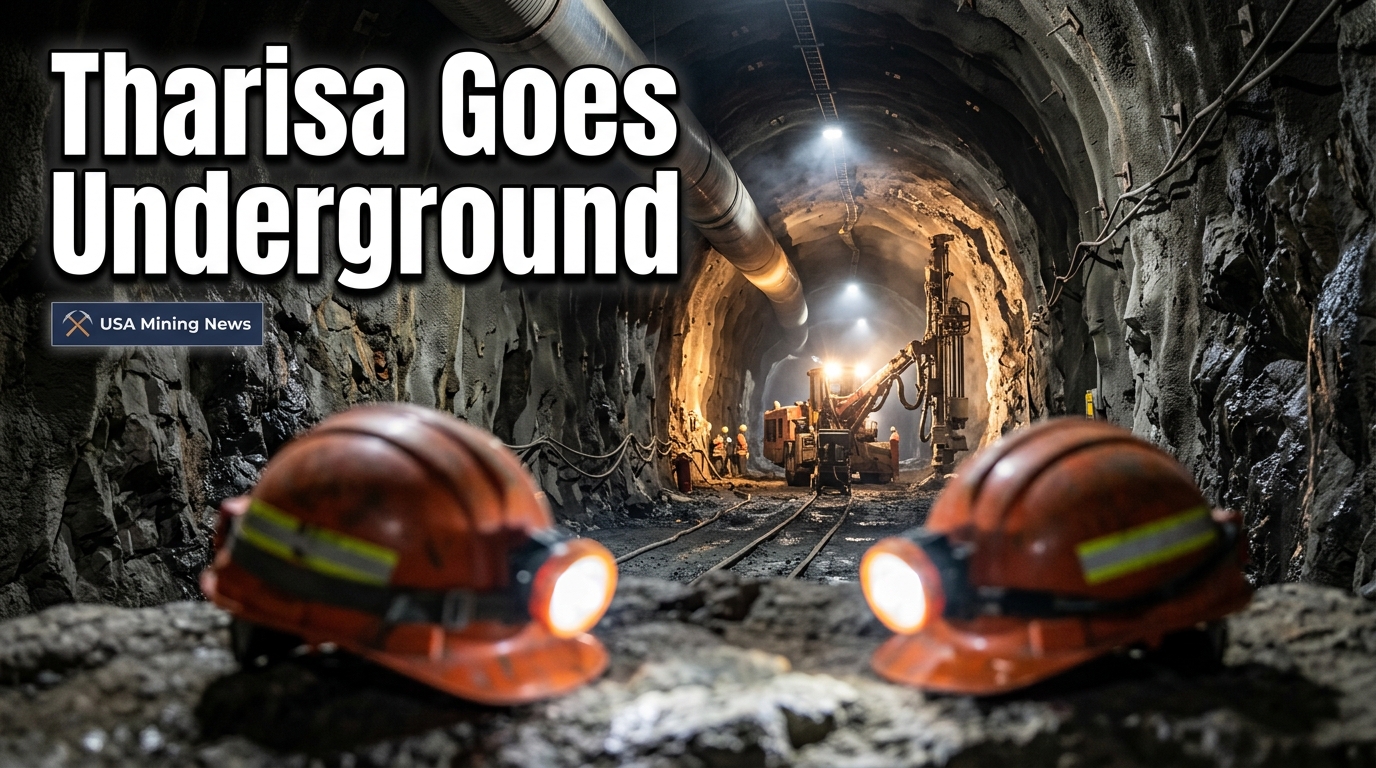
Deeper into the heart of South Africa’s mineral wealth, Tharisa Minerals has taken a decisive step to secure the long-term future of its operations, awarding a substantial five-year underground mining contract to Cementation Africa. This crucial agreement, announced on May 7, 2026, represents a fundamental strategic pivot for the Tharisa Mine, signaling an accelerated transition from its traditional open-pit methods towards leveraging the deeper, multi-generational potential of its orebody. Situated on the renowned south-western limb of the Bushveld Complex, a geological treasure trove globally famous for its platinum group metals (PGMs) and chrome, this move is set to profoundly impact Tharisa’s production profile and add significant value to its resource base.
Strategic Shift Underway at Tharisa Mine
The core of the announcement centers on a five-year contractual agreement between Tharisa Minerals and Cementation Africa, a well-regarded underground mining contractor. This collaboration is specifically designed for the development and construction of new underground operations at the Tharisa Mine. While the contract solidifies a long-term partnership, initial groundwork commenced even earlier, with the first portal at the mine seeing initial blasting activity in March 2026. This pre-contractual foundational work underscores Tharisa’s commitment to expediting its underground development plans.
The Tharisa Mine has long been recognized as a low-cost, multigenerational asset, primarily operating through open-pit methods. However, as is common with many mature open-pit mines, accessing deeper ore requires a strategic shift to underground methodologies. This transition is not merely an operational adjustment but a critical long-term value-unlocking strategy, allowing Tharisa to tap into mineralized zones previously beyond the practical or economic reach of surface mining. Importantly, this strategic shift will not immediately halt existing operations; open-pit mining will continue in parallel with the phased development of the underground infrastructure, ensuring continuity of production and a smoother transition.
The Alliance-Style Contracting Model: A New Paradigm
What sets this agreement apart is its innovative contracting approach. Tharisa and Cementation Africa have opted for an alliance-style model, a departure from conventional rate-based, risk-transfer contracts often seen in the mining industry. This alliance is characterized by:
- Open-Book Transparency: Both parties will operate with full visibility of costs and operational data, fostering trust and shared understanding.
- Cost-Plus-Fee Structure: Instead of fixed rates that can create adversarial relationships, this model allows for transparent cost recovery plus an agreed-upon fee, aligning financial incentives.
- Shared Principles: The framework is guided by common objectives and principles, emphasizing collaboration and joint problem-solving rather than strict contractual obligations designed for risk transfer.
This progressive contracting model aligns the interests of both Tharisa and Cementation Africa, encouraging efficiency, innovation, and shared responsibility for project success. As Cementation Africa’s Managing Director, Japie Du Plessis, noted, the trust placed in their capabilities to safely deliver the underground operation is highly valued. This type of collaborative model is gaining traction in the mining sector, especially for complex, long-term projects where adaptability and shared commitment can lead to superior outcomes compared to traditional lump-sum or unit-rate agreements that often transfer significant risk but can also stifle cooperation.
Operational Implications and Resource Unlocking
The implications of this contract extend beyond just a shift in mining technique; they are central to Tharisa’s long-term operational performance and resource maximization. The collaboration is anticipated to:
- Strengthen Operating Performance: By combining Cementation Africa’s specialized technical capabilities in underground development with Tharisa’s focus on operational excellence and sustainable practices, the partnership aims to enhance overall efficiency and productivity.
- Enable Improved Reach into Deeper Mineralized Zones: The primary objective of the underground expansion is to access the significant PGM and chrome resources that lie beneath the current open-pit limits. This ensures resource continuity and maximizes the value extraction from the orebody.
- Support a Longer Mine Life: By transitioning to underground mining and unlocking deeper reserves, the Tharisa Mine is expected to significantly extend its operational lifespan, securing its future as a multi-generational asset within the Bushveld Complex.
Tharisa CEO Phoevos Pouroulis underscored the strategic importance of the agreement, stating, "This agreement represents an important step in unlocking the full potential of our resource base. Cementation Africa’s proven capabilities and safety-focused approach make them an ideal partner as we expand our underground operations." This statement highlights both the financial rationale of maximizing resource value and the critical emphasis on safety, a paramount concern in all underground mining endeavors.
This development is also a direct consequence of a broader strategic investment announced by Tharisa in October 2025. At that time, the company revealed plans to invest a substantial $547 million (equivalent to €464.75 million at the time) over the subsequent ten years into an underground platinum group metals mining project in South Africa. The contract with Cementation Africa is a tangible execution step of this ambitious long-term investment strategy, signifying a clear commitment to enhancing the company’s PGM production profile.
The Bushveld Complex: A Global PGM Powerhouse
The Tharisa Mine's location on the south-western limb of the Bushveld Complex lends critical significance to this underground development. The Bushveld Complex is not merely a geological formation; it is arguably the world's most significant repository of platinum group metals and chromite. This vast igneous intrusion is responsible for approximately 80% of the world's platinum reserves and a substantial portion of its palladium, rhodium, ruthenium, iridium, osmium, and chrome. The geological consistency and high-grade nature of its ore bodies make it a coveted mining region.
For any mining company operating within this complex, extending mine life and optimizing resource extraction is paramount, given the global demand for these strategic minerals. PGMs are indispensable in a range of industries, from automotive catalysts which reduce harmful emissions, to electronics, dentistry, medical devices, and jewelry. Chrome, meanwhile, is critical for stainless steel production and various industrial applications. Securing long-term access to these minerals from a stable jurisdiction like South Africa addresses global supply chain concerns and reinforces the strategic importance of companies like Tharisa.
Long-Term Value Creation and Market Significance
The decision to invest heavily in underground mining reflects a broader industry trend where easily accessible surface deposits are depleting, necessitating deeper and more technically complex operations. By unlocking the "multi-generational potential" of the Tharisa Mine orebody, Tharisa aims to ensure a stable and predictable supply of PGMs and chrome for decades to come. This provides crucial predictability for off-takers and investors alike.
For investors, this shift translates into enhanced asset longevity and potentially more stable future cash flows, reducing the long-term risk associated with depleting reserves. For the broader mining industry, Tharisa's move exemplifies the strategic foresight required to maintain competitiveness and deliver sustainable value from world-class mineral endowments. The focus on operational excellence and sustainable mining practices, as highlighted by Tharisa, is also increasingly important for attracting capital and maintaining a social license to operate in today's environmentally and socially conscious investment landscape.
Future Outlook and Broader Industry Trends
The five-year contract with Cementation Africa marks a definitive pathway for Tharisa’s future. Over the next decade, as the $547 million investment unfolds, the underground operations are expected to steadily increase their contribution to the mine’s overall production profile. This transition will likely involve a ramp-up phase, with increasing ore tonnage and potentially higher grades of PGMs and chrome being extracted as the underground infrastructure matures. The continuation of open-pit mining in parallel will provide a stable production base during this transition, mitigating immediate output risks.
Globally, the mining sector is witnessing significant investment in underground technologies, driven by a need to access deeper orebodies efficiently and safely. Innovations in automation, remote operating systems, and ventilation technologies are making what was once uneconomic or too risky, now viable. Tharisa’s partnership with Cementation Africa, known for its technical capabilities, suggests an adoption of such advanced practices to ensure the success of this complex project. This commitment positions Tharisa not just as a producer of critical minerals, but also as a forward-thinking operator embracing future mining methodologies.
In conclusion, Tharisa Minerals' award of the underground mining contract to Cementation Africa is more than just a contractual agreement; it is a strategic declaration of intent. It solidifies the company’s long-term vision for the Tharisa Mine, harnesses the profound potential of the Bushveld Complex, and aligns with global industry trends towards technologically advanced, sustainable, and deeper mining. This milestone sets the stage for a new chapter of growth and value creation for Tharisa, promising extended life and enhanced output from a vital PGM and chrome asset in South Africa.