Forging Domestic Critical Mineral Resilience: Titan Mining Secures Landmark US Army Partnership for Graphite Processing
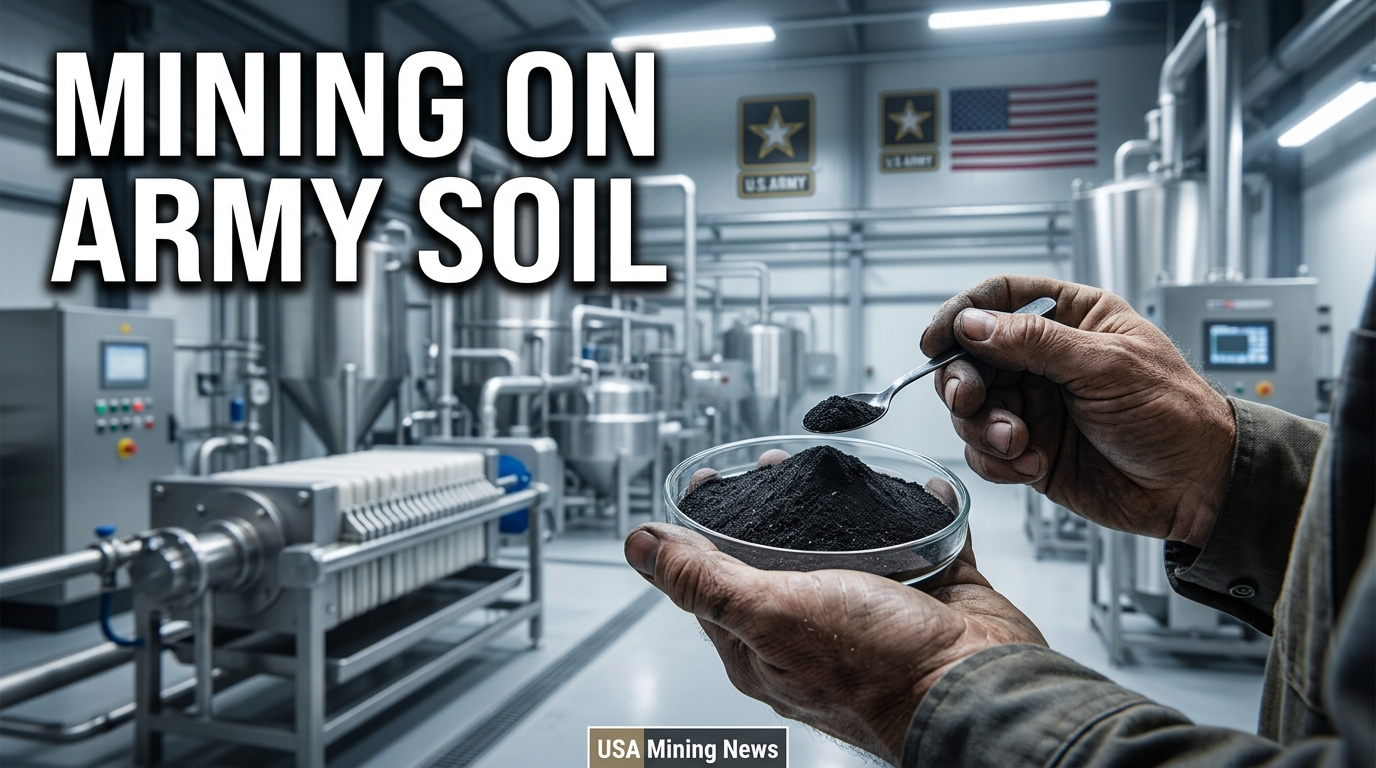
Denver, CO – June 26, 2026 – In a significant move set to reshape the landscape of critical mineral supply chains in the United States, Titan Mining announced today that its subsidiary, Empire State Mines, has received Conditional Selection Notices from the US Army. These notices greenlight Enhanced Use Lease (EUL) opportunities at two crucial military installations: Pine Bluff Arsenal in Arkansas and Anniston Army Depot in Alabama. This landmark development positions Titan Mining at the forefront of a national initiative to secure domestic processing capabilities for graphite, a mineral deemed essential for national security and the burgeoning energy transition.
The agreement is not merely a corporate achievement; it represents a momentous shift in US policy, marking the first major public-private partnership dedicated to critical mineral processing established on American military bases. It directly addresses a pressing strategic vulnerability: the US currently imports 100% of its natural flake graphite and more than 90% of its battery-grade processed graphite, with China dominating the global supply chain.
A Pivotal Public-Private Partnership on US Soil
The Conditional Selection Notices were issued under the US Army’s Strategic Capital Initiatives program, specifically referencing RFP No. DACA27-1-26-204. This program underscores a concerted effort by the Department of Defense to leverage underutilized assets and foster strategic industrial capabilities critical for national defense and economic resilience. The Enhanced Use Lease mechanism, a long-standing tool used by the military to lease non-excess land and facilities to public or private entities, provides a stable framework for such long-term investments. Under applicable legislation, these EULs may extend for durations of up to 50 years, offering Empire State Mines the necessary operational longevity for a substantial capital undertaking.
This partnership is particularly notable as it is among the first awards issued under Executive Order 14241. This executive order explicitly directs the deployment of critical mineral processing infrastructure on defense sites, signaling a clear governmental imperative to onshore and secure strategic material supply chains. By utilizing military installations, the initiative potentially streamlines permitting processes, enhances site security, and utilizes existing infrastructure, accelerating project timelines compared to greenfield developments.
Empire State Mines: The Operational Core
At the heart of this initiative is Empire State Mines, the dedicated subsidiary of Titan Mining, which will assume comprehensive responsibility for the Kilbourne Graphite Purification Plant project. Its mandate includes the design, financing, construction, and ultimate operation of these sophisticated graphite purification facilities. This vertically integrated approach demonstrates a strong commitment to establishing a fully functional domestic processing capability, mitigating risks associated with fragmented supply chains.
The facilities will specialize in producing two key forms of graphite: purified micronised graphite (PMG) and coated spherical purified graphite (CSPG). These advanced graphite products are indispensable, serving as critical components across a spectrum of strategic sectors. PMG, characterized by its fine particle size, finds applications in refractories, lubricants, and various industrial components where high purity and thermal stability are paramount. CSPG, with its optimized spherical morphology and surface coating, is the gold standard for anode material in lithium-ion batteries, powering everything from electric vehicles and grid-scale energy storage solutions to specialized defense systems and consumer electronics.
Strategic Locations and Phased Development
The US Army has designated Pine Bluff Arsenal in Arkansas as the primary site for the initial development, encompassing an approximate area of 245 acres. This choice reflects its suitability for large-scale industrial operations and its strategic location. Following a sequenced timeline, the Anniston Army Depot in Alabama, spanning approximately 97 acres, will advance as a secondary site. This phased approach allows for lessons learned from the initial deployment to inform the subsequent development, ensuring optimized project execution and resource allocation.
A crucial aspect of this public-private partnership is the financial structure. Empire State Mines will bear the entire cost burden for the development, construction, and ongoing operational expenses of the project. This significant private investment underscores Titan Mining's confidence in the long-term viability and strategic importance of domestic graphite processing. Importantly, the US Army will retain full land titles, ensuring federal control over these strategic assets while enabling commercial operations that directly support national security objectives.
Critical Minerals for National Security and Economic Resilience
The strategic imperative behind this venture cannot be overstated. Graphite is not only a vital component for next-generation energy technologies but also a critical material for numerous defense applications. Its unique properties, including high thermal conductivity, electrical conductivity, strength, and chemical inertness, make it indispensable in:
- Lithium-ion Batteries: As the primary anode material, graphite is crucial for the performance and capacity of batteries used in military vehicles, drones, communication systems, and portable electronic devices.
- Aerospace and Defense: Used in lightweight composites, missile nose cones, thermal management systems, and high-temperature lubricants for advanced aircraft and weaponry.
- Nuclear Applications: Essential for nuclear reactor components due to its neutron moderating and refractory properties.
- Advanced Materials: A key ingredient in specialty steels, friction materials, and fuel cells.
The US’s overwhelming reliance on foreign sources, particularly China, for processed graphite presents a significant supply chain vulnerability. Geopolitical tensions, trade disputes, or disruptions in overseas production could severely impact domestic manufacturing capabilities and national defense preparedness. Establishing an onshore purification facility directly addresses this vulnerability, building resiliency into the American industrial base and safeguarding access to these vital materials.
Titan Mining's Vision and Progress
Ms. Rita Adiani, President and CEO of Titan Mining, articulated the profound significance of this achievement. “For the first time in American history, a critical minerals processing facility will be built on US defense soil, and Titan Mining is the company making it happen,” Ms. Adiani stated. Her remarks underscore the pioneering nature of this initiative and Titan Mining's leadership in the nascent domestic critical minerals sector. “These awards mark a turning point in ending America’s dependence on Chinese-controlled supply chains, and Titan is honored to lead the reshoring initiative of critical minerals which are essential to our national security.”
This latest announcement builds upon Titan Mining’s prior advancements in graphite processing. In December of the previous year, the company commenced ore feeding at its Kilbourne graphite demonstration facility, a crucial step that moved the project closer to the initial production of graphite concentrate. This prior demonstration provided valuable data and experience, proving the viability of their processing technology and laying the groundwork for the scaling up of operations at the planned purification plants.
Currently, negotiations on the final business terms between Empire State Mines and the US Army have commenced. This phase is critical for establishing the detailed operational, financial, and regulatory frameworks for the project. Pending the successful finalization of these agreements, construction at the Pine Bluff Arsenal site is targeted to begin in the second half of 2027. This timeline reflects the complexity of such large-scale industrial projects, which require meticulous planning, environmental assessments, and significant capital mobilization.
Market Implications and Future Outlook
The implications of this partnership for the broader mining industry and the US economy are substantial. For mining investors and industry professionals, this development signals a burgeoning opportunity in the domestic critical minerals sector, particularly for graphite. The establishment of secure, integrated supply chains within the US could attract further investment, foster innovation in processing technologies, and create high-skilled jobs in engineering, manufacturing, and operations.
This initiative also sets a precedent for other critical minerals identified by the US Department of Interior, potentially paving the way for similar public-private partnerships on defense lands to process materials like lithium, rare earth elements, nickel, and cobalt. Such a strategic deployment could fundamentally alter the global competitive landscape for critical minerals, reducing reliance on volatile international markets and strengthening national economic security.
The successful execution of the Kilbourne Graphite Purification Plant projects will be a testament to America’s ability to re-establish its industrial base for strategic materials. It will also provide a reliable, domestically sourced supply of high-purity graphite, which is essential not only for military applications but also for meeting the escalating demand from the automotive industry for electric vehicle batteries and the burgeoning renewable energy sector. As the world transitions towards a greener economy, the robust domestic supply of critical minerals will be a cornerstone of both economic growth and national resilience.
In conclusion, Titan Mining’s achievement represents a significant leap forward in the United States' endeavor to secure its critical mineral supply chains. The partnership with the US Army for graphite processing facilities on military soil is a bold, strategic move that promises long-term benefits for national security, economic independence, and leadership in advanced manufacturing.