UK Inquiry Illuminates Urgent Need for Critical Mineral Self-Sufficiency Beyond China
London, UK – In a move signalling a profound shift in national security and industrial policy, a parliamentary inquiry in the United Kingdom has brought the essential role of critical minerals, particularly tungsten and rare earths, into sharp focus regarding the nation's future defence capabilities. As detailed by Alejandro Gonzalez on May 28, 2026, expert witnesses have conveyed to UK Members of Parliament (MPs) that safeguarding the UK's defence-industrial resilience will necessitate not only robust access to these vital materials but, crucially, the rebuilding of domestic refining and metallisation infrastructure independent of current global dependencies, especially China.
This inquiry by UK MPs is systematically examining how critical minerals are fundamentally reshaping defence-industrial strategy, moving beyond traditional resource acquisition to encompass the entire value chain. For the global mining industry, this parliamentary scrutiny in a major Western economy underscores a growing and urgent demand for diversified, secure, and ethically sourced supply chains for strategic materials, presenting both significant challenges and substantial investment opportunities.
The Strategic Imperative of Critical Minerals
Critical minerals are defined by governments worldwide as essential for economic and national security, with their supply chains vulnerable to disruption. Tungsten and rare earths exemplify this class of materials due to their indispensable roles in advanced technologies, particularly within the defence sector. The inquiry's emphasis highlights a strategic reorientation, where the availability of refined and processed minerals is now as critical as the raw ore itself.
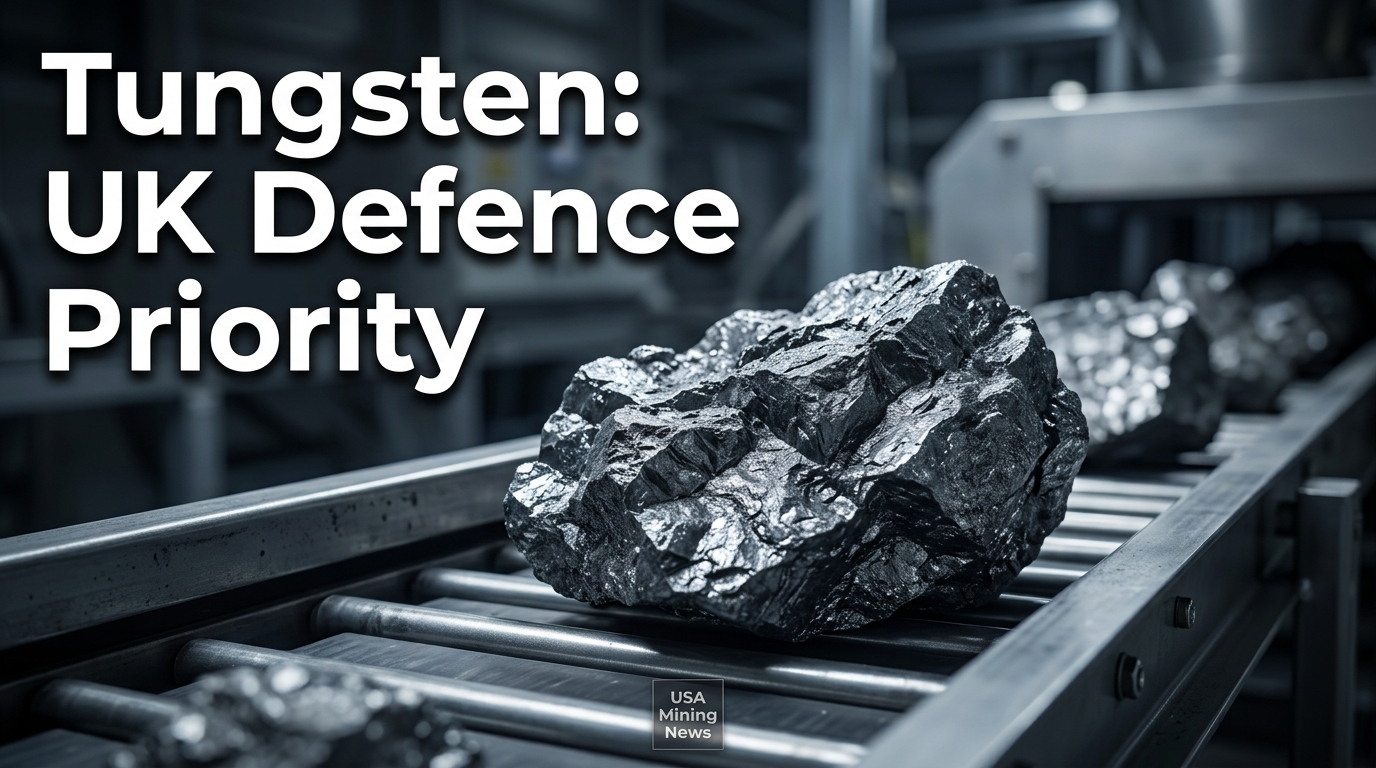
Tungsten, renowned for its exceptional hardness, high melting point, and density, is an cornerstone in a multitude of military applications. Its use spans from armour-piercing munitions and high-speed cutting tools to components in jet engines and advanced electronics. The unique physical properties of tungsten, particularly its ability to withstand extreme temperatures and pressure, make it irreplaceable in many of these contexts. A secure supply of refined tungsten in various forms—from powders to finished alloys—is therefore paramount for maintaining a modern and effective defence force.
Rare earth elements (REEs), a group of seventeen chemically similar metallic elements, are equally, if not more, critical. These elements are not necessarily rare in geological abundance but are challenging and costly to mine, extract, and refine into usable forms. They are vital components in:
- Strong permanent magnets used in precision-guided munitions, satellite systems, and electric motors for military vehicles.
- Lasers and other optical devices for targeting and communication.
- Advanced radar and sonar systems.
- Miniaturized electronic components in virtually every modern defence system.
The unprecedented performance characteristics that REEs impart to these technologies have made them indispensable, rendering any disruption to their supply chain a direct threat to a nation's technological and military edge.
Examining Global Dependencies: The China Factor
The core finding articulated to UK MPs, as reported on May 28, 2026, is the critical need for supply chain independence "outside China." This statement reflects a widely recognized geopolitical reality: China's dominant position across the critical minerals value chain. For decades, China has strategically invested in and developed extensive capabilities in the mining, processing, refining, and metallisation of a vast array of critical minerals, including both tungsten and rare earths.
In the rare earths sector, China commands a staggering share of global refined output, estimated at over 85% for some key elements, and has historically controlled a significant portion of tungsten processing. This near-monopoly is not merely about raw material extraction; it extends deeply into the sophisticated, often environmentally intensive, processing techniques required to transform raw ore into high-purity metals and alloys necessary for high-tech applications. Western nations, including the UK, have largely outsourced these downstream activities due to economic pressures, environmental concerns, and the sheer capital investment required.
While economic efficiency drove this shift in the past, the current geopolitical landscape, marked by increasing trade tensions and a renewed focus on national security, has exposed the inherent vulnerability of such concentrated supply chains. The UK inquiry, therefore, is directly confronting the strategic risks associated with relying on a single, potentially adversarial, nation for essential defence inputs. The implications for the global mining industry are profound, suggesting a fundamental de-risking of supply chains will become a primary driver for investment and policy decisions in the coming decade.
Rebuilding Domestic Refining and Metallisation Capabilities
The recommendation by witnesses to rebuild domestic refining and metallisation capabilities presents a formidable, yet essential, undertaking. This is not a simple matter of establishing new mines; it involves developing an entirely new industrial ecosystem. Key challenges and considerations include:
- Capital Intensity: Establishing modern, environmentally compliant refining and metallisation facilities requires multi-billion-dollar investments and long lead times for construction and commissioning.
- Technological Expertise: Many advanced processing techniques are proprietary or require highly specialized engineering and scientific talent, much of which has migrated or concentrated in dominant producing nations.
- Environmental Standards: Western nations typically have stringent environmental regulations for chemical processing, which can add significant cost and complexity to operations compared to regions with looser oversight.
- Supply Chain Integration: These facilities need reliable feedstock from upstream mining operations, necessitating deep integration or secure long-term contracts with producers.
- Economic Viability: Without significant government incentives or off-take agreements, new Western facilities may struggle to compete on cost with established, large-scale operations abroad.
Despite these hurdles, the UK parliamentary inquiry signals a willingness to address them. Rebuilding these capabilities means addressing a critical gap between raw material extraction and the manufacturing of defence products, creating a more resilient supply chain from mine to military-grade component.
Broader Implications for the Mining Industry
The UK inquiry, as reported on May 28, 2026, extends beyond British borders, reflecting a consensus emerging across Western economies. The USA, European Union, Australia, and Canada are all pursuing strategies to enhance critical mineral security. This collective push carries significant implications for mining industry professionals and investors:
- Investment in Exploration and Development: Renewed interest and potential government support will likely drive exploration for new critical mineral deposits in geopolitically stable regions. Companies with prospective tungsten and rare earth projects in North America, Europe, Australia, and other allied nations stand to benefit.
- Focus on Downstream Processing: The greatest opportunity may lie not in primary mining, but in the value-added processing and refining sectors. Investments in hydrometallurgical or pyrometallurgical facilities, particularly those employing advanced, cleaner technologies, are expected to see increased private and public funding. This could rejuvenate a sector that has seen significant decline in the West.
- Technological Innovation: Expect a push for innovative, more sustainable, and cost-effective methods for extracting and refining critical minerals. Research and development in areas like mineral processing, recycling from end-of-life products, and substitutions for critical minerals will gain traction.
- Government Policies and Incentives: Governments are likely to implement a suite of policies including tax incentives, grants, loan guarantees, and streamlined permitting processes to encourage domestic critical mineral projects. Off-take agreements, particularly for defence-related materials, could provide crucial market certainty for new ventures.
- ESG Considerations: As new projects emerge, environmental, social, and governance (ESG) standards will remain paramount. The mining industry will need to demonstrate commitment to responsible sourcing, minimal environmental impact, and benefits for local communities to secure social license to operate.
- Supply Chain Transparency: Increased scrutiny will lead to greater demands for transparency and traceability throughout the critical mineral supply chain, enabling end-users to verify the origin and processing path of their materials.
Future Outlook: A Reshaped Global Landscape
The parliamentary inquiry in the UK, as highlighted on May 28, 2026, is a strong indicator of a long-term strategic shift. The era of prioritizing purely lowest-cost mineral supply chains appears to be waning, replaced by a more nuanced approach that balances economic efficiency with national security and supply chain resilience. This will invariably lead to a more diversified, albeit potentially more expensive, global critical minerals market.
For the UK, the next steps will involve translating parliamentary findings into actionable policy. This could include national strategies for critical minerals, establishment of strategic reserves, funding mechanisms for domestic processing plants, and international partnerships to secure diversified raw material inputs. Similar initiatives are gaining momentum in the USA, where recent legislative actions like the Inflation Reduction Act and a renewed focus on domestic processing underscore a parallel trajectory. Mining and technology companies that can demonstrate robust plans for secure, sustainable, and Western-aligned supply chains for tungsten, rare earths, and other critical minerals will be exceptionally well-positioned for future growth and strategic partnerships.
The insights from the UK inquiry signal an exciting, albeit challenging, period for the global mining industry. It’s an era where geology, metallurgy, economics, and geopolitics intertwine more closely than ever before, creating new imperatives and opportunities for those ready to meet the demands of a rapidly evolving strategic landscape.