Zambia's Strategic Play for Greater Mineral Wealth
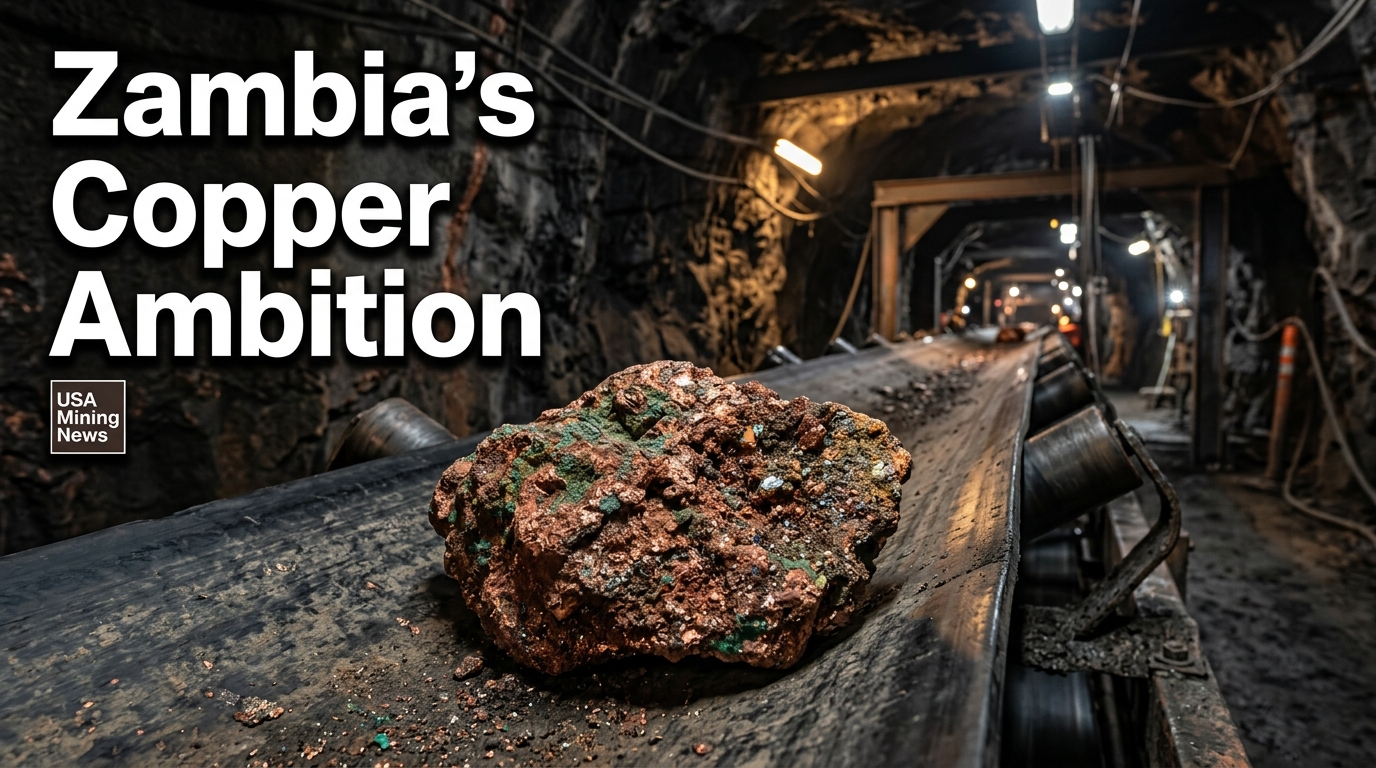
Zambia, Africa's second-largest copper producer, is embarking on a deliberate and strategically significant path to bolster its position within the global mining industry. At the forefront of this initiative is ZCCM Investments Holdings (ZCCM-IH), the nation’s state investment company, which has signaled its intent to acquire substantially larger stakes in various mining ventures across the country. This proactive approach, first reported by Reuters on May 18, 2026, is not merely a financial adjustment but a foundational shift designed to redefine Zambia’s engagement with its rich mineral endowments.
According to ZCCM-IH CEO Kakenenwa Muyangwa, this strategy aligns with a growing trend mirrored across African nations, where governments are seeking a more significant slice of the economic pie generated by their mineral resources. The impetus for this shift is clear: a burgeoning global demand for critical minerals, particularly copper, which is indispensable for the burgeoning electric vehicle (EV) sector and the broader clean energy transition. By increasing its ownership stakes, ZCCM-IH aims to secure a greater share of the revenue streams, enhance its influence in operational decisions, and ultimately contribute more robustly to Zambia's national development agenda.
ZCCM-IH's Mandate and Current Portfolio Landscape
As Zambia’s primary state investment vehicle in the mining sector, ZCCM-IH manages the government’s interests in various large-scale mining operations. Historically, ZCCM-IH held significant, often majority, interests in the country's copper mines before privatization initiatives. Today, its portfolio primarily comprises minority stakes in joint ventures with some of the world’s leading mining conglomerates. These holdings, as Muyangwa highlighted, are currently as low as 10% in operations managed by major international players such as First Quantum Minerals of Canada, China Nonferrous Metal Mining Group, and India’s Vedanta Resources.
The stated objective of moving beyond these minimal holdings reflects a desire for more meaningful participation. While a 10% stake provides a seat at the table, it often limits a partner’s ability to significantly shape strategic decisions or maximize local value addition. The new directive from ZCCM-IH emphasizes a commercial approach to increasing these stakes, indicating a willingness to negotiate fair terms that reflect the value of the assets and potential future upside, rather than seeking outright nationalization. This nuance is crucial for maintaining investor confidence while pursuing national interests.
Incremental Ownership: Recent Transactions and Future Direction
ZCCM-IH’s strategy of progressive ownership increase has already seen tangible results, demonstrating a clear path forward. One notable example is its elevation of a stake in Lubambe Copper Mines. Last year, ZCCM-IH increased its ownership in Lubambe to 30% from 20%. This transaction occurred following the exit of EMR Capital in 2024, which transferred its majority shareholding to JCHX Mining of China. Such movements illustrate opportunities for state entities to expand their footprint when private equity or other parties adjust their portfolios. For ZCCM-IH, stepping into the breach to secure a larger stake ensures continued national benefit from these operations.
Another significant development is the planned increase in ZCCM-IH’s stake in KoBold Metals’ Mingomba Mining. Here, the state investment company is raising its interest from 20% to 25%. KoBold Metals, known for its artificial intelligence-driven exploration for critical mineral deposits, represents a new frontier in mining technology. ZCCM-IH’s decision to increase its stake in such a cutting-edge venture underscores its commitment not only to securing mineral wealth but also to participating in the future of mining innovation within Zambia.
CEO Muyangwa articulated the rationale behind these moves, stating unequivocally: “There is clear intent for us to have substantial stakes in our existing mining assets.” He further elaborated on the strategic advantage of higher ownership, emphasizing, “There is a gradual move to higher ownership, where we believe being a significant minority gives you more say and leverage in the activities than if you have a very small minority stake.” This philosophy suggests ZCCM-IH is targeting ownership levels that provide genuine influence over operational, investment, and strategic decisions, moving away from a passive investor role. Importantly, Muyangwa clarified that ZCCM-IH has no immediate plans to acquire operating mines where it currently holds no shares, choosing instead to concentrate its efforts on assets already under development or where it possesses existing interests.
The 'Free Carry' Mechanism and Royalty-to-Revenue Model
Beyond direct equity acquisitions, ZCCM-IH is exploring other innovative mechanisms to enhance its share of mineral wealth. One such approach involves seeking an element of “free carry” where it already owns a mining license. A free carry interest typically ranges from 5% to 15% and allows the holder to maintain an equity stake in a project without incurring proportional exploration or development costs during certain phases. This mechanism is particularly advantageous for state entities, allowing them to participate in the upside of resource development without immediate capital outflow, effectively leveraging existing sovereign assets.
Furthermore, ZCCM-IH plans to extend its successful royalty-to-revenue model to other mining assets. This model was initially implemented with First Quantum Minerals at Kansanshi Mining, one of Zambia’s largest copper operations. A royalty-to-revenue model provides a direct, predictable stream of income tied to a mine’s output, offering stability that can be reinvested into other projects or national development. Unlike traditional royalties fixed to commodity prices, a royalty-to-revenue model can be structured to provide a more stable share of gross revenues, acting as a crucial funding mechanism for ZCCM-IH’s broader expansion plans and Zambia’s copper production ambitions.
Zambia's Ambitious Copper Production Target and Global Imperative
The context for ZCCM-IH’s intensified strategy is Zambia’s bold national aspiration: to significantly boost its copper production to three million tonnes (3mt) by 2031. This ambitious target represents a substantial increase from current output levels and underscores the critical importance of copper in the global economy. Zambia, currently Africa’s second-largest copper producer, is strategically positioning itself to capitalize on the escalating worldwide demand driven by the proliferation of electric vehicles (EVs), renewable energy infrastructure, and other clean energy solutions. Copper, with its unparalleled electrical conductivity and corrosion resistance, is a cornerstone material for these burgeoning industries.
Achieving the 3mt target by 2031 will require substantial investment, technological upgrades, and the efficient operation of both existing and new mines. ZCCM-IH’s increased participation is envisioned as a catalyst for this growth, ensuring national interests are aligned with the operational strategies of its joint venture partners. By being a more influential shareholder, ZCCM-IH can advocate for investments that not only maximize production but also prioritize local content, skills development, and environmental stewardship, all crucial elements for sustainable mining sector growth.
Financing the Vision: Capital Raising and Strategic Partnerships
Implementing ZCCM-IH’s ambitious strategy, particularly the acquisition of increased stakes, necessitates significant capital. Recognizing this, the company is actively considering appointing a financial adviser to assist with capital raising for these projects. This indicates a measured, professional approach to financing, seeking expertise to navigate global capital markets and secure funding on favorable commercial terms.
The increased revenue generated from the expanded stakes and the broader application of the royalty-to-revenue model will contribute to ZCCM-IH’s capacity for reinvestment. These funds can then be directed towards developing new projects, upgrading existing infrastructure, and supporting exploration efforts crucial for sustaining the long-term growth required to hit the 2031 copper production target. Strategic partnerships with international financial institutions and mining companies will remain vital, ensuring that capital access and technical expertise complement ZCCM-IH’s enhanced ownership model.
Broader Implications for African Mining and Investor Relations
ZCCM-IH’s intensified stake acquisition strategy is not an isolated phenomenon but rather emblematic of a broader, continent-wide shift in how African nations view and manage their mineral resources. Governments across Africa are increasingly seeking more equitable returns from their vast mineral wealth, driven by a desire to foster greater economic development, reduce reliance on external aid, and enhance sovereign control over strategic resources. This trend has significant implications for foreign direct investment (FDI) in the African mining sector.
For international mining companies, this means a recalibration of traditional joint venture structures and risk/reward calculations. While increased government participation can sometimes raise concerns about regulatory stability or potential for intervention, ZCCM-IH’s emphasis on "commercial terms" and focusing on assets under development signals a pragmatic approach. The key for Zambia and other African nations will be to strike a delicate balance: asserting national interests and securing a fair share of wealth while simultaneously maintaining an attractive and predictable investment climate that continues to draw essential foreign capital and technical expertise. A successful implementation could set a precedent for other resource-rich nations, demonstrating how state entities can play a more active, commercially astute role in their mining sectors.
Conclusion: A Defining Era for Zambia's Mining Sector
Zambia stands at the cusp of a defining era for its mining sector, underpinned by ZCCM-IH’s assertive strategy to secure greater national value from its mineral assets. By aiming for substantial, influential stakes in key operations, extending viable revenue models, and prioritizing a commercial approach to investment, Zambia is positioning itself as a strategic player in the global supply chain for critical minerals. This calculated expansion of state ownership, coupled with an ambitious copper production target of 3mt by 2031, underscores Zambia’s determination to leverage its natural endowments for sustainable economic growth and to meet the burgeoning demands of the global clean energy transition. The coming years will be crucial in observing how these strategic moves reshape the landscape of mining in Zambia and inspire similar endeavors across the African continent.