Major Oil and Gas Suppliers Warn EU: Methane Regulations Threaten Europe's Energy Security
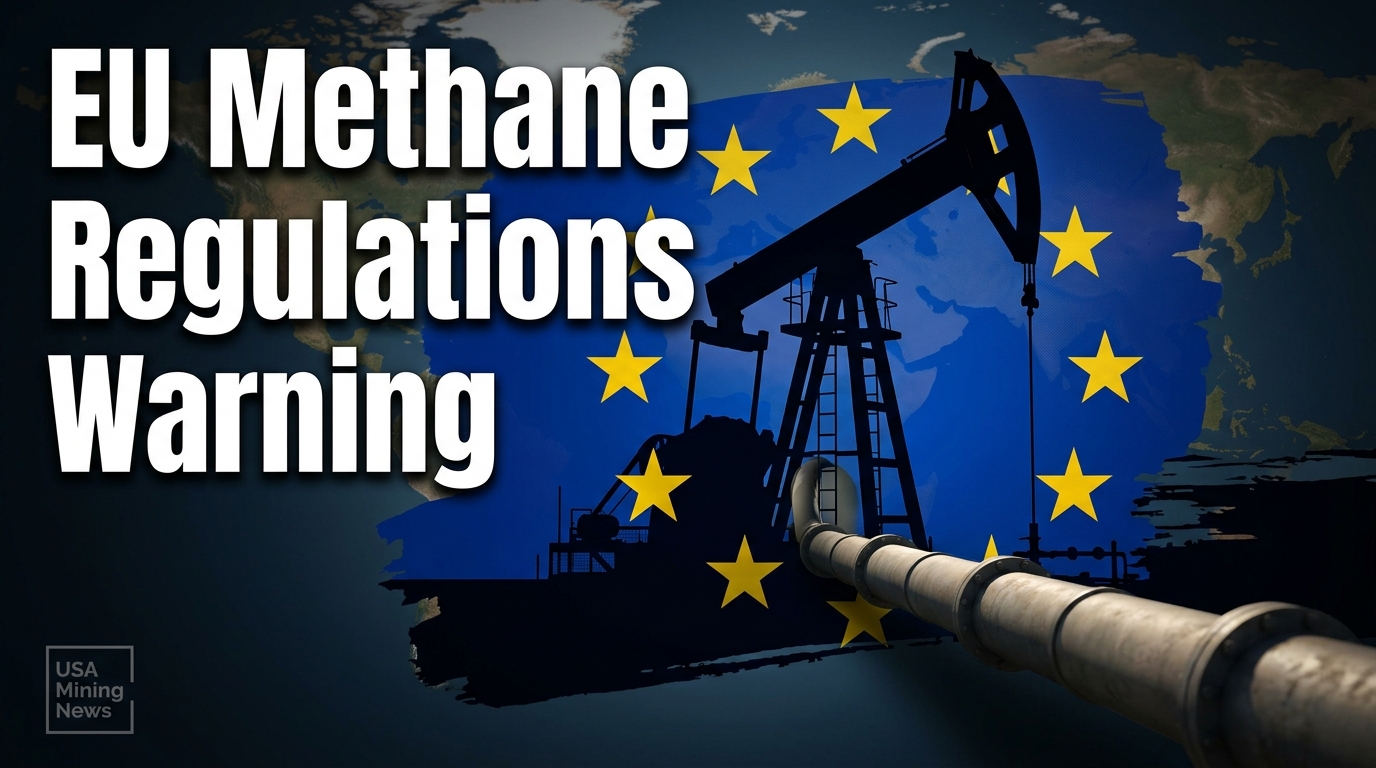
WASHINGTON – A powerful consortium of global energy producers – the United States, Qatar, Nigeria, and Algeria – has delivered a unified and urgent message to the leaders of the European Commission, European Council, and European Union (EU) Member States. On June 24, 2026, senior energy ministers from these nations penned an open letter expressing profound concerns that the EU's proposed Methane Regulation (EUMR), if implemented as currently drafted, will severely compromise Europe's energy security and economic stability. The core contention revolves around the regulation's stringent and unworkable measuring, reporting, and verification (MRV) requirements, which, according to an independent industry analysis, threaten to render nearly all of Europe's oil imports and a significant portion of its natural gas imports noncompliant by January 2027.
The intervention underscores a mounting tension between ambitious environmental policy goals within the EU and the practical realities of maintaining reliable, affordable energy supplies from its primary international partners. For the global mining and energy sector, this development signals significant regulatory uncertainty that could impact investment decisions, supply chain logistics, and commodity market dynamics well into the coming decade.
Joint Appeal: A Unified Front Against Impending Supply Disruption
The joint letter, signed by U.S. Secretary of Energy Chris Wright, Qatari Minister of State for Energy Affairs Saad Sherida Al-Kaabi, Nigerian Minister of State for Petroleum Resources Ekperikpe Ekpo, and Algerian Minister of State, Minister of Hydrocarbons Mohamed Arkab, was addressed directly to President von der Leyen of the European Commission, President Costa of the European Council, and all EU Member State Leaders. The signatories collectively represent the largest external energy suppliers to the European bloc, furnishing the critical oil and natural gas resources that underpin Europe's industrial capacity, residential heating, and power generation.
In their communication, the energy ministers asserted their unwavering commitment to strengthening economic and strategic partnerships with the EU and ensuring its energy security. They explicitly stated their support for the EU's objectives of enhancing economic competitiveness, prosperity, sustainability, and the provision of reliable energy supplies for its citizens. However, they stressed that the current framework of the EUMR, while well-intentioned, is fundamentally unachievable within the prescribed timeline, creating an untenable situation for both exporters and European importers.
This coordinated action from such diverse and geographically dispersed energy powerhouses highlights the widespread concern across major producing regions regarding the EUMR's implications. It is not merely an isolated objection from a single nation, but a consensus view from key players in the global energy market, all of whom have significant economic ties and strategic interests within the European Union. Several EU Member States, industry associations, and even members of the European Parliament have previously raised similar concerns, underscoring the broad apprehension within the existing regulatory framework.
The European Methane Regulation (EUMR): A Closer Look at Compliance Challenges
The EU Methane Regulation aims to curtail methane emissions from the oil and gas sector – a potent greenhouse gas with a far greater short-term warming potential than carbon dioxide. While the objective of reducing methane leaks is widely supported by the industry, the proposed EUMR’s specific requirements for measuring, reporting, and verifying (MRV) methane emissions have become a major point of contention. These requirements mandate a level of granularity and standardization in data collection and third-party verification that, according to the letter, most global exporters cannot meet on the prescribed schedule.
The critical deadline looms large: beginning in January 2027, the EUMR stipulations are set to take effect. The letter emphasizes that European importers have already commenced the crucial process of acquiring oil and natural gas supplies destined for delivery in 2027. Under the current regulatory framework, these contracts, once finalized, will effectively be for non-compliant fuel streams, creating a significant legal and financial quandary for all parties involved. This challenge is amplified by the sheer volume and complexity of international energy trade, where hundreds of millions of tons of oil and billions of cubic meters of natural gas are transacted globally to meet Europe’s substantial energy demand.
The signatories underscore that the diversity of the EU's energy import base, sourcing from a wide array of international suppliers, complicates compliance significantly. Each exporting nation has its own regulatory environment, operational methodologies, and technological capabilities for methane emissions tracking. Harmonizing these disparate systems to meet a single, stringent EU standard in such a short timeframe presents an insurmountable hurdle, leading to the collective warning of impending market disruption in Europe’s energy supply chains.
Grave Warnings: Supply and Price Impacts
The most alarming aspect of the joint letter is the explicit warning of impending market chaos. Citing an "independent, comprehensive industry analysis," the ministers predict that "nearly all of EU oil imports and a significant quantity of EU natural gas imports will be noncompliant with the EUMR beginning in January 2027." This is not a speculative risk; the letter categorizes "significant negative supply and price impacts" as a "certainty," even if the regulation were to be implemented with maximum flexibility. The analysis suggests that the current MRV requirements are so stringent and the timeframe so short that even robust efforts by exporting nations would fall short of full compliance by the January 2027 deadline.
The implications for Europe's economy and citizens are profound. Restricted access to global energy markets due to regulatory non-compliance would inevitably lead to supply shortages, which, in turn, would drive up energy prices. This scenario would disproportionately affect European industries, particularly energy-intensive sectors such as chemicals, steel, and manufacturing, leading to increased operational costs, potential production cuts, and a significant competitive disadvantage. Moreover, increased energy costs for residential consumers could exacerbate cost-of-living challenges across the continent, undermining Europe's economic competitiveness and potentially fueling inflation, as witnessed in recent energy market volatilities.
Furthermore, the letter directly addresses the EU's proposed mitigation strategy: the reliance on "non-binding forthcoming guidelines" that would encourage flexibility in implementation and recommend against imposing penalties for noncompliance. The energy ministers firmly reject this approach, stating that it "fails to address the financial and legal risks associated with contracts that often span multiple years and that are valued in the tens of billions of euros." Long-term energy contracts require absolute legal certainty; the prospect of knowingly entering into agreements that violate EU law, even with a vague promise of discretionary non-enforcement across 27 EU Member States, is unacceptable to exporters and importers alike. Industry leaders cannot risk multi-billion-euro deals on informal assurances, demanding instead clear, binding legal amendments to clarify and solidify compliance pathways.
Proposed Amendments and a Pragmatic Path Forward
To avert this looming energy crisis, the signatory nations have put forth a clear set of actionable recommendations for the EU. These proposed amendments are not intended to dilute the ultimate environmental goals but rather to introduce practical pathways for compliance that reflect global realities and the complexities of international trade. Specifically, they urge the EU to:
- Adopt a "stop the clock" mechanism: This would provide essential time to develop the necessary methodologies and compliance mechanisms that are workable across diverse international supply chains. Developing accurate, verifiable, and harmonized MRV standards for complex global operations requires extensive collaboration among regulators, industry experts, and technology providers, alongside pilot programs and validation, all of which cannot be rushed without compromising accuracy or feasibility.
- Grandfather new contracts: Contracts signed during the period of legislative adjustments should be "grandfathered" in. This measure would provide legal and financial stability for ongoing energy trade, allowing suppliers and buyers to continue their crucial transactions without fear of retrospective non-compliance. It acknowledges the commercial realities of long-term planning and investment in the energy sector.
- Remove penalties for noncompliance during a transitional period: A period free from punitive measures is vital to allow the industry to adapt, invest in new technologies, and implement the revised compliance pathways without paralyzing fear of immediate legal repercussions for unavoidable initial shortcomings. This would foster a constructive environment for compliance, rather than one driven by punitive threats.
The letter also explicitly recognizes the significant efforts already undertaken by energy producers in their respective nations. These companies, across the United States, Qatar, Nigeria, and Algeria, have already invested "substantial capital to decrease methane emissions intensity" and are committed to continuing these efforts, aligning with the core objectives of the EUMR. Their plea is not for an abandonment of environmental stewardship, but for a pragmatic, achievable regulatory framework that facilitates, rather than obstructs, the transition to lower-emission energy supplies while safeguarding energy security.
Broader Implications for Global Energy Markets
This challenge to the EUMR extends beyond a mere technical dispute; it touches upon the fundamental pillars of global energy trade and geopolitics. The EU's reliance on diversified energy sources, particularly after recent geopolitical shifts and its stated aim to reduce dependence on single suppliers, makes regulatory missteps potentially catastrophic. The U.S., Qatar, Nigeria, and Algeria represent distinct, yet collectively indispensable, components of Europe’s energy mix, providing crucial alternatives and stability to the continent's supply landscape.
For the broader extractive industries, this situation serves as a critical case study in the delicate balance between environmental regulation and energy security. Mining and energy companies operate on extremely long investment horizons, where regulatory stability and predictability are paramount. Sudden, unachievable regulatory shifts, even if well-intentioned, can deter foreign direct investment, disrupt long-term planning, and cascade through global commodity markets. The risk is that the pursuit of stringent environmental targets, without adequate consideration for implementation feasibility, could inadvertently lead to energy shortages, price spikes, and a potential deceleration of economic activity, thereby undermining the very prosperity that enables further environmental investment and technological advancement.
The call for collaboration with industry stakeholders and EU Member States who have already voiced similar concerns highlights the need for a more inclusive and practical approach to developing such far-reaching regulations. Effective policies are often the result of robust dialogue and iterative adjustments, integrating expert knowledge from those on the ground who will be tasked with implementation, ensuring that environmental ambitions are matched by practical pathways to achieve them.
The Narrow Window: Urgency for EU Action
The urgency conveyed by the letter is palpable. The "narrow window" for making necessary changes before the January 2027 deadline is closing rapidly. With contracts for 2027 deliveries already being negotiated and finalized, the lack of clarity and viable compliance pathways creates an immediate impediment to trade. Companies cannot sign multi-year contracts worth tens of billions of euros if those contracts are foreseeably in violation of EU law, regardless of informal assurances of non-enforcement. The financial and legal exposure for all parties would be immense and unacceptable in a market driven by certainty.
The United States, Qatar, Nigeria, and Algeria have strongly encouraged the European Commission and EU Member States to adopt a "pragmatic approach" – one that clarifies essential missing elements of the EUMR and incorporates necessary changes. This engagement is crucial to allow importers to continue sourcing the vital oil and gas resources needed by the EU market, thereby safeguarding Europe's energy access and security without sacrificing its long-term sustainability goals. The spirit of the letter is one of partnership, aiming to work collectively towards policies that enhance both energy access and security throughout the EU.
Conclusion: Navigating Sustainability and Security
The joint letter from the U.S., Qatar, Nigeria, and Algeria is more than a warning; it is a clear invitation for collaborative problem-solving. It acknowledges Europe's legitimate environmental aspirations while stressing the critical importance of maintaining a stable, secure energy supply. For mining industry professionals and investors watching the global energy landscape, this situation underscores the complex interplay of regulation, geopolitics, economics, and environmental stewardship. The EU’s response to this unified appeal will not only determine the immediate future of its energy supply but will also set a significant precedent for how major economic blocs navigate the challenging path toward a sustainable, yet secure, energy future for the global community.