The global mining sector, grappling with intensifying competition for critical mineral resources, is closely observing policy developments aimed at accelerating project timelines. In a significant move, the Queensland Government has signaled its intent to lead in this arena, introducing reforms that promise to streamline project approvals and enhance infrastructure coordination. These legislative adjustments, made public in early June 2026, have reignited industry discussions on the critical role of efficient permitting and robust infrastructure in attracting mining investment, a topic set to take center stage at the International Mining and Resources Conference (IMARC) later this year.
Queensland’s Proactive Stance on Project Acceleration
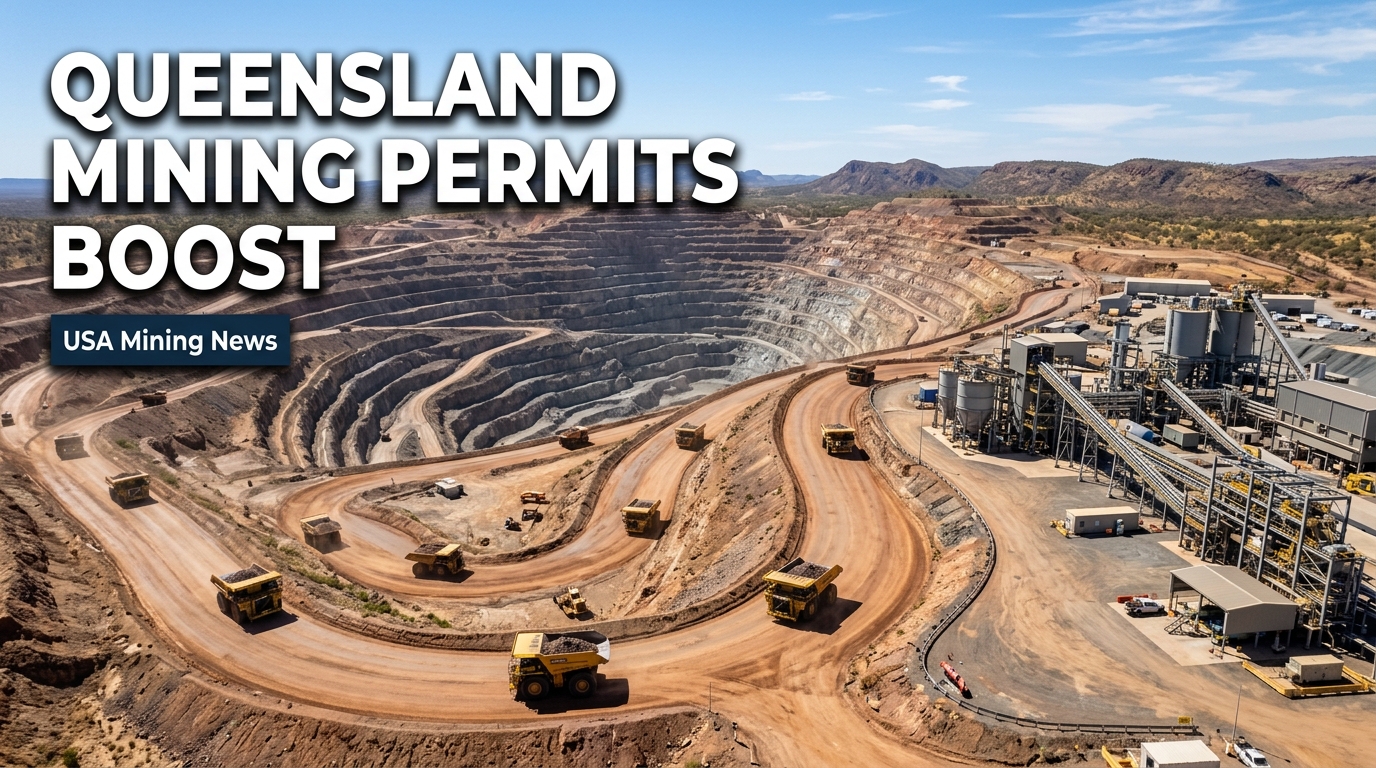
On June 2, 2026, the Queensland Government formally introduced amendments to the State Development and Public Works Organisation Act 1971. This legislative overhaul creates a new framework for identifying and progressing "State Strategic Projects," granting new powers designed to expedite developments deemed vital to the state’s economic future, particularly within the nascent critical minerals sector. The core objective of these reforms is multifaceted: to improve coordination between the complex web of project approvals and the provision of enabling infrastructure. This includes essential components such as roads, critical power transmission corridors, and reliable water pipelines, all while rigorously maintaining environmental oversight.
Deputy Premier and Minister for State Development, Infrastructure and Planning, Jarrod Bleijie, underscored the strategic intent behind these changes. "Queensland has an abundance of critical minerals and we’re grabbing hold of an incredible opportunity," Bleijie stated, asserting the state’s ambition to position itself as a preferred global destination for critical minerals investment. This proactive legislative approach aims to "fast-track the next wave of critical minerals and other state significant projects," a strategic imperative that supports not only raw material extraction but also investment in crucial downstream processing capabilities and expanded export capacity.
Industry Reacts: A Welcome Step Towards Certainty
The mining industry's response to Queensland’s legislative reforms has been largely positive, reflecting a broad consensus on the need for more efficient regulatory pathways. Janette Hewson, chief executive of the Queensland Resources Council (QRC), lauded the reforms as a "positive step for the industry," emphasizing that "timely approvals that get new projects to production faster are a key consideration for investors." For a sector where capital expenditure is substantial and project lifecycles can span decades, any measures that reduce lead times and enhance predictability are highly valued. Hewson further highlighted that these streamlined pathways are essential for Queensland to effectively capitalize on the escalating international demand for critical minerals, which are foundational to burgeoning sectors such as defense applications, widespread vehicle electrification, and advanced artificial intelligence technologies.
Echoing these sentiments, the Association of Mining and Exploration Companies (AMEC) also welcomed the changes. AMEC chief executive Warren Pearce pointed out a pervasive industry challenge: "infrastructure planning often determines whether critical minerals projects advance beyond the development stage." The promise of better planning and strategic alignment under the new framework, Pearce argued, would provide greater certainty, enabling projects to move more swiftly "from discovery to production." This move by the Queensland Government is seen as responding directly to a long-standing industry call for a more cohesive approach to project development, tackling a significant impediment to exploration and investment.
Addressing the Infrastructure Conundrum
One of the most formidable barriers to the execution of emerging critical minerals developments, particularly those situated in regional and remote areas of Australia, remains the lack of coordinated transport, power, and water infrastructure. Establishing new mines in greenfield regions often necessitates substantial upfront investment in supporting infrastructure, which may not be readily available or scalable. This creates a challenging "chicken-and-egg" scenario where mining companies may be hesitant to commit to large-scale infrastructure outlays without project certainty, while projects cannot achieve certainty without that very infrastructure.
The Queensland reforms directly aim to mitigate this conundrum by integrating infrastructure planning more robustly into the project approval process. By identifying "State Strategic Projects," the government can presumably de-risk essential infrastructure investments, facilitating shared corridors for power transmission or coordinating water supply solutions that serve multiple projects or regional growth. This integrated approach is expected to reduce the financial burden and logistical complexities often borne solely by individual mining operators, thereby unlocking investment in areas previously deemed too challenging due to infrastructure deficiencies.
The Global Race for Critical Minerals
Queensland’s legislative efforts arrive at a time of unprecedented global competition for critical minerals. Nations worldwide are scrambling to secure stable and diverse supply chains for these essential elements, which include lithium, cobalt, nickel, rare earth elements, and many others. These minerals are indispensable for the global energy transition, powering electric vehicles (EVs), renewable energy storage systems, and advanced electronics. Beyond energy, their strategic importance extends to defense technologies and the rapidly expanding artificial intelligence sector.
Governments in major mining jurisdictions are under pressure to shorten project development timelines, recognizing that bureaucratic hurdles can dissuade vital investment and delay the supply of materials critical for national economic and strategic objectives. Countries offering clear, efficient, and transparent permitting processes, coupled with supportive infrastructure policies, are increasingly viewed as more attractive destinations for significant mining capital. Queensland’s reforms position it squarely in this global context, attempting to enhance its competitive advantage against other mineral-rich nations seeking to capture a larger share of the critical minerals market.
IMARC 2026: A Platform for Policy Dialogue
The Queensland Government's initiatives are expected to be a prominent discussion point at the International Mining and Resources Conference (IMARC) 2026, scheduled to take place in Sydney from October 27-29. As event partners, the Queensland Government, the QRC, and AMEC will have a platform to share insights on these reforms and engage with industry leaders, policymakers, and investors from across the globe. Key questions surrounding permitting efficiency, expedition of project approvals, infrastructure readiness, and overall investment certainty are anticipated to dominate policy discussions at the conference.
Attendees at IMARC 2026 are expected to delve into the delicate balance required of regulatory frameworks: how to accelerate the development of critical minerals projects, which are essential for the energy transition and industrial supply chains, while simultaneously upholding robust environmental responsibility. This dialogue is crucial, as the industry seeks innovative solutions that marry economic development with sustainable practices, ensuring that the push for critical minerals does not come at an unacceptable environmental cost. The Queensland experience will serve as a timely case study for these important conversations.
Broader Implications for Investment and Development
The success of Queensland’s reforms will have significant repercussions beyond the state's borders. For investors, a clear, predictable, and expedited approvals process reduces financial risk and can significantly improve project economics, making Queensland projects more attractive relative to international alternatives. Enhanced infrastructure coordination also lowers the capital intensity for individual projects, freeing up resources for exploration, technology adoption, or downstream processing. This could encourage further exploration and the development of a more diversified mining sector within Queensland, moving beyond its traditional coal and base metals strengths into the burgeoning critical minerals space.
Furthermore, by supporting investment in "downstream processing," Queensland aims to capture more value from its mineral endowments. Instead of merely exporting raw ore, the state seeks to foster industries that refine, process, and potentially manufacture advanced materials, creating higher-value jobs and strengthening its position within the global critical minerals supply chain. This strategic vision aligns with broader national efforts to shore up domestic processing capabilities and reduce reliance on single-source supply chains.
Conclusion
The Queensland Government’s recent overhaul of its project approval framework represents a tangible response to the urgent global demand for critical minerals and the industry's perennial need for regulatory certainty and efficient infrastructure. By creating a specific framework for "State Strategic Projects" and focusing on coordinated infrastructure planning, Queensland is taking proactive steps to attract investment and accelerate development. The discussions anticipated at IMARC 2026 will undoubtedly provide further insights into the practical implementation and industry reception of these reforms, as the mining world watches closely to see if Queensland's legislative adjustments can indeed unlock its vast critical minerals potential and solidify its position as a key player in the global energy transition.