Elevating Efficiency: West Red Lake Gold Completes Phase One of Madsen Shaft Refurbishment
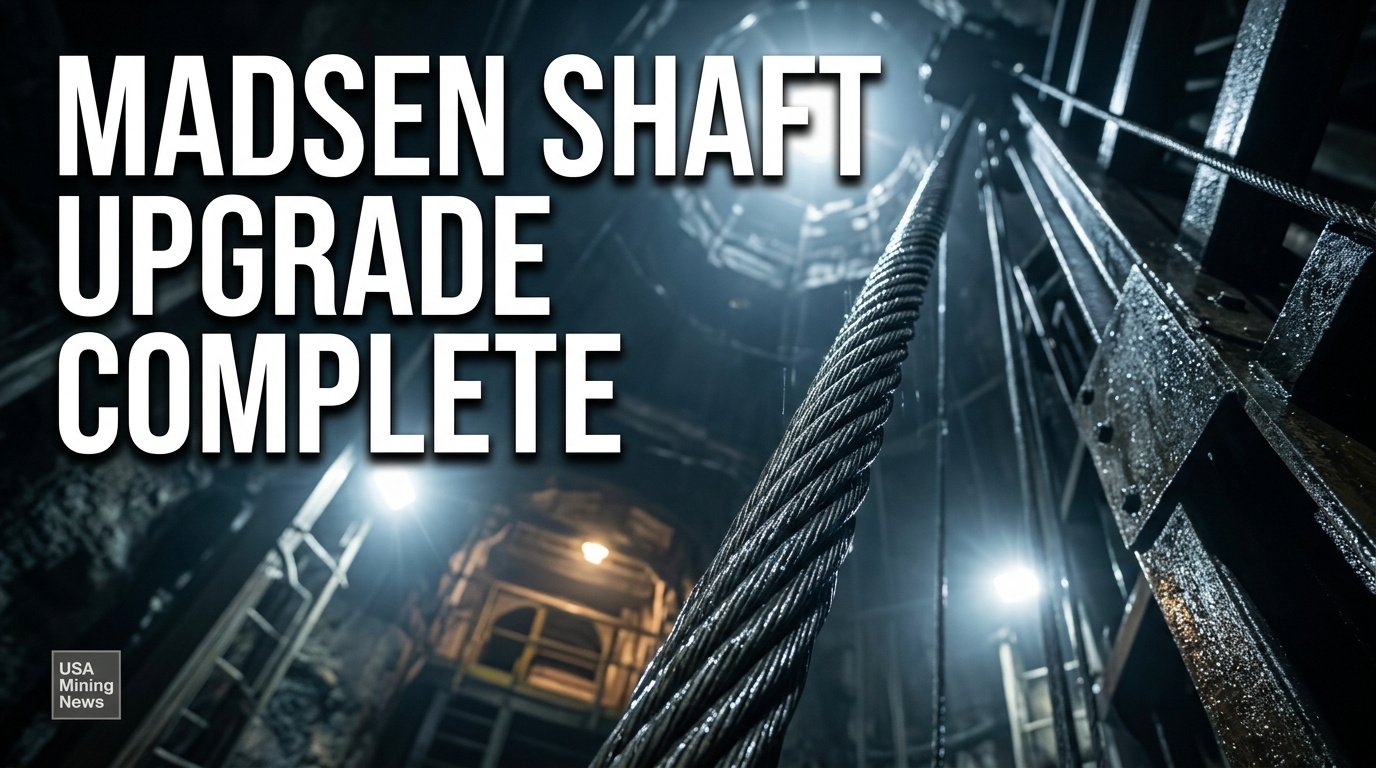
Toronto, Ontario – West Red Lake Gold Mines (WRLG) announced on August 14, 2026, the successful completion of Phase One in the comprehensive refurbishment of its Madsen Mine shaft, located in Ontario’s prolific Red Lake mining district, Canada. This initial phase marks a pivotal step in the company's strategy to revitalize the historic mine, demonstrating the shaft's immediate capability to safely hoist gold ore and waste material at a capacity of approximately 200 tonnes per day (tpd).
The Madsen Mine, a venerable asset within one of Canada's most renowned gold camps, is undergoing a substantial infrastructure upgrade designed to significantly enhance its operational throughput and economic viability. The long-term objective of this multi-phased program is to restore the shaft's material haulage capacity to its original design specification of approximately 2,000 tpd, a level of efficiency crucial for modern, large-scale underground mining operations.
A New Chapter for the Historic Madsen Mine Shaft
The Madsen Mine shaft has been an integral part of the Red Lake landscape for nearly five decades, historically serving as the primary system for transporting materials from the mine's extensive underground workings to the surface. Its refurbishment is not merely an engineering feat but a strategic reinvestment in an asset that can dramatically alter the mine's cost structure and operational flexibility.
The successful completion of Phase One, bringing the shaft online with a 200 tpd capacity, represents a critical de-risking step. For an underground gold mine, the ability to efficiently move ore and waste material is fundamental. While 200 tpd is a modest start compared to the ultimate 2,000 tpd goal, it signifies that the fundamental safety and operational mechanisms of the refurbished shaft are functional. This initial capacity allows West Red Lake Gold to commence vertical transport operations, progressively reducing reliance on less efficient and more costly methods as the refurbishment continues.
Strategic Phasing for Enhanced Operations
West Red Lake Gold’s approach to the shaft refurbishment is a carefully planned, incremental program involving a series of infrastructure upgrades. This phased methodology allows for managed capital expenditure, enables progressive increases in hoisting rates as mining activities deepen, and ensures that operational improvements are brought online systematically.
- Phase One & Two: The current phase, along with the impending Phase Two, is engineered to support material hoisting from the active mining zones within the mine’s Austin and South Austin complexes. These zones are currently being accessed down to Level 10, situated at an approximate depth of 500 meters. The ability to hoist from these levels is critical as it directly supports ongoing development and production within key ore bodies.
- Phase Two Progress: Demonstrating robust project execution, West Red Lake Gold confirmed that all major equipment required for Phase Two is already on site. Installation and further associated upgrades are actively in progress, signaling the company's commitment to maintaining momentum on this critical infrastructure project.
- Phase Three: Looking ahead, the completion of Phase Three is anticipated to unlock haulage capabilities from even deeper sections of the mine, potentially extending access to Level 17. The Madsen Mine shaft historically provided access down to Level 26, its deepest point, over its five-decade operational history. This historical depth underscores the significant untapped potential for deeper exploration and mining, which the revitalized shaft will enable.
These phased upgrades are intrinsically linked to West Red Lake Gold Mines’ broader strategy: to significantly increase material handling capacity, enhance overall mining efficiency, and ultimately lower operating costs. Each phase not only improves logistical capabilities but also derisks the subsequent deeper mining initiatives by providing proven, scalable infrastructure.
The Economic and Operational Imperative of Shaft Hoisting
The strategic decision to refurbish the Madsen shaft is rooted in sound economic and operational principles, particularly evident in the statements from West Red Lake Gold Mines president and CEO, Shane Williams. Mr. Williams emphasized, "The phased refurbishment of the Madsen Shaft represents an important investment in the long-term growth of the Mine. As mining advances to deeper levels, the Shaft will complement underground truck haulage by providing an additional means of moving ore and waste to surface at much lower costs while reducing haulage distances and improving operational flexibility."
In underground mining, the method of material transport profoundly impacts operating expenses and overall mine economics. While underground trucks offer flexibility for initial development, particularly for horizontal movement and access to shallower zones, they incur higher operating costs per tonne, especially as haulage distances increase and operations extend to greater depths. This is due to significant costs associated with fuel, maintenance, ventilation requirements for diesel fumes, and labor.
Shaft hoisting, by contrast, offers distinct advantages for bulk vertical transport over long distances:
- Lower Operating Costs: Once installed and operational, the unit cost of hoisting a tonne of material via a shaft is typically significantly lower than truck haulage over comparable distances. This is a primary driver for the expected reduction in operating costs and all-in sustaining costs (AISC) cited by Mr. Williams.
- Reduced Haulage Distances: A central shaft minimizes the need for extensive ramp development or long truck hauls to surface, thereby reducing wear and tear on underground infrastructure and equipment.
- Improved Operational Flexibility: With a shaft handling primary vertical transport, underground trucks can be optimized for shorter, localized hauls from active mining faces to shaft loading pockets. This specialization improves overall efficiency and reduces congestion.
- Enhanced Throughput: A high-capacity shaft can move material far more rapidly than a fleet of trucks over long vertical distances, directly increasing the mine's overall material handling capacity and potential production rates.
Mr. Williams further noted, "While underground trucks will continue to play an important role throughout the Mine, the Shaft is expected to improve operating efficiency and contribute to lower operating costs and all-in sustaining costs over time." This clearly articulates a strategy where the shaft acts as the backbone for bulk material movement, complementing the agility of trucks for shorter, in-mine logistics, leading to a more efficient and cost-effective operation as the mine progresses to deeper and higher-volume extraction. The shaft's historical access to Level 26 indicates its profound potential to unlock significant future resources.
West Red Lake Gold's Broader Development Strategy
The investment in the Madsen Mine shaft refurbishment is consistent with West Red Lake Gold Mines’ broader strategic initiatives within the Red Lake mining district. The company is actively pursuing growth and resource expansion across its portfolio. As recently as February 2026, the company disclosed new results from its infill and conversion drilling campaign at the Rowan Project, another key asset within the Red Lake Mining District. Infill and conversion drilling are crucial for converting inferred mineral resources into higher-confidence indicated or measured categories, which are essential for detailed mine planning and reserve estimation. This parallel development highlights WRLG’s multi-faceted approach to maximizing the value of its Red Lake properties.
The Red Lake mining district itself holds a legendary status in the global gold industry, known for its high-grade, deep-seated gold deposits. Companies operating here benefit from a well-established mining infrastructure, a skilled labor force, and a supportive regulatory environment in Ontario, Canada. West Red Lake Gold’s commitment to modernizing the Madsen Mine shaft positions it to fully leverage these regional advantages and unlock the full potential of its substantial land package.
Outlook: Deepening Potential and Cost Optimization
The completion of Phase One of the Madsen Mine shaft refurbishment is more than an engineering achievement; it is a declaration of West Red Lake Gold Mines' long-term vision for the Madsen operation. The progressive increase in hoisting capacity through the subsequent phases, particularly the ambition to reach Level 17 and potentially beyond towards the historical Level 26, suggests a clear strategy to access deeper, potentially richer ore bodies that were previously uneconomical to exploit with surface-based haulage alone.
As the refurbishment progresses, industry observers and investors will be keenly watching for further updates on Phase Two completion and the commencement of Phase Three. Each incremental step towards the 2,000 tpd design capacity is expected to translate into significant improvements in operational metrics, driving down per-ounce production costs and enhancing the mine’s overall profitability and competitive position. This investment underscores a robust belief in the long-term potential of the Madsen Mine and its ability to contribute substantially to the Red Lake district's gold output for decades to come.