Zacatecas, Mexico – Zacatecas Silver Corp. has officially launched its 2026 diamond drilling campaign at the El Cristo Project, a pivotal asset strategically located within Mexico’s historically prolific Zacatecas Mining District. This early-stage exploration effort has already yielded promising initial results, with the very first drill hole successfully encountering a significant mineralized structure, driving optimism for the project’s high-grade silver and base metal potential. The successful intersection of target mineralization in the inaugural hole marks a significant milestone for the company and underscores the prospectivity of this renowned silver jurisdiction.
Zacatecas Silver Ignites 2026 Drilling at El Cristo
The 2026 diamond drilling program at El Cristo represents a focused endeavor to delineate and expand known mineralization within this promising concession. Initiated with precision and strategic intent, the campaign saw Major Drilling Mexico, a reputable industry contractor, spud and complete the first exploration hole in March 2026. This initial drilling phase focused on a specific target: the downdip extension of a sulphidation vein system identified through prior geological work.
The inaugural hole was drilled to a downhole depth of 117 meters at a -60° incline, a common orientation employed in epithermal vein systems to effectively intersect steeply dipping structures. This careful targeting proved successful, as drilling encountered a distinct mineralized brecciated structure positioned between 89 and 108 meters downhole. The identification of this structure within the predicted target zone in the very first hole is a strong indicator of the geological model's accuracy and the project's inherent potential.
Geological Indicators and Mineralization Details
The geological observations from the initial drill core provide critical insights into the nature of the mineralization at El Cristo. The encountered mineralization primarily occurs within brecciated, multi‑episode quartz veins. These veins are hosted by a fractured and intensely silicified volcaniclastic succession, characterized by an andesitic to basaltic composition. This lithological and structural framework is highly favorable for the development of economic mineral deposits, particularly within epithermal environments.
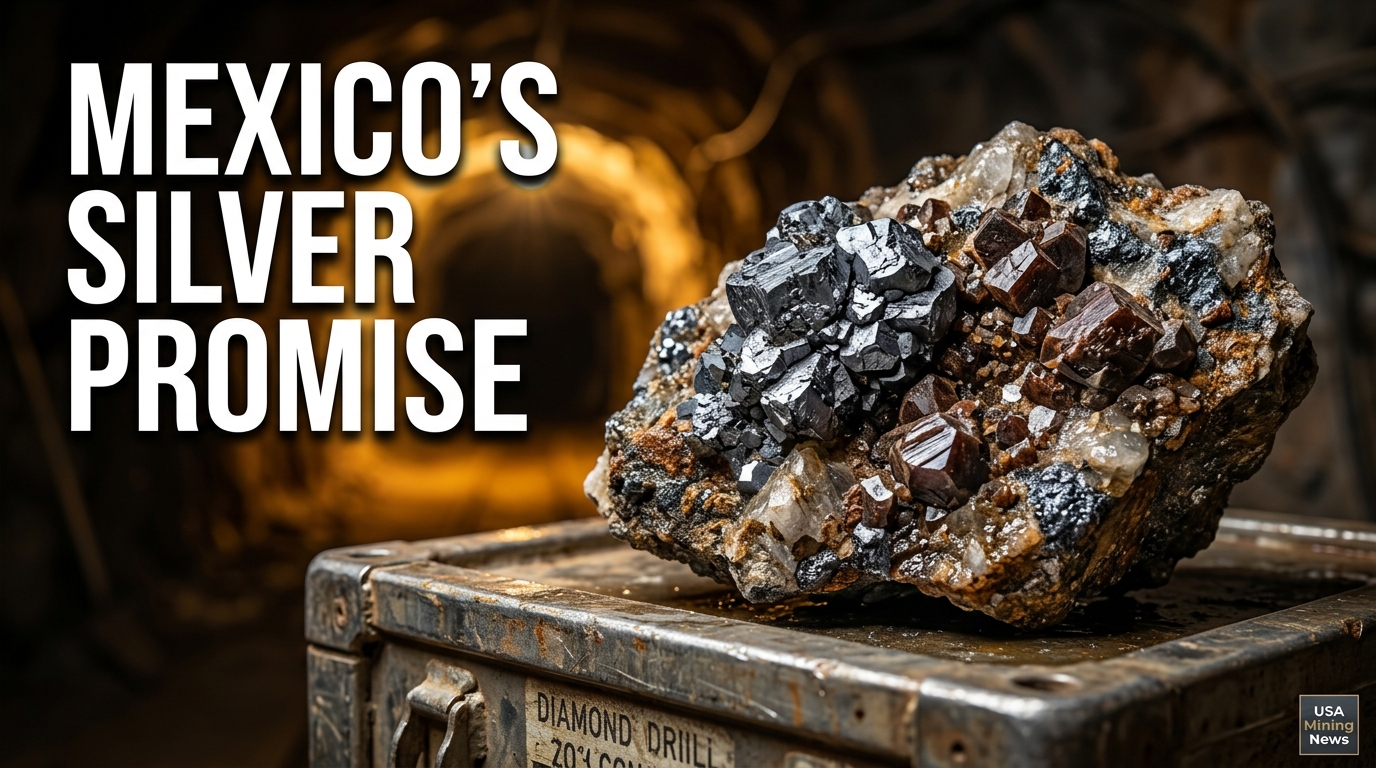
Crucially, the mineral assemblage observed within the brecciated zone is highly encouraging. Geologists identified the presence of fine dark-grey sulphide minerals, along with readily distinguishable sphalerite and galena, and some chalcopyrite. This specific suite of sulfide minerals is a characteristic indicator of the type of mineralization anticipated. Sphalerite (zinc sulfide) and galena (lead sulfide) are frequently associated with significant silver grades in epithermal deposits, often serving as direct metal carriers or pathfinder minerals for enriched silver zones. The presence of chalcopyrite (copper iron sulfide) further broadens the potential commodity suite, hinting at possible copper enrichment in addition to silver, lead, and zinc.
The observed vein textures and mineral assemblages within the core are consistent with those typically found in the shallowest levels of silver, base metal, intermediate-sulphidation epithermal vein systems in the Zacatecas Mining District. This congruence with known deposit types within the district provides a strong geological context and significantly de-risks the early-stage exploration, suggesting the company is indeed exploring a fertile and prospective system.
Supporting these new drill observations, prior rock-chip sampling conducted on waste dumps surrounding historical artisanal workings at El Cristo had already indicated a strong correlation: the highest silver grades were closely linked to the presence of galena and sphalerite. This historical data, now corroborated by initial drill results, reinforces the geological model and highlights the project's potential for high-grade silver mineralization directly associated with base metal sulfides.
Following the completion of the first hole, Zacatecas Silver is meticulously processing the core samples. These samples are slated for dispatch to ALS in Zacatecas, a globally recognized analytical laboratory, for detailed geochemical analysis. The assay results from these samples will be pivotal in quantifying the grade and tenor of the encountered mineralization, providing the definitive data required to assess the economic potential of the discovery.
A Strong Start: CEO's Perspective
Mr. Eric Vanderleeuw, CEO and director of Zacatecas Silver, expressed considerable enthusiasm regarding these initial findings, stating, “Intersecting the vein system with visible sulphides in our very first hole is exactly what we were aiming for, the presence of galena and sphalerite confirms we are in a fertile, mineralised system with clear potential for high-grade silver.” His statement underscores the strategic importance of this early success. In exploration, hitting the target in the first hole, especially with visible economic minerals, is a significant confidence booster and often a harbinger of further positive results.
Mr. Vanderleeuw further added, “This is an outstanding start, and we are eager to build on this momentum as the drill programme progresses.” This sentiment reflects the company’s forward-looking approach and its commitment to systematically exploring the El Cristo project. The initial success provides a strong foundation for the ongoing drilling campaign, guiding subsequent hole placements and potentially accelerating the project's development timeline. For investors and industry watchers, this direct commentary from the CEO offers valuable insight into the company's internal assessment of the discovery's significance.
El Cristo's Strategic Position in the Zacatecas Mining District
The El Cristo Project significantly benefits from its location within the Zacatecas Mining District, a region with a storied history as one of Mexico’s premier silver producers. The district has been a cornerstone of global silver supply for centuries, boasting numerous large-scale silver mines and a well-established mining infrastructure, including skilled labor and support services. This rich heritage and existing infrastructure provide a distinct advantage for new exploration and development ventures.
Intermediate-sulphidation epithermal vein systems, like those targeted at El Cristo, are globally recognized as major sources of silver, gold, lead, and zinc. These deposits typically form from hydrothermal fluids circulating beneath volcanic centers, depositing precious and base metals in fractures and shear zones within host rocks. The characteristics observed in the first hole at El Cristo—brecciated quartz veins, silicified volcaniclastic host rocks, and a specific sulfide mineral suite—are textbook indicators for this prolific deposit type. The ability to intercept such a target in the maiden drill hole further validates the exploration team's geological understanding and highlights the potential for a significant discovery within a proven mining camp.
The importance of visible sulfides like galena and sphalerite cannot be overstated in early-stage exploration. While not definitive proof of economic grades without assay results, their presence, especially when correlated with historical high-grade rock-chip sampling, significantly upgrades the prospectivity of the target. These minerals are often intimately associated with silver in epithermal systems, acting as primary carriers of the precious metal. This initial visual confirmation provides strong preliminary evidence of a robust, mineralizing system at depth.
Zacatecas Silver's Broader Portfolio and Future Prospects
Beyond the promising developments at El Cristo, Zacatecas Silver maintains a diversified portfolio of exploration assets within Mexico. The company’s two key projects include the flagship Zacatecas Silver Project, also situated within the high-grade silver belt of Zacatecas, and the Esperanza Gold Project. This strategic project positioning allows the company to pursue both silver-focused and gold-focused opportunities within a single, mining-friendly jurisdiction. The success at El Cristo could potentially add a significant new silver and base metals component to its portfolio, complementing its existing assets.
Looking ahead, the immediate focus for Zacatecas Silver will be the expeditious processing and analysis of the remaining core samples from the first hole. The assay results, once received from ALS, will be crucial in determining the exact grades of silver, lead, zinc, and potentially copper, providing a quantitative measure of the discovery’s significance. Following this, the company plans to continue with the broader 2026 drill program, leveraging the geological insights gained from this initial success to vector towards further high-grade mineralization. Continued drilling will aim to define the lateral and vertical extent of the mineralized structure, ultimately working towards a maiden resource estimate, if warranted.
The commencement of drilling and the immediate success at El Cristo position Zacatecas Silver for an exciting year of exploration. The positive start enhances the company's profile within the competitive mining sector and underscores the enduring potential of Mexico's historic mining districts. As the drilling campaign progresses and further assay results become available, the industry will be closely watching for confirmation of high-grade potential, which could profoundly impact the company’s trajectory and contribute to the ongoing vibrancy of the Mexican silver sector.