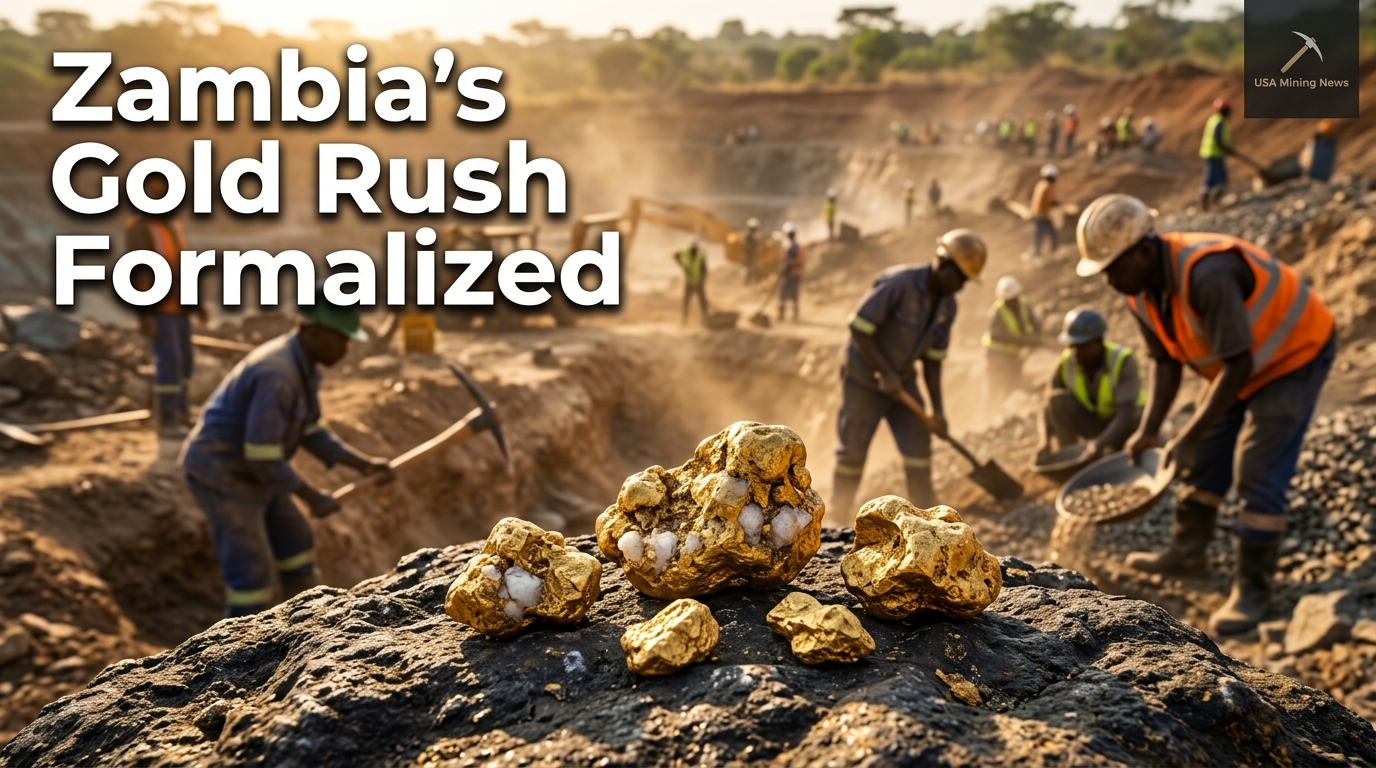
LUSAKA, ZAMBIA – In a strategic move poised to significantly reshape its mining landscape, ZCCM Investments, Zambia’s state mining investment company, has announced an ambitious plan to formalize the nation’s burgeoning small-scale gold sector. The initiative aims to generate more than $1.8 billion annually, capitalizing on the substantial value currently lost through informal trade channels and drawing inspiration from the notable success achieved by Ghana in a similar endeavor.
This development comes as global gold prices remain elevated, presenting a timely opportunity for Zambia to diversify its mineral revenue streams beyond its traditional copper dominance. The strategy, detailed by ZCCM Investments CEO Kakenenwa Muyangwa, seeks to align Zambia’s official gold export figures with the substantial import data reported by major trading partners, signaling a commitment to greater transparency and national economic benefit.
Zambia's Untapped Gold Potential and the Informal Dilemma
Zambia, a country rich in mineral resources, has long grappled with the challenge of a thriving informal gold mining sector. This sector, while providing livelihoods for numerous artisanal miners, often operates outside regulatory frameworks, leading to significant revenue leakage and a lack of official oversight. The scale of this informal economy has become strikingly evident through discrepancies in international trade data.
According to World Integrated Trade Solution data, the United Arab Emirates (UAE) imported nearly $1.8 billion (Dh6.61 billion) worth of gold from Zambia in 2023. During the same period, Hong Kong reported imports valued at $108 million (HK$846.98 billion) from the Southern African nation. These figures paint a clear picture of a robust, albeit largely informal, gold trade flow from Zambia to global markets.
In stark contrast, Zambia’s central bank reported official gold exports valued at less than $128 million for 2023. This glaring disparity – where import figures from trading partners are more than fourteen times higher than Zambia's declared exports – highlights the urgent need for a formalization strategy. The vast majority of Zambia’s gold production is evidently bypassing official channels, depriving the government of crucial tax revenues, limiting foreign exchange accumulation, and obscuring the true economic contribution of the sector.
Ghana's Model: A Blueprint for Formalization
ZCCM’s formalization strategy is explicitly inspired by Ghana’s highly successful approach to integrating its small-scale gold miners into the formal economy. Ghana, a West African mining powerhouse, demonstrated the immense potential of such initiatives when its artisanal and small-scale gold producers collectively surpassed the output of major mining companies in 2025. These small-scale miners generated approximately $10.8 billion (121.84 billion cedis) in foreign exchange earnings that year, significantly bolstering the nation's economy.
This remarkable increase in formal earnings followed the establishment of the state-run Ghana Gold Board. The Board’s primary mandate has been to direct gold from small-scale miners into formal trading channels, ensuring traceability, fair pricing, and compliance with national regulations. This system has not only supported Ghana’s foreign exchange reserves but has also provided stability and legitimacy to thousands of small-scale mining operations.
Ghana’s success has garnered international attention, with other resource-rich nations keen to replicate its achievements. Senegal, for instance, announced plans in June to review Ghana’s system, aiming to enhance traceability and boost its own formal gold sector. The effectiveness of Ghana’s model provides a compelling case study for ZCCM, demonstrating that a well-structured state-led intervention can successfully integrate informal miners, increase official exports, and deliver substantial economic benefits.
ZCCM's Strategic Formalization Drive
ZCCM Investments CEO Kakenenwa Muyangwa emphasized that formalizing Zambia’s informal gold trade is key to substantially raising official export figures. The company's target of generating more than $1.8 billion from the small-scale gold sector is therefore not just an aspiration but a direct attempt to capture and formalize the economic value that is already leaving the country through unofficial channels, as evidenced by the UAE's import data.
To kickstart this ambitious initiative, ZCCM has already forged strategic partnerships aimed at directly engaging with artisanal miners. These partnerships are critical for establishing reliable purchasing mechanisms and providing necessary support to integrate miners into the formal system. Key collaborations include:
- A partnership with Mining Mineral Resources SAS in Zambia’s North-Western Province, focusing on both gold production and the purchase of gold from artisanal miners.
- A similar arrangement established with Kamunshinshi Mineral Resources, further expanding ZCCM’s reach and capacity within the small-scale gold sector.
These direct engagements are designed to offer fair prices, ensure compliance with environmental and labor standards, and provide a secure pathway for gold sales, thereby incentivizing miners to move away from informal markets.
Boosting Production: From Ounces to Millions
Beyond formalizing existing informal trade, ZCCM’s strategy also includes a significant push to increase overall gold output. Kakenenwa Muyangwa expressed strong confidence in the potential for growth, stating that it was “totally achievable” to increase Zambia’s official gold output from its current estimated 127,000 ounces per year to several hundred thousand ounces annually. This projected increase would place Zambia among significant gold-producing nations, adding considerable weight to its mineral portfolio.
The timing of this drive is particularly opportune given the robust performance of the global gold market. Despite a slight retraction from a January high of above $5,400 per ounce, gold prices have settled at an elevated level, recently trading at just over $4,300 per ounce. Muyangwa underscored this advantage, remarking, “The price of gold is high enough. Let’s take advantage.” This optimistic outlook reflects a clear understanding of market dynamics and the immediate economic benefits that higher output and formalization could bring.
While Zambia remains globally recognized for its copper mining industry, which is a cornerstone of its economy, the strategic focus on gold signifies a prudent diversification effort. Leveraging the strength of the gold market not only adds resilience to the national economy but also positions Zambia to capitalize on increasing demand for precious metals.
Economic Implications and Industry Significance
The successful formalization of Zambia's small-scale gold sector holds profound economic and strategic implications, not only for Zambia but for the broader global mining industry. For Zambia, the benefits are multi-faceted:
- Foreign Exchange Earnings: Capturing the $1.8 billion in value currently exported informally would significantly boost Zambia’s foreign exchange reserves, strengthening the national currency and providing greater stability for imports and debt servicing.
- Government Revenue: Formalizing the trade allows for the collection of taxes, royalties, and fees, providing critical revenue for public services and infrastructure development.
- Economic Development: Legitimate gold trade fosters local economic development by creating formal jobs, encouraging responsible mining practices, and potentially attracting further investment into the sector.
- Supply Chain Transparency: For the global industry, a formalized Zambian gold sector contributes to more transparent and ethical supply chains, an increasingly important factor for investors and consumers concerned with sourcing and sustainability.
This initiative underscores a growing trend among resource-rich nations to assert greater control over their natural resources and maximize national benefit. It reflects an understanding that well-managed small-scale mining can be a powerful engine for economic growth rather than a source of illicit trade and environmental degradation.
Challenges and the Path Forward
While the potential rewards are substantial, ZCCM's formalization journey will undoubtedly face challenges. These may include the logistical complexities of reaching and registering thousands of artisanal miners, ensuring consistent adherence to regulatory frameworks, combating smuggling, and managing environmental impacts associated with small-scale operations. Effective enforcement, community engagement, and sustained political will will be crucial for long-term success.
However, with Ghana’s proven blueprint and the strong market incentives, Zambia is well-positioned to navigate these hurdles. The commitment from ZCCM, as a state-owned enterprise, provides a robust institutional framework for implementation. The next steps will likely involve scaling up purchasing operations, intensifying miner registration efforts, and potentially developing further support mechanisms, such as technical assistance and access to finance for small-scale miners.
Conclusion: A Golden Opportunity for Zambia
ZCCM Investments’ ambitious target of generating over $1.8 billion from a formalized small-scale gold sector marks a pivotal moment for Zambia’s mining industry. By confronting the long-standing challenge of informal trade head-on and adopting a proven model from its regional counterpart, Ghana, Zambia is poised to unlock significant economic value. This strategic shift not only promises to enhance the nation's foreign exchange earnings and government revenues but also strengthens its position in the global gold market, demonstrating a forward-thinking approach to resource management and national prosperity. The coming years will reveal the full extent of this golden opportunity for Zambia, solidifying its role as a key player in Africa’s burgeoning mineral economy.