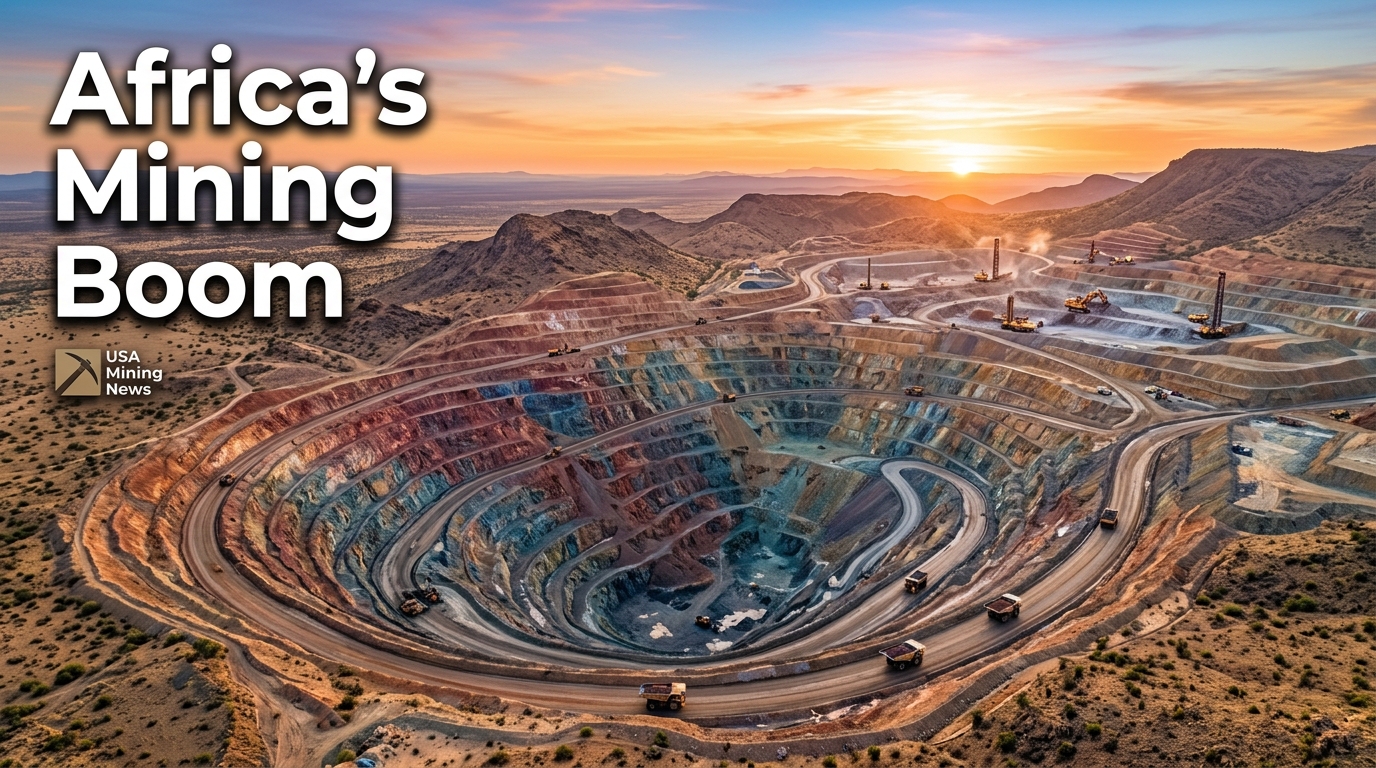
In a significant development for the global mining industry, Africa's vast mineral sector is charting a course for sustained growth, propelled by two powerful forces: the escalating worldwide demand for critical minerals and the implementation of crucial policy reforms across various nations. This optimistic trajectory, highlighted in a GlobalData analyst comment issued on July 7, 2026, positions the continent as an indispensable player in the future of global resource supply, even as it continues to grapple with entrenched operational hurdles.
Platinum’s Enduring Dominance and New Frontiers
At the heart of Africa’s current mining landscape lies platinum, a commodity that continues to solidify the continent’s irreplaceable role in specific global supply chains. According to the GlobalData analysis, Africa is projected to account for a remarkable nearly 80.5% of global platinum production in 2025. This figure underscores the concentrated nature of platinum group metals (PGMs) production, with South Africa historically being the predominant source. Platinum, alongside palladium and rhodium, is critical for a diverse array of industrial applications, most notably in automotive catalysts designed to reduce harmful emissions. Beyond this, it finds extensive use in jewelry, petroleum refining, chemical processes, and specific medical applications.
The vast PGM reserves in the Bushveld Complex of South Africa, coupled with deposits in Zimbabwe, form the geological backbone of this dominance. Companies operating in these regions, such as Anglo American Platinum, Impala Platinum, and Sibanye-Stillwater, are key custodians of this critical supply. Their operational stability and strategic investments are vital for global industrial sectors heavily reliant on these precious metals.
However, the narrative is expanding beyond traditional bulwarks like platinum. The analyst comment points to "critical minerals" as a key driver for future growth. While the source does not list specific critical minerals, industry context suggests this typically refers to commodities essential for the clean energy transition and high-tech industries. This includes minerals such as cobalt, lithium, graphite, rare earth elements, copper, and nickel, all of which are found in significant quantities across various African nations. The increasing global push for decarbonization and electrification, particularly in the automotive and renewable energy sectors, fuels an unprecedented demand for these materials, making Africa’s diverse mineral endowment exceptionally strategic.
Policy Reforms: Paving the Way for Investment
The second major catalyst for Africa’s anticipated growth is the wave of policy reforms sweeping across the continent. Governments are increasingly recognizing the need to create more stable, transparent, and attractive environments for foreign and domestic investment in the mining sector. Historically, policy uncertainty, shifting regulatory frameworks, and opaque licensing processes have deterred significant capital inflows, despite the continent's undeniable resource wealth.
While the GlobalData comment does not detail specific reforms, industry observations suggest these typically include:
- Streamlined Licensing and Permitting: Efforts to reduce bureaucratic hurdles and accelerate the approval process for exploration and mining permits.
- Fiscal Stability and Incentives: Creation of more predictable tax regimes, royalty structures, and, in some cases, offering tax holidays or other financial incentives to attract large-scale projects.
- Improved Mining Codes: Modernization of national mining laws to align with international best practices, ensuring clarity on ownership, environmental standards, and local content requirements.
- Enhanced Transparency and Governance: Initiatives to combat corruption and improve the overall governance framework, often through participation in global initiatives like the Extractive Industries Transparency Initiative (EITI).
- Local Content Development: Policies encouraging the training and employment of local workers, as well as the procurement of goods and services from local businesses, aiming to ensure that mining benefits broader society.
These reforms are crucial for de-risking investments and providing the long-term certainty that major mining companies and financial institutions require. Nations like the Democratic Republic of Congo, Zambia, Botswana, and Ghana have either implemented or are actively discussing changes to their mining policies to capitalize on the critical minerals boom and attract necessary capital.
Navigating Persistent Headwinds: Challenges Remain
Despite the optimistic outlook, the GlobalData analyst comment explicitly highlights that Africa’s mining industry continues to face "persistent challenges." These hurdles, if not effectively addressed, could impede the pace and scale of projected growth. Understanding these challenges is crucial for investors and operators charting their course on the continent.
- Infrastructure Gaps: Perhaps the most significant impediment is the pervasive lack of adequate infrastructure. Many key mineral deposits are located in remote areas, far from reliable power grids, paved roads, rail lines, or port facilities. This dramatically increases the capital expenditure required for project development, elevates operational logistics costs, and directly impacts the competitiveness of African-mined commodities on the global market. Investment in transport corridors, energy generation (including renewable options), and water management solutions is vital.
- Policy Uncertainty: While reforms are ongoing, the specter of policy uncertainty still looms in some jurisdictions. This can manifest as sudden changes in royalty rates, export restrictions, nationalization threats, or inconsistent application of regulations. Such unpredictability can significantly deter long-term foreign direct investment, which is essential for large-scale mining projects that require decades of stability.
- Rising Operational Costs: The cost of doing business in Africa can be prohibitively high. This includes the aforementioned infrastructure deficits contributing to higher transport and energy costs. Furthermore, security concerns in certain regions necessitate substantial expenditure on personnel and equipment to protect sites and supply chains. Labor costs, while often lower in absolute terms, can be impacted by skill shortages requiring significant investment in training and expatriate staff. The increasing global inflation and supply chain disruptions further exacerbate these operational cost pressures.
Addressing these challenges requires a concerted effort from governments, mining companies, local communities, and international development partners. Sustainable solutions often involve public-private partnerships for infrastructure development, robust community engagement strategies, and ongoing dialogue to foster regulatory predictability.
Market Implications and Future Outlook
The projected growth of Africa’s mining sector has profound implications for global commodity markets, particularly for industries reliant on PGMs and battery metals. For USA Mining News readers, this translates into several key takeaways:
- Supply Chain Security: As global economies increasingly prioritize resilient supply chains, especially for critical minerals, Africa’s role as a major supplier becomes paramount. Diversifying sources and ensuring stable access to these minerals is a strategic imperative for industrial nations.
- Investment Opportunities: The combination of vast untapped resources, rising demand for critical minerals, and improving policy environments presents significant investment opportunities. This includes not only direct investment in new mines but also in associated infrastructure, processing facilities, and beneficiation projects.
- Geopolitical Significance: Africa’s mineral wealth is intrinsically linked to global geopolitical dynamics. The competition for critical mineral supplies is intensifying, making diplomatic engagement and strategic partnerships with African nations increasingly important for resource-hungry economies.
- Technological Adoption: For mining operations to thrive in Africa’s challenging environments, the adoption of advanced technologies—such as automation, remote monitoring, and data analytics—will be crucial for optimizing efficiency, reducing costs, and improving safety. These innovations can help mitigate some of the infrastructure and operational cost burdens.
- Sustainability and ESG: Environmental, Social, and Governance (ESG) considerations are no longer optional but central to successful mining ventures. Companies operating in Africa must demonstrate a strong commitment to responsible mining practices, environmental stewardship, and community development to secure social license to operate and attract ethical investment.
Looking ahead, the trajectory for Africa’s mining sector in the mid-2020s and beyond appears robust, driven by an undeniable global appetite for its mineral resources. The continent’s unique position, holding a significant share of both traditional and future-critical minerals, places it at the nexus of global economic and energy transitions. While the path to sustained growth will undoubtedly entail overcoming complex infrastructural, regulatory, and operational hurdles, the proactive policy reforms being pursued by many African governments, coupled with strategic international partnerships, are collectively building a more conducive environment for investment and operational success. The July 7, 2026, GlobalData analyst comment serves as a timely reminder of Africa’s enduring and growing significance in the worldwide mining industry, a development that merits close monitoring by all stakeholders.