India Forges Ahead in Critical Mineral Security: NLCIL and CSIR-CECRI Partner on Extraction from Mining Waste
In a significant move poised to bolster India’s domestic critical mineral supply chain, NLC India Limited (NLCIL), a prominent lignite mining and power generation public sector undertaking, has entered into a strategic Memorandum of Understanding (MoU) with the CSIR-Central Electrochemical Research Institute (CSIR-CECRI). The agreement, formally sealed on June 10, 2026, at NLCIL’s headquarters in Neyveli, a major mining hub in the Indian state of Tamil Nadu, signals a dedicated effort towards the beneficiation and extraction of critical and strategic minerals from secondary sources.
This collaboration is a direct and proactive step taken in alignment with the Indian Government’s comprehensive National Critical Mineral Mission. It represents a forward-thinking approach to resource management, aiming to unlock significant value from materials historically considered waste, thereby enhancing India's self-reliance in a rapidly evolving global mineral landscape.
Strategic Partnership for Critical Mineral Recovery in India
The core objective of the newly inked MoU is to facilitate extensive research and development focused on innovative methods for recovering valuable minerals. The partnership brings together NLCIL’s extensive mining footprint and operational expertise with CSIR-CECRI’s specialized scientific and electrochemical research capabilities. India, like many nations, recognizes the imperative to secure a stable supply of critical minerals, which are essential for advanced technologies, renewable energy, defense, and electronics. By focusing on secondary sources such as overburden and tailings, the initiative aims to address both environmental sustainability and resource security simultaneously.
The signing ceremony, held in Neyveli, witnessed the participation of key executives from both organizations, underscoring the high-level commitment to this endeavor. I.S. Jasper Rose, Executive Director (Mines & Land) for NLCIL, and K. Ramesha, Director of CSIR-CECRI, formally signed the agreement. Senior NLCIL officials present included Chairman and Managing Director Prasanna Kumar Motupalli and Director (Mines) Suresh Chandra Suman, highlighting the corporate strategic importance of this collaboration.
Unlocking Value from Mining Waste: REEs and Trace Minerals
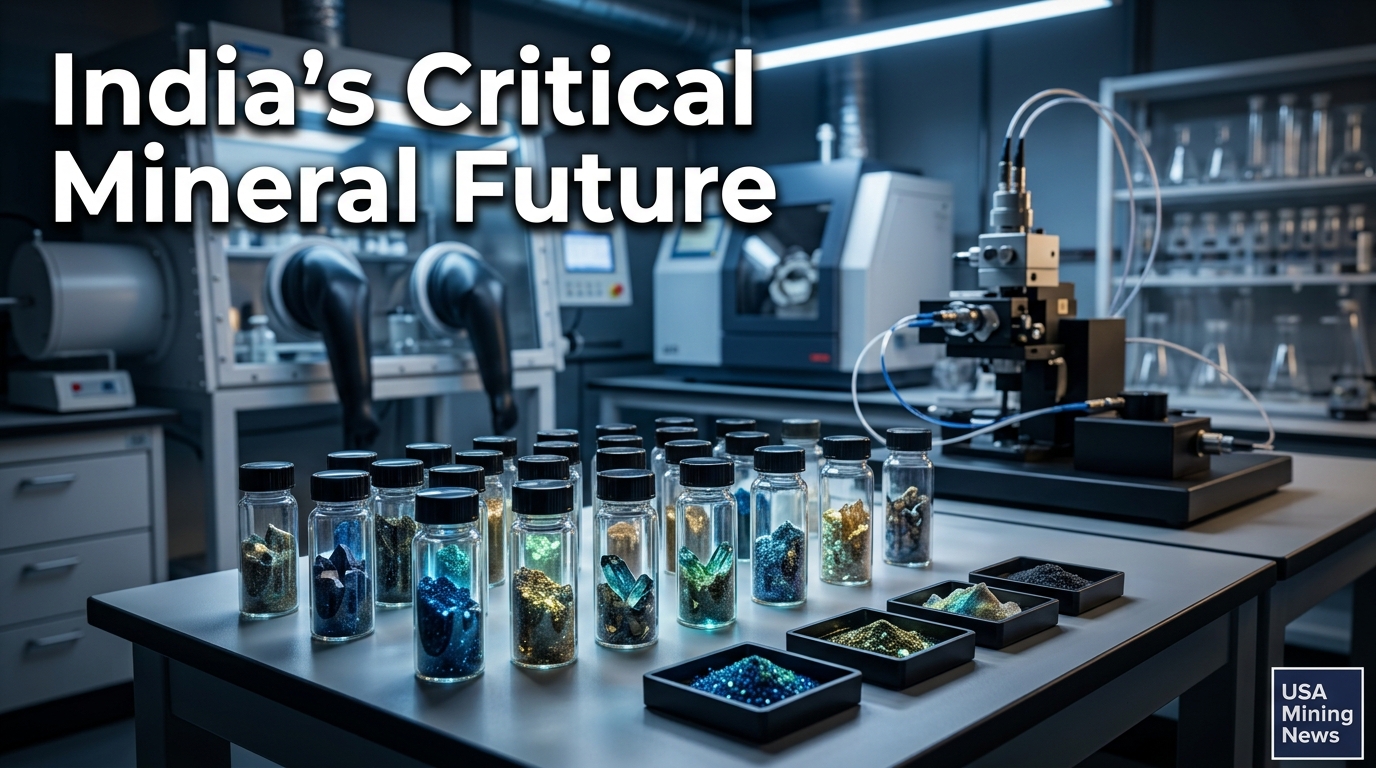
A primary focus of the joint study will be the vast quantities of overburden materials and tailings generated at NLCIL’s Neyveli Mines. These materials, by-products of extensive lignite mining operations, are known to contain various accessory minerals. The collaboration will specifically assess the potential for the economic extraction and recovery of rare earth elements (REEs) and other trace minerals embedded within these secondary resources.
Rare earth elements are a group of 17 chemically similar metallic elements that are indispensable in numerous high-tech applications, including electric vehicle motors, wind turbines, smartphones, and missile guidance systems. The global supply chain for REEs is highly concentrated, making domestic recovery initiatives strategically important for any nation aspiring to technological independence and economic resilience. Trace minerals, while present in smaller quantities, can also hold significant industrial value depending on their specific composition.
The initial phase will concentrate on the Neyveli Mines, serving as a pilot for methodology development and resource assessment. Subsequently, the partnership intends to explore further opportunities for similar studies across other NLCIL mining and exploration sites. This expansion would aim to develop and implement sustainable and economically viable technologies for recovering valuable resources from various secondary sources, establishing a broader framework for mineral recovery across NLCIL’s portfolio.
Key Leadership and Vision
Prasanna Kumar Motupalli, NLCIL’s Chairman and Managing Director, articulated the profound significance of this partnership. He emphasized that the collaboration with CSIR-CECRI is designed to support critical research into the recovery of REEs and other essential minerals from what is traditionally regarded as mining waste. Motupalli underscored the dual benefit of the initiative: developing indigenous technologies that align with the objectives of the National Critical Mineral Mission and crucially contributing to India’s overarching goal of self-reliance (Atmanirbhar Bharat) in key mineral resources.
Echoing this sentiment, K. Ramesha, Director of CSIR-CECRI, highlighted the long-standing operational presence of both organizations within Tamil Nadu. He expressed confidence that their joint efforts would significantly advance research in critical mineral extraction and provide robust support to India’s burgeoning critical mineral supply chain. The synergy between a large-scale miner and a premier research institution is expected to accelerate the transition from laboratory-scale concepts to industrial-scale application.
India's National Critical Mineral Mission and Self-Reliance Goals
The MoU unequivocally supports the Indian Government’s National Critical Mineral Mission, a strategic imperative launched to secure and diversify the supply of minerals vital for the nation's economic growth and strategic autonomy. India, like many major economies, recognizes the vulnerabilities inherent in global supply chains for critical minerals, often dominated by a few countries. Dependence on imports for these indispensable raw materials can pose significant economic and national security risks.
The mission aims to achieve greater self-sufficiency through various strategies, including exploration of domestic primary deposits, international collaborations for sourcing, and crucially, the development of technologies for extraction from unconventional and secondary sources. NLCIL’s proactive engagement in the latter, particularly through its collaboration with CSIR-CECRI, represents a tangible commitment to these national objectives. Indeed, Prasanna Kumar Motupalli is a member of a high-level committee at NITI Aayog, the Indian Government’s premier think tank, specifically examining the recovery of such minerals from diverse resources, including mine waste, overburden, and tailings. This dual role underscores the strategic alignment of NLCIL’s corporate strategy with national policy directives.
The Broader Industry Shift: Secondary Sources as a New Frontier
The global mining industry is increasingly recognizing the immense potential of secondary sources for mineral recovery. As primary deposits become more challenging and costly to access, and environmental regulations tighten, the reprocessing of mine waste, tailings, and overburden is emerging as a critical frontier. This paradigm shift offers several compelling advantages:
- Resource Efficiency: It maximizes the utilization of already extracted materials, reducing the need for new virgin extraction and minimizing resource depletion.
- Environmental Benefits: Reprocessing reduces the volume of mine waste requiring disposal, mitigates potential environmental hazards posed by tailings dams (e.g., acid mine drainage, heavy metal leaching), and can reclaim land for other uses.
- Economic Value: Minerals recoverable from waste, even in low concentrations, can become economically viable with advances in beneficiation and extraction technologies, especially given increasing commodity prices.
- Circular Economy Principles: It aligns with the principles of a circular economy, transforming waste into valuable inputs and promoting sustainable resource management.
NLCIL's existing pursuit of critical and strategic minerals from both primary and secondary sources indicates a forward-looking corporate strategy. Leveraging the institute's vast quantities of mining waste for REE and trace mineral recovery is not just an environmental measure but a strategic business decision that could unlock significant new revenue streams and enhance the company's mineral portfolio beyond its traditional lignite focus.
Technical and Operational Implications for NLCIL
The partnership demands sophisticated technical expertise and could lead to substantial operational adjustments for NLCIL. Extracting REEs and trace minerals from complex matrices like overburden and tailings requires advanced beneficiation techniques, which might include novel flotation, magnetic separation, gravity separation, and leaching processes. CSIR-CECRI, with its focus on electrochemical research, is well-positioned to contribute innovative hydrometallurgical or electrometallurgical methods that can selectively extract target elements with high efficiency and lower environmental impact.
For NLCIL, this translates into potential investments in new processing plants, specialized equipment, and skilled personnel. The initial studies at Neyveli will be crucial for understanding the specific mineralogical composition of the waste, determining the most effective extraction pathways, and assessing the overall economic feasibility. Scaling these technologies from laboratory or pilot-plant scale to full commercial operation will be a significant challenge, requiring careful planning, robust engineering, and continuous optimization.
Market Context and Global Supply Chains
Globally, the scramble for critical minerals, particularly REEs, has intensified due to geopolitical tensions and accelerated demand from the clean energy transition. Nations are increasingly seeking to diversify their supply chains and reduce dependence on dominant producers. For instance, the demand for magnet-grade rare earths like neodymium and dysprosium is projected to soar with the expansion of electric vehicle manufacturing and renewable energy infrastructure.
India’s proactive stance, exemplified by the NLCIL-CSIR-CECRI MoU, positions it as a significant player in this global quest for mineral security. By developing indigenous capabilities to recover these minerals, India can not only meet its domestic industrial requirements but potentially emerge as a reliable supplier in the international market, contributing to a more diversified and resilient global supply chain. This strategic move could protect Indian industries from price volatility and supply disruptions, fostering greater economic stability.
Future Outlook and Potential Impact
The immediate next steps for the NLCIL-CSIR-CECRI partnership will likely involve detailed characterization studies of the overburden and tailings at Neyveli, followed by laboratory-scale process development and optimization. Successful outcomes at this stage would pave the way for pilot plant construction and testing, progressively scaling up the technology towards a commercial application.
The long-term impact of this collaboration could be transformative for India. It has the potential to:
- Significantly enhance India's critical mineral resource base without relying solely on new primary mining projects.
- Create a new sector of mineral processing focused on secondary resources, generating employment and fostering technological innovation.
- Reduce the environmental footprint of NLCIL’s extensive mining operations by converting waste into valuable products.
- Strengthen India's position in global technology and defense sectors by securing essential raw materials.
- Serve as a model for other mining companies in India and globally to explore similar waste-to-wealth initiatives.
By transforming mining liabilities into strategic assets, the partnership between NLCIL and CSIR-CECRI is not merely a corporate agreement; it is a pivotal step for India towards achieving greater economic autonomy and environmental stewardship in the 21st century mineral economy.