enCore Energy Forges Ahead at Dewey Burdock with Key BLM Infrastructure Approval
Denver, CO – June 19, 2026 – enCore Energy Corp. (NASDAQ: EU) (TSX.V: EU) today announced a pivotal regulatory advancement for its Dewey Burdock Uranium Project, securing final approval from the Bureau of Land Management (BLM) for initial infrastructure construction in south-west South Dakota, US. This decision, following a comprehensive Environmental Assessment (EA) and a subsequent Finding of No Significant Impact (FONSI), marks a significant step forward for what is poised to become South Dakota’s first in-situ recovery (ISR) uranium operation.
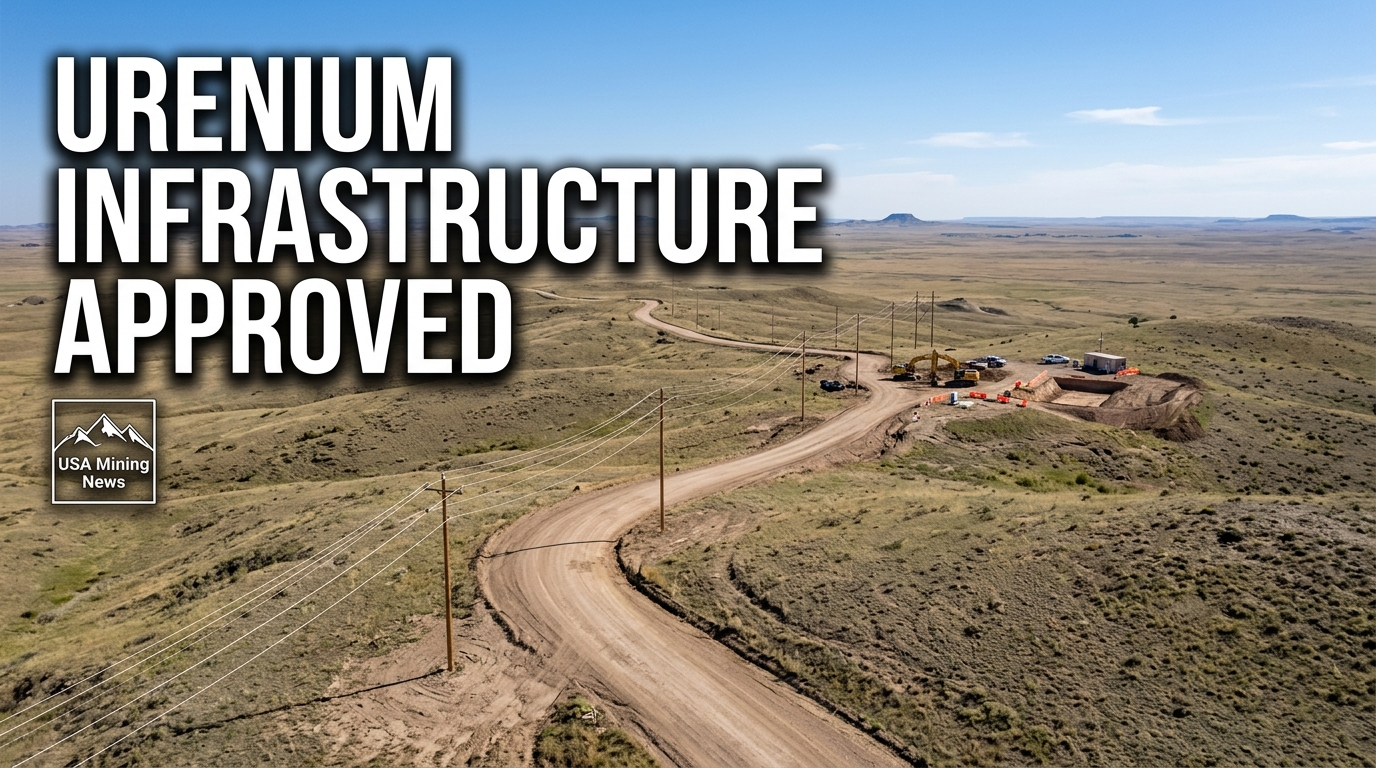
The approval allows enCore Energy’s wholly-owned subsidiary, Powertech, to commence infrastructure development across approximately 240 acres of public land managed by the BLM. This acreage is situated within the broader 10,580-acre project area spanning Custer and Fall River counties. The federally sanctioned works are critical preparatory steps for the project's eventual operational phase, setting the foundation for future uranium extraction activities.
William Sheriff, Executive Chair of enCore Energy, highlighted the strategic importance of this federal clearance. “Securing the BLM’s approval to commence construction on BLM lands marks a significant milestone for the Dewey Burdock Project,” Sheriff stated. He further added, “Our team’s efforts at the federal level to coordinate permitting within the Fast 41 programme have greatly enhanced enCore’s ability to move forward, and we look forward to continuing to work with US Government agencies and state regulators to advance the Dewey Burdock Project.” Sheriff also expressed gratitude, “We greatly appreciate the support of our landowners, neighbours and the Edgemont community and look forward to growing our economic impact on the region. enCore remains committed to maximising shareholder value and properly managing best practices to protect the land, air, people and water.”
Initial Infrastructure Development Detailed
The approved plans cover essential ground infrastructure necessary for any large-scale mining operation, tailored to the unique requirements of in-situ recovery. Specifically, Powertech is now authorized to undertake:
- Construction of primary access roads, which will serve as the main arteries for transporting equipment, personnel, and materials to and from the project site.
- Development of secondary access roads, providing additional routes for logistical flexibility and internal movement within the project area.
- Establishment of light-use roads, designed for routine monitoring, maintenance, and lighter vehicle traffic.
- Installation of four critical groundwater monitoring wells, which are integral to environmental oversight, particularly for an ISR operation. These wells will allow for continuous monitoring of groundwater quality, ensuring the integrity of surrounding aquifers and compliance with regulatory standards.
- Installation of overhead power lines, indispensable for providing the necessary electrical supply for site operations, including drilling, pumping, and processing facilities.
These initial works are foundational, enabling subsequent phases of development and ultimately the full-scale implementation of the ISR extraction process.
The Dewey Burdock Project: A Strategic Uranium Asset
The Dewey Burdock Project, wholly owned by enCore Energy, is recognized as an advanced-stage uranium project. Its strategic location in South Dakota positions it as a key potential contributor to the resurgence of domestic uranium production in the United States. The project is designed to utilize the in-situ recovery (ISR) method, a modern and increasingly favored technique for uranium extraction due to its reduced environmental footprint compared to conventional open-pit or underground mining.
The ISR method involves injecting an oxygen and water-based solution, known as a lixiviant, into subsurface sandstone ore bodies. This mild solution dissolves the uranium minerals from the host rock while it remains in place. The uranium-bearing solution is then pumped to a central processing facility on the surface, where the uranium is separated and concentrated. This process significantly minimizes surface disturbance, eliminates the need for large tailings piles, and reduces water usage compared to conventional milling processes, aligning with modern environmental stewardship principles in mining.
In terms of regulatory progress, Dewey Burdock received a crucial Source and Byproduct Materials Licence from the Nuclear Regulatory Commission (NRC) in 2014. This federal license is currently under renewal, a standard procedure for long-term projects. enCore Energy has affirmed its commitment to continue working closely with the NRC as the federal permitting lead agency to ensure seamless progression through all necessary regulatory stages.
"Fast 41" and National Critical Mineral Strategy
A significant aspect of the Dewey Burdock Project’s advancement is its inclusion in the federal "Fast 41 programme," a designation managed by the Permitting Council under a US President Donald Trump Executive Order. This initiative is specifically designed to expedite the permitting review process for certain critical infrastructure and critical mineral projects deemed vital for national interests. The programme aims to streamline complex federal permitting reviews, reducing delays and fostering investment in key sectors.
The inclusion of Dewey Burdock, set to be South Dakota’s inaugural ISR project, underscores its importance in the broader context of US energy policy and critical minerals strategy. For decades, the United States has increasingly relied on imported uranium to fuel its nuclear power plants. Initiatives like "Fast 41" and projects like Dewey Burdock are integral to reversing this trend, strengthening domestic uranium production, and enhancing national energy security through a reliable, domestically sourced supply of nuclear fuel. Uranium is classified as a critical mineral due to its indispensable role in national defense, clean energy generation, and economic stability.
enCore Energy's Broader Corporate Vision
The approval for Dewey Burdock forms part of enCore Energy's aggressive growth strategy within the North American uranium sector. The company has been actively expanding its portfolio and consolidating its position as a leading US-focused ISR uranium producer. An example of this strategy was the acquisition in August last year of a 5,900-acre parcel of private land adjacent to its Alta Mesa uranium project in Texas, US. Such strategic land acquisitions and regulatory advancements at projects like Dewey Burdock reflect enCore’s commitment to building a robust pipeline of production-ready and advanced-stage uranium assets.
The company's focus on ISR technology is also a key component of its corporate strategy, leveraging the economic and environmental efficiencies inherent in the method. By advancing projects systematically through permitting and development, enCore aims to maximize shareholder value while adhering strictly to environmental best practices and fostering strong community relationships.
Market Implications and Future Outlook
The progression of the Dewey Burdock Project holds substantial implications for the US uranium market and global nuclear energy landscape. As global demand for clean energy solutions intensifies, nuclear power is poised for a significant resurgence. Countries worldwide are increasingly recognizing nuclear energy's role in achieving carbon reduction targets, leading to a projected increase in uranium demand.
For the United States, bolstering domestic uranium production is not merely an economic concern but a strategic imperative. Reducing reliance on foreign sources, particularly from geopolitical rivals, enhances supply chain resilience and national security. Projects like Dewey Burdock contribute directly to this objective, promising to add a significant, long-term source of raw uranium to the national supply chain. The ISR method is particularly well-suited for the geology of many US uranium deposits, making it the predominant and most economically viable extraction method in the country.
Looking ahead, enCore Energy’s immediate next steps will involve executing the approved infrastructure construction on the BLM lands. Simultaneously, the company will continue its collaborative efforts with the NRC as the federal permitting lead and will work through additional state-level regulatory approvals required for full project development and operation. While specific production timelines were not detailed, this infrastructure approval is a foundational step, preceding final construction approvals for processing facilities and wellfield development. The successful completion of these stages would pave the way for Dewey Burdock to commence uranium production, further solidifying enCore Energy's position as a prominent domestic uranium supplier and contributing significantly to the US energy independence goals.
The Dewey Burdock Uranium Project, with its latest BLM approval, exemplifies the complex yet rewarding trajectory of critical mineral development in the United States. It underscores the concerted efforts between industry and government agencies to unlock vital resources while upholding stringent environmental and community standards.